From Carolina Herrera’s spectacular 45th anniversary to a new generation of creative talent and the rising allure of collectible couture, New York Fashion Week reaffirmed the enduring power of fashion, craftsmanship, and individuality.
Every September, the fashion world turns its attention to four extraordinary cities. New York, London, Milan, and Paris become the stages upon which designers unveil their latest visions, established houses reinterpret their legacies, and emerging talents make their ambitions known.
Yet there is something distinctly compelling about New York Fashion Week. Perhaps it is the city’s restless creative energy, its remarkable diversity, or its ability to embrace tradition while continually challenging convention. Here, fashion is not simply presented. It becomes part of the city’s cultural conversation.
For the Spring/Summer 2027 season, New York offered a compelling reminder of why it remains one of fashion’s most influential capitals. From Carolina Herrera’s magnificent anniversary celebration to the return of familiar American names, the arrival of a remarkable young designer, and an extraordinary auction of archival couture, the season revealed an industry equally invested in its heritage and its future.
New York’s Enduring Fashion Legacy
American fashion has long distinguished itself through an instinctive understanding of modern life. Where Paris is synonymous with haute couture and Milan with Italian craftsmanship, New York has cultivated a design language defined by confidence, individuality, and an unmistakable sense of possibility.
Designers including Ralph Lauren, Thom Browne, Christian Siriano, Batsheva Hay, and Aisling Camps reflect the breadth of the city’s creative identity. Their approaches may differ considerably, but each contributes to a fashion landscape in which personal expression remains paramount.
The conversation increasingly extends beyond the runway. Local production, skilled craftsmanship, and the preservation of New York’s garment-making heritage have become important considerations for designers navigating an evolving global industry.
At the same time, established American houses continue to demonstrate the value of reinvention.
Diane von Furstenberg entered a new creative chapter under artistic director Henry Zankov, whose appointment brought a fresh perspective to a house synonymous with feminine independence and effortless sophistication. His return to the brand represented both a homecoming and an opportunity to reinterpret its celebrated design heritage.
Tommy Hilfiger, meanwhile, made a memorable return to the New York Fashion Week calendar with a presentation at The Plaza Hotel. With Gigi Hadid opening the show, the designer revisited his signature American preppy aesthetic, refreshing familiar codes through contemporary proportions, spirited color, and a playful approach to classic dressing.
The setting was particularly fitting. Few addresses embody New York’s enduring glamour quite like The Plaza, and Hilfiger’s presentation captured the relationship between the city’s cultural history and its ever-changing sense of style.
Carolina Herrera: 45 Years of Extraordinary Elegance
Among the season’s most memorable moments was Carolina Herrera’s 45th anniversary celebration, an occasion that transformed fashion into a tribute to the woman, the house, and the city that shaped its remarkable legacy.
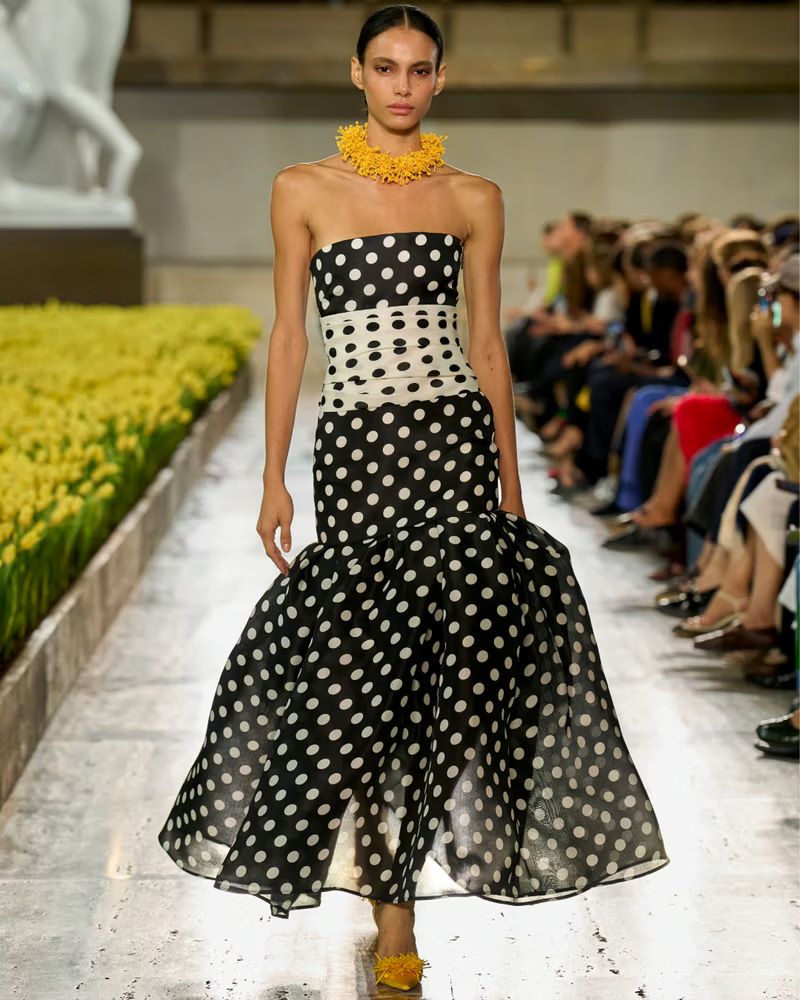
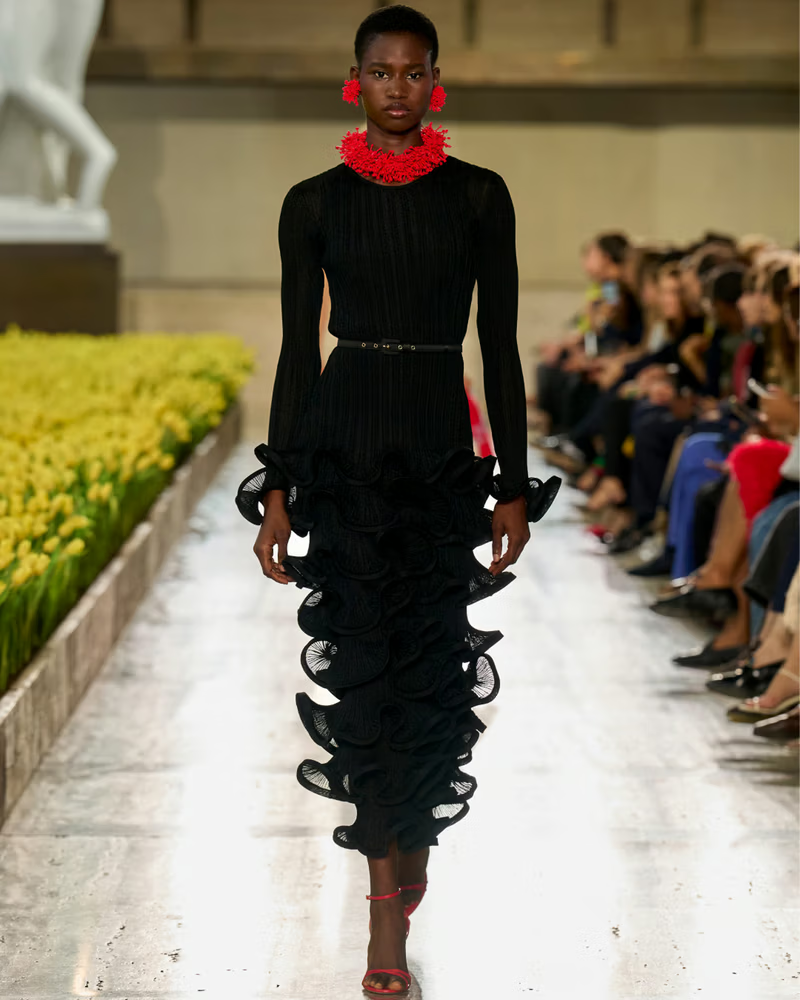
The setting was Lincoln Center’s David H. Koch Theater, home of New York City Ballet. There, creative director Wes Gordon conceived a spectacular homage to Park Avenue, recreating the spirit of a New York spring with 28,798 brilliant yellow tulips arranged between the theater’s monumental sculptures.
It was an inspired expression of the Herrera aesthetic: elegant, theatrical, and unmistakably sophisticated.
The Spring/Summer 2027 collection celebrated the codes that have defined the house since its founding in 1981. Refined silhouettes, expressive color, feminine detailing, and a confident appreciation for beauty reflected the enduring influence of Carolina Herrera herself.
One of the collection’s most captivating creations brought art and fashion into direct conversation.
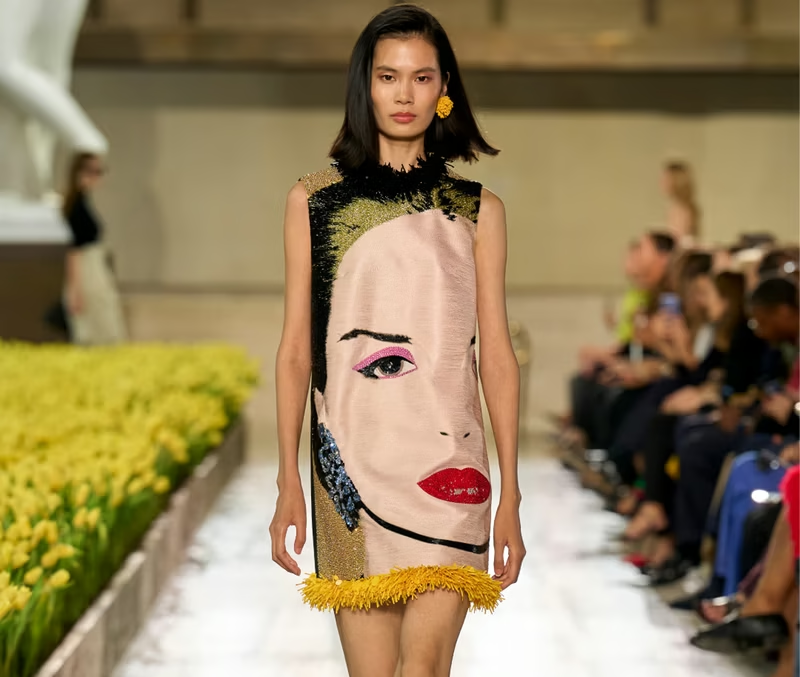
Andy Warhol’s celebrated 1979 portrait of Mrs. Herrera was reimagined on an embroidered minidress, transforming a familiar image of New York society into a striking piece of contemporary fashion. The portrait also appeared on accessories, underscoring the relationship between the house’s artistic heritage and its modern identity.
The collection offered something more meaningful than a retrospective. It demonstrated how a fashion house can honor its founder without becoming confined by the past.
Mrs. Herrera, seated in the front row, remained the embodiment of the elegance she introduced to American fashion more than four decades earlier.
In an industry captivated by novelty, the celebration offered a reminder that true style is not measured by its ability to follow trends, but by its capacity to transcend them.
The Power of a Recognizable Design Signature
The most influential designers possess something that cannot be manufactured through marketing alone: a distinctive creative identity.
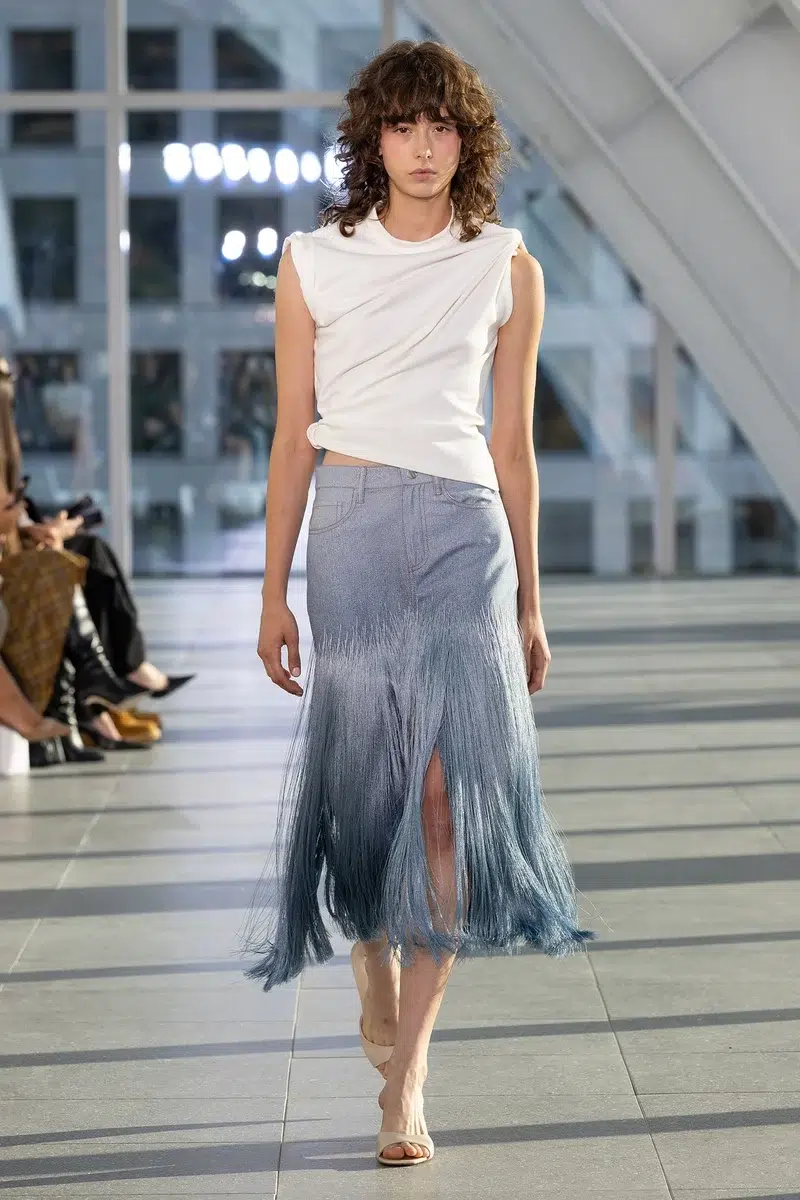
A McQueen creation can often be recognized through its dramatic construction and provocative imagination. Monse has developed a language of unconventional tailoring and deconstructed silhouettes. Carolina Herrera remains synonymous with polished femininity, while Ralph Lauren has elevated American lifestyle dressing into a globally recognizable aesthetic.
The late Giorgio Armani’s legacy rests in an equally powerful proposition: that elegance can be expressed through restraint, impeccable tailoring, and an intuitive understanding of how clothing should move with the body.
These signatures are more than aesthetic choices. They represent years of experimentation, refinement, and a designer’s commitment to a particular vision.
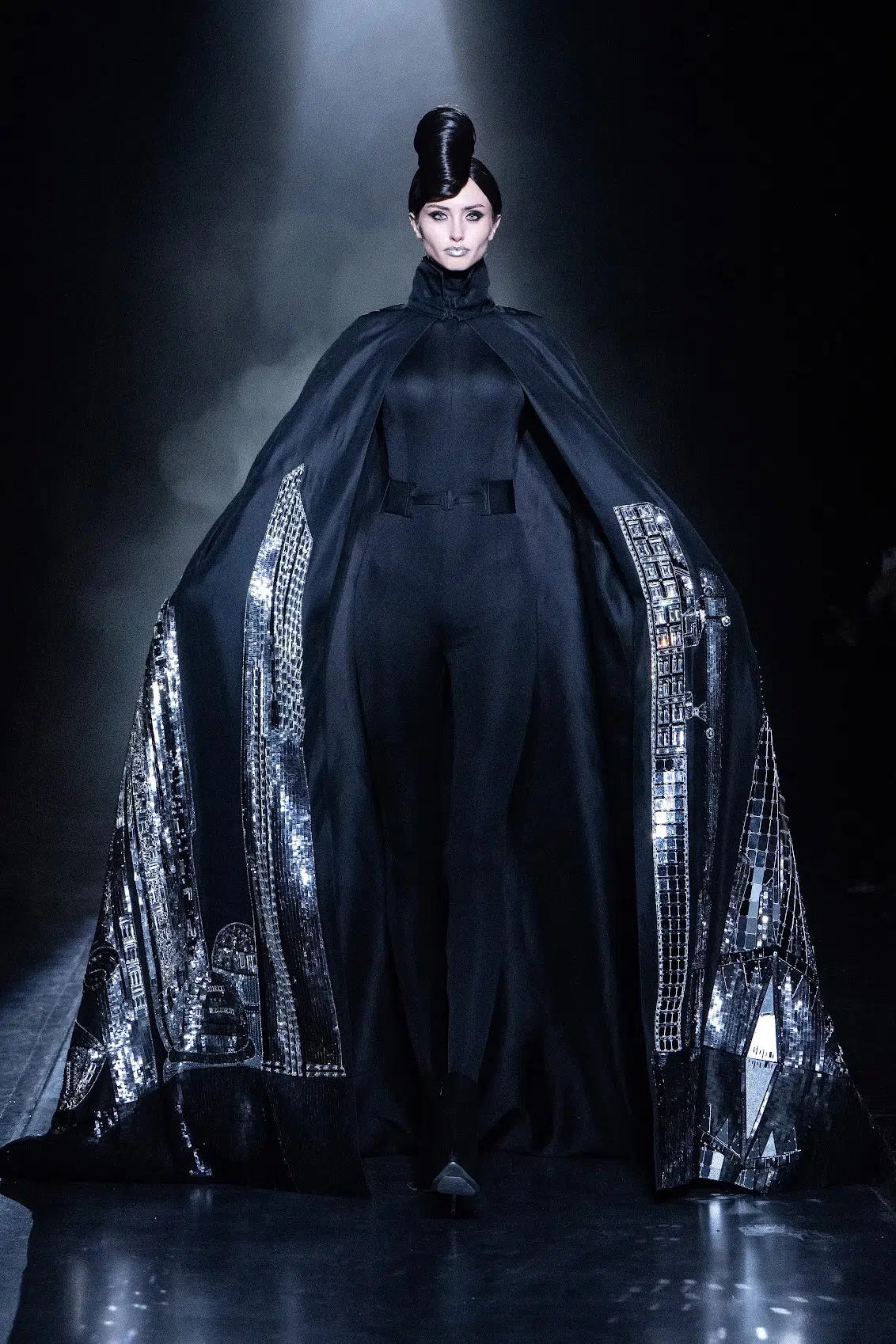
Zang Toi’s runway presentations offer another expression of this philosophy. His designs embrace the glamour of traditional fashion shows, where dramatic silhouettes, refined construction, and an appreciation for occasion combine to create a complete visual world.
A compelling collection does not merely introduce new garments. It invites the audience into the designer’s imagination.
That sense of identity is what distinguishes a memorable fashion moment from one that disappears with the season.
Max Alexander: A Remarkable New Generation
While established houses celebrated their histories, one of New York Fashion Week‘s most engaging stories belonged to a designer whose career is only beginning.
At just 10 years old, Max Alexander has already accomplished what many aspiring designers spend decades pursuing: international recognition, a distinctive creative voice, and multiple Guinness World Records titles.
Having begun designing dresses at the age of four, Alexander has developed an extraordinary enthusiasm for fashion, particularly for imaginative construction and the creative possibilities of sustainable materials.
During Fashion Week, he unveiled a textile collaboration with Mood Fabrics in New York’s Garment District, introducing designs that reflected his colorful aesthetic and interest in environmentally conscious production.
The occasion also became the setting for another remarkable achievement.
Alexander earned his fourth Guinness World Records title by threading an automatic sewing machine in just 10.16 seconds, adding to an impressive collection of accomplishments that includes becoming the youngest person to design a runway show.
Beyond the records, however, his story speaks to something more compelling.
Fashion’s future depends upon individuals who approach design with curiosity, courage, and the freedom to imagine possibilities beyond established conventions.
Alexander’s enthusiasm offers a refreshing reminder that creativity is not confined by age, experience, or tradition.
Talent may be discovered early, but it is imagination that gives it the potential to endure.
When Fashion Becomes Collectible Art
If the runway celebrates fashion’s future, the growing market for archival couture reveals the extraordinary value of its past.
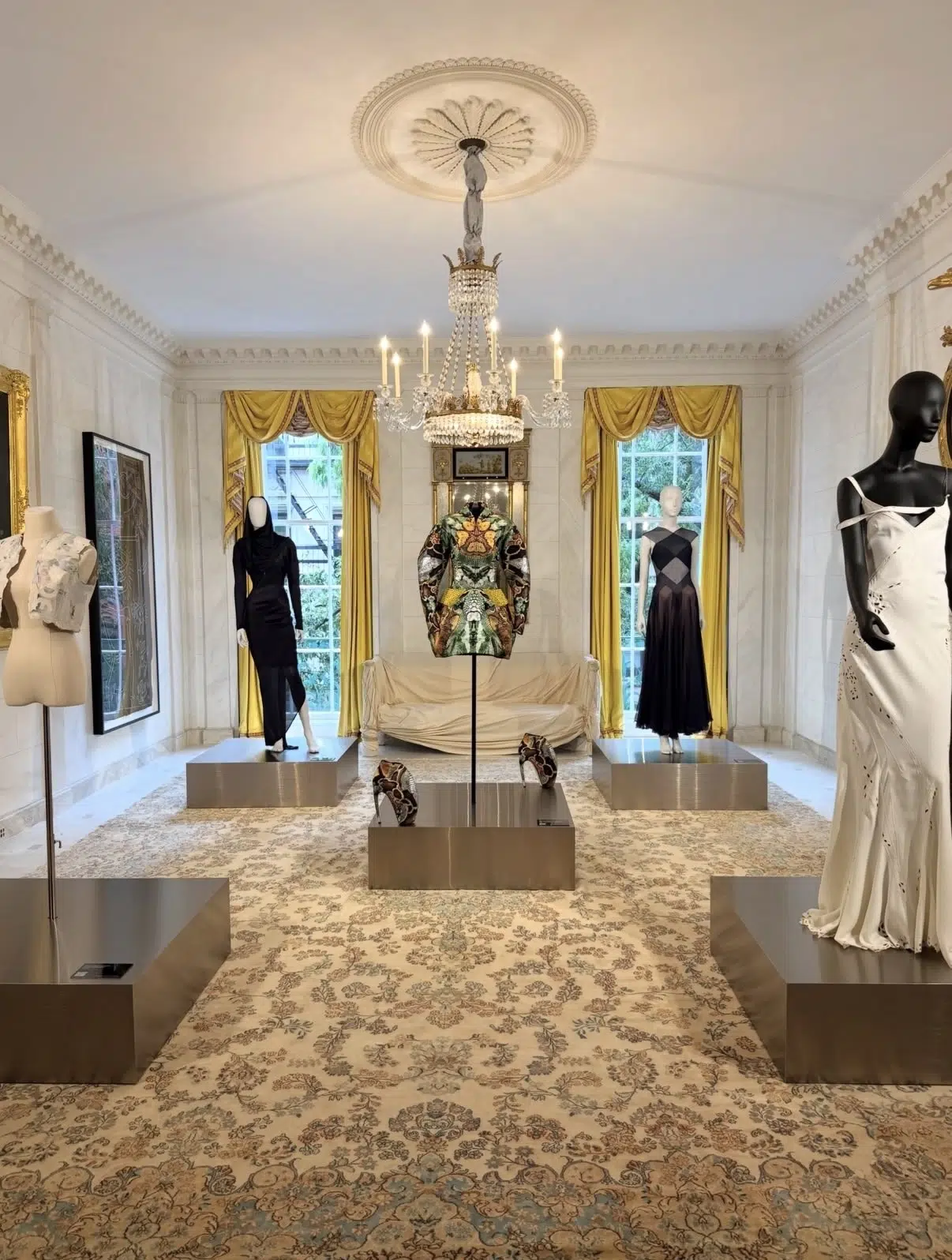
During New York Fashion Week, the Impossible Couture Collection brought together 23 exceptional pieces representing some of fashion’s most influential designers, including Alexander McQueen, Yves Saint Laurent, and Azzedine Alaïa.
Curated by Peter Brant Jr. in collaboration with Loïc Gouzer’s auction platform Fair Warning, the collection offered a rare opportunity to acquire garments whose significance extends far beyond their original purpose.
The September auction achieved approximately $3.93 million in total sales, underscoring the increasing recognition of important fashion pieces as cultural artifacts and coveted collectibles.
Among its most remarkable offerings was an ensemble from Alexander McQueen’s Spring/Summer 2010 Plato’s Atlantis collection, complete with the designer’s iconic Armadillo shoes. The look achieved approximately $1.59 million, including fees.
Such results reflect a fundamental shift in how exceptional fashion is valued.
A significant couture creation can embody the artistic vision of its designer, the craftsmanship of its atelier, and the cultural atmosphere of the moment in which it was conceived.
Its provenance may be as compelling as its construction.
Collectors increasingly recognize that an extraordinary garment can occupy a place alongside fine art, rare watches, and historically significant design objects. Museums have long understood this relationship, preserving landmark fashion creations as expressions of artistic and cultural history.
For private collectors, the attraction is equally powerful.
To own an important piece of fashion history is to preserve a tangible expression of creative genius.
And while the financial value of collectible couture may fluctuate, its cultural significance can continue to deepen with time.
The Invisible Artistry Behind the Runway
Fashion’s most memorable moments often appear effortless.
A model emerges, a silhouette catches the light, and for a brief instant, months of creative work are distilled into a single image.
Yet behind that moment lies an extraordinary network of talent.
Patternmakers, textile specialists, embroiderers, seamstresses, stylists, photographers, set designers, makeup artists, hairstylists, and production teams all contribute to the realization of a designer’s vision.
Even the simplest presentation demands a sophisticated coordination of creative and technical expertise.
A beautifully executed garment is not merely the result of inspiration. It is the culmination of countless decisions involving proportion, material, movement, construction, and finish.
The distinction between ready-to-wear and haute couture may be significant, but the pursuit of excellence remains central to both.
This is perhaps what makes fashion so compelling as an art form. It exists at the intersection of imagination and practicality, translating creative ideas into objects that become part of everyday life.
The finest designs achieve something even more remarkable: they alter how we perceive the familiar.
A jacket becomes an expression of authority. A gown becomes a statement of identity. A seemingly simple white shirt becomes an enduring symbol of elegance.
Fashion’s influence is often most powerful when its complexity remains invisible.
New York Fashion Week: A City in Motion
The New York Fashion Week of today bears little resemblance to the era when the industry’s presentations were concentrated beneath the famous Bryant Park tents.
The city itself has become the runway.
Shows unfold in grand hotels, cultural institutions, galleries, unexpected industrial spaces, and intimate settings that reflect the personalities of the designers presenting within them.
Across Manhattan, models move between castings and fittings, photographers gather outside show venues, and the streets take on the unmistakable energy of a city immersed in fashion.
The Garment District remains a vital symbol of this creative heritage. Along Seventh Avenue, historically known as Fashion Avenue, the relationship between design, commerce, and craftsmanship continues to shape New York’s identity.
But the city’s influence extends far beyond its traditional fashion neighborhoods.
New York Fashion Week thrives because it refuses to remain static. It welcomes emerging voices, challenges established ideas, and continually redefines what American fashion can represent.
As the international fashion calendar moves onward to London, Milan, and Paris, New York leaves behind more than a collection of runway images.
It offers a perspective on fashion as a living, evolving expression of culture.
Fashion’s Enduring Influence
Fashion has always been about more than the clothes themselves.
It reflects the aspirations of an era, the imagination of its creators, and the identities of those who choose to wear it. At its finest, it challenges convention while preserving the artistry and craftsmanship that give great design its lasting relevance.
The September season brought these ideas into focus.
Carolina Herrera celebrated the power of legacy. Established American houses demonstrated the possibilities of reinvention. Max Alexander represented the promise of a new generation, while the extraordinary response to archival couture revealed fashion’s increasingly important place in the world of collecting.
Together, these moments offered a portrait of an industry defined as much by its history as by its appetite for change.
Trends will inevitably come and go. Silhouettes will evolve, creative directors will change, and new generations will discover their own interpretations of style.
But the desire to express individuality through what we wear remains constant.
And in New York, where ambition and imagination have always found a natural home, fashion continues to reinvent itself with an energy entirely its own.