From multi-course banquets and state dinners to café pastries, souvenir cookies, Shine Muscat jellies, and even cranberry witches, Executive Chef Yu Sugimoto wants nothing less than to “change society through deliciousness.”
At Tokyo’s legendary Imperial Hotel, he takes his raisin biscuits as seriously as he does his turnip sauce.
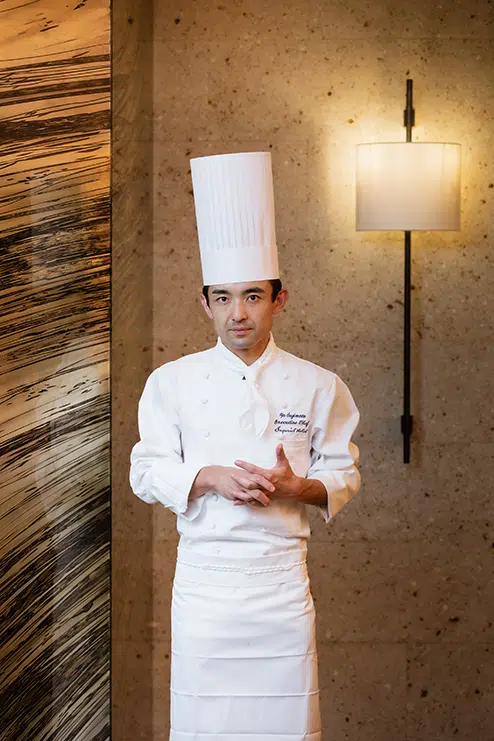
The acclaimed chef spent 13 years in France training under Alain Ducasse and Yannick Alléno before returning to help guide the culinary future of one of Japan’s most storied hospitality institutions.
“From Chef Ducasse I learned a philosophy of pursuing the origins and essential flavors of ingredients to their very core,” says Sugimoto. “From Chef Alléno, I learned the artistry of dynamically expressing a single dish using the ingredients at hand. These contrasting lessons still live deep within me today and form the very foundation of my culinary philosophy.”
That philosophy can be found in something as deceptively simple as turnip sauce.
Traditionally, only the white flesh of the root is used. Sugimoto uses everything.
“The leaves and the skin as well,” he explains. “The choice is not merely for color. This is born from a desire to pour the entire life of the ingredient into the dish. To me, this represents more than just a recipe; it is a physical expression of the harmony between fine dining and sustainability — a philosophy where nothing is wasted, and every part of nature is honored.”
For Sugimoto, preserving tradition and embracing change are not opposing ideas.
“It is precisely because I wish to protect our tradition that I am unafraid to evolve our recipes,” he says. “What we must truly inherit is not a fixed formula, but that original passion for our guests and the relentless pursuit of deliciousness that those pioneering chefs embraced. To honor tradition is to continue moving forward.”

The Imperial Hotel has been doing exactly that for 135 years.
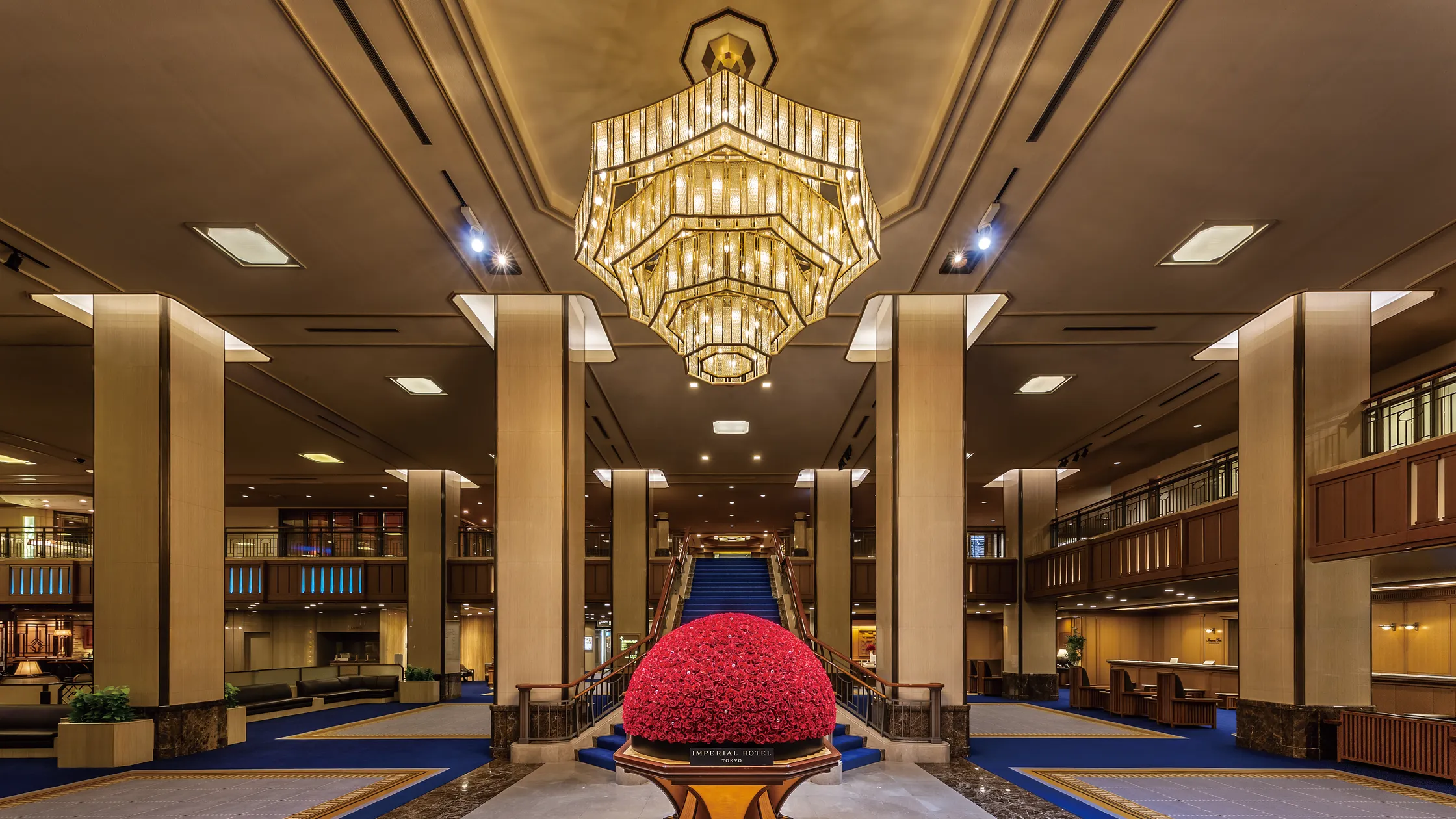
Founded in 1890 and located in Tokyo’s Hibiya district near the Imperial Palace and Ginza, the hotel has welcomed royalty, diplomats, celebrities, and travelers from around the world. Today, many of its most famous dishes remain on the menu, creating what Sugimoto describes as a culinary journey through time.
“Guests move between eras in a single meal.”
Restaurants worldwide are increasingly embracing heritage cuisine, culinary nostalgia, and story-driven dining experiences. At the Imperial Hotel, those stories are not recreated. They are still being served.
Among the most celebrated is the Chaliapin Steak, created in 1934 for Russian opera singer Feodor Chaliapin. Concerned about his ability to enjoy tougher cuts of meat, the singer inspired Imperial chefs to develop a preparation using grated onions to tenderize the beef. Nearly a century later, the dish remains one of the hotel’s enduring classics.
The Gratin of Prawn and Sole “Queen Elizabeth II” was first prepared during the late Queen’s state visit to Japan in 1975. Delicate and restrained, it reflects the precision associated with diplomatic hospitality. The name itself was granted with royal approval, permanently linking the dish to a moment in history.
The Signature Double Consommé Soup, refined over generations, remains a benchmark of classical French technique. The hotel’s celebrated pancakes date back to 1953. It’s famous curries trace their origins to the 1930s.
Even the cocktails tell stories.
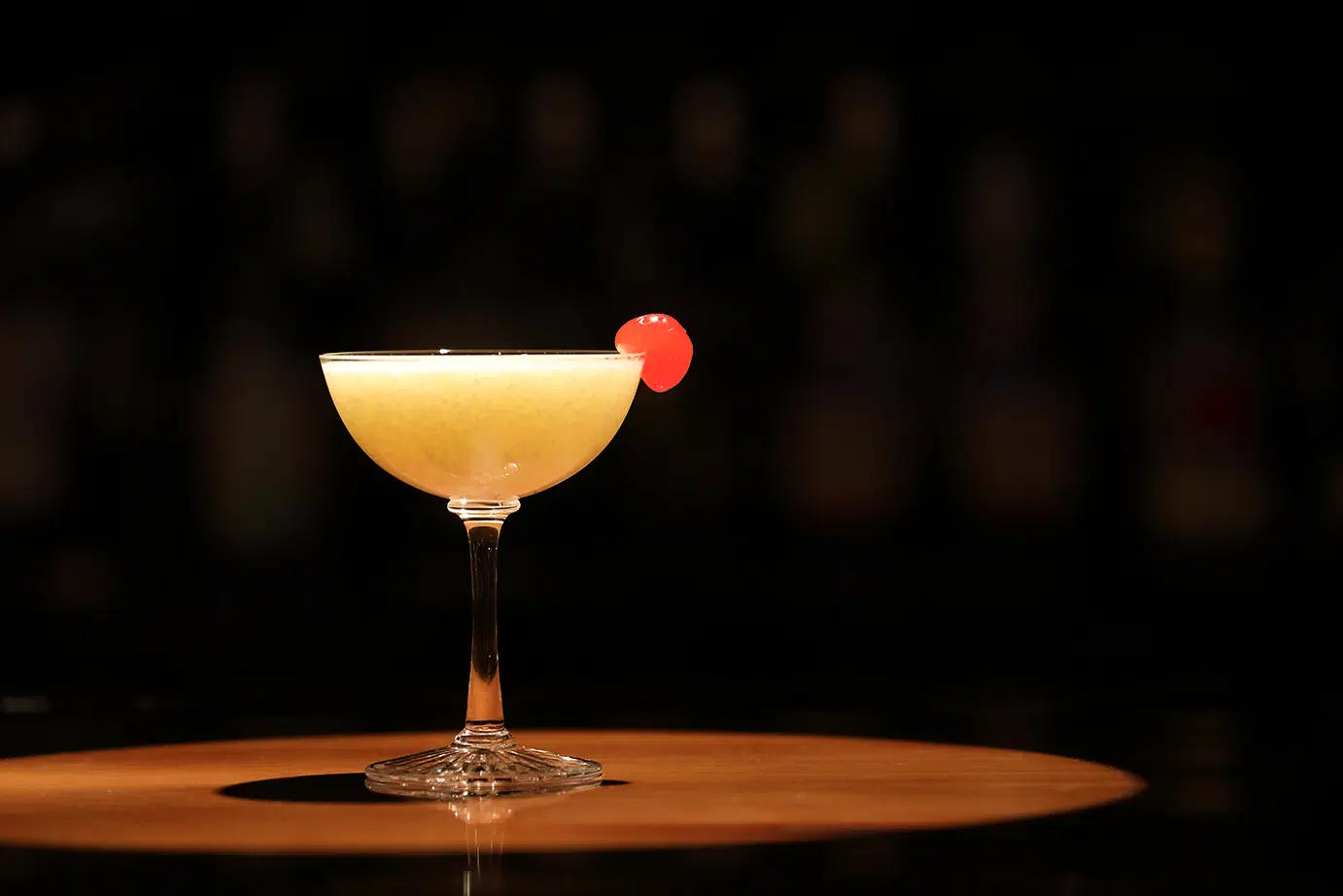
The Imperial’s signature Mount Fuji cocktail was created in 1924 as a welcome drink for Western passengers arriving in Tokyo aboard around-the-world cruises. Its foamy white surface, topped with a maraschino cherry, was designed to evoke Japan’s most iconic mountain beneath the rising sun. More than a century later, the recipe remains unchanged.
Perhaps nowhere is the Imperial’s influence more visible than at Viking Sal, the hotel’s celebrated buffet restaurant.
Introduced in 1958 as Japan’s first “Viking” buffet, the concept was inspired by a Scandinavian smorgasbord encountered by Imperial Hotel president Tetsuzō Inumaru. The idea proved so influential that “Viking” entered the everyday Japanese language as a synonym for all-you-can-eat dining.
Today, Viking Sal offers more than 50 dishes spanning French, Japanese, and Chinese culinary traditions.
“A single visit can trace a progression from prewar European techniques to postwar Japanese adaptations and into contemporary interpretations,” says Sugimoto. “It creates a layered experience built plate by plate.”
The Imperial story extends beyond Tokyo.
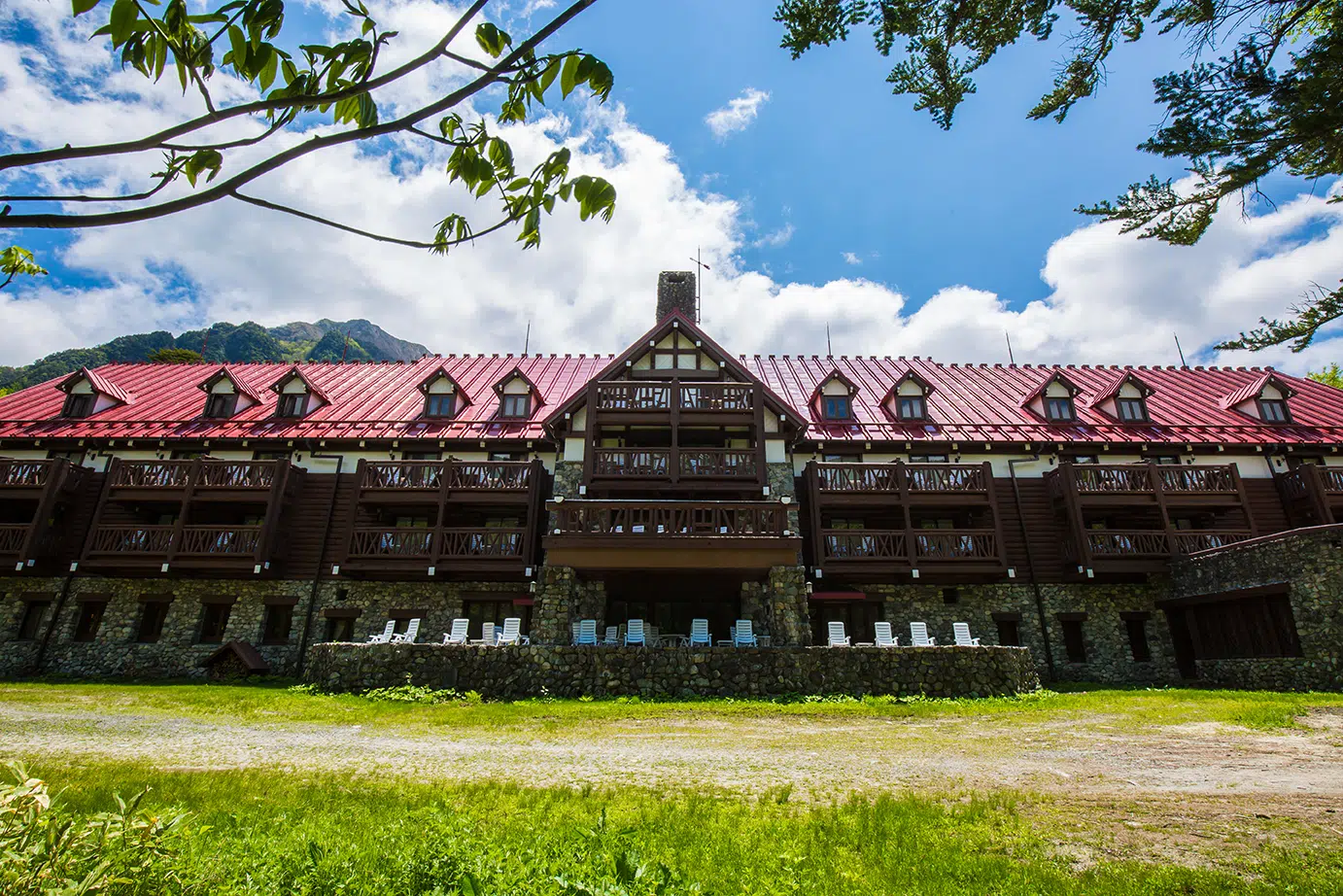
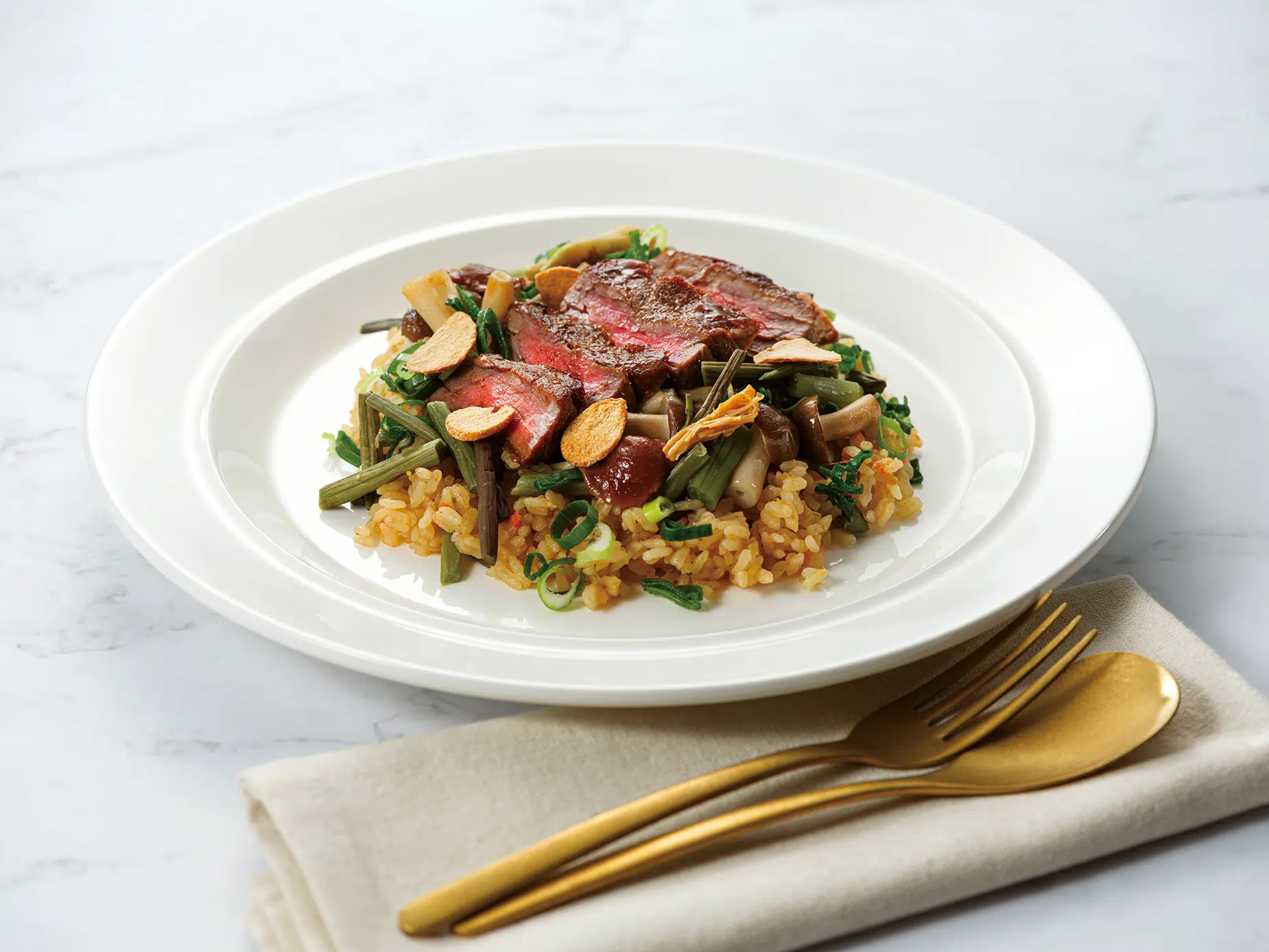
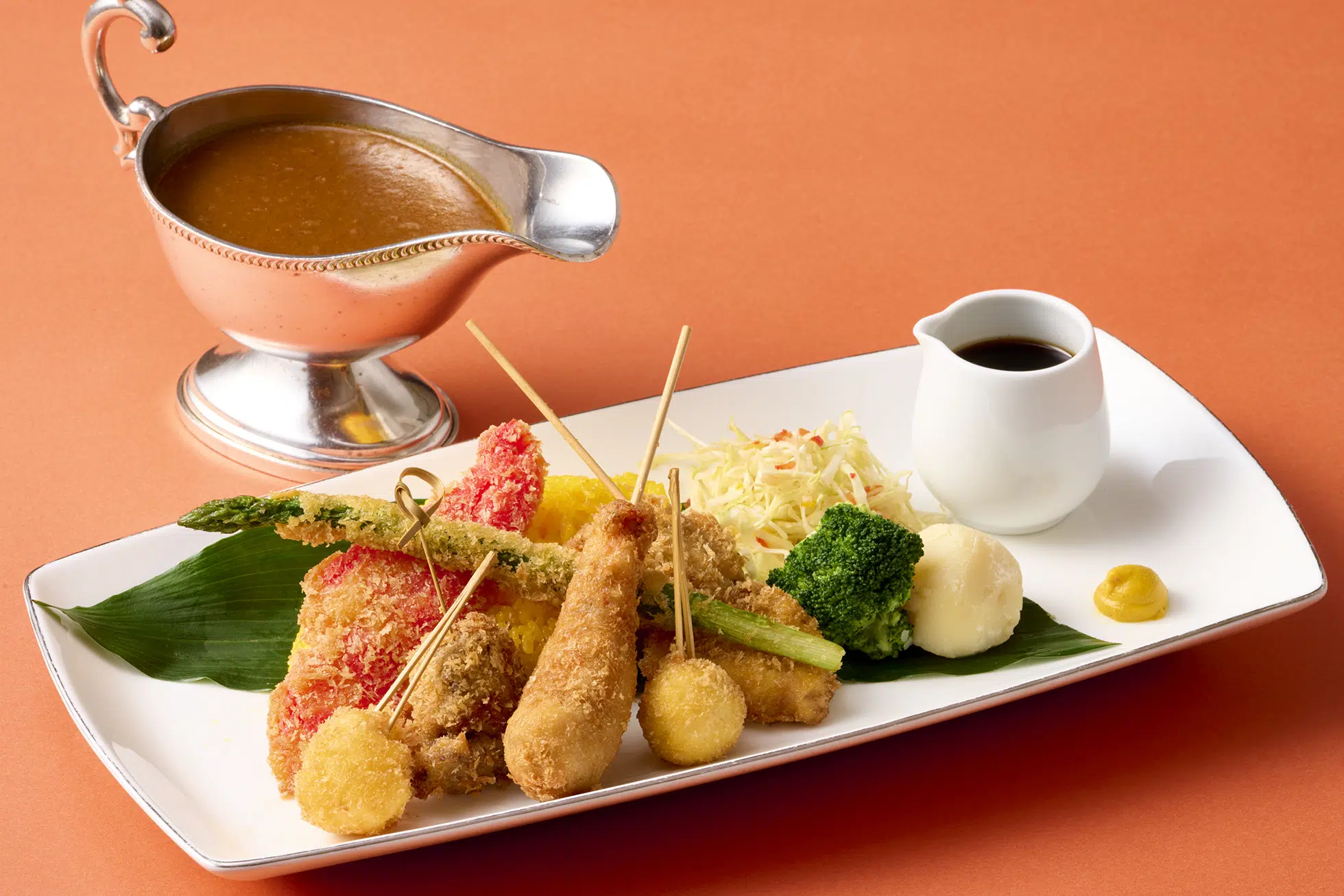
Each property within the Imperial portfolio offers a signature dish found nowhere else. Imperial Hotel Kamikochi serves Wild Mountain Vegetable Pilaf with Beef Tenderloin. Imperial Hotel Osaka is known for its Naniwa Kushikatsu Curry featuring seven varieties of deep-fried skewers. In Kyoto, guests can enjoy wood-fired Yasaka Curry and the Yasaka Burger.
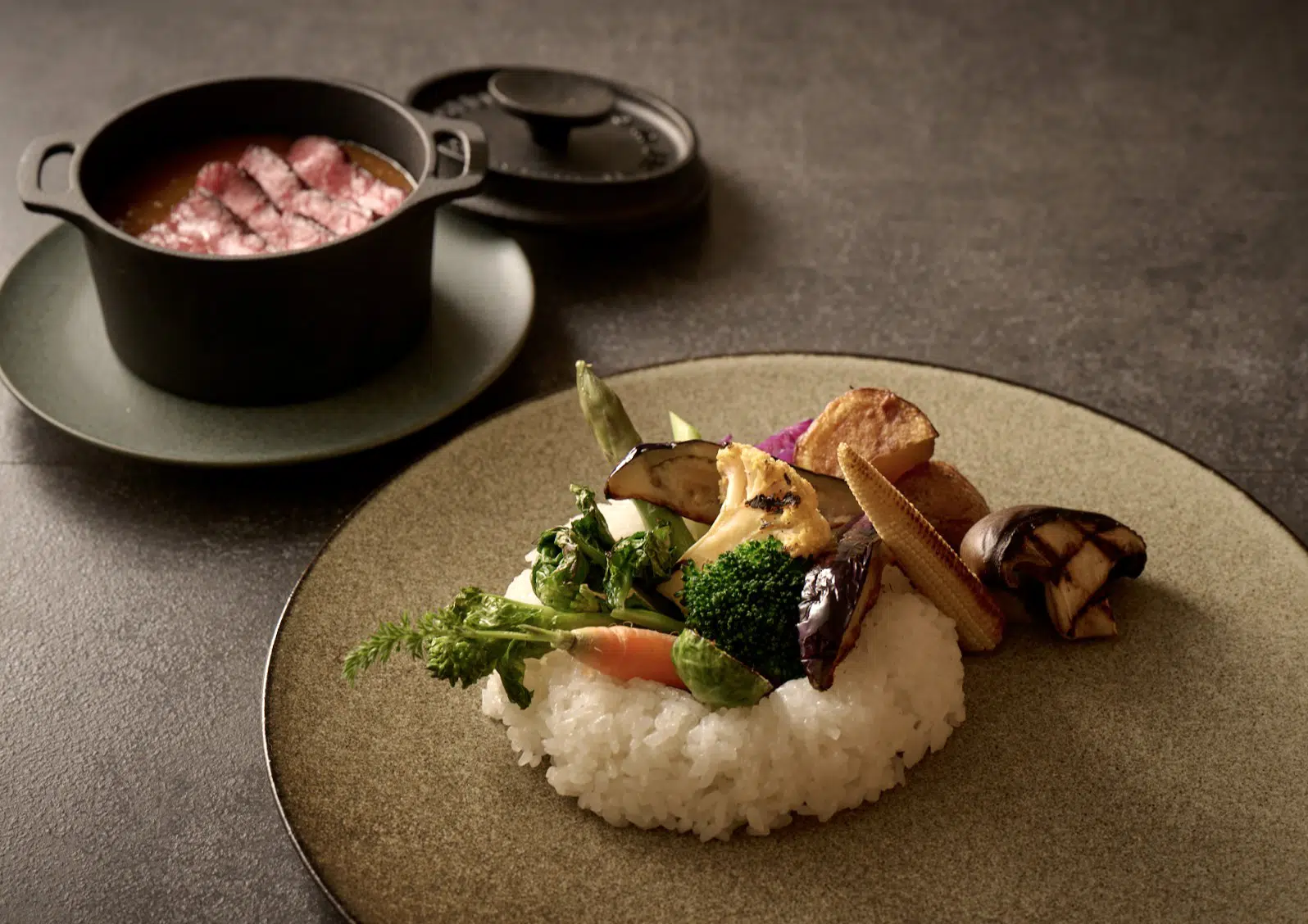
“Each of our hotels offers a dish that can be experienced only in that place,” says Sugimoto. “A singular encounter with flavor and history.”
For Kazuhiko Yashima, General Manager of the Imperial Hotel Tokyo, that continuity is increasingly valuable in a hospitality world often focused on reinvention.
“Many restaurants today are working to build experiences around history and narrative,” he says. “At the Imperial Hotel, those stories are already embedded in our dishes. They were created at distinct moments in time for real guests, and they have remained part of our offering ever since.”
Sugimoto sees the menu as something more than a collection of recipes.
“Our menus trace a progression of influence, adaptation, and exchange,” he says. “They serve not only as menu offerings, but as records of shifting cultural relationships and evolving tastes, shaped by the individuals and moments for which they were originally created. It is not a reinterpretation of history, but its continuation.”
More than ever, the Imperial Hotel remains one of Japan’s great temples of omotenashi — the art of hospitality — where history is not displayed behind glass, but served one course at a time.