Behind one of Bath’s most celebrated Georgian façades, the Royal Crescent Hotel & Spa combines historic English grandeur with contemporary dining, intimate gardens, and a wonderfully restorative spa.
Founded by the Romans as a thermal spa more than 2,000 years ago, Bath has the sort of beauty that feels almost improbably well preserved. A UNESCO World Heritage city, it is renowned for elegant Georgian architecture, where sweeping terraces of honey-colored stone sit comfortably alongside Roman ruins, medieval churches, and centuries of English history.
Its most famous address is the Royal Crescent, an extraordinary semicircle of 18th-century townhouses overlooking an immaculate green lawn. At its center sits The Royal Crescent Hotel & Spa, one of Bath’s grandest places to stay and a property that feels inseparable from the architectural character of the city around it. The 45-room hotel occupies a generous section of the Crescent, where history is impossible to ignore. The setting is closely tied to Bath’s literary and social past and has long been associated with the world of Jane Austen, while the city’s unmistakable Georgian architecture has more recently become familiar to television audiences through period productions including Bridgerton. Over the years, the hotel itself has also welcomed an impressive roster of guests, including U2 and The Rolling Stones.
Despite all that history, the hotel does not feel trapped by it. Behind its classical façade lies a property that balances Georgian grandeur with a relaxed, modern approach to hospitality, encompassing elegant rooms and suites, Montagu’s Mews restaurant, a secluded spa, manicured gardens, and a private Garden Villa capable of accommodating up to eight guests.
A Splendid Entrance
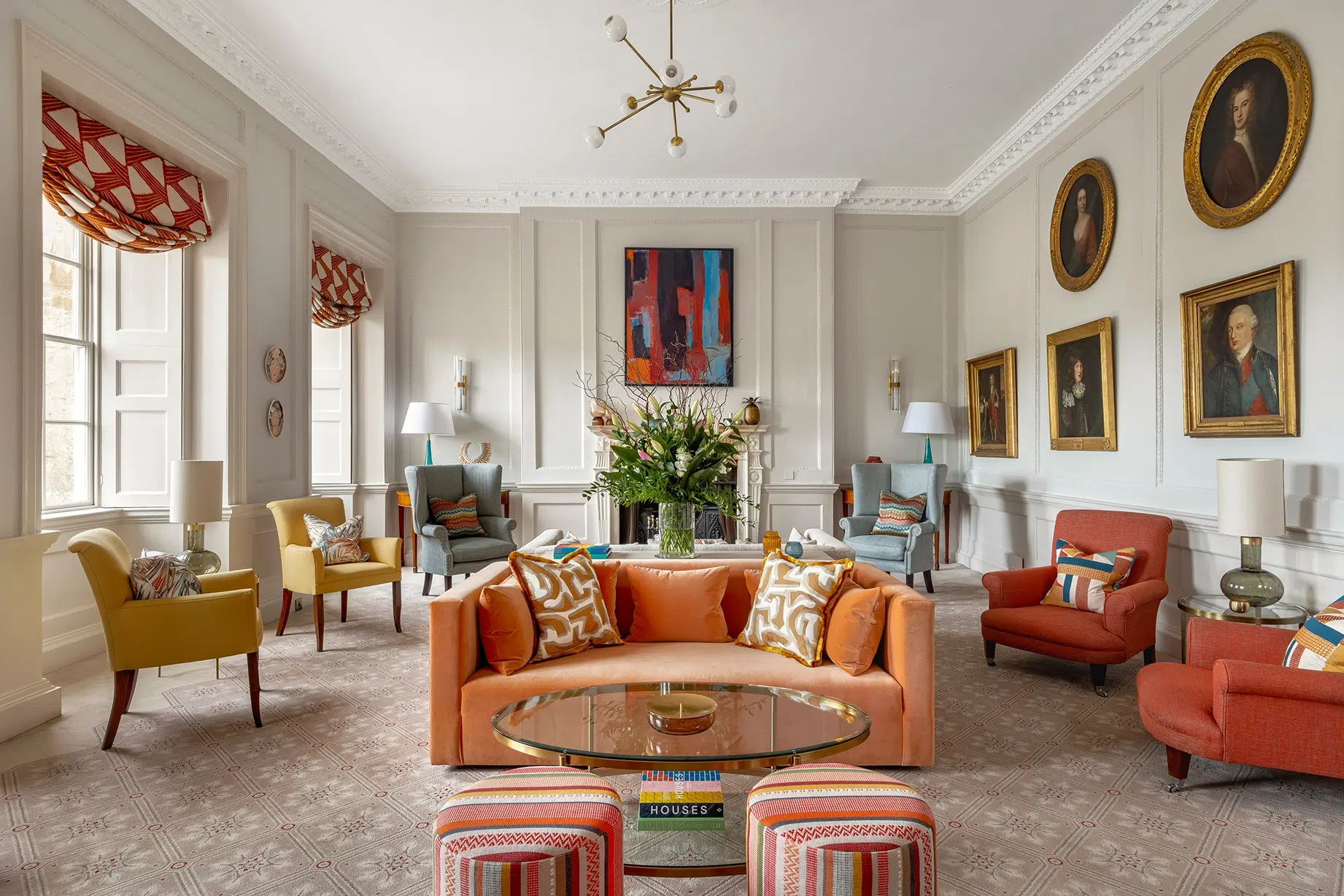
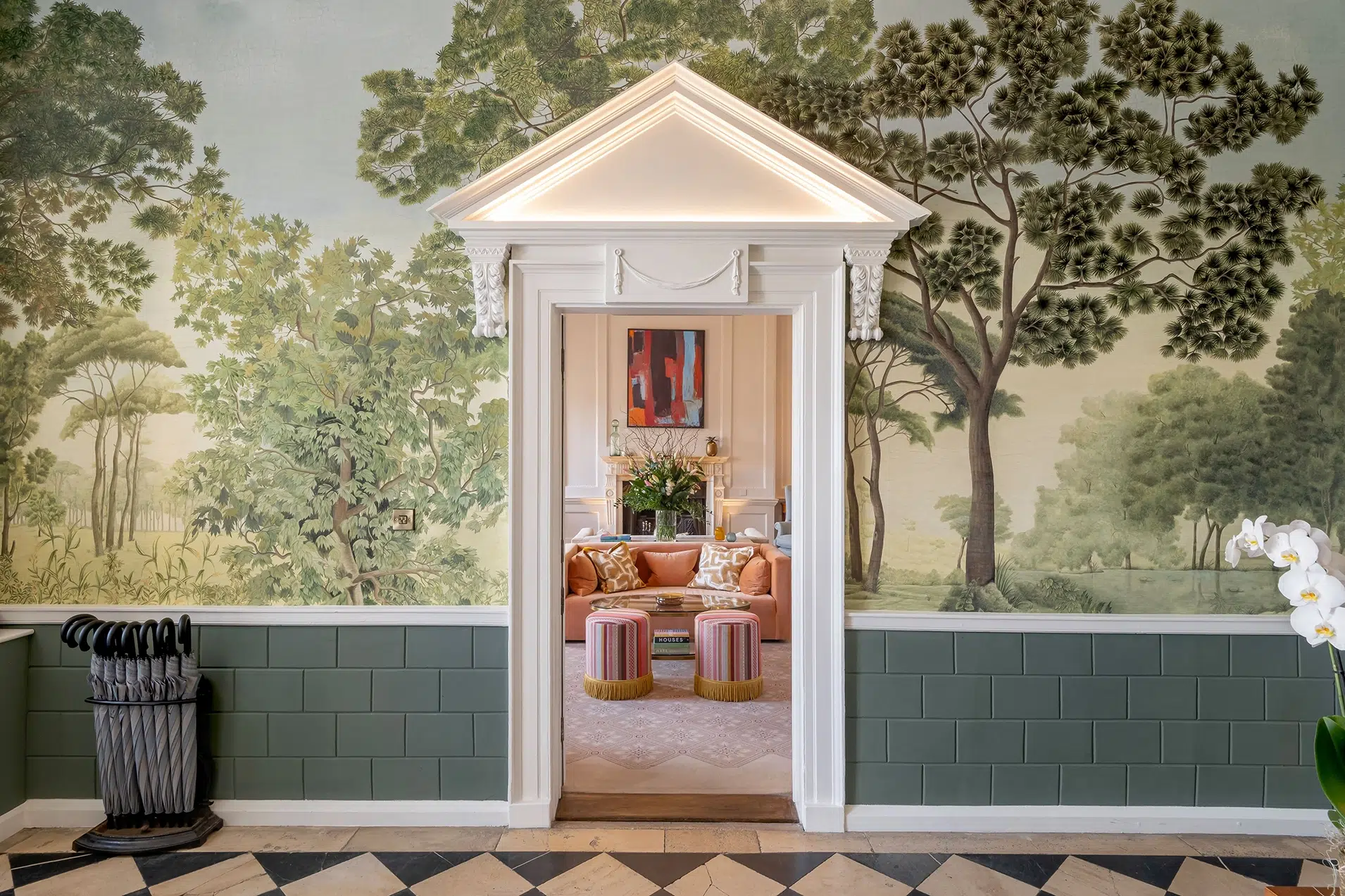
On the cold winter’s day of our arrival, a kindly doorman ushered us inside and out of the rain. We were quickly welcomed at reception before retreating to the lounge, where a glowing fire provided instant relief from the weather outside. Above us, a high ceiling detailed with ornate cornicing reinforced the sense that this was no ordinary hotel arrival, and after warming ourselves with a complimentary drink, we made our way upstairs to the John Wood Suite.
The suite is named after the celebrated architect whose vision helped transform Bath during the 18th century. Wood was fascinated by the city’s ancient history and believed Bath occupied a place of particular significance long before the Georgian era. His legacy remains visible throughout the city, making the suite’s name especially fitting.
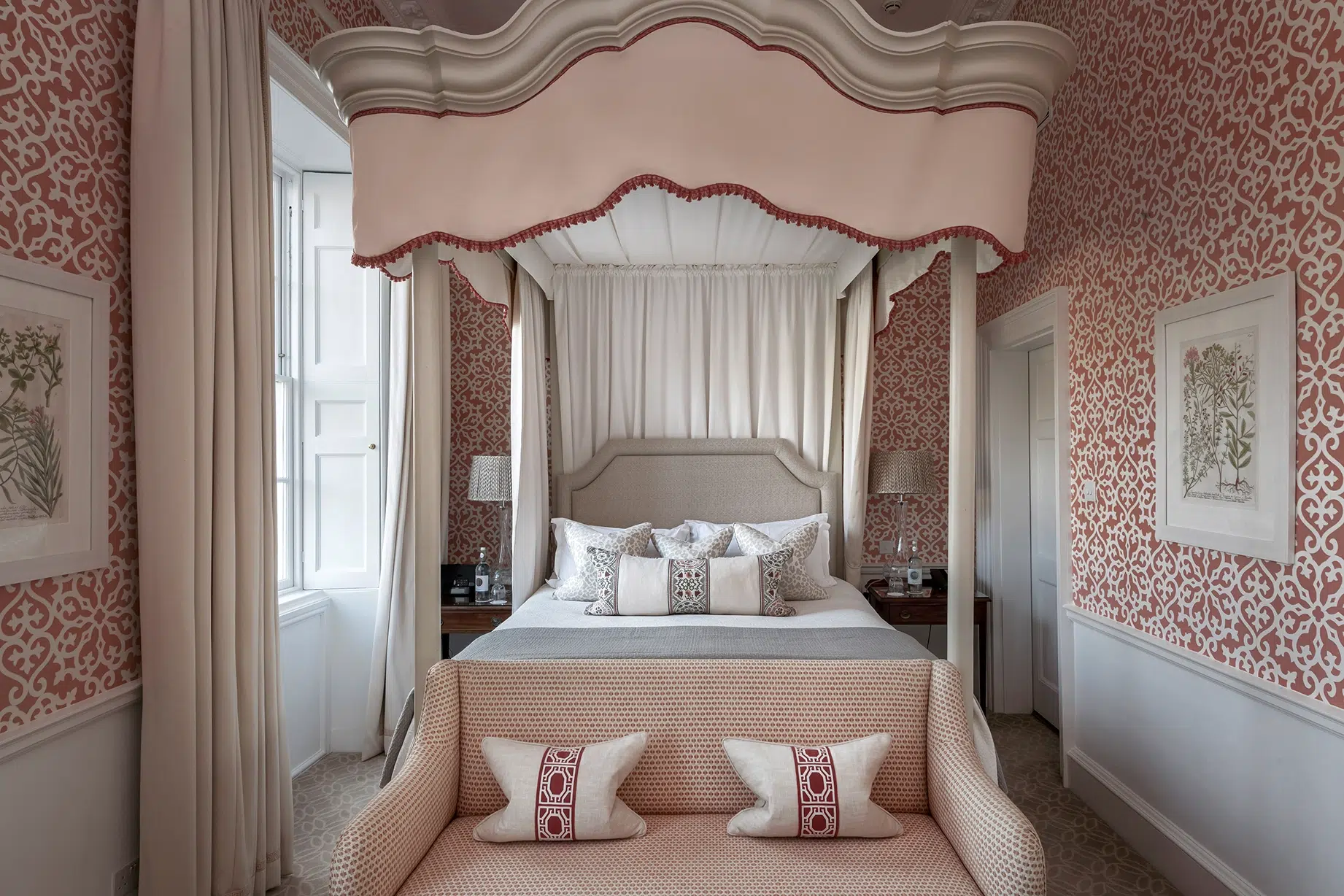
The room itself is spacious and classically English, with a generous combined sleeping and living area centered around a dramatic four-poster canopied bed. Tall windows overlook the broad lawns of the Royal Crescent and the city beyond, while antique-style furniture, upholstered chairs, a writing desk, and blue William Morris-inspired wallpaper give the space a suitably historic character without making it feel museum-like.
After a day spent exploring Bath in determinedly torrential rain, the large bathroom proved particularly welcome. A long soak in a piping-hot bath was exactly what was needed before dinner, with Jo Loves toiletries adding a contemporary touch to the more traditional surroundings. Later, dressed for the evening, we descended the hotel’s central staircase beneath a collection of imposing portraits, generations of distinguished faces appearing to watch our progress down toward dinner.
Dinner at Montagu’s Mews
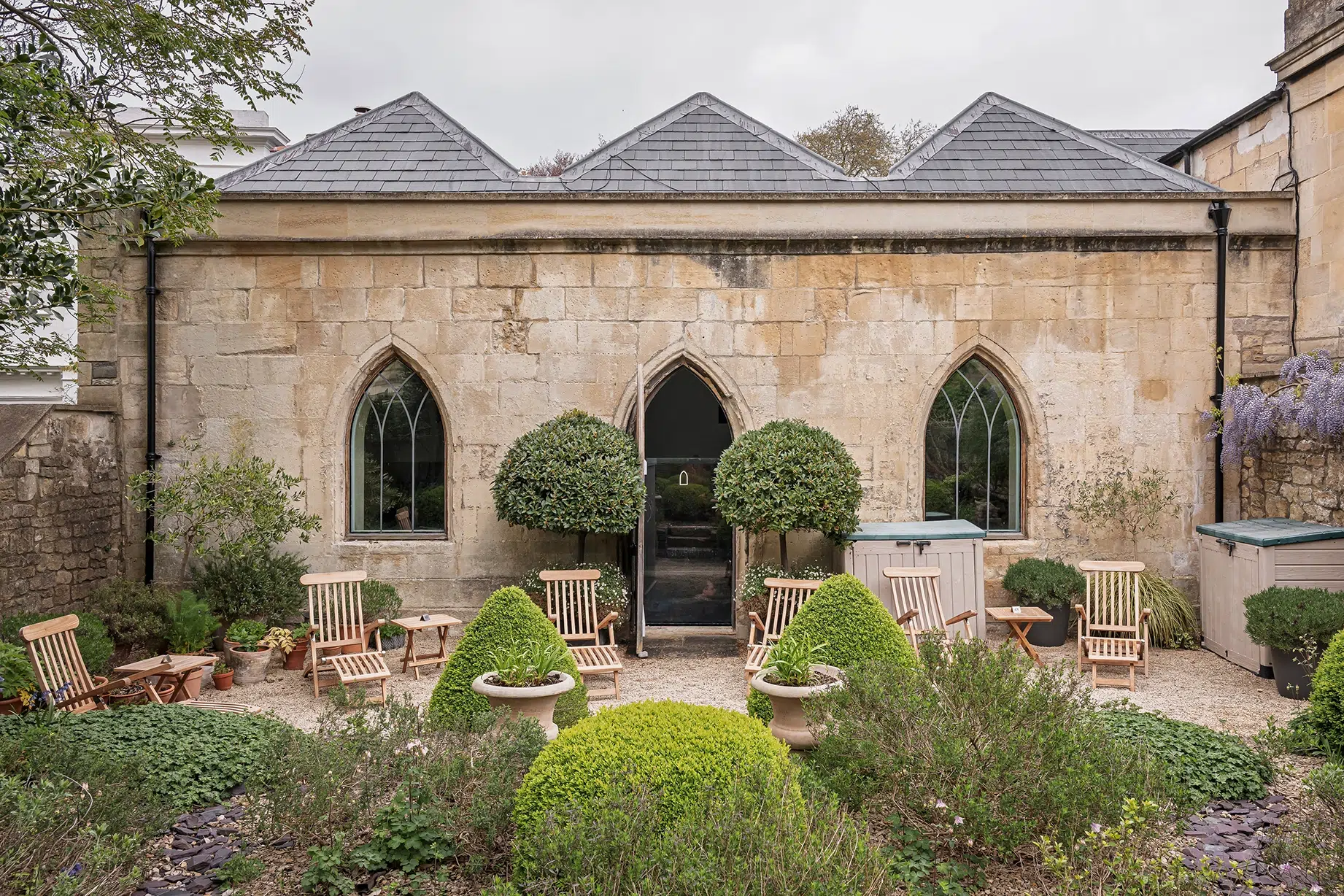
A private garden separates the main house from Montagu’s Mews, as well as the spa and Garden Villa. Before dinner, we settled into the adjoining bar for cocktails and tried the hotel’s Jane Austen-inspired creation, a fragrant combination of Salcombe Gin, vermouth, raspberry shrub, lime, and rose water that made for an elegant introduction to the evening.
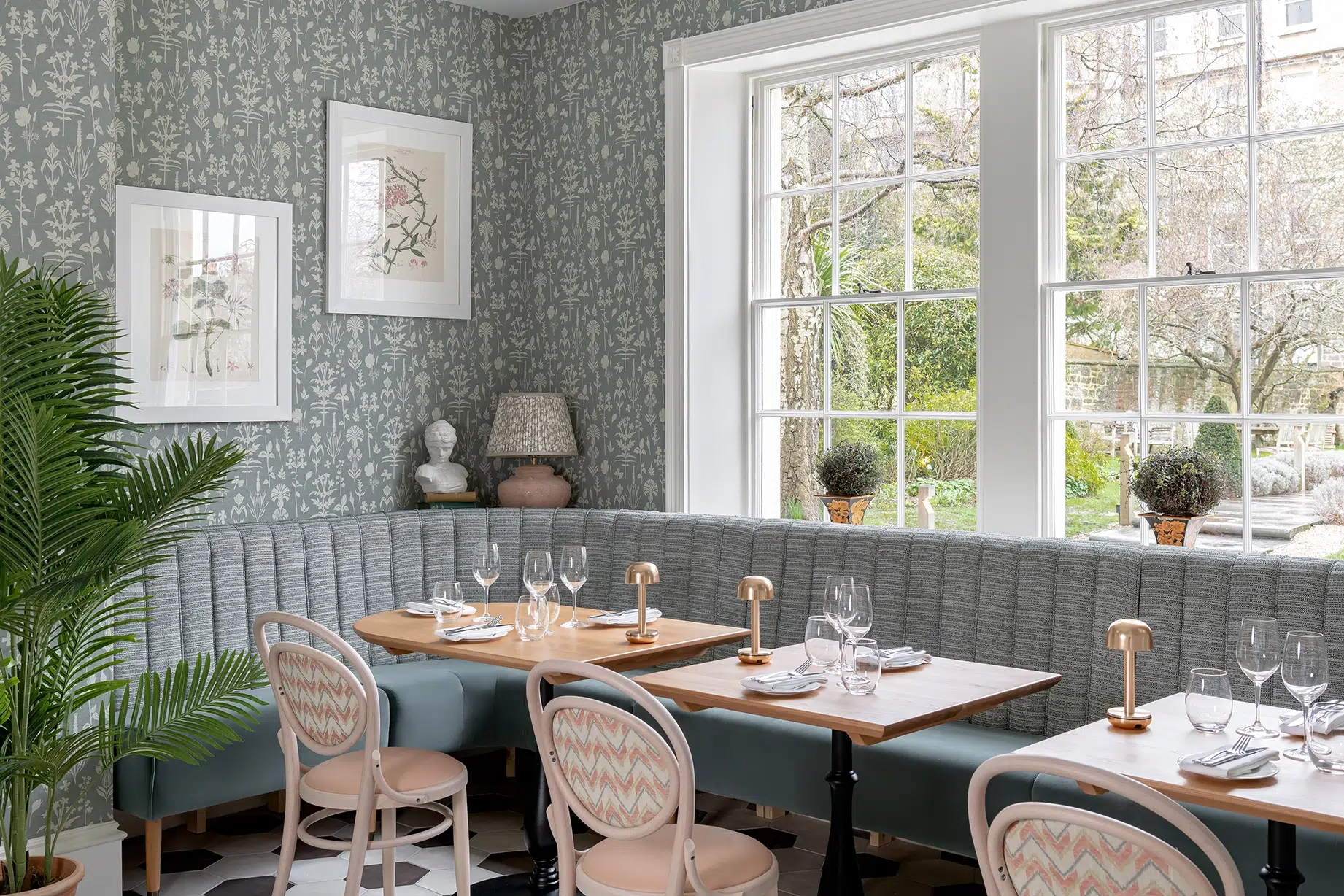
The restaurant occupies a bright, conservatory-style space that manages to feel polished without becoming overly formal. Service throughout the night was attentive and assured, while the menu celebrates the produce of southwest England, including Somerset meat and fish from the Cornish coast.
Guests can choose between à la carte dining and a selection of tasting menus, including meat, pescatarian, and vegetarian options. We opted for the classic six-course experience, which began with a pair of richly flavored snacks: smoked haddock and sweet potato fritters with spiced aubergine, followed by a sticky pork cheek bun seasoned with togarashi.
The courses that followed became progressively more ambitious. A chicken and black pudding galantine introduced earthy, deeply savory flavors, while Orkney scallops brought the delicacy and sweetness expected of one of Britain’s finest shellfish. Carefully judged accompaniments, including pickled celeriac, added acidity and contrast without overwhelming the principal ingredients.
For me, however, the standout dish was the Exmoor venison. Served with slow-cooked beetroot, preserved berries, and a sloe gin jus, it was a deeply seasonal plate that captured something of the English countryside in winter: rich, dark, slightly sweet, and beautifully composed. The evening concluded with sharp seasonal rhubarb followed by a selection of English cheeses, a suitably indulgent finish to a long dinner.
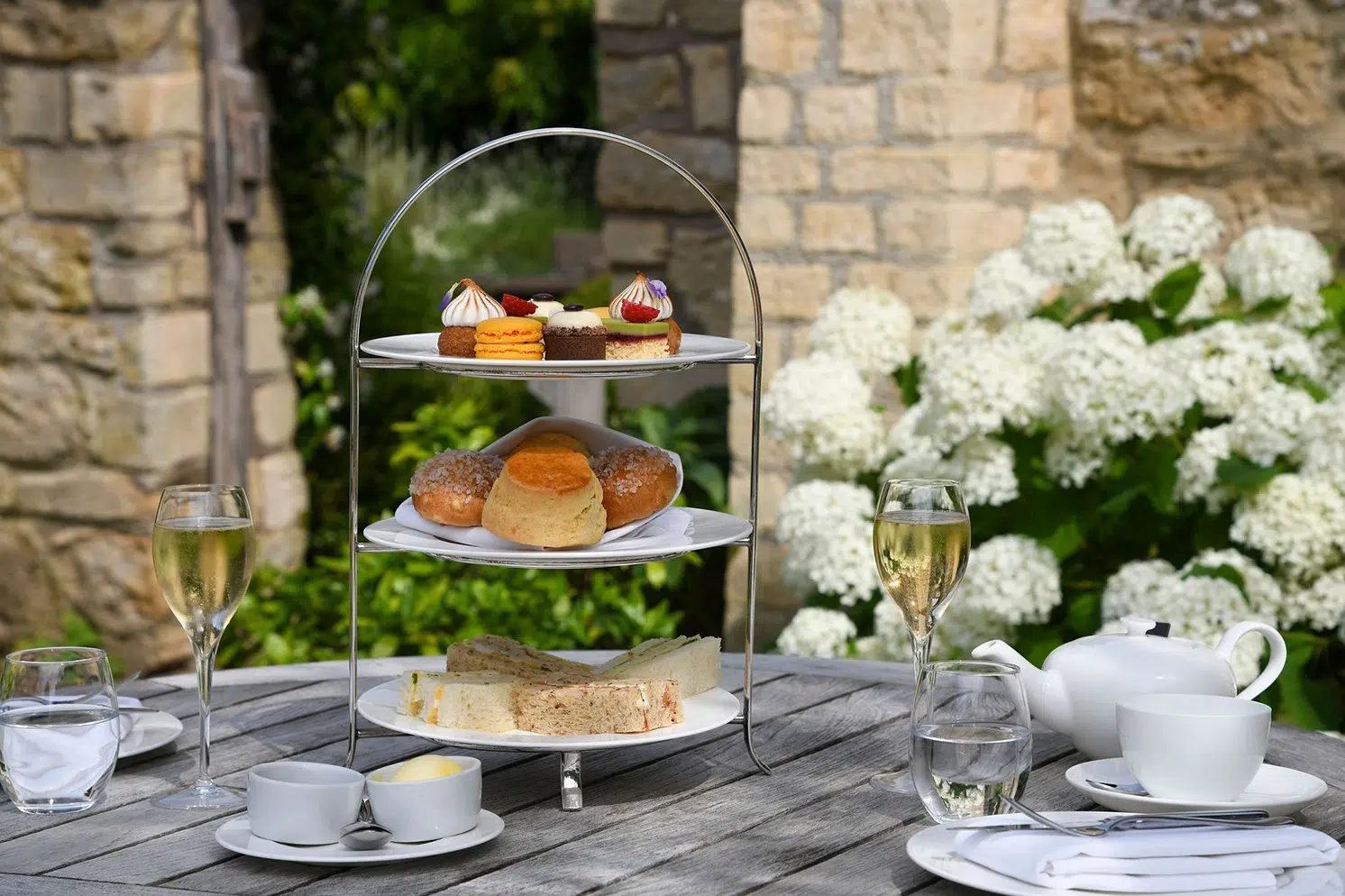
Breakfast is also served at Montagu’s Mews, with a generous buffet built around local meats, dairy products, and fresh bread from Bath’s Bertinet Bakery. In warmer weather, guests can dine outside on the garden terrace beneath flowering trees, while the hotel’s traditional afternoon tea offers another distinctly British indulgence, complete with scones, jam, cream, cakes, fine teas, and Champagne.
The Healing Waters of Bath
No visit to Bath feels complete without some connection to water. The mineral-rich hot springs beneath the city have attracted visitors for thousands of years, first among the Celts and later the Romans, who established the settlement of Aquae Sulis around the natural thermal springs. That legacy continues to define Bath today, and the hotel’s spa offers a quieter, more intimate interpretation of the city’s ancient relationship with bathing and wellbeing.
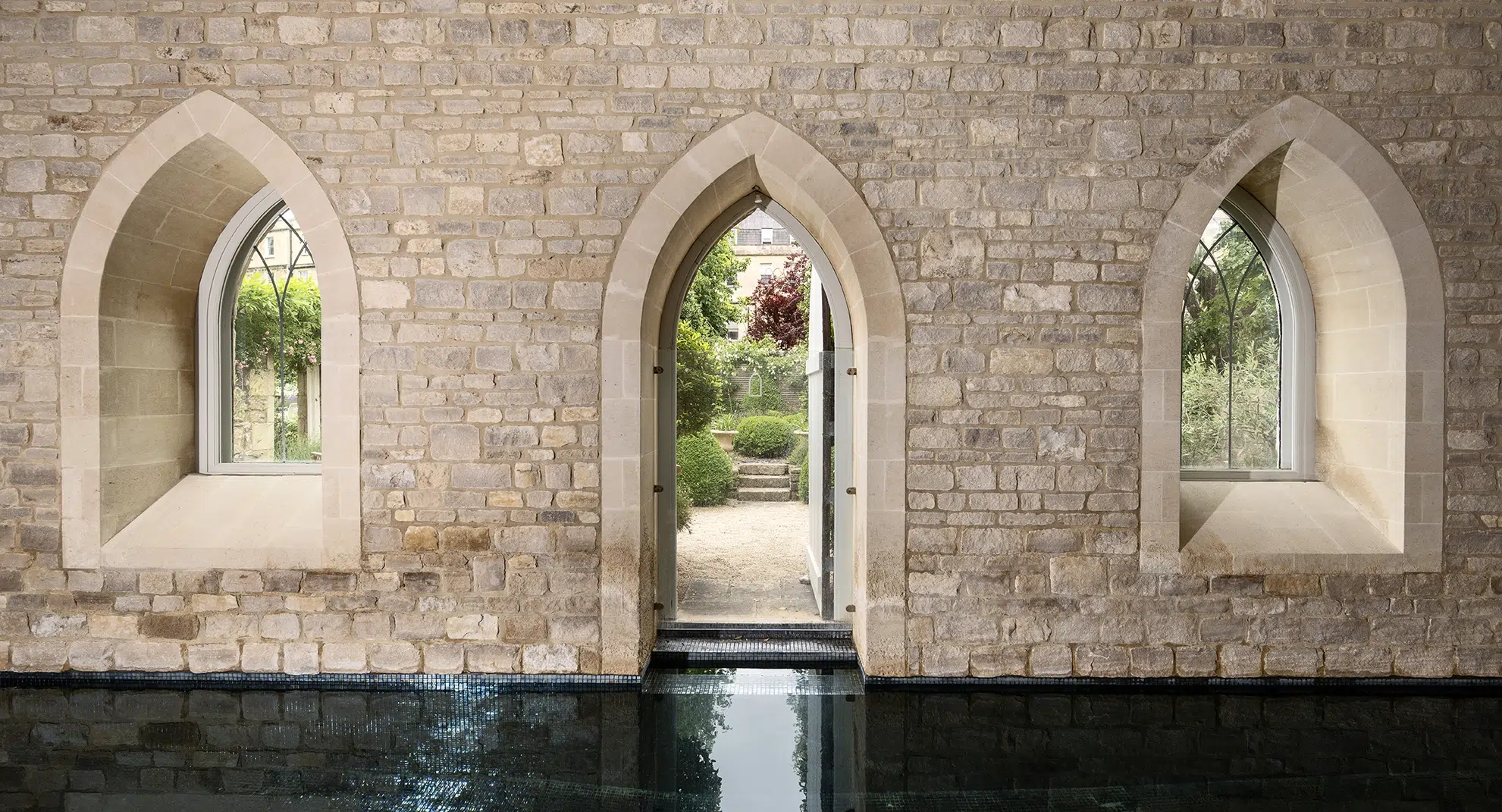
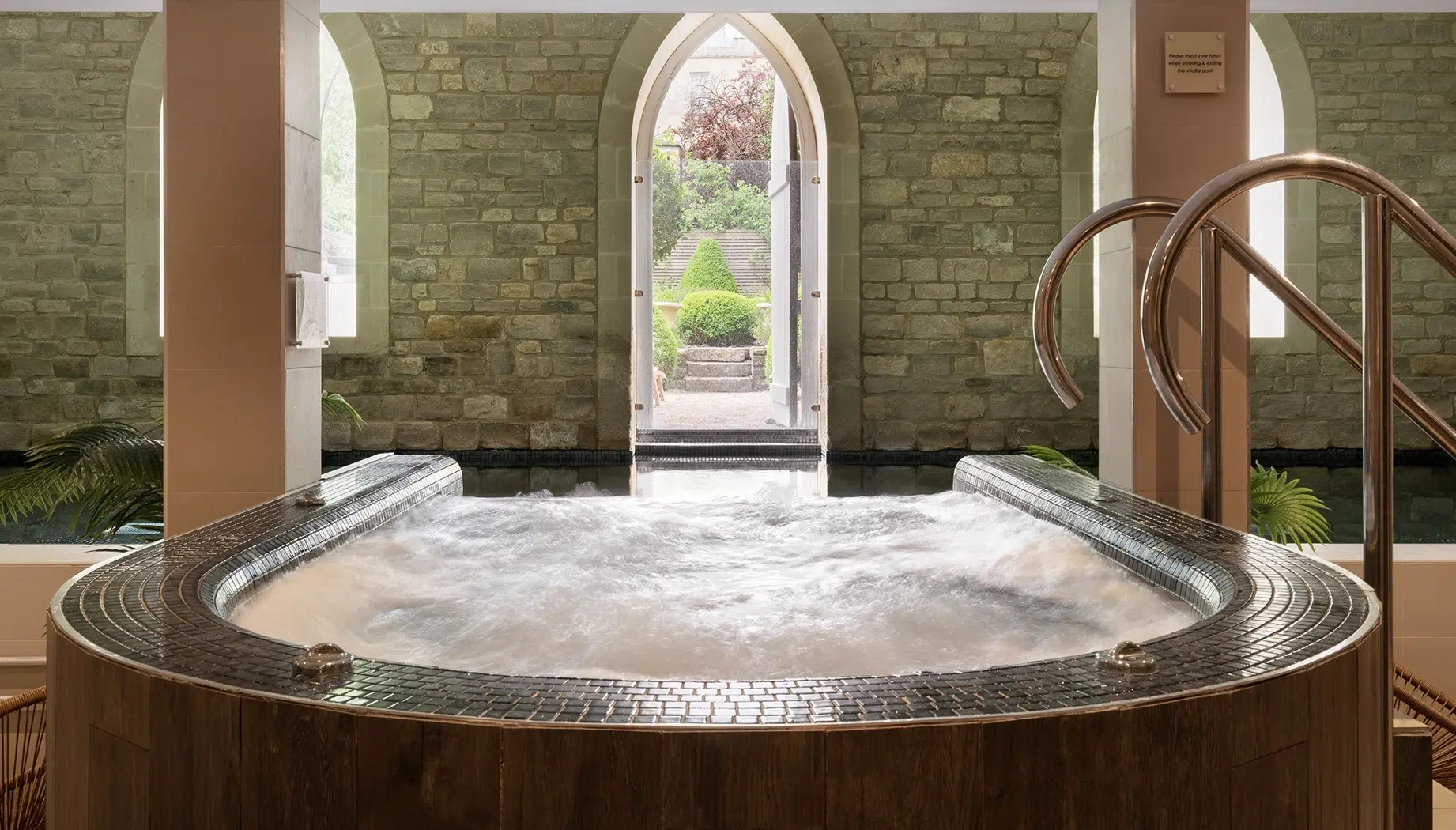
The spa is centered around a stone-lined pool area illuminated by tall, chapel-like windows. A 12-meter heated relaxation pool forms the heart of the space, complemented by a vitality pool with massage jets, sauna, steam room, and a well-appointed gym. Treatment rooms offer a broad selection of therapies using natural and vegan ingredients, and we chose the 60-minute Restorative Ritual, a deeply relaxing treatment designed to release tension through the face, neck, and head while incorporating soothing Gua Sha techniques.
After several days of walking Bath’s cobbled streets, climbing its hills, and negotiating winter weather, it was exactly the sort of treatment one hopes for but does not always find. Perhaps it is the knowledge that people have been coming here in search of restorative waters for more than two millennia, or perhaps it is simply that, after an hour beneath warm water and skilled hands, the outside world seems considerably less urgent. Either way, the experience provided a fitting conclusion to our stay.
The Royal Crescent Hotel & Spa succeeds because it does not attempt to modernize Bath at the expense of its history. Instead, it allows the architecture, gardens, rituals, and traditions of the city to remain part of the experience while introducing the comforts contemporary travelers expect. There are grander hotels, newer hotels, and properties that speak far more loudly about luxury, but the Royal Crescent has little need for theatrics. Its address has been making the point for more than 250 years.
Rooms: From approximately $550 per night, including breakfast
Address: 16 Royal Crescent, Bath, Somerset BA1 2LS, United Kingdom
Telephone: +44 1225 823 333
Email: info@royalcrescent.co.uk
Website: royalcrescent.co.uk