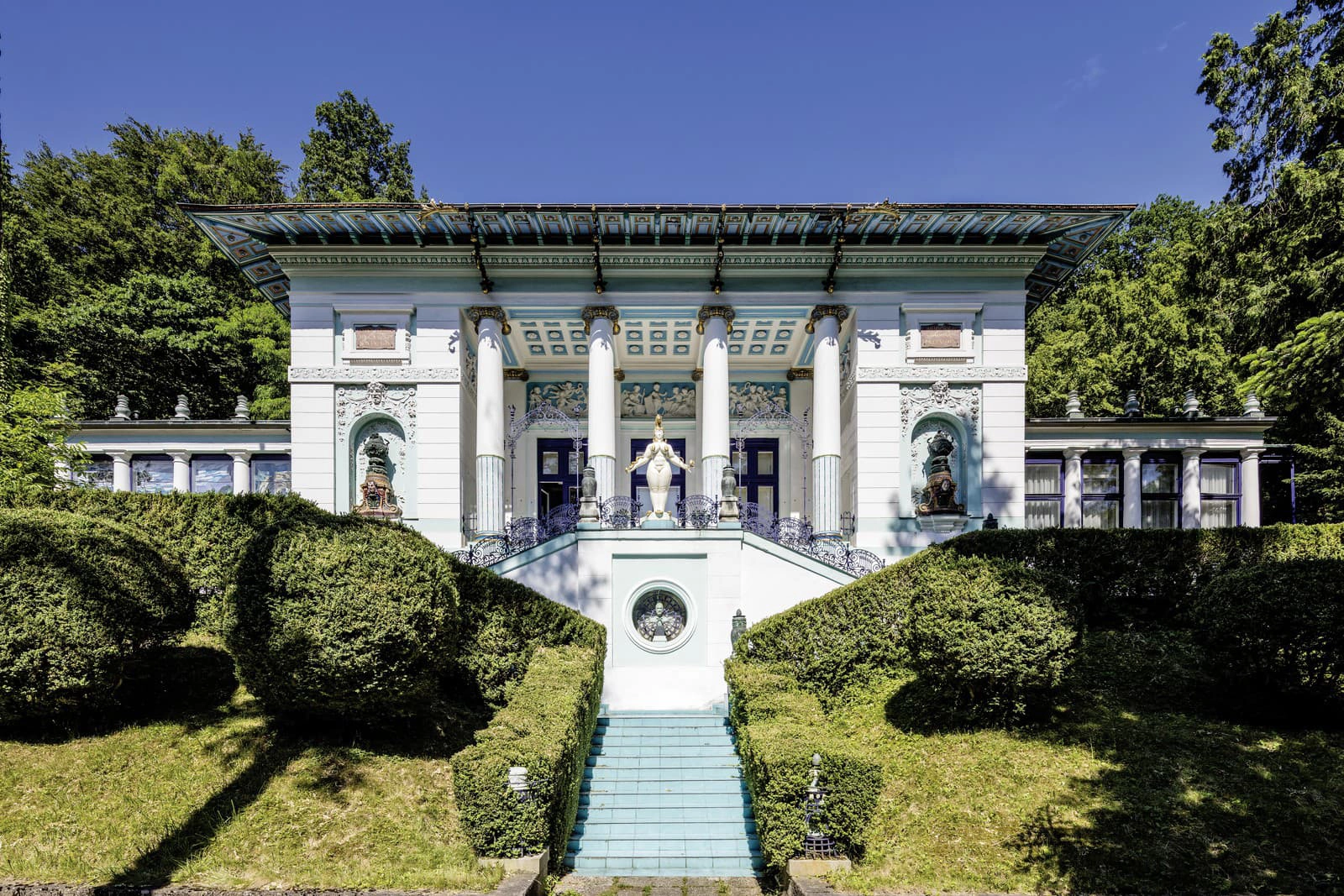
Tucked into the wooded hills of Vienna, behind an elegant façade and a sweeping garden approach, the Otto Wagner Villa is a remarkable residence where architecture, art and history converge. Once the summer home of one of Austria’s most influential architects, it now offers an intimate glimpse into a world of artistic ambition and extraordinary imagination.
Vienna is a city celebrated for its imperial palaces, grand museums and architectural landmarks, yet some of its most intriguing discoveries lie beyond the familiar avenues of the historic centre. In the leafy district of Hütteldorf, on the western edge of the city, a striking white villa emerges from its green surroundings with an almost theatrical presence. Quietly removed from the bustle of central Vienna, the Otto Wagner Villa feels like a discovery from another era, its imposing staircase, symmetrical architecture and landscaped setting offering a glimpse into the private world of one of Austria’s most celebrated architects.
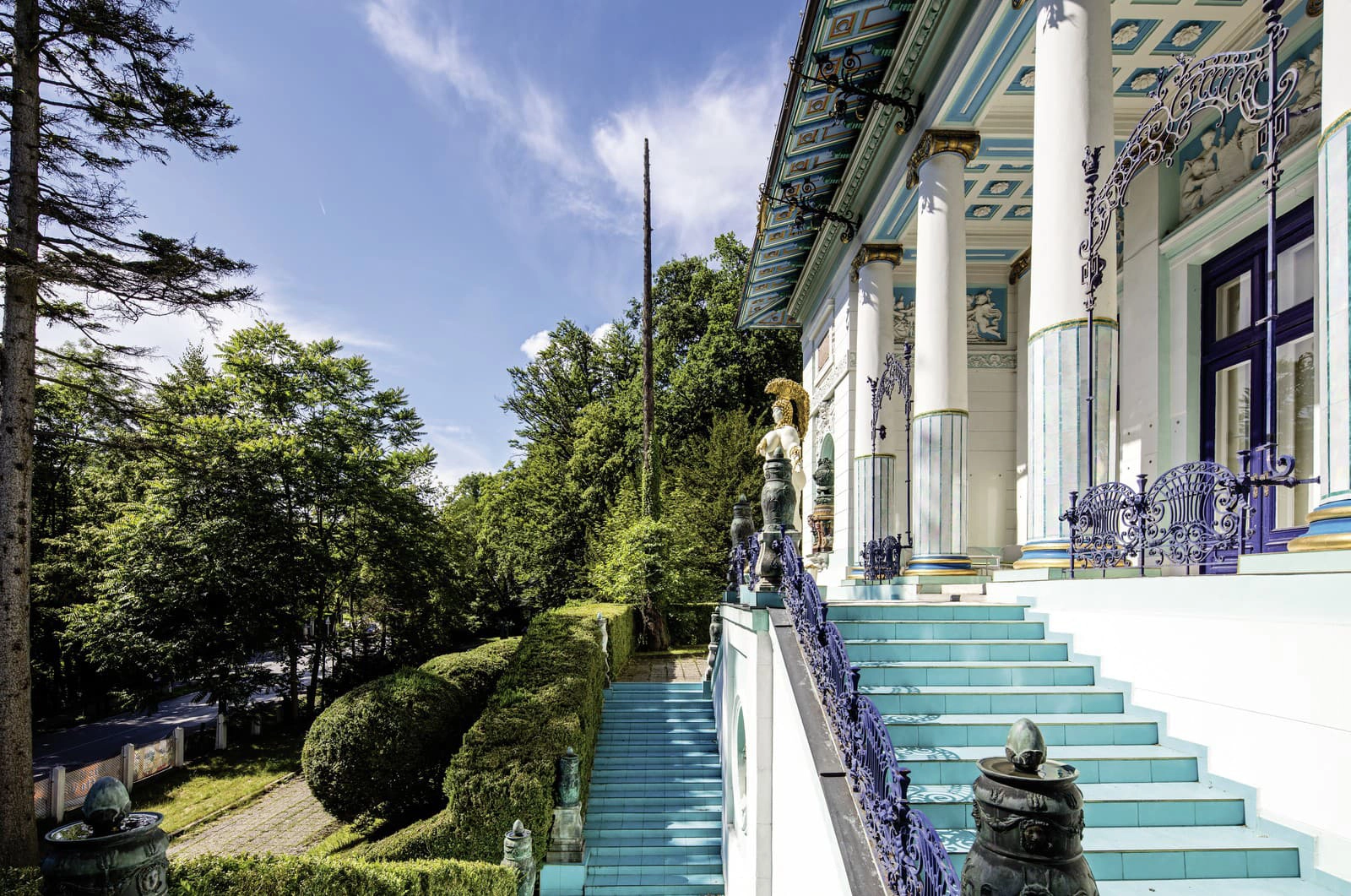
Designed and built between 1886 and 1888, the residence was conceived by Otto Wagner as a summer home for himself and his family. At the time, Hütteldorf was a desirable suburb bordering the Vienna Woods, providing an appealing retreat from the increasingly sophisticated urban life of the Austrian capital. Wagner drew inspiration from the Italian Renaissance architect Andrea Palladio, translating the classical villa tradition into a distinctive residence that reflected his own architectural ambitions. The result was a composition of elegant symmetry, a prominent central hall, two adjoining wings and a grand staircase that gives the building much of its ceremonial character.
The villa’s design was an expression of the architect’s appreciation for classical proportions and architectural theatre. Its formal exterior, broad colonnaded entrance and relationship with the surrounding landscape establish a sense of grandeur without the scale of an imperial palace. The property was intended to be more than a family residence; it became a setting for entertaining, artistic exchange and the social life of Vienna’s cultural elite. During its celebrated years, guests included influential figures such as Gustav Klimt, Adolf Loos and Gustav Mahler, making the villa an important meeting place within the city’s artistic circles.
Yet the building’s history is not confined to its original owner. In 1911, Wagner sold the property to theatre entrepreneur Ben Tiber, after which it became known as the Ben Tiber Villa. Its fortunes changed dramatically during the Nazi period, when the Jewish owner’s property was expropriated. The villa subsequently passed through a difficult chapter in its history, losing much of its former standing and eventually facing serious deterioration. What had once been a celebrated residence risked disappearing from Vienna’s architectural landscape altogether.
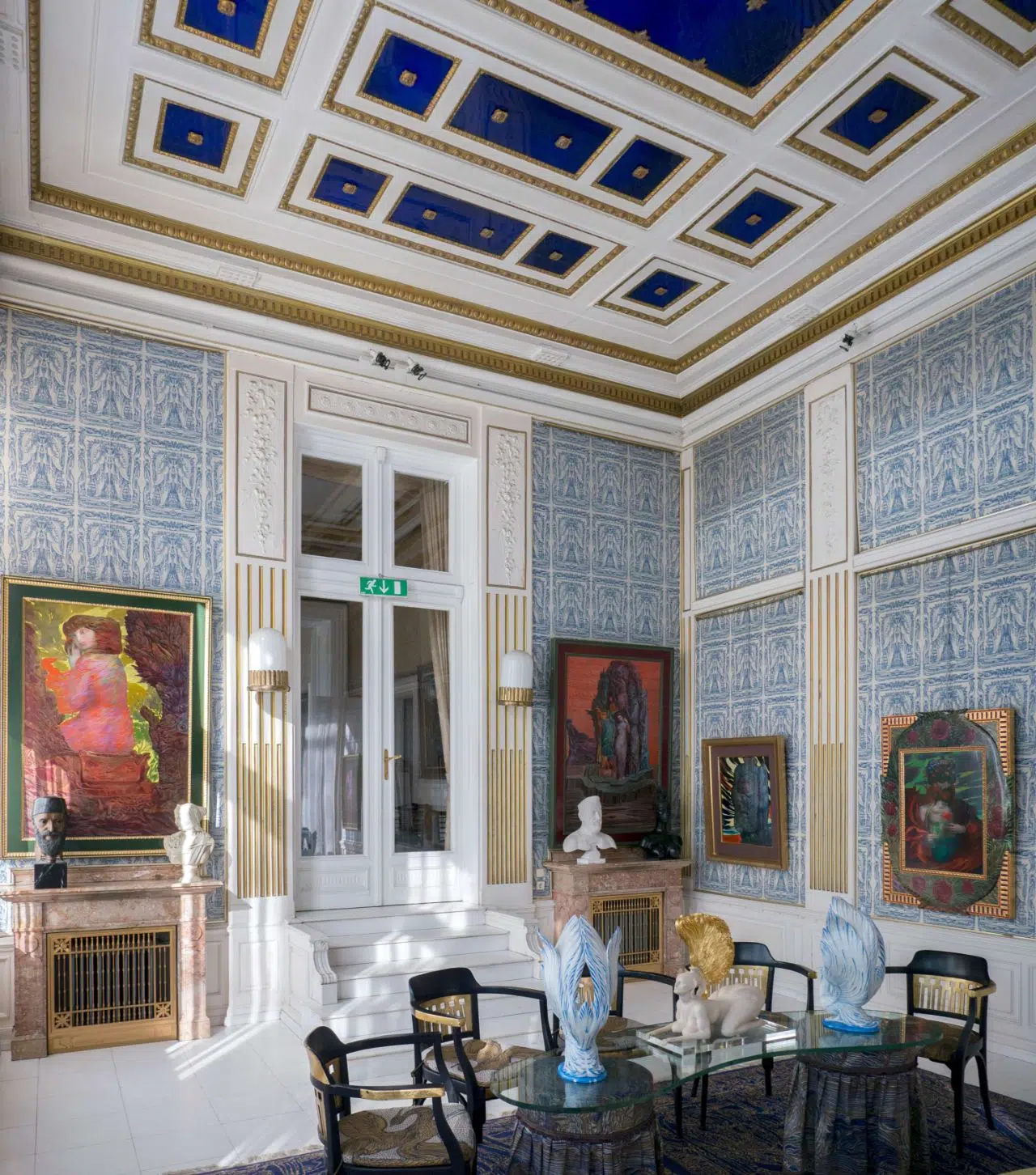
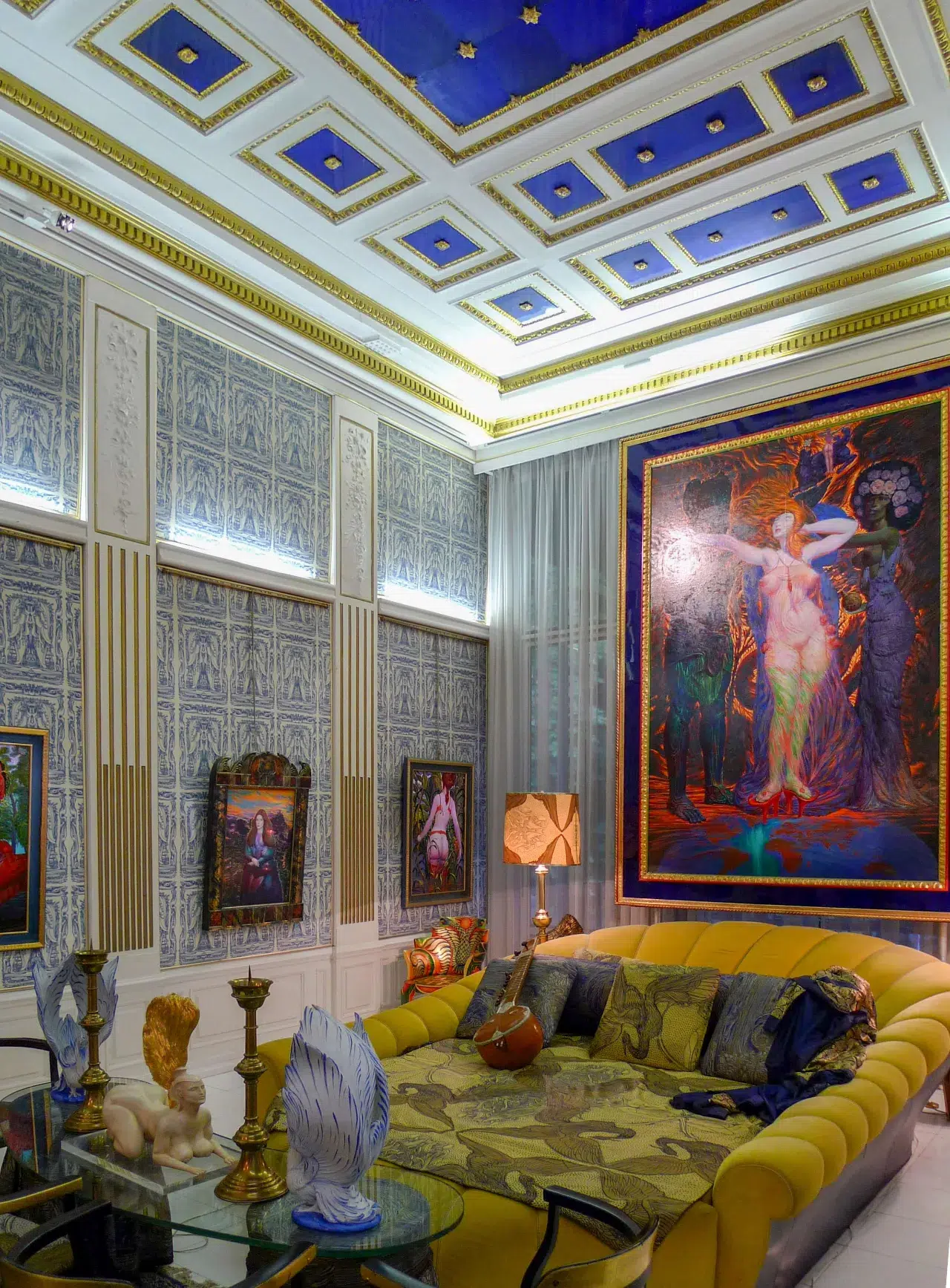
A new chapter began in 1972, when Austrian artist Ernst Fuchs acquired the neglected property and undertook an ambitious restoration. One of the leading figures of Fantastic Realism, Fuchs brought a markedly different artistic sensibility to the building, introducing an extraordinary visual world of color, ornament and imaginative detail. His intervention preserved the villa while giving it a new identity, creating an intriguing dialogue between Wagner’s classical architectural vision and Fuchs’s more expressive artistic universe. In 1988, the residence opened to the public as the Ernst Fuchs Museum, allowing visitors to experience the building and explore the artist’s work within its remarkable interiors.
Inside, the atmosphere is a departure from the restrained elegance of Wagner’s original architectural language. Rich decorative surfaces, elaborate artistic details, and works by Fuchs introduce an almost fantastical dimension to the rooms. Among the most notable spaces is the Adolf Böhm Hall, distinguished by its remarkable stained-glass windows and decorative treatment. The windows, created by artist Adolf Böhm around the turn of the twentieth century, provide a particularly compelling connection to the villa’s earlier artistic history and its relationship with Vienna’s creative community.
The museum brings together paintings, drawings, sculptures and examples of applied art associated with Ernst Fuchs, while the architecture itself remains an essential part of the experience. Rather than presenting a residence preserved in a single historical moment, the villa reveals several layers of Vienna’s cultural past. Wagner’s original ambitions, the property’s later ownership, the disruption of the twentieth century and Fuchs’s artistic restoration all contribute to its singular character.
There is also something especially appealing about its location. Set away from the city’s principal tourist routes, the villa offers a different perspective on Vienna, one that rewards visitors willing to venture into its quieter western districts. The surrounding greenery and elevated setting create a sense of separation from the capital’s more familiar attractions, while the architecture provides an unexpectedly dramatic encounter. It is a destination for those who appreciate places with a story, where the experience is shaped as much by the building’s past as by the art and design found within it.
Today, the Otto Wagner Villa, home to the Ernst Fuchs Museum, stands as a testament to the enduring value of architectural preservation and artistic imagination. Its history is neither simple nor static, and that is precisely what makes it so compelling. Within its walls, the classical discipline of Wagner’s architecture meets the expressive vision of Fuchs, creating an experience that feels distinctly Viennese while remaining unlike almost anywhere else in the city.
For travelers seeking a more intimate encounter with Vienna, this remarkable villa deserves a place on the itinerary. It is not merely another historic building to admire, but a fascinating meeting point of architecture, art, and history, hidden among the trees at the edge of the Vienna Woods.