Separated by a narrow stretch of Mediterranean water, Corsica and Sardinia offer contrasting interpretations of the island escape, from secluded anchorages and historic harbors to the refined pleasures of the Costa Smeralda.
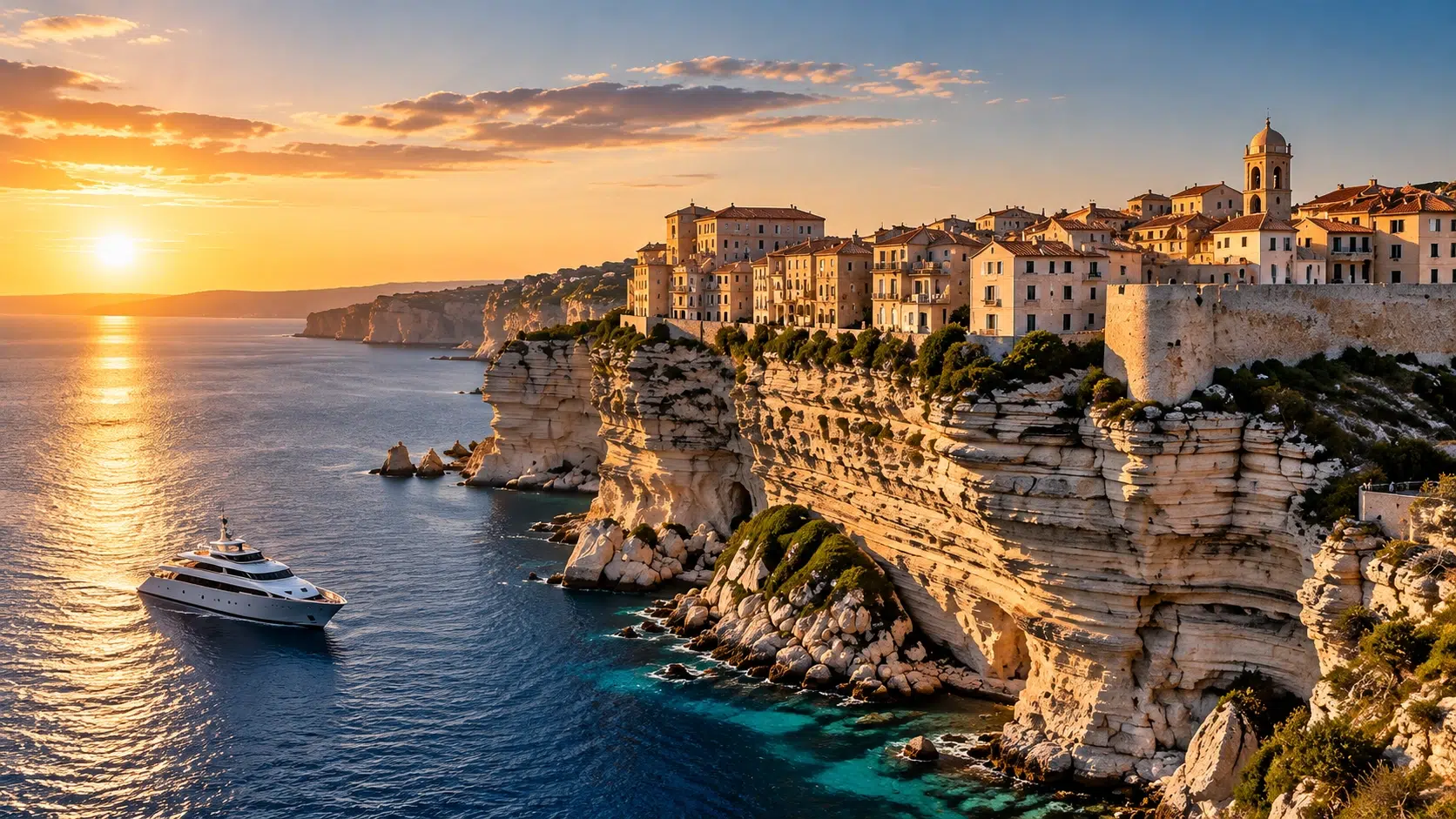
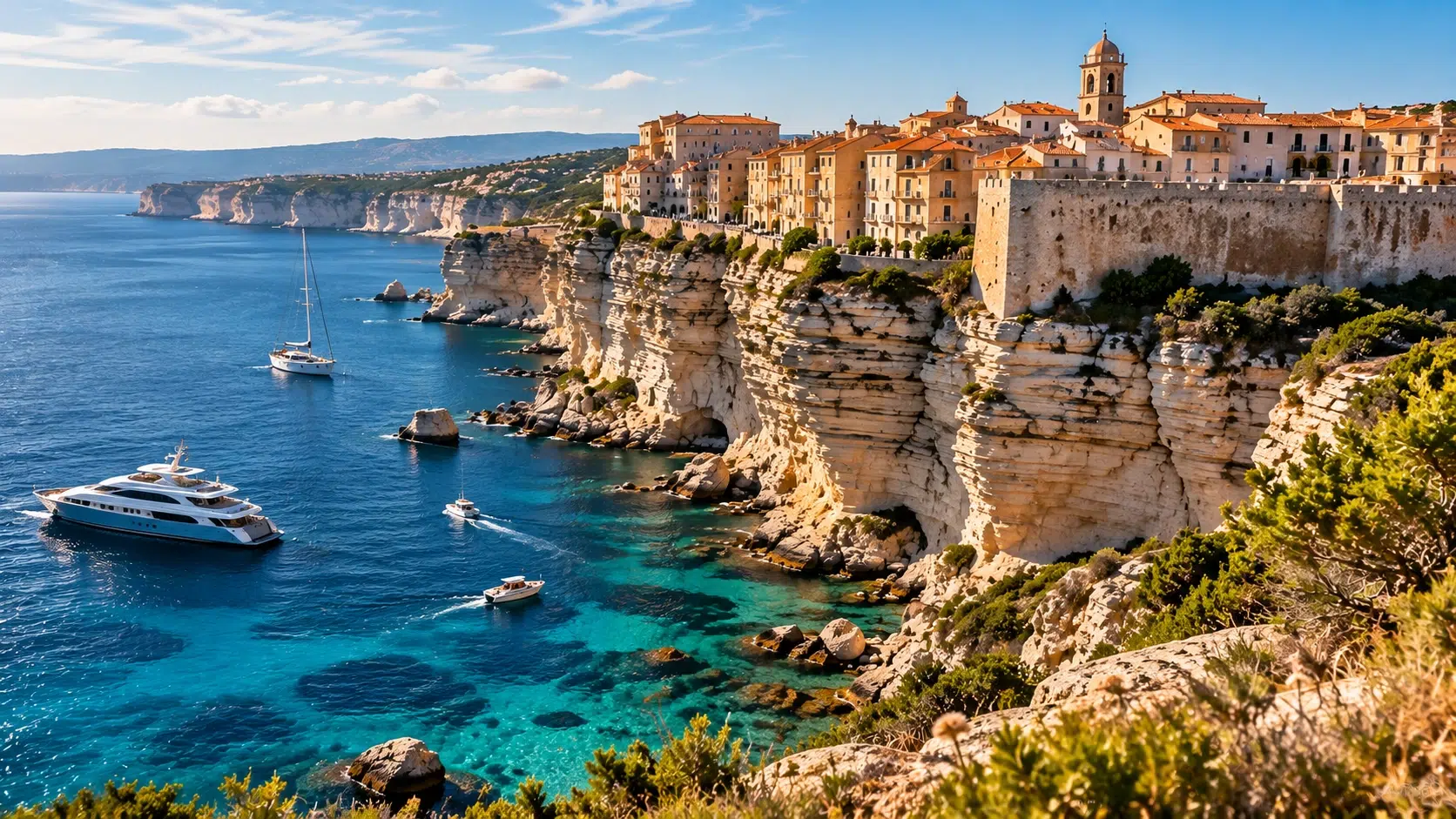
In Bonifacio, the sea meets the land with extraordinary theatricality. White limestone cliffs rise almost vertically from the Mediterranean, supporting a medieval town whose pale buildings seem precariously balanced above the water. Across the Strait of Bonifacio, Sardinia presents an entirely different spectacle: sculpted granite headlands, translucent coves, and the polished waterfront of Porto Cervo, where some of the world’s most impressive yachts gather each summer. The two islands lie just 11 kilometers apart at their closest point, yet their identities could scarcely be more distinct.
For travelers exploring the western Mediterranean by private yacht, Corsica and Sardinia represent one of Europe’s most compelling pairings. Both offer extraordinary coastlines, exceptional regional gastronomy, and a relationship with the sea that has shaped centuries of island life. But where Corsica reveals its character through wild landscapes, fiercely preserved traditions, and an almost deliberate resistance to excess, Sardinia moves between untamed natural beauty and the sophisticated resort culture that has made its northeastern coast an international summer destination.
The distinction is not simply French versus Italian, nor understated versus glamorous. It is a question of what luxury means when the familiar conventions of grand hotels and exclusive marinas give way to something more personal: the pleasure of arriving somewhere extraordinary, and discovering a place that has little interest in becoming anything other than itself.
Corsica makes its first impression through its remarkable geography. The island’s mountainous interior descends toward a coastline of extraordinary contrasts, where secluded beaches interrupt dramatic cliffs and fishing villages occupy harbors that appear largely unchanged by time. Along the western shore, the Gulf of Porto offers one of the Mediterranean’s most memorable landscapes. The Calanques de Piana, Gulf of Girolata, and Scandola Nature Reserve form a UNESCO World Heritage Site, celebrated for its striking geological formations and marine biodiversity.
Here, volcanic rock rises in improbable formations above clear water, its reddish tones shifting with the light. Sea eagles inhabit the protected landscape, while small inlets and inaccessible caves lend the coastline an atmosphere of remoteness. Girolata, a tiny settlement reached by boat or on foot, offers a glimpse of Corsica at its least hurried. There are few experiences more evocative of Mediterranean travel than approaching such a place from the water, with the mountains forming an immense natural backdrop.
The island’s southern coast reveals another dimension. Bonifacio, perched above its sheltered natural harbor, is among the most dramatically situated towns in Europe. Its narrow streets, weathered buildings, and ancient fortifications speak to centuries of maritime history, while the harbor below provides an intimate contrast to the grandeur of the cliffs. Farther north, Calvi combines a commanding Genoese citadel with a sweeping bay and a waterfront atmosphere that becomes particularly animated during the summer months.
Corsica’s attraction lies in this balance between beauty and restraint. The island has luxury hotels, fine restaurants, and sophisticated coastal addresses, particularly around Porto-Vecchio, but its greatest appeal is not a concentration of fashionable establishments. It is the freedom to exchange a leisurely lunch beside the harbor for an afternoon discovering an isolated stretch of coastline, or to leave the sea altogether and explore the villages and mountains that define its interior.
Sardinia approaches the art of Mediterranean living from another direction. The Costa Smeralda, stretching along the island’s northeastern shore, is among Europe’s most recognizable luxury destinations. Its crystalline bays and sculptural granite coastline provide the setting for Porto Cervo, an enclave whose identity is closely associated with international yachting, elegant summer residences, and a carefully cultivated sense of Mediterranean glamour.
The modern history of this celebrated coastline is inseparable from Prince Karim Aga Khan IV, whose vision helped transform the region during the 1960s. In 1967, he joined fellow sailing enthusiasts in founding the Yacht Club Costa Smeralda, an institution that would become an important presence in international competitive sailing. Its legacy helped establish Porto Cervo as something more enduring than a fashionable seasonal harbor: a destination with a distinctive nautical identity.
Yet to define Sardinia solely by the Costa Smeralda would be to overlook much of its fascination. Beyond Porto Cervo’s boutiques, waterfront terraces, and celebrated marina, the island remains extraordinarily varied. Its eastern coast is marked by limestone cliffs and secluded coves, while its mountainous interior contains villages where pastoral traditions have endured for generations. The western shore around Alghero reveals traces of Catalan influence, and the southern reaches offer a different rhythm altogether, far removed from the international summer circuit.
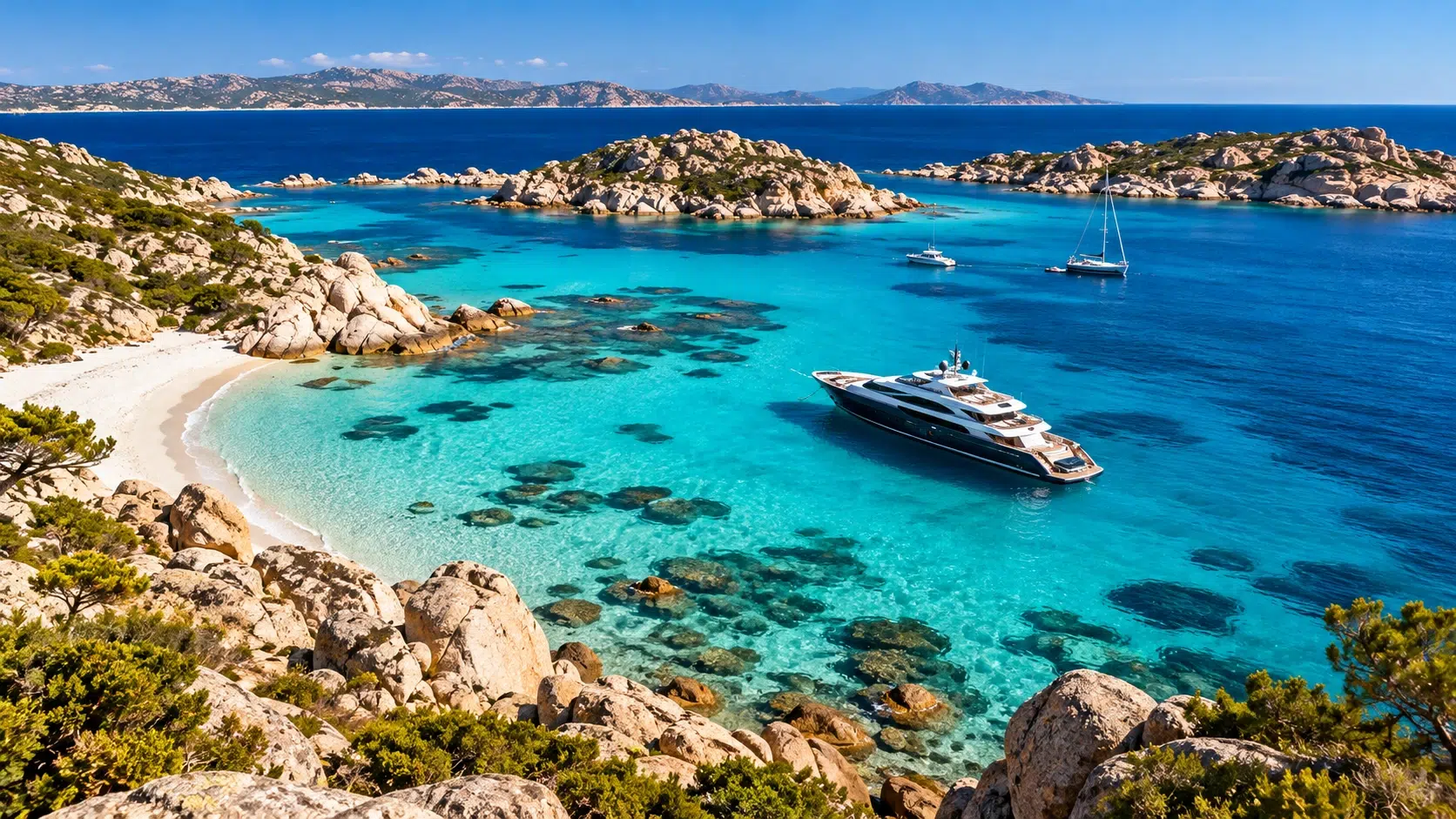
For yacht travelers, one of Sardinia’s most compelling attractions lies northeast of the main island. The La Maddalena Archipelago, a protected national park, is a constellation of granite islands, narrow channels, and exceptionally clear waters. Its pale beaches and sheltered passages are among the most beautiful in the Mediterranean, although their fragile environment demands careful navigation. Permits and restrictions govern activities in the park, including sailing, mooring, and anchoring in designated areas.
The waters between southern Corsica and northern Sardinia offer the possibility of experiencing both islands within a single itinerary. A voyage might combine Bonifacio’s dramatic harbor with the islands of the Maddalena archipelago before continuing toward Porto Cervo. Yet the Strait of Bonifacio is not a passage to be approached casually. Strong winds, exposed waters, and environmental protections make experienced planning essential, particularly for larger vessels or itineraries involving sensitive marine areas.
The most rewarding charters embrace the geography rather than attempt to conquer it. A knowledgeable captain can shape the journey around weather conditions, suitable anchorages, and the particular pleasures of each coast. In protected waters, the privilege of arriving by yacht is accompanied by a responsibility to respect navigation restrictions and the fragile Posidonia seagrass meadows that help sustain the Mediterranean’s marine ecosystems.
Beyond the water, the islands’ differences become most apparent at the table. Corsican cuisine is deeply connected to its mountainous terrain, pastoral traditions, and agricultural heritage. Chestnuts, cured meats, wild boar, olive oil, and aromatic herbs form part of a culinary identity that owes as much to the land as it does to the sea. Among the island’s most distinctive products is brocciu, a traditional fresh whey cheese made from sheep’s or goat’s milk, prized for its delicate flavor and remarkable versatility.
Brocciu appears in everything from savory preparations to fiadone, a traditional Corsican cheesecake often scented with citrus. It speaks to a culinary culture in which local ingredients are valued not for their rarity, but for their connection to place. The island’s wines offer a similarly individual expression, with grape varieties such as Niellucciu, Sciaccarellu, and Vermentinu reflecting its distinctive terroir.
Corsica’s fine-dining scene also rewards exploration. In Porto-Vecchio, Casadelmar brings contemporary culinary sophistication to the island’s southern coast, while restaurants around Calvi and Bonifacio offer different interpretations of Mediterranean ingredients. The most memorable meals, however, need not involve elaborate tasting menus. A carefully prepared fish, a plate of local charcuterie, or a glass of Corsican wine overlooking a harbor can communicate the island’s character with equal eloquence.
Sardinian gastronomy offers an equally compelling journey, although its culinary traditions reflect the remarkable diversity of its landscape. Along the coast, seafood takes center stage, while inland communities continue to celebrate the dishes of the island’s pastoral heritage. Pane carasau, the famously thin and crisp Sardinian flatbread, accompanies everything from cheeses to substantial regional preparations, while pecorino and slow-roasted meats remain closely associated with rural cooking.
Among Sardinia’s most distinctive specialties are culurgiones, intricately folded pasta parcels associated with the Ogliastra region and traditionally filled with potato, pecorino, and mint. Their carefully pinched edges resemble an ear of wheat, transforming a humble preparation into a small expression of culinary craftsmanship. For dessert, seadas bring together pastry, cheese, and honey in a combination that captures the island’s taste for balancing richness with simplicity.
Sardinia’s wines add another dimension. Vermentino di Gallura is particularly associated with the island’s northeast, while Cannonau offers a fuller-bodied expression of Sardinian winemaking. Enjoyed alongside local food rather than as an exercise in prestige, these wines reveal the agricultural identity that continues to exist beyond the island’s glamorous coastal establishments.
The cultural differences between Corsica and Sardinia are equally revealing. Corsica’s history is visible in its Genoese watchtowers and fortified towns, reminders of a strategically important island shaped by successive Mediterranean powers. Calvi, Bonifacio, and the ancient settlement of Aléria offer different perspectives on its past, while the island’s distinctive language, music, and traditions testify to an identity that has survived political and cultural change.
Sardinia’s historical legacy reaches much further into antiquity. Scattered across its interior are the remains of the Nuragic civilization, whose monumental stone towers rank among the Mediterranean’s most remarkable prehistoric structures. At Su Nuraxi di Barumini, a UNESCO World Heritage Site, an extraordinary complex of defensive towers and surrounding structures provides evidence of a sophisticated Bronze Age society.
For visitors willing to venture beyond the coast, such places transform Sardinia from a beautiful holiday destination into something far more intriguing. The island’s archaeological sites, mountain villages, and traditional communities reveal a depth that contrasts sharply with the carefully composed elegance of its most fashionable resorts. The same island that welcomes extraordinary yachts also preserves monuments dating back thousands of years.
This duality shapes the islands’ evening atmospheres. Corsica tends toward a more informal interpretation of sophistication, with waterfront restaurants, intimate bars, and historic town squares providing the setting for long Mediterranean evenings. Bonifacio’s illuminated citadel and Calvi’s harbor possess a particular charm after dark, when the day’s maritime activity gives way to conversation and leisurely dining.
Sardinia, especially around Porto Cervo, offers a more conspicuously social summer scene. Elegant dining terraces, stylish bars, and gatherings aboard private yachts lend the Costa Smeralda a cosmopolitan atmosphere. Yet elsewhere on the island, evening life remains rooted in village piazzas, seaside promenades, and the quieter traditions of Mediterranean hospitality.
Choosing between the two ultimately depends on the pleasures one values most. Corsica appeals to travelers who favor dramatic scenery, cultural individuality, and a sense of exploration. Sardinia accommodates those seeking polished coastal living and sophisticated summer society, without sacrificing the possibility of discovering remote beaches, ancient settlements, and landscapes of exceptional beauty.
For the most discerning travelers, however, the distinction may be precisely what makes these neighboring islands so irresistible together. A morning spent beneath Bonifacio’s limestone cliffs and an evening overlooking the waters of Porto Cervo reveal two sides of a Mediterranean that continues to resist easy definition.
And perhaps that is the true privilege of exploring Corsica and Sardinia by sea: not the freedom to arrive somewhere inaccessible to others, but the opportunity to discover how two islands separated by so little water can offer entirely different ideas of an extraordinary life.