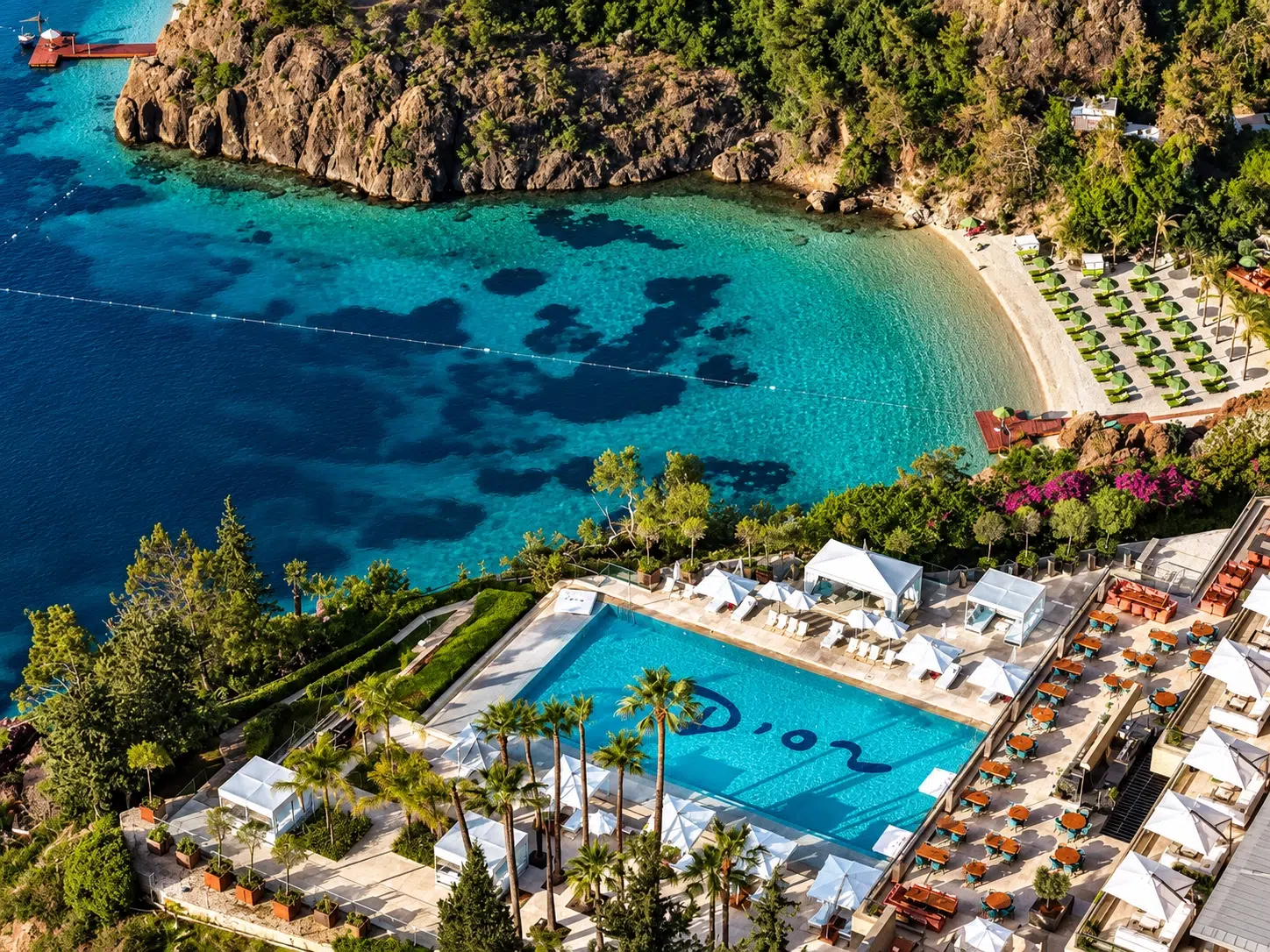
At D Maris Bay, where the Aegean meets the Mediterranean, Dior’s summer 2026 residency brought Jonathan Anderson’s creative vision to one of Turkey’s most extraordinary coastal retreats.
The first thing one notices about D Maris Bay is the setting. Pine-covered mountains fall toward a succession of secluded coves, their slopes reflected in water that shifts between turquoise and deep Mediterranean blue. There are no crowded promenades or sprawling beachfront developments to interrupt the view. Instead, this remarkable corner of Turkey’s Datça Peninsula offers something increasingly difficult to find along Europe’s fashionable coastlines: the sensation of being wonderfully removed from everything.
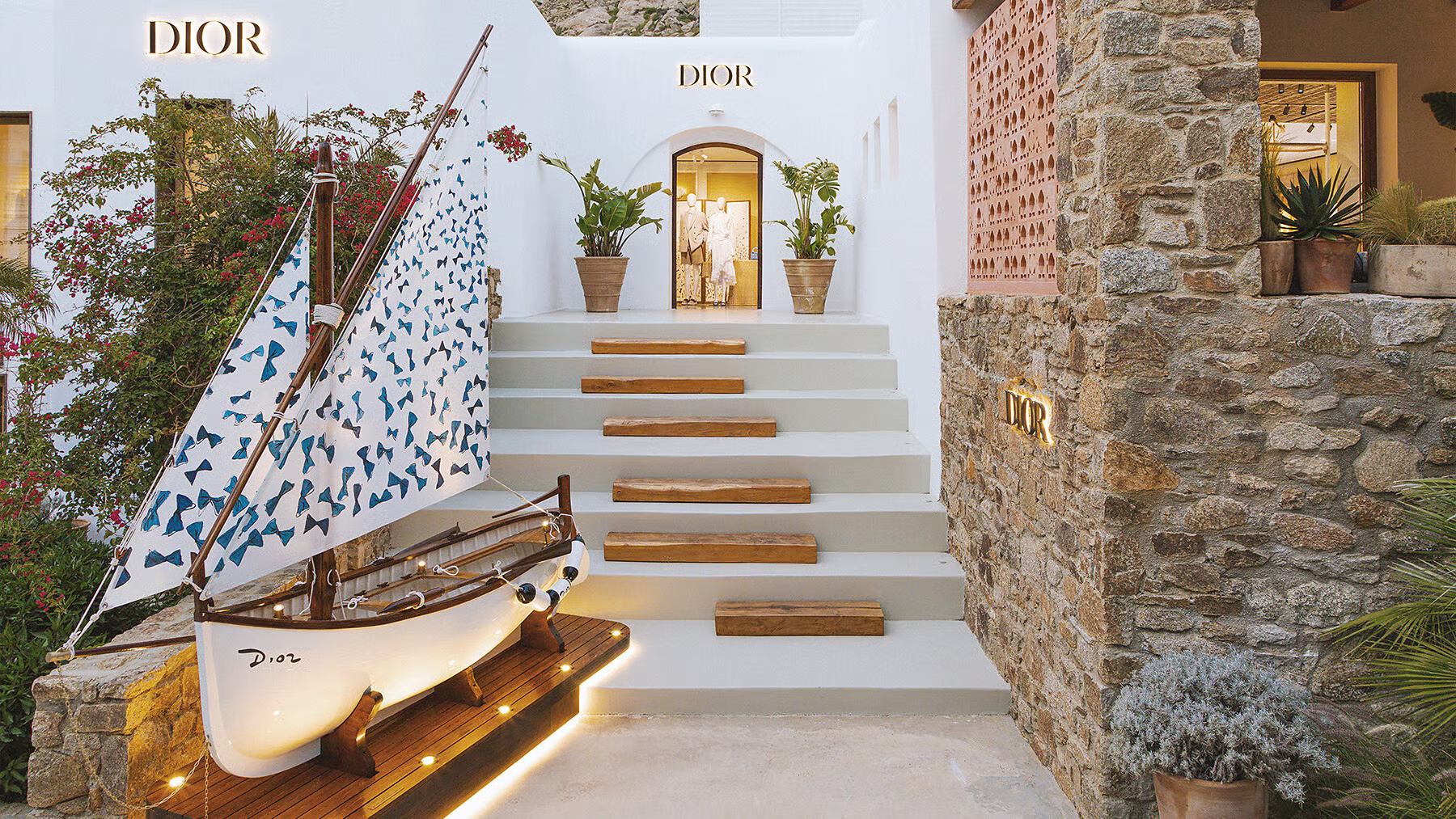
For summer 2026, however, that sense of seclusion acquired an unmistakably Parisian accent. Dior arrived at D Maris Bay with its Dioriviera collection, bringing the French fashion house’s distinctive visual language to a destination already celebrated for its extraordinary scenery and sophisticated hospitality. The collaboration was less about changing the resort’s identity than introducing another layer to its Mediterranean character, transforming familiar holiday rituals into an expression of fashion, design, and the art of living well.
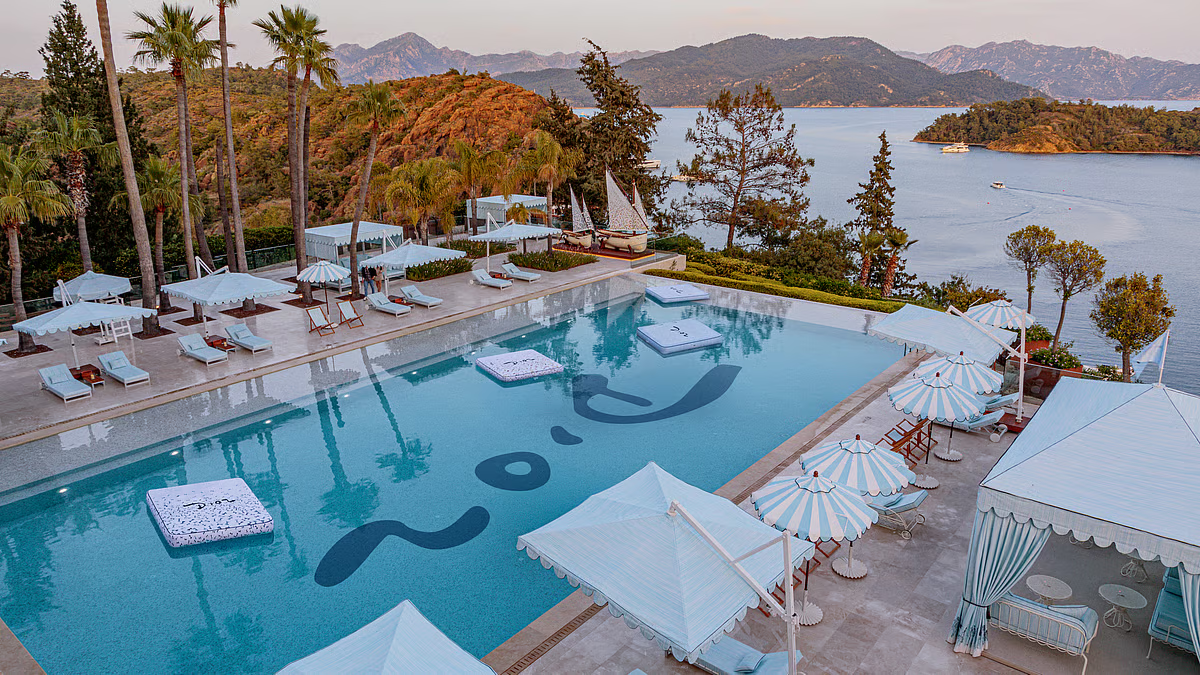
The setting could hardly have been more fitting. Positioned high above a sheltered bay in a protected landscape near Marmaris, D Maris Bay occupies an enviable stretch of Turkey’s Turquoise Coast. Five private beaches are scattered along its shoreline, connected by boat transfers, while the resort’s elevated position affords sweeping views across the meeting point of the Aegean and Mediterranean seas. Its location feels decidedly remote, yet the experience is anything but rustic.
Against this backdrop, Dior introduced a summer universe that extended beyond the traditional boutique. The Dioriviera residency brought the maison’s aesthetic into the leisure environment, with signature branding, coordinated poolside furnishings, and decorative elements designed to evoke the spirit of a Mediterranean holiday. The resort’s swimming pool became a particularly memorable centerpiece, its unmistakable Dior identity turning an ordinary afternoon beside the water into something resembling a scene from a fashion campaign.
What made the collaboration especially interesting was its timing. The 2026 Dioriviera collection marked the first interpretation of the line under Jonathan Anderson, whose appointment ushered in a new creative chapter for the historic house. Known for his ability to bring unexpected artistic references into contemporary fashion, Anderson approached the summer collection with a sense of playfulness, drawing upon Dior’s longstanding relationship with art, travel, and the natural world.
Among the collection’s inspirations was Christian Bérard, the French painter, illustrator, and theatrical designer whose friendship with Christian Dior helped shape the maison’s early visual identity. Bérard was closely associated with the original interiors of Dior’s historic headquarters at 30 Avenue Montaigne in Paris, including the Colifichets boutique, where the couturier first introduced a world of accessories beyond his celebrated garments.
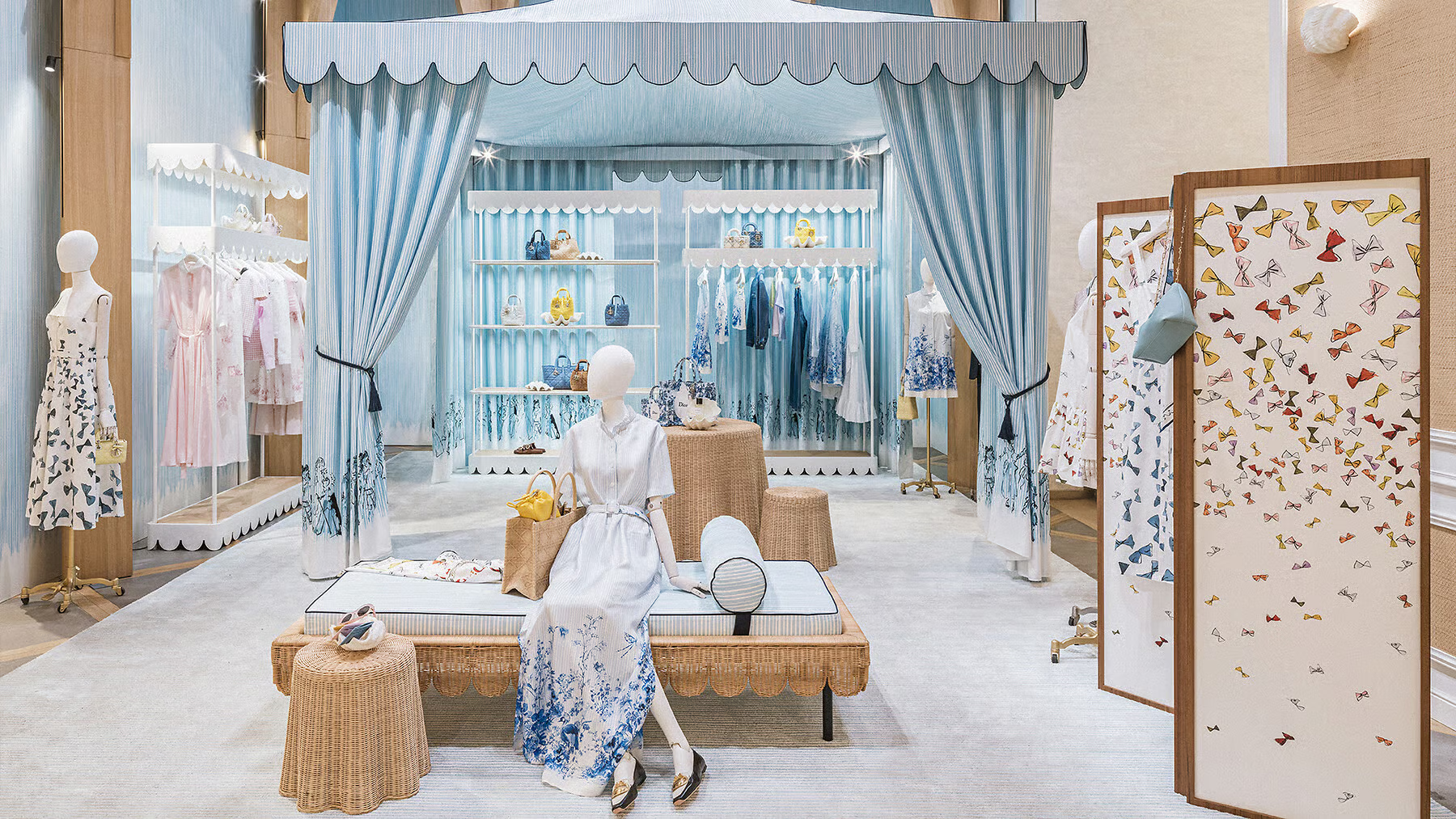
Anderson’s reinterpretation of that artistic heritage appeared throughout Dioriviera. The Dior Arabesque motif drew upon Bérard’s imaginative universe, while floral patterns, maritime references, and vibrant summer colors brought a lighter sensibility to the collection. Alongside ready-to-wear and accessories, Dior Maison extended the aesthetic into decorative objects, tableware, parasols, and outdoor furnishings, demonstrating how thoroughly the house has developed its identity beyond fashion itself.
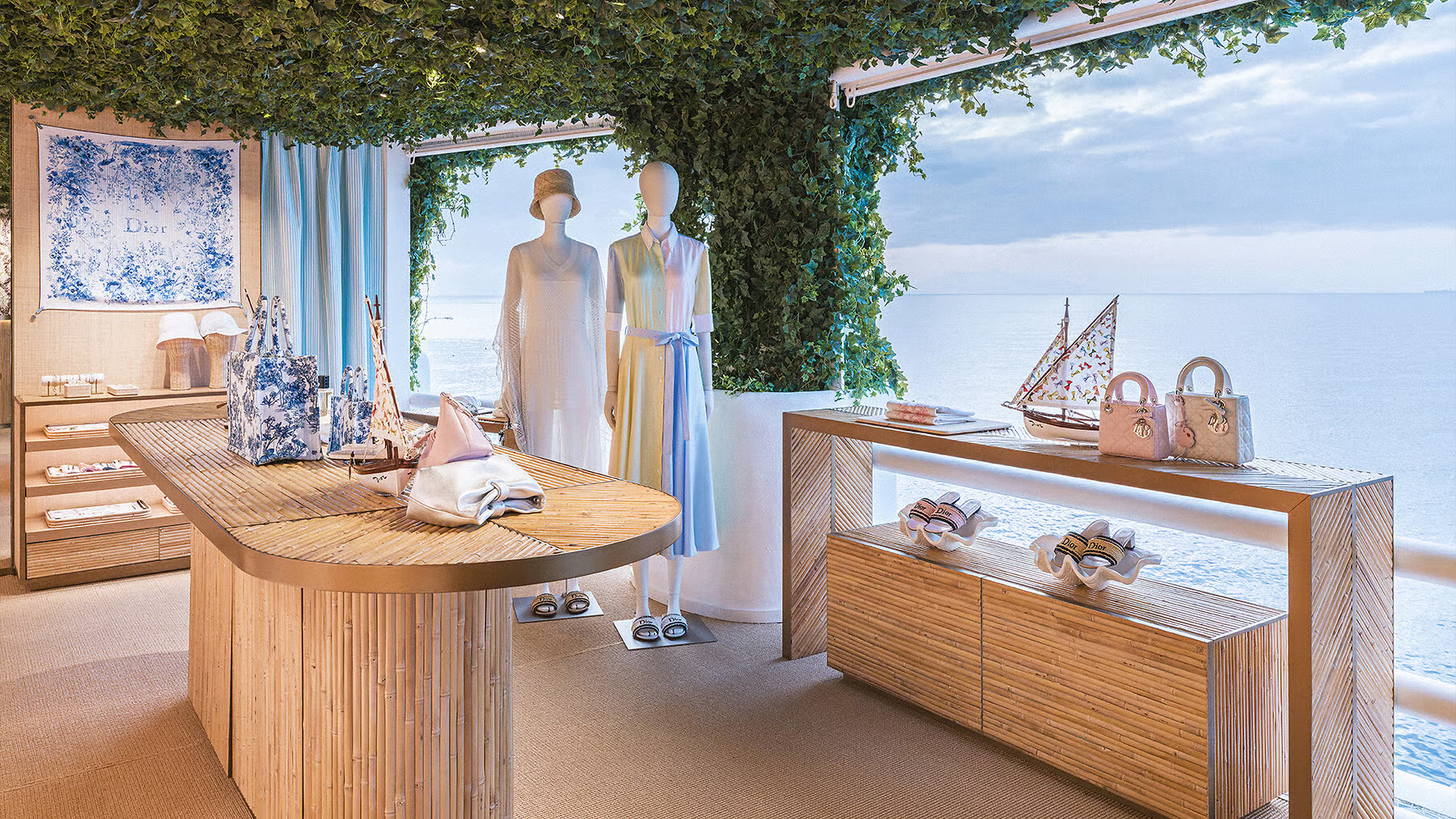
At D Maris Bay, these creative references found an especially natural setting. The juxtaposition of French design and the rugged Turkish coastline was part of the appeal: carefully composed decorative details set against a landscape that required no embellishment. Rather than reproducing the atmosphere of Saint-Tropez or Capri, the collaboration introduced Dior’s recognizable codes to a destination with an identity entirely its own.
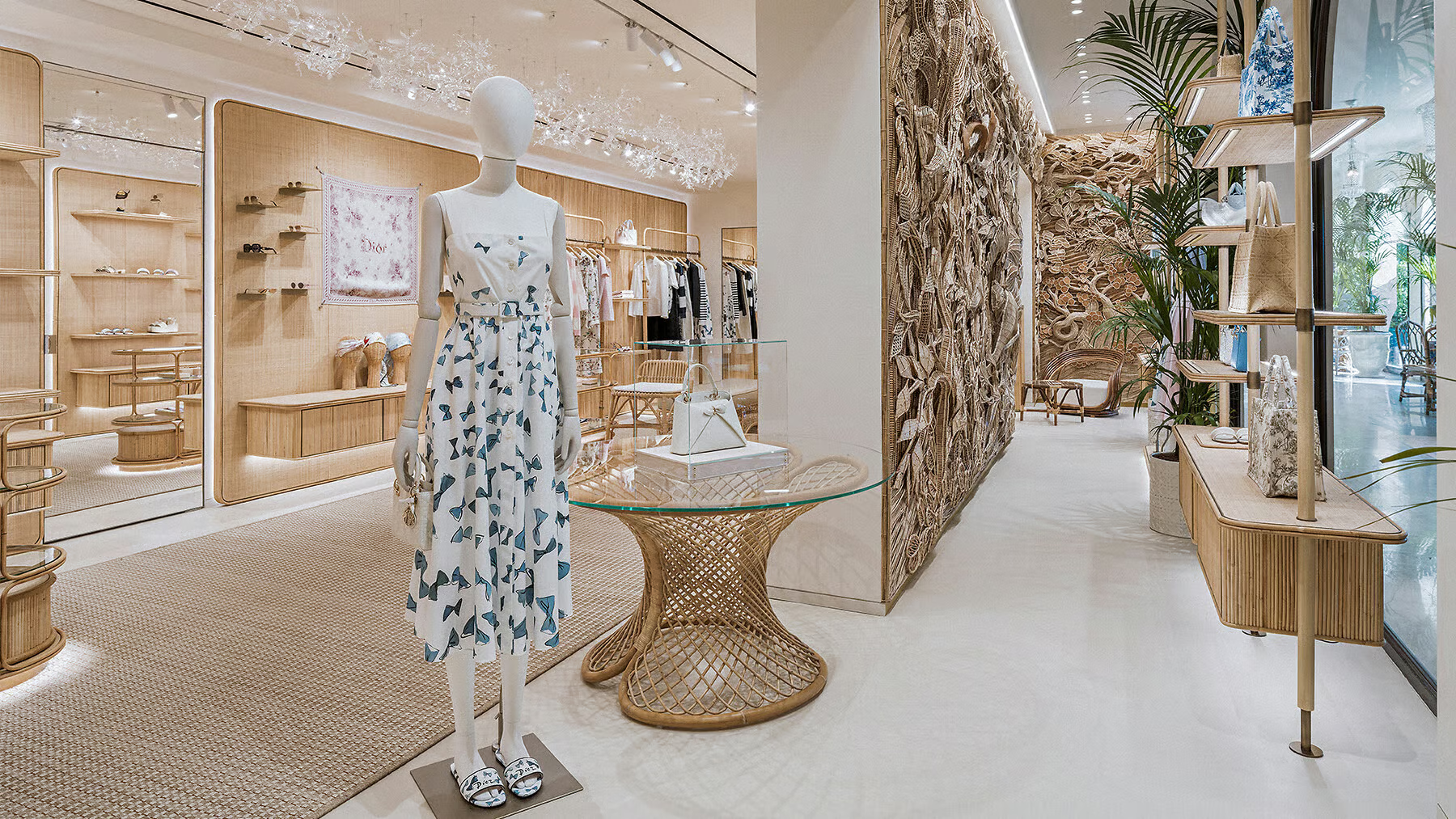
The resort’s dedicated Dioriviera boutique continued the experience indoors. Located on the property’s first floor, the boutique presented the collection against a restrained palette of beige, white, and cream, allowing the more expressive colors and patterns of the merchandise to command attention. It was a deliberate contrast to the intensity of the surrounding landscape, creating a moment of visual calm before guests returned to the brilliant Mediterranean sunshine.
Beyond the Dior collaboration, D Maris Bay’s appeal rests on an unusually varied collection of experiences. Days might begin with a private swim in one of the resort’s sheltered coves before moving to a leisurely lunch at La Guérite, whose Riviera-inspired atmosphere brings a livelier social dimension to the beachfront. Elsewhere, Zuma offers contemporary Japanese dining, while Manos celebrates Mediterranean seafood and Greek culinary traditions in an intimate waterside setting.
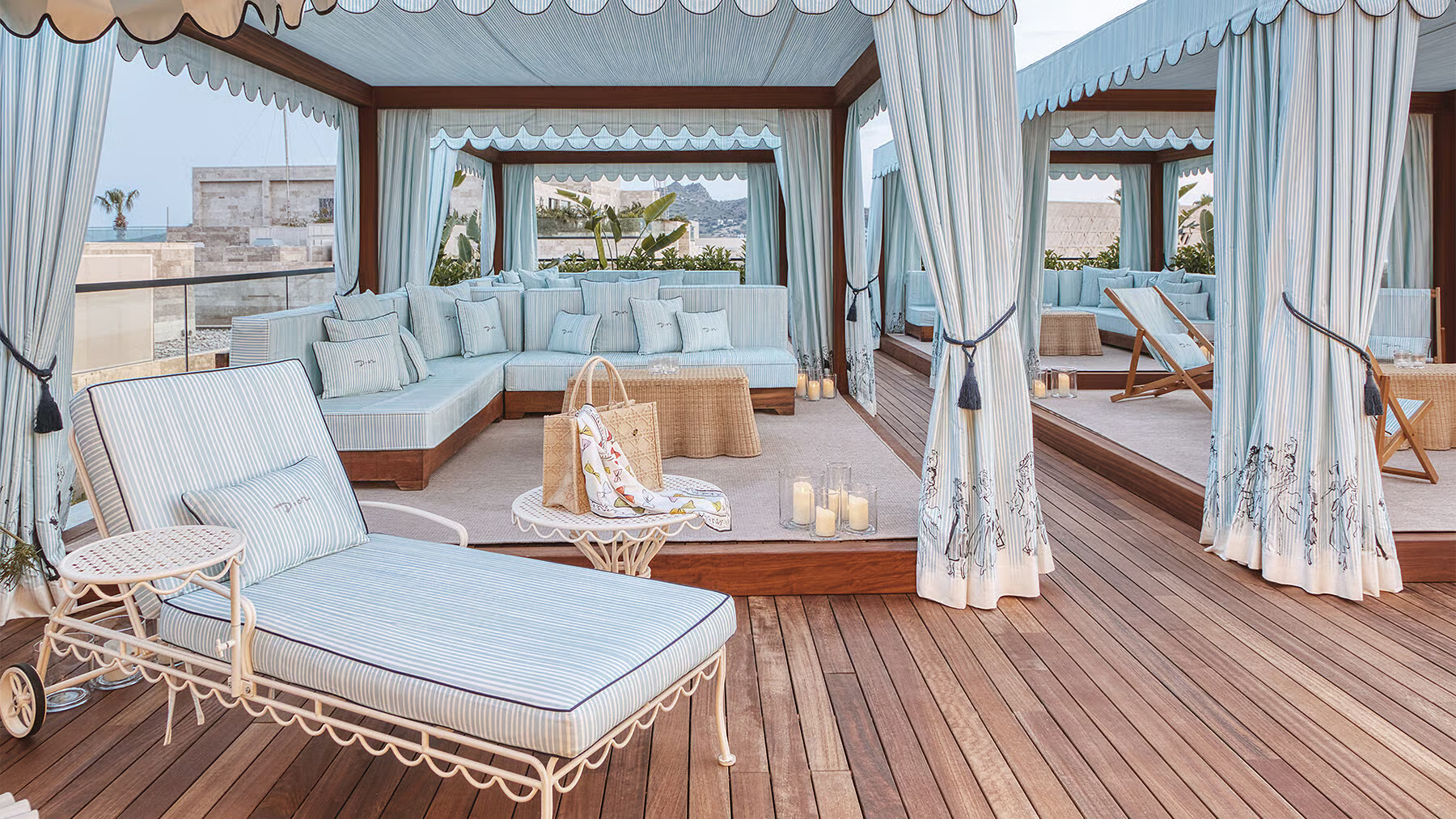
Each beach has its own distinct personality. The Bay Beach provides a spacious setting for swimming and family afternoons, while the adults-only Zuma x Silence Beach offers a more tranquil experience, free from music and unnecessary distractions. For travelers who prefer greater seclusion, private cabanas and quieter stretches of shoreline provide opportunities to enjoy the landscape at an entirely different pace.
Such contrasts are central to the resort’s character. D Maris Bay can be sociable and spirited, particularly as afternoon gives way to evening, but it also understands the appeal of privacy. The ability to move between these experiences without leaving the property is one of its greatest luxuries, and an important reason why the setting lends itself so naturally to an international fashion collaboration.
The Dior residency also reflected a broader evolution taking place within the luxury industry. The world’s leading fashion houses are increasingly interested in environments that allow clients to experience their identities beyond clothing, handbags, and accessories. Exclusive beach clubs, seasonal boutiques, branded hospitality experiences, and carefully conceived resort partnerships have become extensions of the fashion universe, offering a different form of connection with the customer.
For Dior, this approach has particular historical resonance. Christian Dior’s fascination with gardens, flowers, art, and beautiful places has long provided inspiration for the house’s collections. Anderson’s Dioriviera interpretation extended that heritage into a contemporary resort setting, where the boundaries between fashion and lifestyle became almost imperceptible.
There is, of course, a commercial dimension to such ventures. Luxury travelers represent a particularly desirable audience for fashion houses, and a seasonal installation at an exceptional resort provides an opportunity to introduce collections in surroundings that complement their intended use. Yet the most successful collaborations transcend the appearance of a temporary retail experience. They create an atmosphere in which the brand feels connected to the destination rather than merely imposed upon it.
That distinction is what made D Maris Bay an intriguing choice. Its geography, privacy, and established reputation for sophisticated leisure offered Dior something more compelling than a fashionable address. The surrounding landscape gave the collection a context, while the resort’s hospitality provided the setting in which its aesthetic could be experienced.
As the Mediterranean summer of 2026 receded, the collaboration left a broader impression of where luxury travel and fashion are heading. The attraction of such partnerships is no longer simply the opportunity to shop while on holiday. It is the increasingly sophisticated relationship between the places people choose to visit and the creative worlds they wish to inhabit.
At D Maris Bay, Dior’s summer interlude offered a particularly elegant illustration of that shift. The maison did not need to reinvent the Turkish Riviera or compete with the natural drama of the Datça Peninsula. Its contribution was more subtle: a distinctly Parisian perspective on the pleasures of summer, expressed in a place where the setting was already extraordinary.
And perhaps that is the most compelling form of luxury of all, not the transformation of a destination into something unfamiliar, but the art of revealing it through an entirely different lens.