The landmark Swiss hotel returns for winter with a place on The World’s 50 Best Hotels list, a major hospitality award, and a new chapter of design.
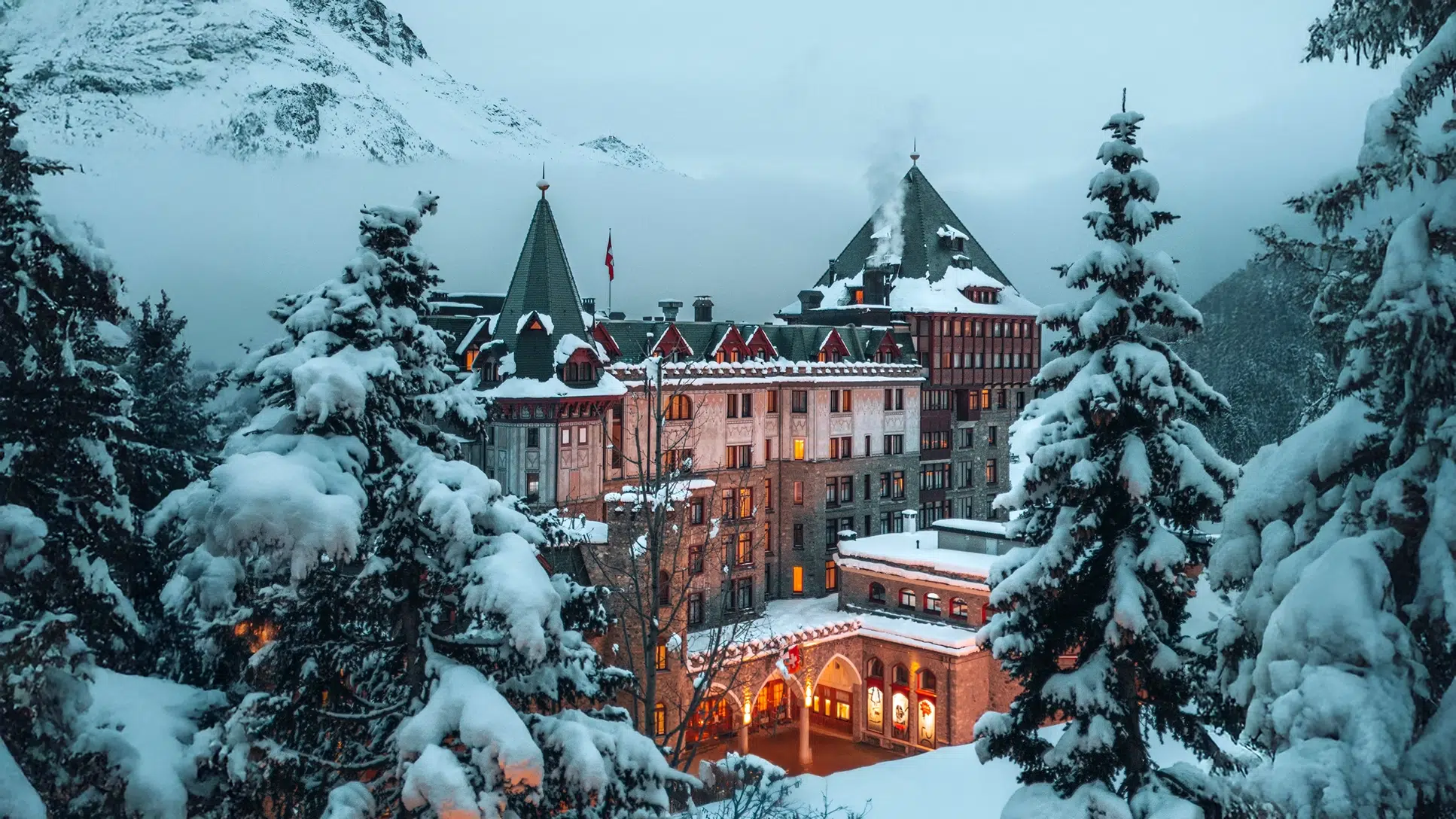
Few hotels are as inseparable from their destination as Badrutt’s Palace is from St. Moritz. Its turrets have risen above Lake St. Moritz since 1896, becoming as much a part of the Engadin landscape as the snow-covered peaks beyond them. Generations have arrived beneath its porte cochère for the same winter rituals: mornings on the mountain, long lunches in the sun, and evenings that unfold beneath chandeliers and wood-paneled ceilings.
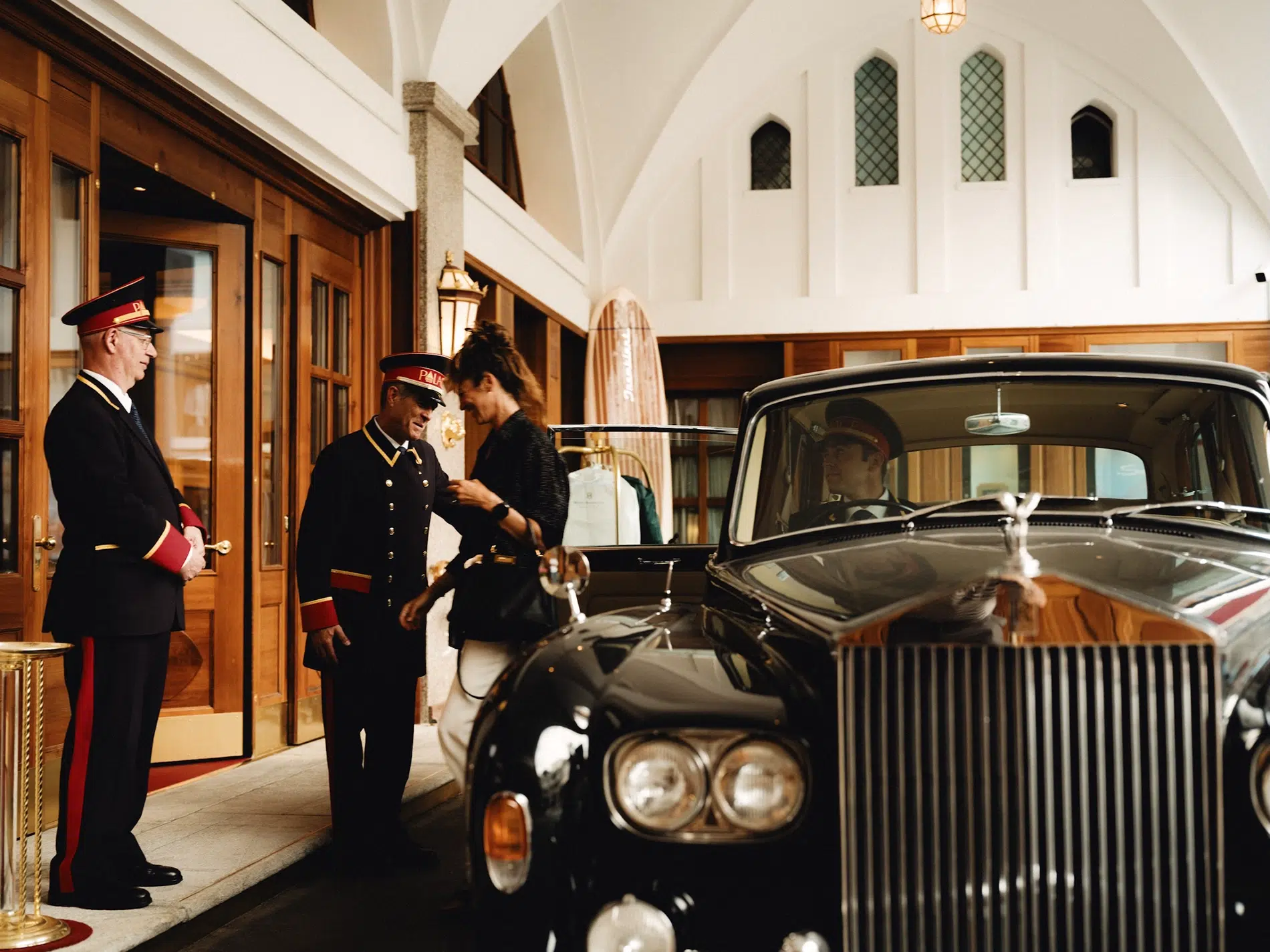
This season, the Palace returns with another distinction. Badrutt’s Palace has been named No. 36 on The World’s 50 Best Hotels 2026 list, making it the only mountain-and-ski resort in the Top 50 and the only Swiss property to appear among the first 50 hotels.
The ranking tells only part of the story.
Badrutt’s Palace also received the 2026 SeiBellissimi Art of Hospitality Award, an accolade decided by more than 800 members of The World’s 50 Best Hotels Academy and given to the property considered to have delivered an exceptional hospitality experience. For a hotel whose reputation has long rested as much on memory as marble, the recognition feels particularly apt.
The Palace has built its service culture around details that become almost invisible once they are done well. Longstanding guests may find their rooms recreated to the way they left them on a previous stay. Ski equipment can be collected at the end of the season, cleaned, stored, and returned to the room when its owner comes back the following winter. It is the sort of service that turns a hotel stay into something closer to returning home—albeit one with liveried doormen, lake views, and a far better wine cellar.
When Badrutt’s Palace opens for the 2026–2027 winter season on December 3, guests will encounter a hotel in the midst of careful evolution rather than wholesale reinvention.
Le Grand Hall, the social heart of the Palace and a space long described as the “living room of St. Moritz,” remains one of the hotel’s defining rooms. With its views over the lake, afternoon tea, cocktails, and steady procession of guests, it operates less like a conventional lobby than a stage upon which St. Moritz performs itself.
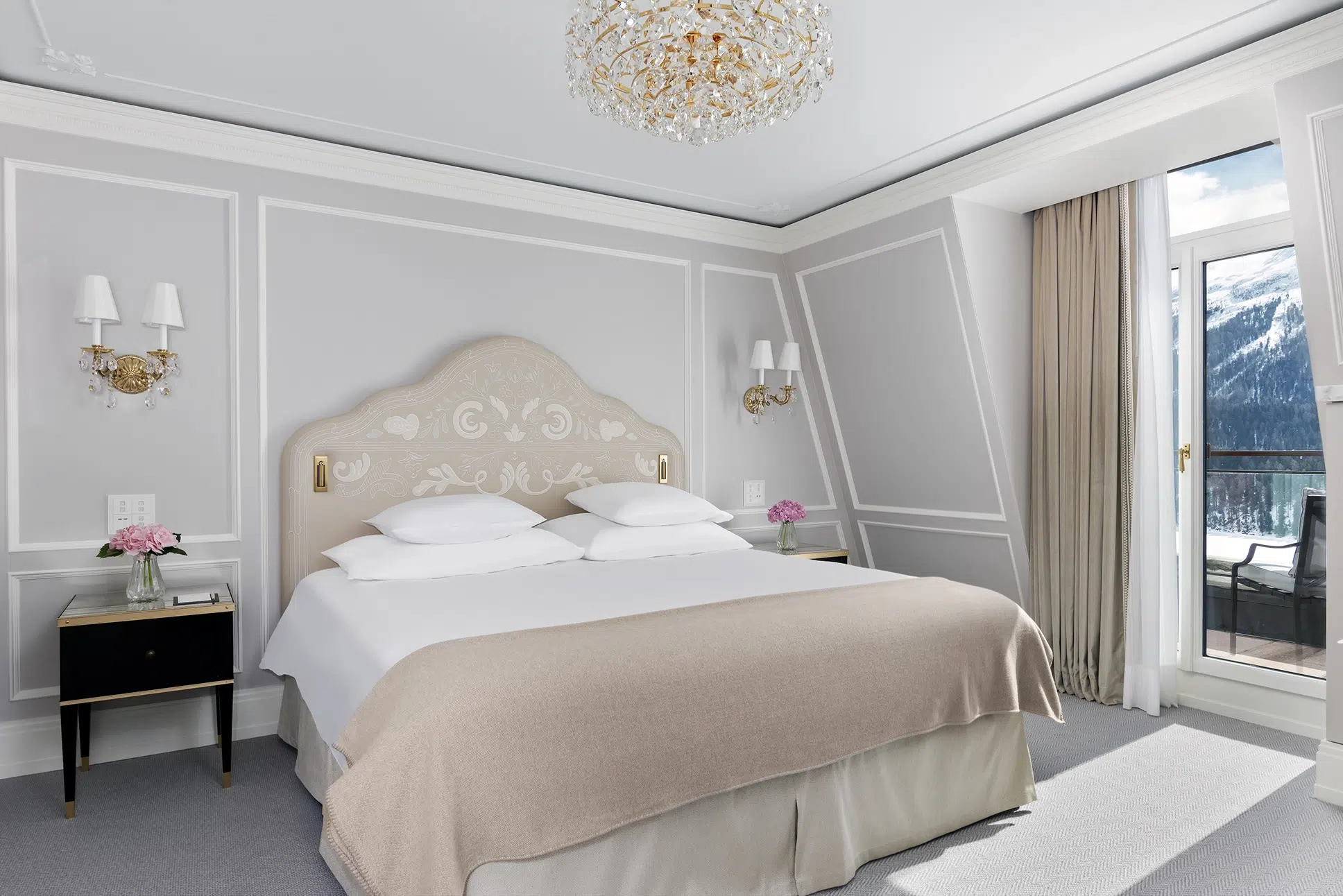
The coming season brings fresh attention to the interiors. Milanese designer Giuseppe Porcelli is creating a new bar within Le Grand Hall, while Champalimaud Design is reworking accommodations across several floors. The changes include larger rooms and suites and a reduction in overall room count, an increasingly familiar luxury-hotel strategy that trades density for greater space and privacy.
La Coupole – Matsuhisa is also entering a new design chapter. Housed in the Palace’s former tennis hall beneath a dramatic glass dome, the Nobuyuki Matsuhisa restaurant is being revisited by Martin Brudnizki Design Studio, which created its earlier interiors. The restaurant remains one of the hotel’s most distinctive dining rooms, pairing Japanese-Peruvian cuisine with a cocktail and sushi bar and private dining.
Yet for all the attention paid to interiors, Badrutt’s Palace has never been a hotel designed to keep guests indoors.
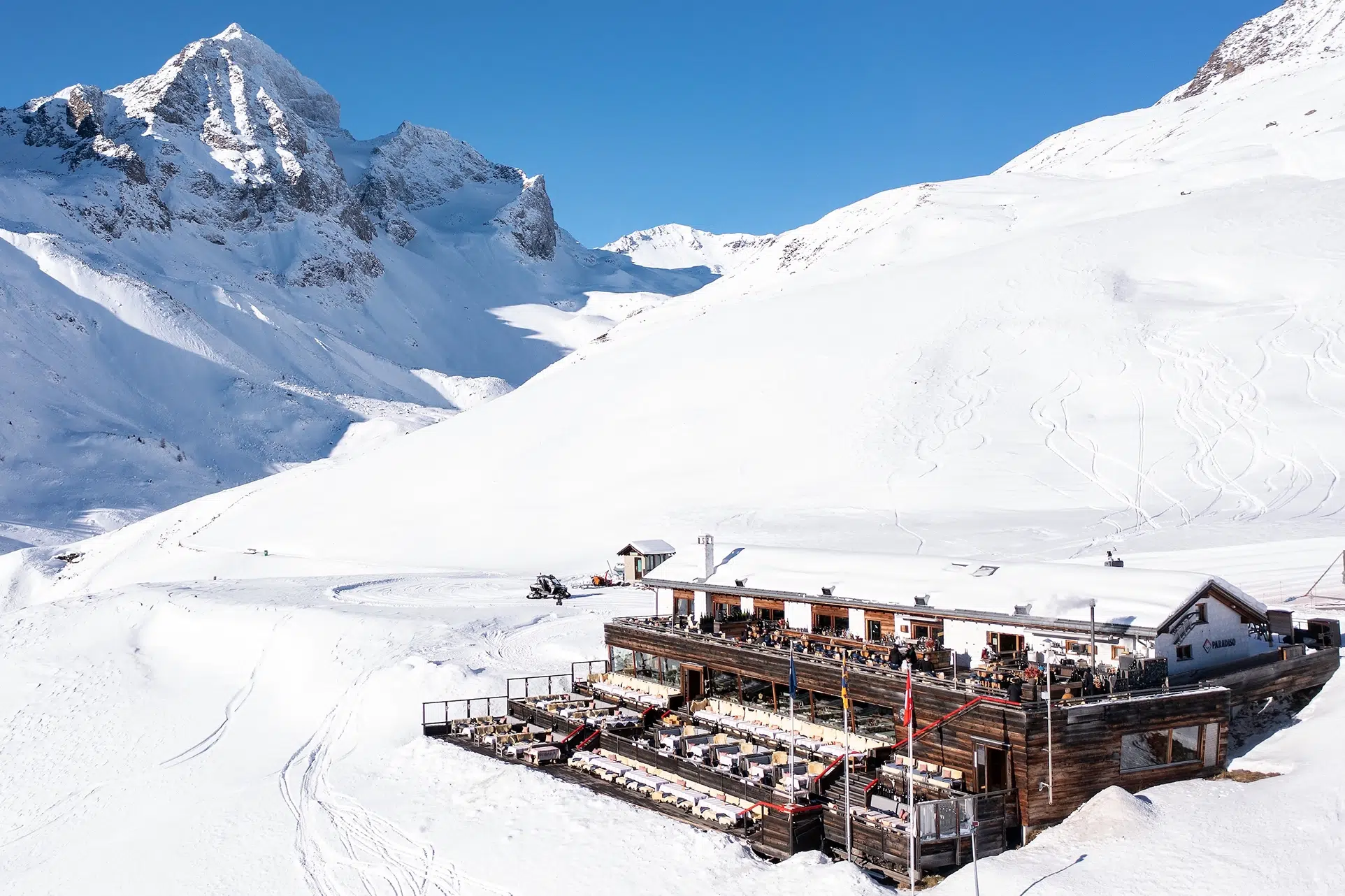
Winter here begins with the mountain. A dedicated ski room and transport to the lifts simplify the morning ritual, while the surrounding Engadin provides the setting that has drawn winter travelers to St. Moritz for more than a century. Skiing can give way to a long lunch at Paradiso, a spa treatment overlooking the lake, or an afternoon that requires little more exertion than choosing where to sit.
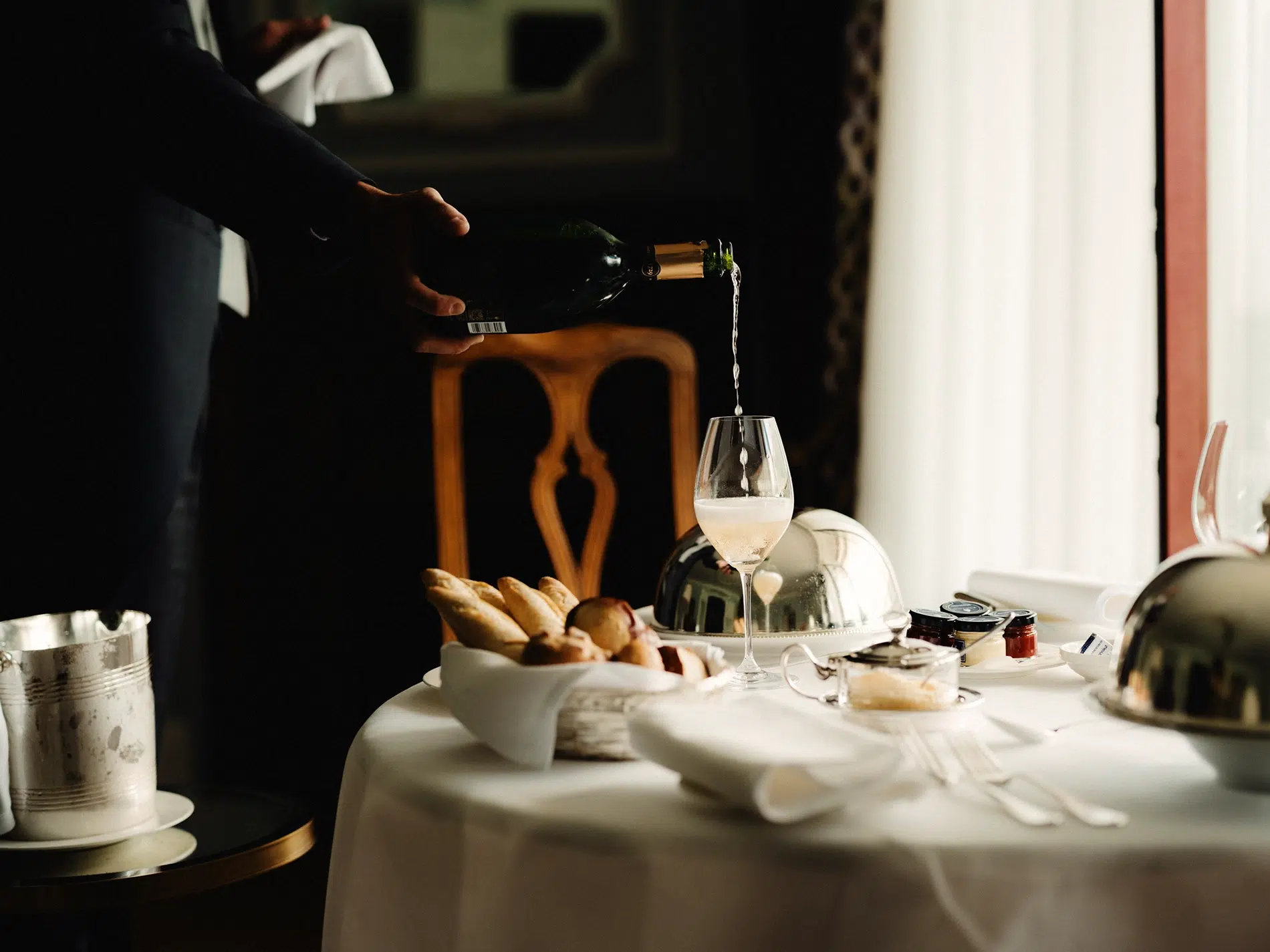
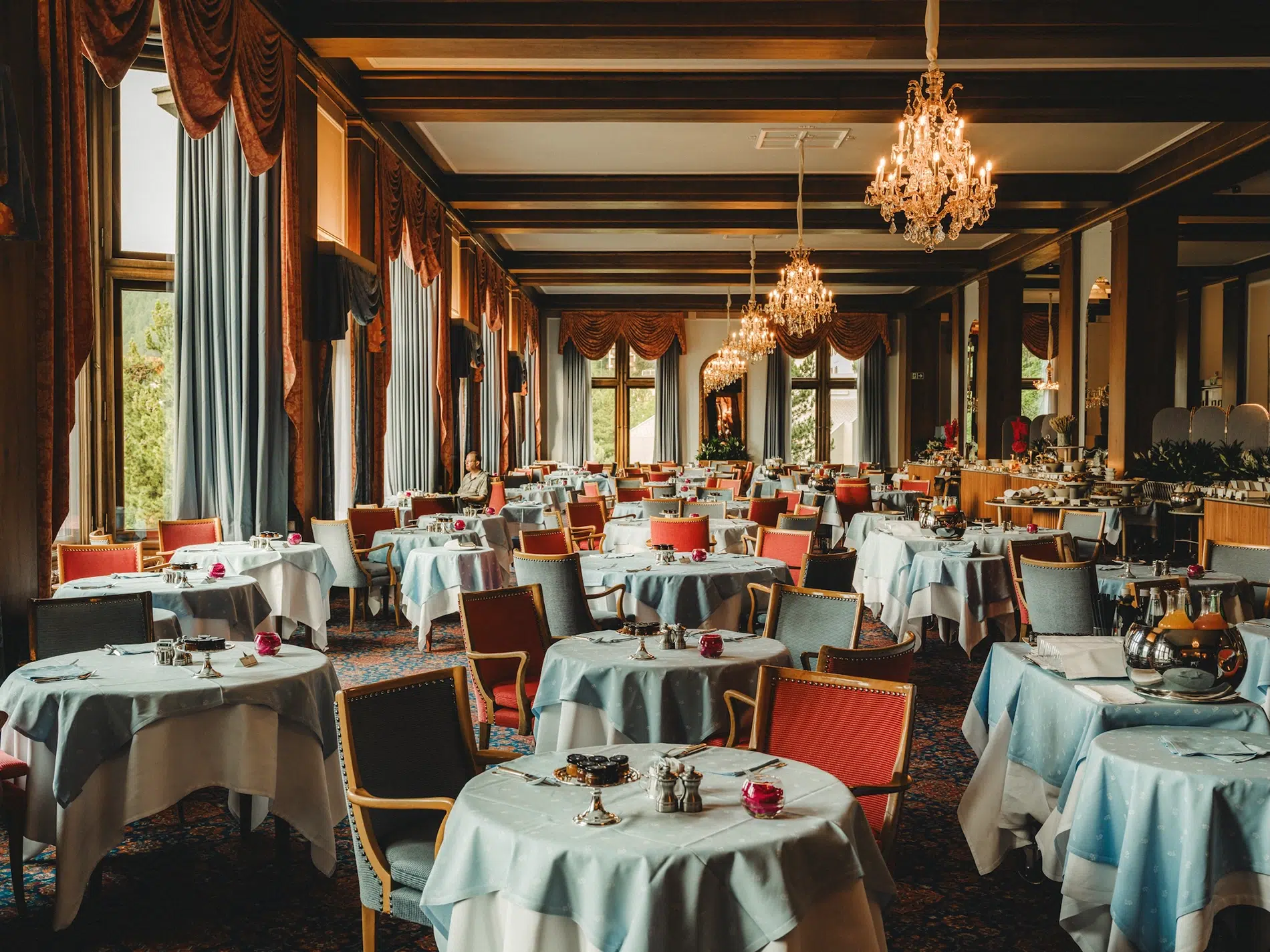
Back at the hotel, the scale of the dining operation is almost resort-like in itself. Badrutt’s Palace lists 11 restaurants during the winter season, ranging from the grand Belle Époque atmosphere of Le Restaurant to La Coupole – Matsuhisa and the more intimate addresses scattered throughout the property.
Then there is St. Moritz beyond the hotel doors. Via Serlas places some of the world’s most familiar luxury houses within a short walk, including Cartier, Dior, Louis Vuitton, Saint Laurent and others, while Hauser & Wirth adds a contemporary-art counterpoint to the shopping.
That proximity is part of what makes Badrutt’s Palace unusual. It offers the spectacle and service of a destination resort without isolating its guests from the life of the town around it.
The greater trick, though, is one the Palace has been performing for 130 years: changing just enough to remain relevant without sanding away the eccentricities and rituals that make people return.
In St. Moritz, novelty has never been the ultimate luxury. Recognition is. The same turret against the winter sky. The same lake below. The same skis waiting, polished and ready, as if the season had simply paused until you came back.