A great car is rarely just transportation. For collectors and connoisseurs, a hand-built grand tourer or a low-mileage classic is closer to a piece of art that happens to have an engine. So when the moment comes to move one — to a second home for the season, to a concours across the country, or from an auction block to a private garage — the question is never simply how to get it there. It is how to get it there without a single swirl mark, stone chip, or anxious phone call along the way.
The world’s most coveted cars change hands constantly, and the values involved are extraordinary; the ten most valuable cars sold at auction in 2025 alone, chronicled by Upscale Living Magazine, reached well into eight figures. Vehicles like these deserve a transport process as considered as the cars themselves. Here is what discerning owners should understand before handing over the keys.
Why Enclosed Transport Is the Only Real Choice
For an everyday commuter car, an open carrier — the familiar two-level trailer stacked with vehicles — is perfectly sensible and economical. For a six-figure exotic, it is a false economy. Open transport leaves a car exposed to road debris, weather, UV, and the curious eyes of every driver on the interstate.
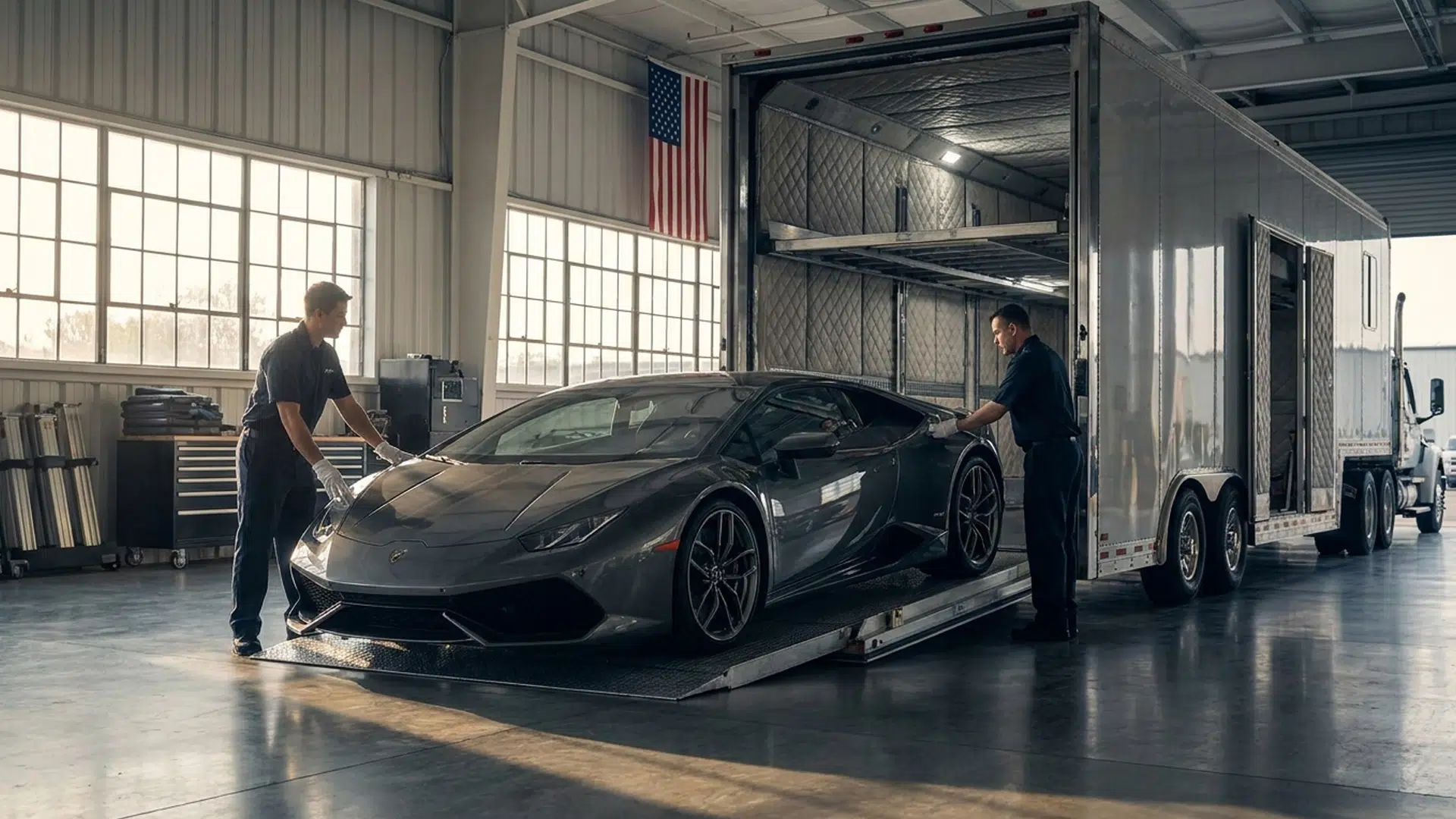
The alternative, enclosed car shipping, places the vehicle inside a fully covered trailer where none of that can reach it. The best operators go considerably further than four walls. Cars are secured with soft, non-abrasive straps that loop around the tires rather than the chassis, so no pressure is placed on the suspension or bodywork. Hydraulic lift gates raise low-slung supercars gently into the trailer instead of risking a steep ramp that could scrape a front splitter. Many premium carriers offer single-vehicle or climate-controlled trailers, padded interiors, and real-time tracking for owners who would rather not wonder where their car is at 2 a.m.
That protection is reflected in the numbers. Enclosed transport typically costs 30 to 60 percent more than open — roughly $0.75 to $1.20 per mile against $0.40 to $0.75 — but the gap looks very different when measured against the value of what is on board.
The Insurance Math Owners Overlook
Cost per mile is the wrong lens. The figure that matters for a high-value car is insurance coverage per vehicle, and this is where enclosed transport quietly justifies itself.
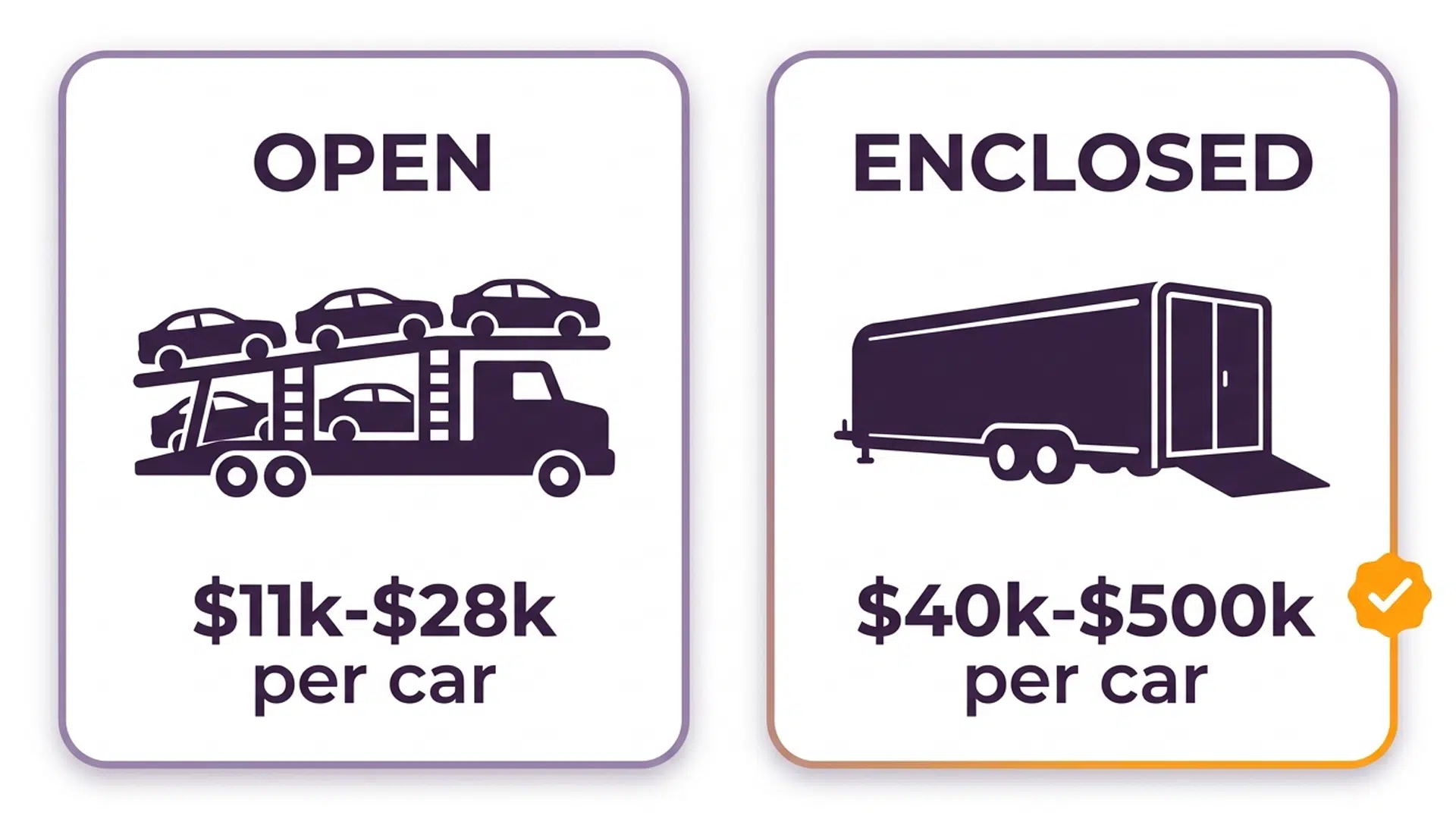
A typical open hauler carries perhaps $100,000 to $250,000 in cargo insurance spread across nine vehicles, as little as $11,000 to $28,000 of coverage for any single car. Enclosed carriers, hauling only two to six vehicles, generally carry $250,000 to $1,000,000 or more per shipment, which can translate to several hundred thousand dollars of protection per vehicle. For a car worth more than a house, that distinction is not a detail. It is the entire point.
Before booking, ask any carrier for proof of its cargo and liability coverage, confirm the per-vehicle limit rather than the per-trailer total, and make sure the policy is active for your shipment dates.
Verify the Carrier Before You Trust It
The luxury transport space is full of polished websites, and not all of them belong to the people who will actually move your car. Many are brokers who pass the job to a third-party driver. That is not inherently a problem — reputable brokers work with vetted carriers every day — but it makes verification essential.
Every legitimate interstate carrier and broker is registered with the Federal Motor Carrier Safety Administration, the federal agency that oversees commercial vehicle safety. Using a company’s USDOT or MC number, you can check its operating authority, safety record, and active insurance filings through the agency’s public SAFER database. Brokers are also required to hold a $75,000 surety bond on file. A trustworthy operator will hand over its USDOT number without hesitation; reluctance to do so is the clearest red flag in the entire process.
Door-to-Door Service and the White-Glove Difference
Once protection and credentials are settled, logistics should be the easy part — and for a luxury owner, convenience is part of the value. Rather than dropping a car at a distant terminal, door-to-door car shipping brings the trailer as close to your home, dealership, or storage facility as the streets allow, with collection and delivery handled at locations of your choosing.
For seasonal residents who move a prized car between homes each year, or buyers receiving a fresh auction win, this is the part that feels genuinely bespoke. A single point of contact, a scheduled pickup window, a careful inspection documented on both ends, and a car that arrives exactly as it left.
A Short Pre-Shipment Checklist
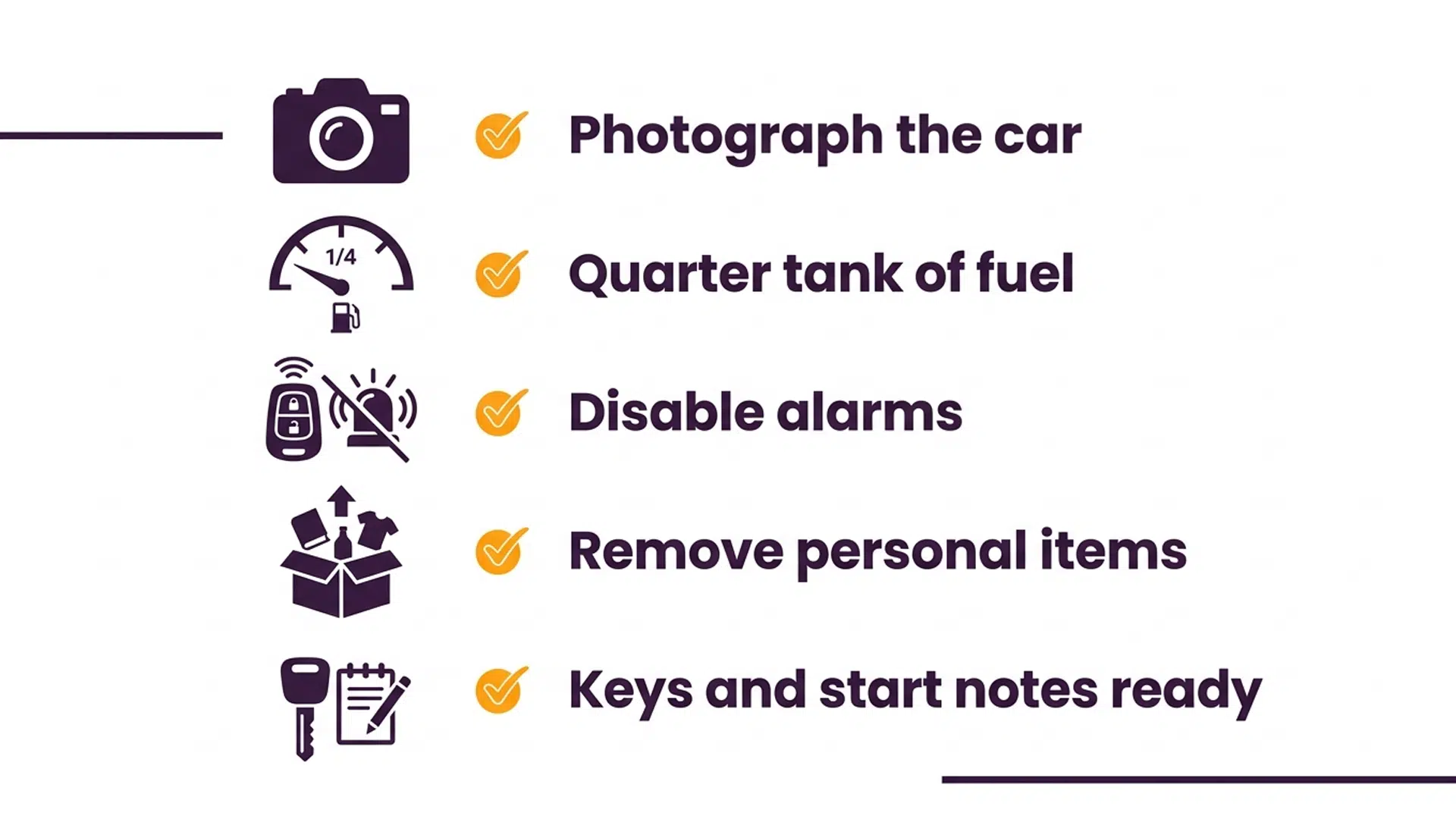
A few habits make any high-value shipment smoother. Photograph the car thoroughly from every angle before pickup and note existing marks on the condition report. Leave the fuel tank around a quarter full to reduce weight without leaving the car dry. Disable or inform the carrier about alarm systems and tracking devices. Remove personal items and aftermarket accessories that could shift or scratch. And keep a set of keys and any specific starting instructions ready for the driver, especially for temperamental classics.
Handled properly, shipping a luxury car should feel less like a logistical ordeal and more like an extension of ownership itself — discreet, meticulous, and entirely in keeping with the machine being moved. Specialists such as Rivalane Auto Transport build their service around exactly that standard, treating each vehicle with the care its owner already knows it deserves. The car is a masterpiece. Its journey should be handled like one too.