
Cooling labels are common, but the features behind them vary widely. One mattress may use a cool-feeling cover, another may add phase-change material, and a third may rely on ventilated foam or coils. Hot sleepers should evaluate how the features connect rather than counting the number of cooling terms on the page.
Breathable Covers and Moisture Movement
The cover controls the first point of contact. Open-knit, perforated, or moisture-managing fabrics may improve surface ventilation and help moisture leave the skin. A cooler first touch can be pleasant, but it does not show what will happen after the cover and upper foam have warmed.
Gel Foam and Internal Ventilation
Gel infusion is intended to help disperse heat through the foam. Ventilation holes, cut channels, and open-cell structures provide routes for air movement and can reduce the stagnant feel of dense foam. The thickness, density, and arrangement of these layers matter, because a small gel component cannot compensate for a completely closed construction.
Shoppers should look for explanations of how heat moves from the cover through the comfort system and away from the body. A product that identifies each layer’s role is easier to assess than one that relies on an undefined cooling label.
Phase-Change Materials
When comparing the best cooling mattress, phase-change materials are designed to absorb heat as temperature rises and release some of it when conditions cool. They may help moderate the surface impression, but the effect depends on placement and quantity. PCM should be treated as part of a system rather than as a thermostat that maintains one exact temperature for an entire night.
Coil Space and Responsive Support
Hybrids create open space around the coil core, which can support airflow and make the surface more responsive. Individually pocketed coils may also reduce movement transfer compared with interconnected units. The upper foam layers remain important, and not every hybrid includes the same edge reinforcement or zoning.
How Multiple Cooling Layers Work Together
A cover can provide an initial surface sensation. PCM can respond as the temperature changes. Gel foam can help spread warmth, and ventilation can give heat a path through the mattress. A coil core may add further open space. Not every bed needs all of these elements, but the construction should show a logical route for heat and moisture rather than stopping at the surface.
No material can guarantee that the bed stays at one temperature for eight hours. Room conditions, bedding, body heat, sleep position, and the amount of sinkage continue to shape the experience. Claims are most credible when they use terms such as “designed to” or “up to” and explain the conditions or limits.
An All-Foam System With Layered Ventilation
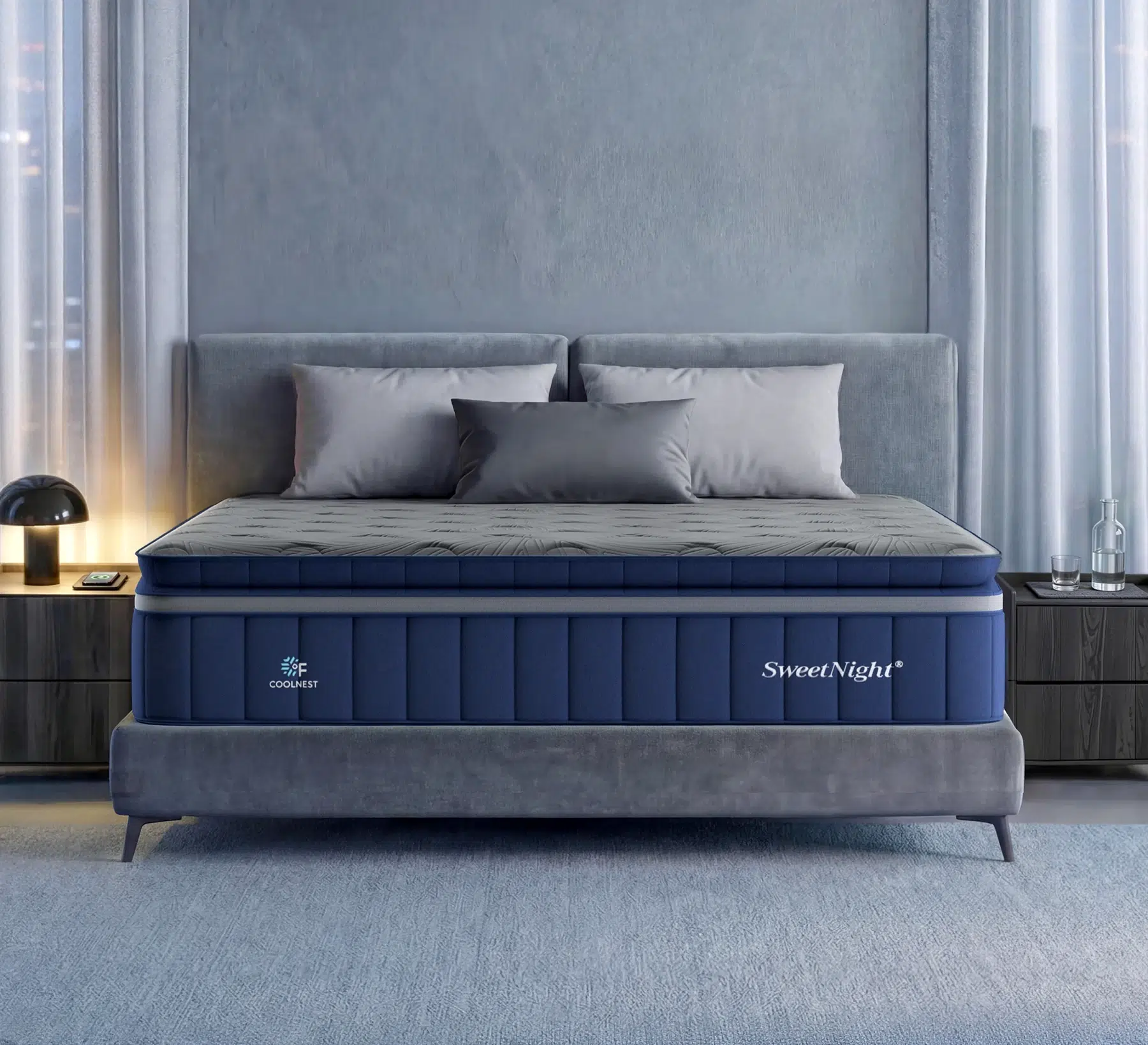
For people comparing the best mattress for hot sleepers, the SweetNight CoolNest® Ultra Memory Foam Mattress combines several of these features within an all-foam construction. Its Gradient Cooling Ice Silk Cover is designed for a cooler surface feel. PCMflux® High Resilience Foam responds as heat builds, while AirMesh™ Breathable Memory Foam, ventilated gel memory foam, and a 3D open-channel structure are intended to improve airflow inside the comfort system. SweetNight describes its Advanced CoolNest® Ultra System as feeling up to 11° cooler and the AirMesh™ layer as providing up to six times greater breathability than traditional memory foam.
The refined 7-zone structure is intended to provide different levels of contouring and support across the body, while the cooling layers are designed to reduce trapped heat within an all-foam construction. This should not be described as stopping overheating, addressing health-related symptoms, or guaranteeing pain relief. The model includes a 100-night trial and a 10-year warranty, which give shoppers time to evaluate comfort and review the current terms rather than proving that every user will experience the same result.
Support, Firmness, and Body Contact
Firmness affects how deeply a sleeper engages the comfort layers. Side sleepers may need more cushioning around the shoulders and hips, while back and stomach sleepers often need more resistance beneath the midsection. Body weight changes perceived firmness and sinkage, so broad labels such as medium or firm should be considered alongside the model’s thickness and support design.
Trials, Warranties, and Realistic Expectations
A trial can reveal how the mattress feels with the buyer’s usual bedding and room temperature. A warranty provides defined coverage for eligible defects and should be reviewed for exclusions, sagging thresholds, and foundation requirements. Neither document guarantees long-term cooling performance or satisfaction.
Final Thoughts
Cooling performance comes from the relationship between the surface, comfort layers, airflow paths, and support core. Hot sleepers should prioritize a construction that explains those relationships clearly, and that also matches their preferred firmness and feel. The complete system matters more than any single cooling feature.


