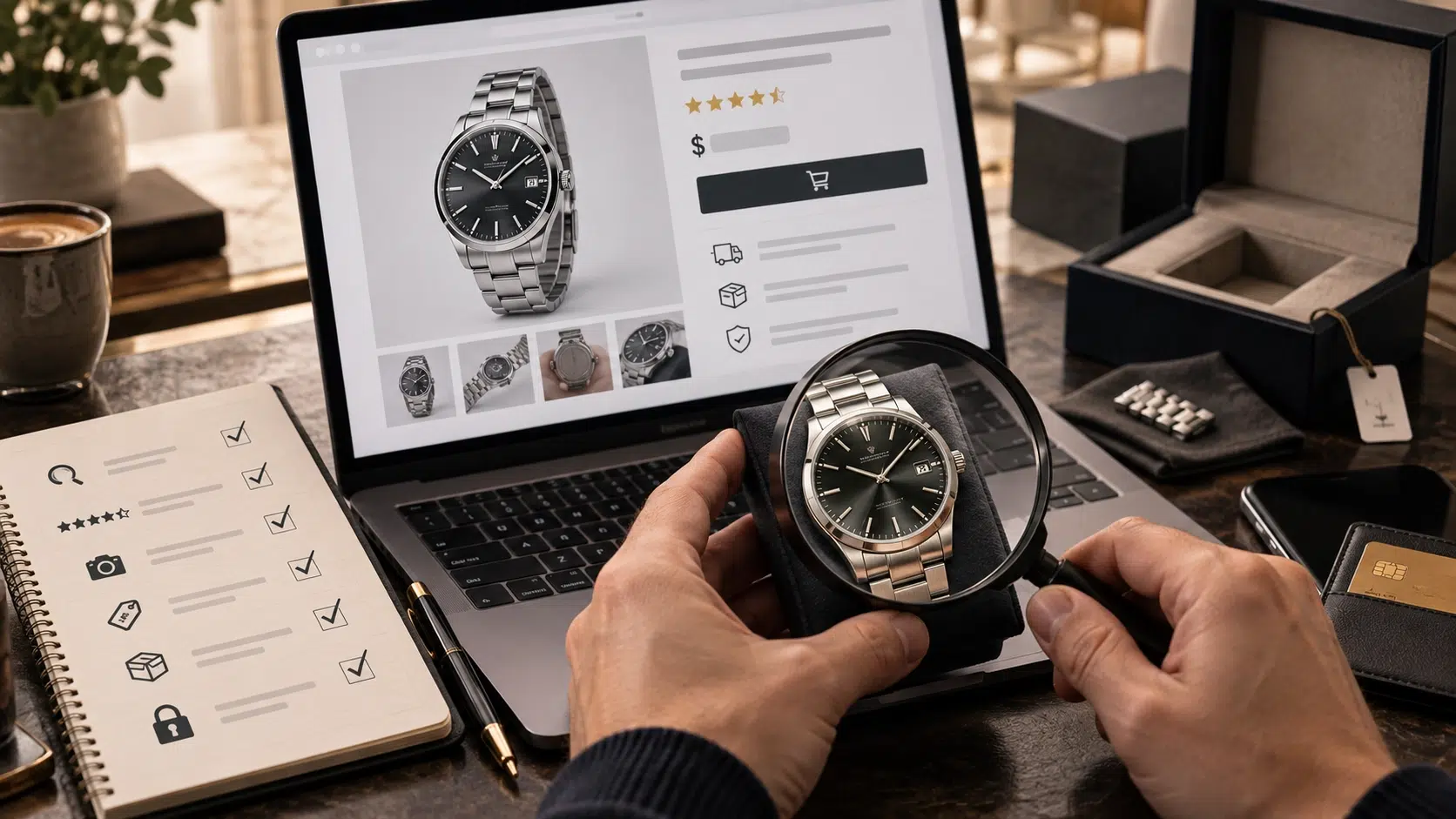
The listing looks great. The photos are sharp, the price feels right, and your finger is hovering over the buy button. This is exactly the moment to slow down, because once the payment clears on a replica purchase, your leverage is mostly gone. We sell replica watches at Watchvale, and we deal with the questions buyers wish they had asked beforehand, so this is the checklist we would want a friend to run before paying anyone, us included. Seven checks, each one capable of saving you from a bad order.
None of these require expert knowledge. They just require you to look before you pay instead of after.
1. Does the Listing Name the Movement?
This is the single most revealing check. A serious seller tells you what movement is inside and what it is based on. A vague high-quality automatic with no further detail usually means the movement is the cheapest part of the watch. The movement is what you live with every day, so a listing that stays silent about it is hiding the thing that matters most.
2. Are the Photos Real or Stock?
Look for actual photographs of the product the seller ships, not manufacturer renders or images lifted from the genuine brand. Real photos show the specific finishing, dial printing, and bracelet you will receive. If every image looks like a glossy catalog shot, ask for real ones. A seller who cannot produce photos of their own stock is a seller to walk away from.
3. Do the Dimensions Match the Genuine Model?
Pull up the genuine watch’s published case diameter and compare it to the listing. A good replica matches the original’s size closely, and a mismatch signals a sloppy build or a generic case. Diameter, thickness, and lug width are easy to check against the real brand’s specs, and doing so takes two minutes.
4. What Does the Return Policy Actually Say?
Read the return terms before paying, not after a problem appears. A seller confident in their product offers a clear return window and explains how it works. Watch for policies that sound generous but quietly exclude the exact situations you would need them for. No stated policy at all is your answer to walk away.
5. Is There a Warranty, and What Does It Cover?
A warranty tells you the seller expects the watch to keep running. Check how long it lasts and what it covers, especially the movement. Vague promises of “support” are not a warranty. Specifics are. The presence of real after-sales terms separates a seller building a reputation from one chasing a single sale.
6. How Does the Seller Handle Pre-Sale Questions?
Send a question before you buy and judge the reply. Ask about the movement, the materials, or shipping, and see whether the answer is clear and direct or evasive and rushed. A seller who answers well before taking your money is far more likely to help after. Silence or dodging at this stage is a preview of the after-sale experience.
7. How Are You Being Asked to Pay?
Look at the payment method and what protection it gives you. Methods with no recourse at all are a red flag, especially paired with any of the warning signs above. You do not need to overthink this one, but you should notice it. A seller steering you toward an untraceable payment with no buyer protection is telling you something.
Frequently Asked Questions
What is the most important thing to check before buying a replica online?
The movement. A listing that names and explains the movement is being transparent about the costliest and most important part, while one that stays vague is usually hiding a cheap caliber you will have to live with daily.
How can I tell if the photos are genuine?
Real product photos show specific finishing, dial printing, and bracelet detail rather than glossy catalog perfection. If every image looks like a brand render, ask the seller for actual photos of the item they ship.
Why do dimensions matter so much?
Case size is easy to verify against the genuine model’s published specs, and a mismatch signals a generic or careless build. Checking diameter, thickness, and lug width takes minutes and filters out low-effort copies fast.
Is a warranty really worth checking on a replica?
Yes. A specific warranty, especially one covering the movement, signals a seller who expects the watch to last and will help if it fails. Vague offers of support without terms are not the same thing.
Final Thoughts
Buying a replica watch online comes down to one habit: checking before you pay instead of hoping after. Run these seven points, and the risky sellers tend to fail at least one of them, usually several. The movement disclosure, real photos, matching dimensions, clear returns, a specific warranty, responsive answers, and sensible payment are not a high bar for an honest seller to clear. They are a high bar for a dishonest one, which is exactly the point. Spend the ten minutes the checklist takes, and you will buy from the sellers worth buying from.