Buyers closed 204 condo sales of $2 million or more across greater Miami in the first quarter of 2026, up 25.9% from a year earlier at a median price above $3.6 million, according to CondoBlackBook’s quarterly market summary. The rest of the market moved the other way. Miami-Dade’s median condo sold for $410,000, down $5,000 year over year, while overall condo sales fell 13%, the Miami Herald reported. The same product type is heading in two directions at once, and the Miami condo market has split into tiers that barely resemble each other.
Robert Balzebre, a developer who has spent more than two decades acquiring and restoring aging buildings in South Beach, watched an earlier version of this divide in the 1990s, when the neighborhood’s Art Deco stock traded at discounts that reflected deferred maintenance more than location. His answer then was reinvestment, and he argues the same logic decides which tier a building lands in now.
“The minimum code requirement is not enough. It’s the writing’s on the wall,” Balzebre said. “You see it when you look at all these different disasters that happen.”
The Tier Where Everything Still Closes
Demand at the top of the Miami condo market has detached from interest rates and from the broader slowdown. Sales of $5 million and above jumped nearly 12% year over year in the Herald’s accounting, and 36% of August closings countywide were all cash, roughly double the national share. Coconut Grove and Coral Gables posted a 44.6% first-quarter sales gain, the largest of any submarket CondoBlackBook tracked.
Wealth migration explains part of that strength, and product explains the rest. Nearly every building absorbing this demand is new or newly delivered, with reserves funded from day one, current structural certifications, and insurance priced into the offering before the first closing. A cash buyer in a new Edgewater tower takes on none of the uncertainty that shadows a forty-year-old building two blocks away.
Even this tier shows a seam worth reading, because luxury price per square foot slipped 11.6% year over year despite the sales surge, and Miami Beach’s figure fell 14.8%. Buyers are closing more deals while negotiating harder on each one, which reads as confidence rather than carelessness.
Thirty Years Old and Losing Value
Older buildings tell the other half of the story. Homeinc, a Florida homebuying firm, estimates that values in some aging buildings have dropped 20% to 40% as assessments, financing restrictions, and insurance costs stack on top of one another. More than 1,400 Florida condo buildings now sit on Fannie Mae’s list of properties ineligible for conventional financing, which pushes their remaining buyers toward cash and drags prices lower with each closing.
Arithmetic inside those buildings is unforgiving. Special assessments for structural repairs run from $30,000 to more than $200,000 per unit, and monthly maintenance in some towers has doubled. Owners who cannot absorb those costs sell into a market where financing barely exists. Only 0.9% of South Florida buildings hold FHA approval, the Herald noted, which removes most first-time buyers from the pool entirely.
The Law That Split the Miami Condo Market
Both tiers trace back to the same morning in June 2021, when Champlain Towers South collapsed in Surfside. Florida responded by requiring condominiums three stories and taller to complete milestone structural inspections at 30 years of age and to fund repair reserves rather than waive them, rules that took full effect across 2025. Decades of deferred maintenance converted into immediate, mandatory bills.
Balzebre reads the legislation as a repricing of honesty rather than a burden. Buildings that maintained themselves all along had little to fear from an inspector. Buildings that balanced budgets by skipping repairs now pay for the repairs and for the years of avoidance at once.
“When you build something that is likely to fail from one of these disasters, then you increase the cleanup costs, you have to rebuild again,” he said. “Sometimes that’s going to double all the costs that you just put out or more.”
What Reinvestment Did for Buildings Like These Before
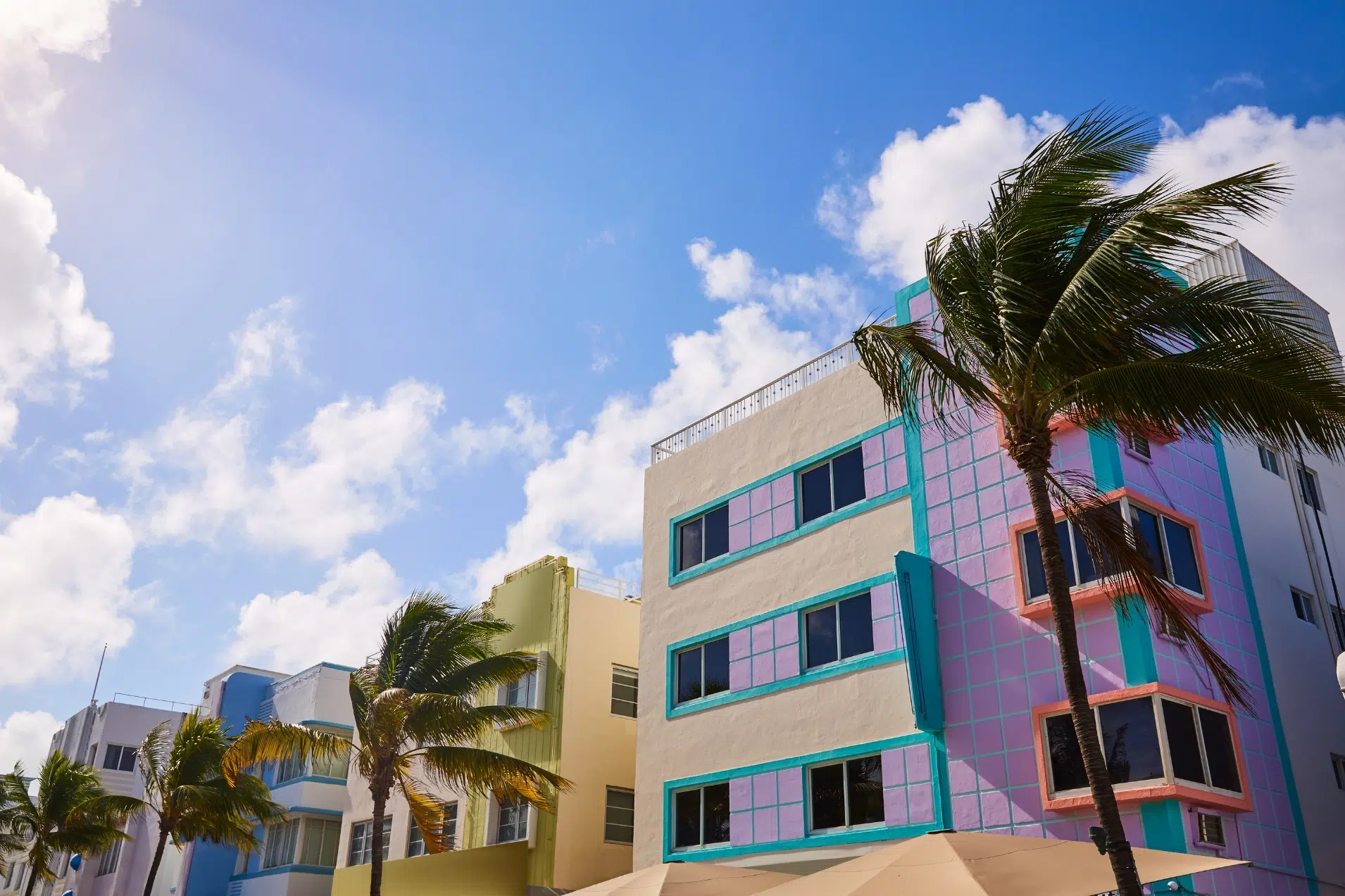
Today’s distressed tier resembles the South Beach that Balzebre entered decades ago. He completed six Art Deco restoration projects there, among them The Arcadia, The Maritime, Espanola Court, and The Santana, converting aging apartment stock into condominiums that sold on the strength of restored character. Those buildings were old then too; what changed their trajectory was capital applied before decay became structural.
His later work repeated the pattern at larger scale. His ownership group acquired the historic Surfcomber hotel on Collins Avenue and put it through a $35 million renovation that brought the Kimpton brand to Miami Beach. Balzebre rarely sells what he restores, so the cost of doing the work correctly returns to him across decades of ownership rather than at a single exit.
“I think it all comes back to delivering the highest quality product that you can deliver for the consumer,” he said. “That’s what I’m building that will stand there for hopefully generations, and what I’d like to be known for.”
Insurance Now Sorts the Buildings
Premiums have become the sorting mechanism between the tiers. Insurance costs have doubled for many associations, per Homeinc, and carriers price aging roofs, plumbing, and electrical systems directly into their quotes. A building that invests ahead of failure pays less to insure, borrows more easily, and defends its resale values. A building that waits pays in every one of those columns at once.
“When you insure things in these places, obviously it increases the expenses on holding real estate and then eventually your bottom line profits,” Balzebre said. “If you build them with the right type of technology and techniques, you can reduce some of those expenses.”
Where the Two Tiers Go From Here
The likelier outcome is sorting rather than convergence. Well-capitalized older buildings will finish their repairs, document their reserves, and gradually re-enter the financeable Miami condo market. Others will slide toward the price where land is worth more than units, and developers will arrive with buyout offers that end the building’s condo life altogether.
Balzebre’s held-and-restored portfolio sits on the paying side of that ledger, and his career points to a third path between decline and demolition: capital that arrives early enough to preserve a building rather than replace it. Miami no longer prices the address alone; it prices the balance sheet behind the address, and the law now requires every building to show it.