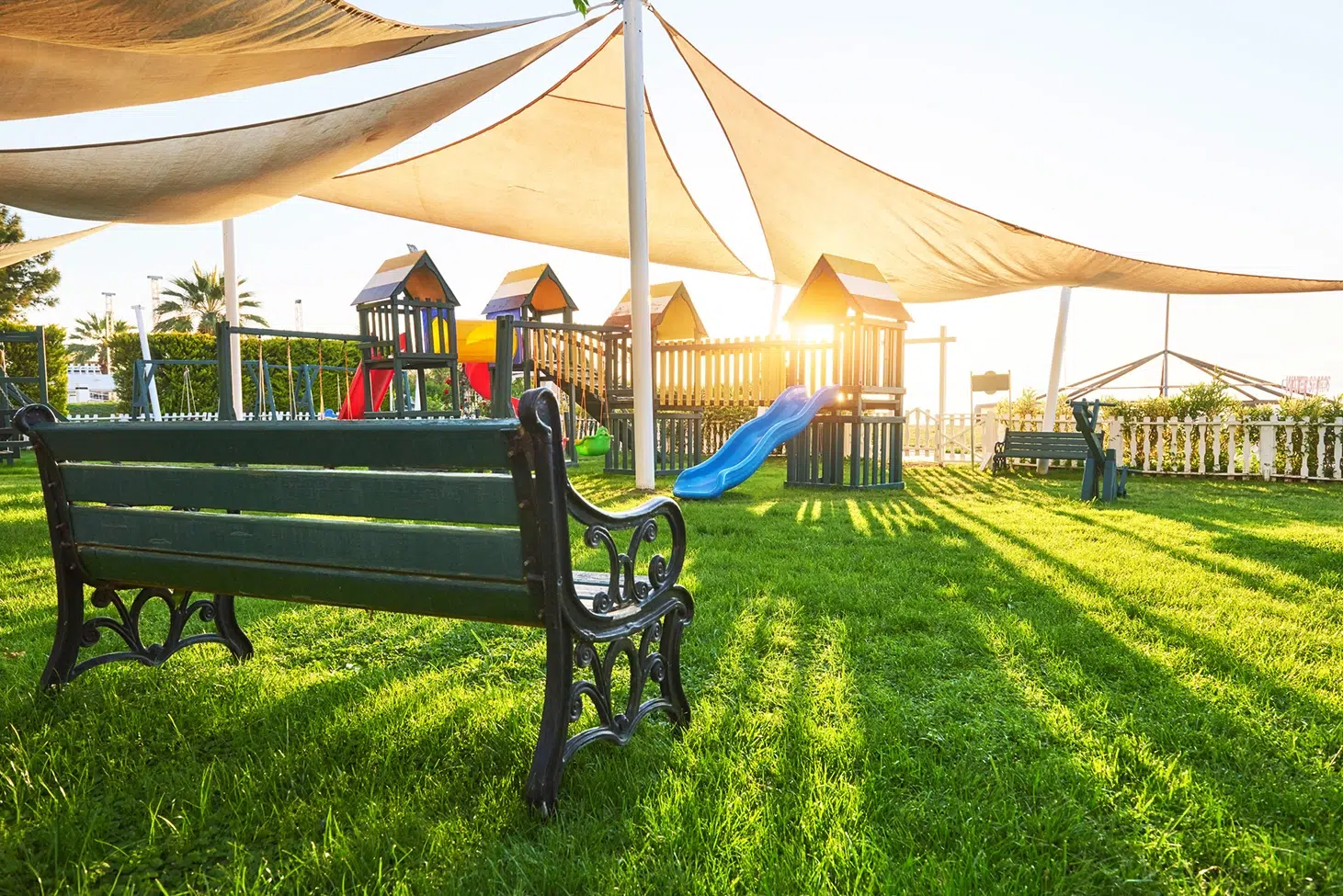
Shade structures are now a practical part of modern playground design, not an optional extra. They help create safer, more comfortable spaces where children, caregivers, and staff can spend more time outdoors with less exposure to intense sun, heat, and changing weather.
Well-planned shade supports inclusive play, improves site usability, and protects the long-term value of the playground. Whether the space includes climbing equipment, seating, pathways, or water play, shade affects how people move, gather, rest, and play.
The Role of Shade in Outdoor Comfort
Playgrounds are active environments, and children can heat up quickly during physical play. Shade helps lower surface temperatures on slides, decks, seats, and safety surfacing. This can make the space more comfortable throughout the day, especially during warmer seasons.
Comfort also matters for adults supervising children. Caregivers are more likely to stay longer when seating areas, stroller spaces, and gathering points are protected from direct sun. A shaded playground often feels more welcoming and better suited for families of different ages.
Sun Protection and Safer Play
Shade structures reduce direct exposure to ultraviolet rays, which is an important consideration for children’s outdoor environments. While sunscreen, hats, and suitable clothing are still useful, built shade provides a consistent layer of protection for all users.
Strategic shade placement can also reduce glare. This helps children see equipment more clearly and helps caregivers maintain better visibility across the play area. Good visibility supports supervision without making the space feel closed in or difficult to navigate.
Designing Shade Around Play Patterns
Effective shade planning starts with understanding how the playground is used. Designers often consider the sun’s path, peak-use times, age groups, and the location of high-traffic features. Shade should protect key areas without blocking movement or limiting imaginative play.
High-Value Areas for Shade
- Slides, climbers, swings, and transfer platforms
- Benches, picnic areas, and caregiver seating
- Inclusive play zones and quiet spaces
- Waiting areas near entrances and pathways
- Water play areas and splash zones
When a playground includes spray park equipment, shade planning becomes especially important. Children may alternate between water play and rest, while caregivers often remain nearby for supervision. Covered rest zones help balance active play with cooling breaks.
Material Choices and Long-Term Performance
Shade structures must be durable enough for outdoor use and daily wear. Common options include tension fabric canopies, metal-roof shelters, sails, and integrated roof panels. Each choice has different maintenance needs, visual impact, airflow, and coverage levels.
Colour and material selection can influence comfort. Lighter colours may reflect more heat, while darker shades may reduce glare in certain settings. The structure should also suit the surrounding landscape and playground style without overwhelming the site.
Accessibility and Inclusive Use
Shade supports accessibility by making play areas more usable for children and adults with heat sensitivity, sensory needs, mobility considerations, or medical concerns. A shaded route between play zones can make the entire site feel easier to use.
Inclusive design also means placing shade where everyone can benefit. Covered seating should connect to accessible routes, and shaded play elements should serve a range of ages and abilities. This approach creates a more balanced and thoughtful outdoor environment.
Planning, Budgeting, and Funding Considerations
Shade should be included early in the planning process rather than added after equipment is installed. Early planning helps avoid conflicts with underground services, drainage, safety zones, and sightlines. It can also improve budget accuracy and reduce future retrofit costs.
Funding programs, including playground equipment grants, may help communities consider shade alongside surfacing, site preparation, and play components. Treating shade as part of the complete design can support a more practical and durable project.
How Shade Strengthens the Whole Playground
A playground with thoughtful shade is more than a place to play. It becomes a comfortable community setting where children can explore, adults can supervise with ease, and groups can gather for longer periods. Shade improves daily use and supports healthier outdoor routines.
Modern playground design works best when comfort, safety, accessibility, and durability are considered together. Shade structures connect each of these priorities, making them a smart and practical feature for outdoor play spaces of many sizes.