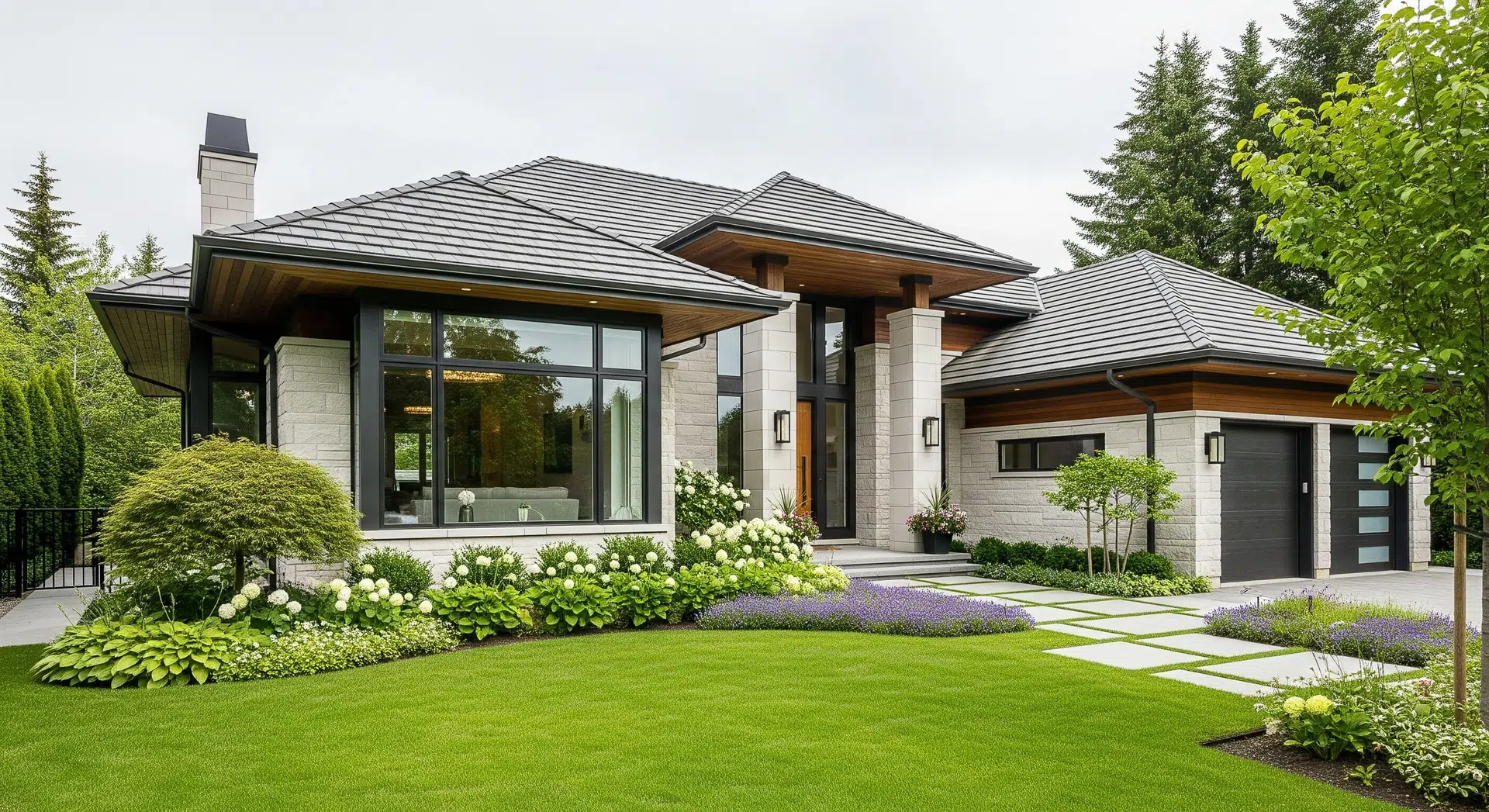
Modern home design values clean lines, open space, and a strong connection between indoor and outdoor living. A well-planned landscape extends these ideas beyond the house.
Homeowners are thinking about how outdoor rooms, pathways, lighting, and materials work together. The goal is a yard that feels intentional and easy to use. See how below.
Elements of Modern Landscape Design
Modern landscape design focuses on mixing functionality with aesthetic appeal. Here are some key elements to consider:
- Clean lines
- Natural materials
- Minimalism
- Sustainable practices
- Functionality
These elements work together to create a cohesive and inviting outdoor space. They reflect contemporary architecture and promote sustainability. Your garden will be more environmentally friendly.
Softscape and Hardscape Elements
Softscape includes living things (grass, trees, shrubs, and perennials). Hardscape includes non-living features (patios, walkways, retaining walls, and stone borders). These two categories should work together to define outdoor areas.
A common approach is to use hardscape to create strong horizontal lines. Soften those lines with low, structured plantings. A rectangular concrete patio can be edged with a single row of lavender or dwarf mondo grass. A gravel path can be framed by steel edging and a few large agaves. Many homeowners find that working with custom landscaping and hardscaping experts helps them balance these materials. Professionals can suggest the right scale for patios and choose plants that will not outgrow their space. They see how materials like stone, concrete, and wood complement the home’s exterior.
Plants for Clean, Low-Maintenance Design
Modern landscapes use fewer plant varieties, but each one is chosen for a clear purpose. Plants may provide privacy, frame a view, soften a wall, or add a single burst of color. Designers might repeat three or four types throughout the yard to create a cohesive look and make maintenance easier.
Native plants and drought-tolerant species fit well with modern design. They need less water and care, and their natural shapes suit a tidy aesthetic. Ornamental grasses, succulents, salvia, yarrow, and sedges are popular choices. Many hold their shape without constant pruning, which preserves clean lines. Gravel, decomposed granite, or low-growing thyme can replace large lawns and reduce water use.
Water Management and Sustainability
Hard surfaces can cause runoff, so designers include permeable paving, gravel beds, or rain gardens. These features let water soak into the ground instead of pooling on patios or running toward the house. A dry creek bed can direct rainwater.
Sustainability comes from choosing climate-appropriate plants and efficient irrigation. Drip systems deliver water directly to roots and reduce waste. Mulch helps the soil hold moisture. When grouping plants with similar water needs, homeowners can avoid overwatering some areas and underwater others. A modern yard can be beautiful and responsible.
Creating a Lasting Outdoor Space
A modern landscape succeeds when every element feels intentional. Well-placed lighting and thoughtful water management all contribute to a functional yard. The strongest designs do not rely on one standout feature. They connect the house to the outdoors through purposeful zones and plants that thrive with minimal care.
Homeowners who take time to plan the relationship between softscape and hardscape end up with a space they love. Want to learn more about home tips? We’ve got you covered.