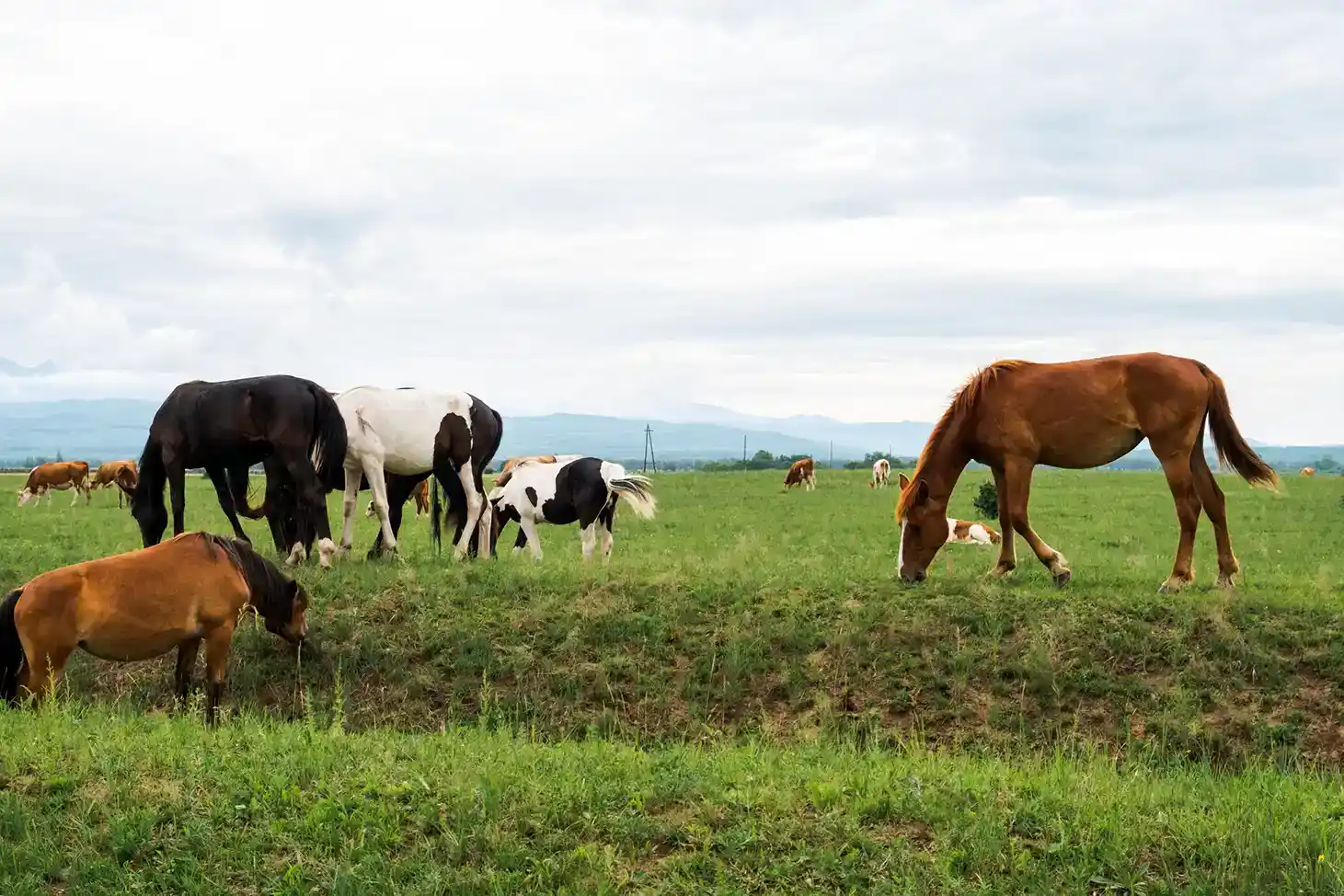
Ideal livestock nutrition is a science, not guesswork. Beef cattle and horses share farm space but diverge sharply in their digestive physiology and dietary requirements. Mismanaging these differences carries measurable consequences, poor growth rates, compromised health, and reduced farm profitability. The nutritional decisions made daily directly determine outcomes for both species. Understanding where these animals align and where they fundamentally differ is the essential first step toward building a sound feeding program.
Nutritional Differences Between Beef Cattle and Horses
Beef cattle and horses differ fundamentally in their digestive physiology, which shapes their respective nutritional requirements. Cattle are ruminants, possessing a four-chambered stomach that enables microbial fermentation of fibrous plant material prior to small intestinal absorption. This digestive system variation allows cattle to efficiently extract energy from low-quality forages through prolonged rumination and microbial protein synthesis.
Horses, by contrast, are non-ruminant hindgut fermenters. Microbial digestion occurs primarily in the cecum and large colon, positioned after the small intestine. Consequently, nutrient absorption rates differ considerably between species. Horses absorb soluble carbohydrates and proteins efficiently in the small intestine, while fiber fermentation occurs downstream, limiting microbial protein utilization compared to cattle.
These digestive system variations necessitate species-specific dietary formulations. Cattle tolerate higher fiber diets and urea-based nitrogen supplements effectively, whereas horses require higher-quality protein sources and carefully managed starch intake to prevent metabolic disorders.
Core Nutritional Needs of Beef Cattle
Cattle require six fundamental nutrient categories to sustain growth, reproduction, and productivity: water, energy, protein, minerals, vitamins, and fat. Among these, energy derived from carbohydrates constitutes the primary dietary requirement, chiefly sourced through forage consumption.
Forage quality considerations directly influence digestibility, dry matter intake, and overall herd performance. High-quality forages exhibit greater neutral detergent fiber digestibility, supporting efficient rumen fermentation and energy extraction. These factors must be carefully balanced with supplemental beef cattle feed formulations to maintain consistent nutrient intake across varying forage conditions.
Optimal protein levels vary according to physiological stage. Beef cattle generally require crude protein concentrations ranging from 7–14%, with higher demands during gestation, lactation, and rapid growth phases. Inadequate protein suppresses rumen microbial activity, reducing fiber digestion efficiency.
Mineral supplementation, particularly calcium, phosphorus, magnesium, and selenium, supports skeletal integrity and reproductive function. Fat-soluble vitamins A, D, and E require deliberate supplementation when forage availability is limited. Strategic nutritional management aligned with these core requirements directly enhances productivity, feed conversion efficiency, and herd profitability.
Daily Nutritional Requirements for Horses
Unlike beef cattle, horses possess a distinct digestive physiology that fundamentally shapes their nutritional requirements. As hindgut fermenters with relatively small stomachs, horses require frequent, small meals rather than infrequent large ones. An ideal feeding schedule typically involves two to three daily feedings, mimicking natural grazing patterns and supporting optimal gastrointestinal function.
Forage constitutes the dietary foundation, with mature horses requiring approximately 1.5–2.5% of body weight in dry matter daily. Ideal optimum hay selection prioritizes species-appropriate, low-dust forage with appropriate nutrient density, timothy, orchard grass, or alfalfa-grass blends, based on age, workload, and metabolic status. In addition to core feed and forage, many owners provide horse treats in moderation as training rewards or enrichment, ensuring they do not disrupt the animal’s overall nutritional balance.
Crude protein requirements range from 8–12%, depending on physiological stage. Energy, supplied primarily through digestible fiber, must balance caloric demand against obesity risk. Calcium-to-phosphorus ratios should be maintained between 1.5:1 and 2:1. Trace minerals, including zinc, copper, and selenium, require precise supplementation to prevent deficiency-related metabolic dysfunction.
How to Stop Your Cattle and Horses From Eating Each Other’s Feed
Managing shared grazing environments presents one of the most persistent logistical challenges in mixed-species livestock operations, as horses and cattle have fundamentally incompatible nutritional requirements that render cross-feeding potentially harmful to both species. Ionophore additives common in cattle feed, such as monensin and lasalocid, are acutely toxic to horses, while equine feeds formulated with elevated copper levels can induce hepatotoxicity in cattle.
Effective feed separation strategies include physical partitioning through species-specific feeding stations with appropriately sized access panels, exploiting cattle’s inability to navigate horse-height feeders. Temporal separation, scheduling distinct feeding windows, further reduces cross-contamination risk. Advanced herd management techniques incorporate electronic identification systems that trigger automated feeder access exclusively for designated animals. Structural enclosures, including separate paddocks with maintained perimeter fencing, provide the most reliable barrier against interspecies feed access. Consistent monitoring and documented feeding protocols reinforce long-term compliance within mixed-species management systems.
Warning Signs of Nutritional Deficiency in Cattle and Horses
Recognizing nutritional deficiency in livestock requires systematic observation, as clinical signs frequently manifest only after subclinical depletion has already compromised physiological function.
In both cattle and horses, signs of protein deficiency include reduced muscle mass, poor hair coat quality, delayed wound healing, and diminished growth rates in younger animals. Weight loss despite adequate forage intake warrants immediate dietary evaluation.
Indicators of vitamin A insufficiency present distinctly across both species, encompassing night blindness, increased susceptibility to respiratory infections, reproductive failure, and compromised epithelial integrity. Cattle may further exhibit excessive lacrimation and rough coat texture. Horses may display poor hoof quality alongside immune suppression.
Producers should implement routine body condition scoring alongside periodic serum biochemistry to distinguish nutritional etiology from infectious or parasitic causes. Early identification substantially reduces production losses and prevents irreversible pathological consequences associated with prolonged deficiency states.