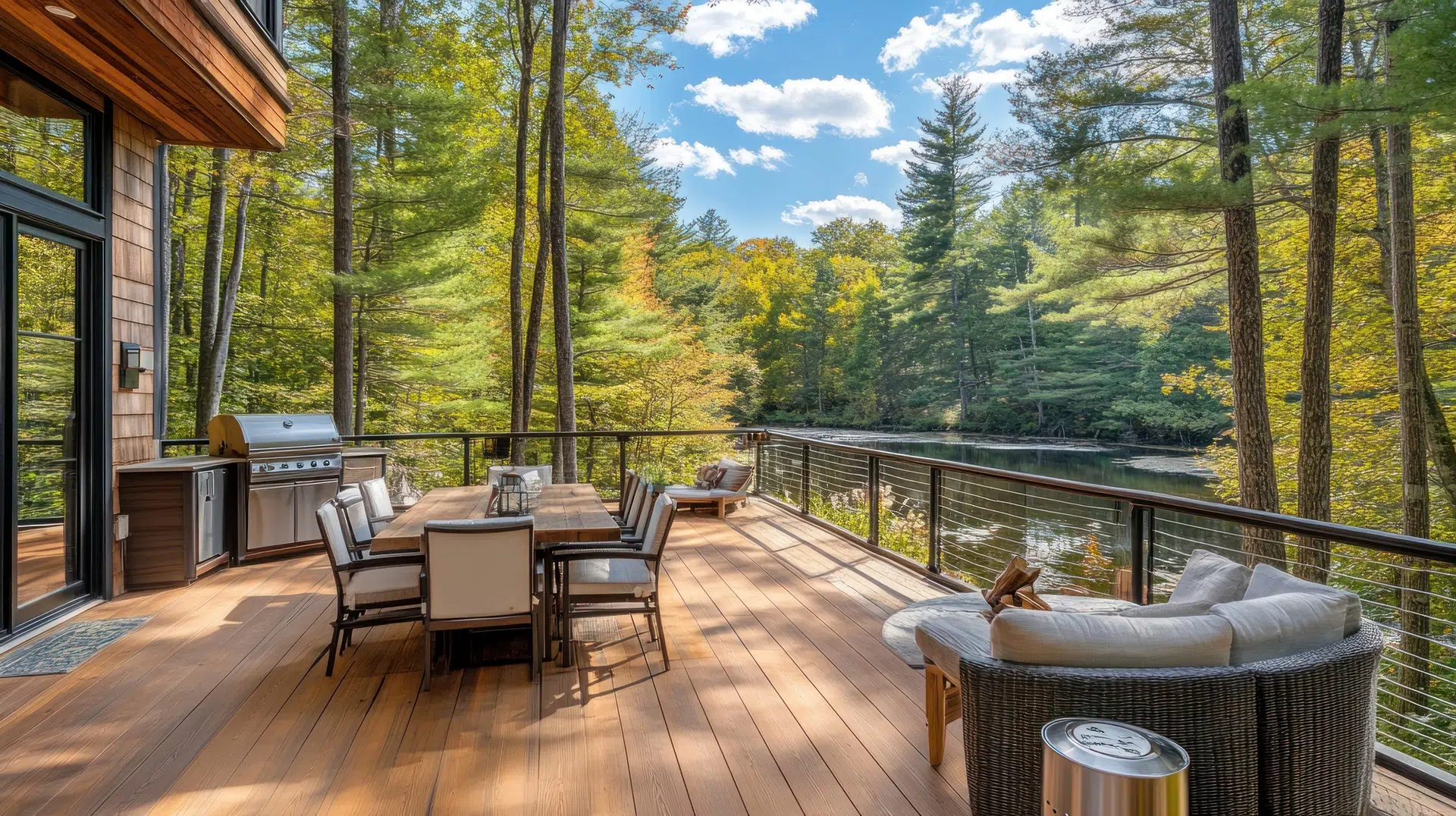
For decades, the standard American backyard followed a predictable formula: a patch of grass, maybe a flower bed, and a wooden platform slapped onto the back of the house. Many think of the deck as a place to dump a grill and a few plastic chairs.
Homeowners are no longer satisfied with a simple wooden box hanging off the kitchen. The modern demand is for a seamless transition between the indoors and the outdoors, a living space that can be an entertainment hub and a personal retreat.
The Psychology of the Outdoor Shift
Spending time outside reduces stress, improves mood, and builds connection. A bare-bones deck doesn’t invite you to linger, but a well-designed retreat does.
Creating a retreat means designing for comfort and immersion, and this involves thinking about how the space feels at different times of the day:
- Morning coffee in the sun
- Shaded afternoon reading spot
- Ambient glow of evening gatherings
You create a destination that pulls you outside, rather than just a platform that sits outside. This requires zoning, landscaping, and an attention to detail that turns a structural necessity into an experience.
Choosing the Right Materials
When you are building a true retreat, you are investing in your home’s value and your family’s enjoyment. The materials you choose determine the look of the space and its safety and lifespan.
Pressure-treated pine is cheap, but it is prone to warping, splintering, and rotting. Composite decking can look fake and gets notoriously hot underfoot in the summer sun. For a genuine retreat, you need a material that feels luxurious, withstands the elements, and is safe for bare feet.
Homeowners looking to create a high-end, durable place want professionals to install the right deck. Contractors like Ipe Woods USA provide top-tier installations using tropical hardwoods that are renowned for their density, rich color, and natural resistance to rot, insects, and weather. Choosing a material like Ipe guarantees that the foundation of your retreat remains beautiful and functional for decades.
Zoning Your Property for Function
Before pouring a single footing or laying a single board, you need to map out your goals. How do you actually want to use the space? A retreat is a collection of zones that serve different purposes.
You might want a dedicated cooking zone with a grill, prep space, and even a pizza oven. You’ll need a dining zone with a proper table that fits the whole family. A separate lounging zone, with weatherproof sofas and a fire pit, acts as the living room of the backyard. When you break the space into zones, you create a flow that encourages movement and makes the area feel larger and more intentional than a single open platform.
Building the Outdoor Space
To truly achieve “retreat” status, you need to integrate elements that engage the senses. The most critical one is shade. Pergolas, shade sails, or awnings are no longer optional components.
These structures block the sun and define the vertical space, creating an outdoor “room” with a ceiling. Draping them with weather-resistant curtains adds a sense of privacy and drama. Training climbing vines over a pergola softens the structure and deepens the connection to nature. Adding a water feature, like a small fountain or a bubbling rock, introduces a calming auditory element that masks neighborhood noise.
Furnishing for Comfort, Not Just Show
Walk into a showroom, and you will see outdoor furniture that looks stylish but is uncomfortable or impractical. Furnishing an outdoor space should be approached with the same care as furnishing a living room.
Deep-seating sofas with high-quality, quick-dry foam cushions invite afternoon naps. Dining chairs should be armchairs, encouraging guests to linger at the table long after the meal is finished. Rugs designed for outdoor use tie the zones together and add a layer of softness underfoot. The goal is to blur the line between indoor comfort and outdoor freshness. If the furniture isn’t comfortable enough to fall asleep in, it isn’t retreat-worthy.
The Art of Atmospheric Lighting
Lighting is the secret weapon of outdoor design. Standard floodlights kill the ambiance. A retreat requires layered lighting that creates a mood as the sun goes down.
Path lights guarantee safe navigation, and uplighting placed in garden beds or beneath trees creates dramatic shadows and highlights the architecture of the landscape. String lights strung overhead provide a festive, warm glow that is perfect for dining areas. For the deck itself, consider recessed lighting in stair risers or post cap lights that glow softly, marking the edges of the space. The right lighting scheme extends the usable hours of your retreat deep into the night.
Softening the Edges with Some Greenery
A deck becomes a retreat when it feels like part of the garden. You can achieve this by softening the edges with strategic landscaping. Build planter boxes directly into the deck design, allowing ornamental grasses or herbs to spill over the edges.
Potted trees, like Japanese maples or olive trees, can be used to create natural privacy screens or focal points. Layering plants around the perimeter of the deck blurs the line between the hardscape and the lawn, making the structure feel grounded and permanent. Integration of greenery is what separates a sterile outdoor room from a lush, living sanctuary.
The Return on Investment
Rethinking your outdoor space is one of the best investments you can make in your property. Outdoor living spaces consistently rank among the top projects for return on investment in real estate.
Know that this is only true if the quality is there. A sagging, grey deck detracts from a home’s value. A stunning, functional retreat can be the deciding factor in a sale. The personal return on investment comes from the hours of relaxation, the family gatherings, and the quiet moments of peace.
Build the Life You Love, One Space at a Time
When your mindset changes from simply building a “deck” to designing a “retreat,” you transform how you live. It is an investment in your home’s architecture and your family’s happiness.
Tear down the old assumptions and build a space that reflects the way we want to live today. If you are interested in learning more about lifestyle trends, explore our website.