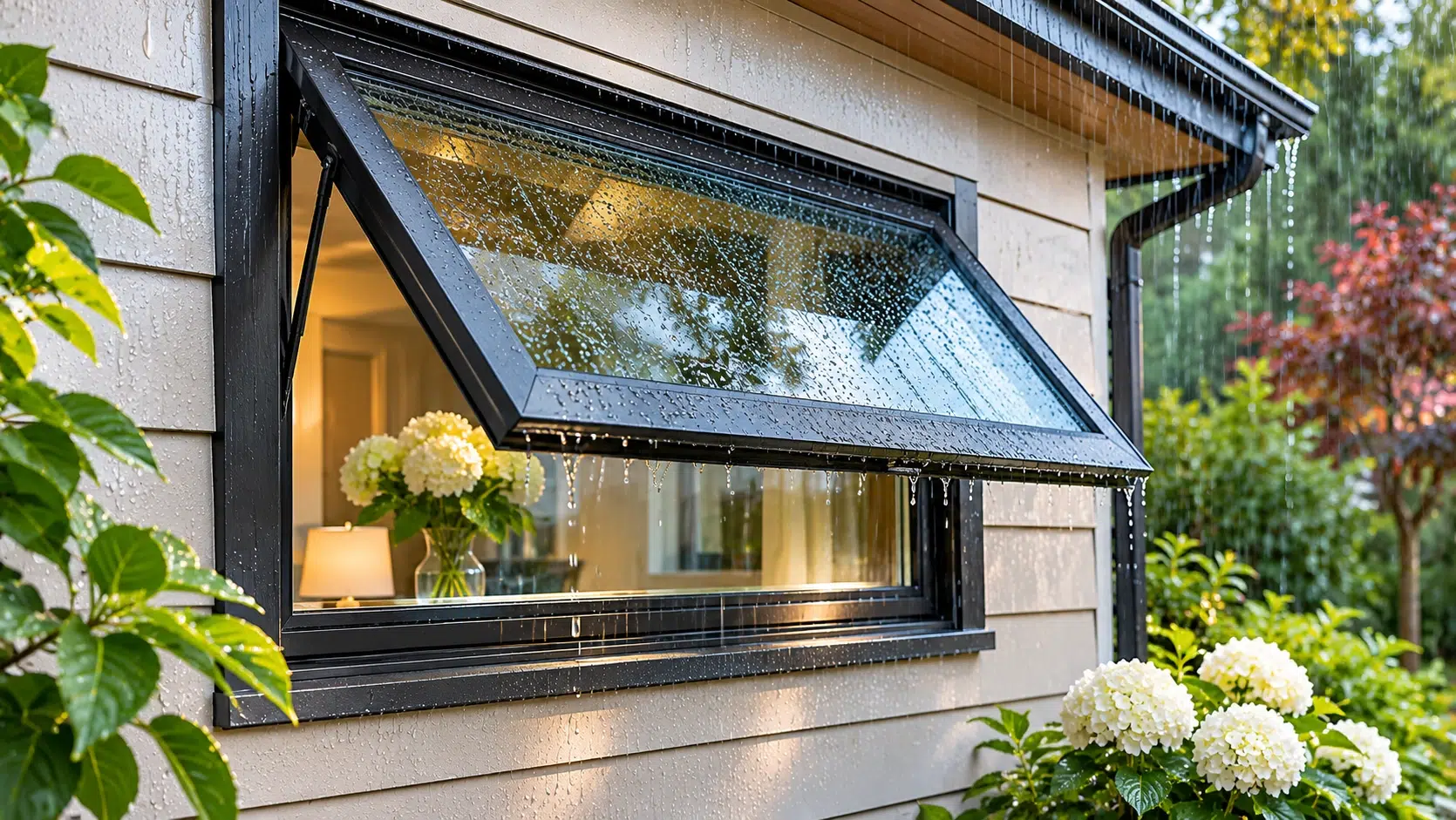
How an awning window is installed affects how well it keeps out rain and drafts. If you’ve ever found a wet windowsill after a storm, you know how frustrating it can be to figure out where the water came from.
The window itself is only part of the story. Water can get in around the frame, and cold air can slip through gaps hidden behind the trim. A few installation details make the difference between a window that closes properly and one that stays dry and draft-free.
How the Window Opens in Rain
Hinged at the top, awning windows push outward at the bottom. The open panel can shield part of the opening during a light drizzle, especially under a roof overhang. Wind can still blow rain in from the sides or underneath, so close and latch the window when rain starts blowing toward the house.
Side-hinged casement windows swing outward like a door. Both styles rely on the moving panel meeting the weatherstripping evenly when shut. If the installer sets the frame out of square, one corner may sit away from the seal even when the latch catches.
Where Rainwater Goes Around the Frame
Flashing gives water a path to drain outside before it can seep into the wall around the window. Around a full-frame installation, the top flashing overlaps the side pieces, which in turn overlap the sill flashing below. These layers work like roof shingles, giving water a path down and out.
The bottom of the opening matters because water tends to collect there. Sill flashing helps protect the wood beneath the window and gives any water that reaches it a way to drain. Before the exterior trim goes on, ask the installer to show you where that water will exit.
Why the Seal Behind the Trim Matters
Even if the window shuts tightly, air can still move through the space between its frame and the wall. The installer seals that space from the inside with a material suited to the gap, such as low-expansion window foam or backer rod and sealant. That seal helps stop the draft you might otherwise feel near the trim or along the interior sill on a windy day.
Small supports called shims hold the frame in position while it’s fastened. Once the window is secured, open and close it with the installer present. If it rubs or you have to push on the panel to latch it, ask the installer to check the alignment before finishing the trim.
What to Check After the First Storm
If you see a damp spot, note where it appeared and whether the window was fully latched. Take a photo before wiping it up, and record the wind direction if you can. That information can help the installer decide where to start looking.
Water at a corner of the trim can come from higher up in the wall. Moisture spread across the room-facing glass may be condensation, especially after a shower or while cooking. If the same spot gets wet after several storms, tell the installer and share the photos.