Summer weddings create one of the trickiest dress codes of the year. The setting may be relaxed, the weather may be warm, and the invitation may mention a garden, beach, vineyard, terrace, or destination venue. Yet the occasion is still a wedding, which means the outfit needs more intention than an ordinary summer dress.
The challenge is balance. A dress that feels right for brunch can look too casual beside the wedding party. A pale lace midi, ivory slip dress, or champagne satin gown can look too close to bridal in photos. The best summer wedding guest look sits between those two mistakes: light enough for the season, polished enough for the ceremony, and clearly respectful of the bride.
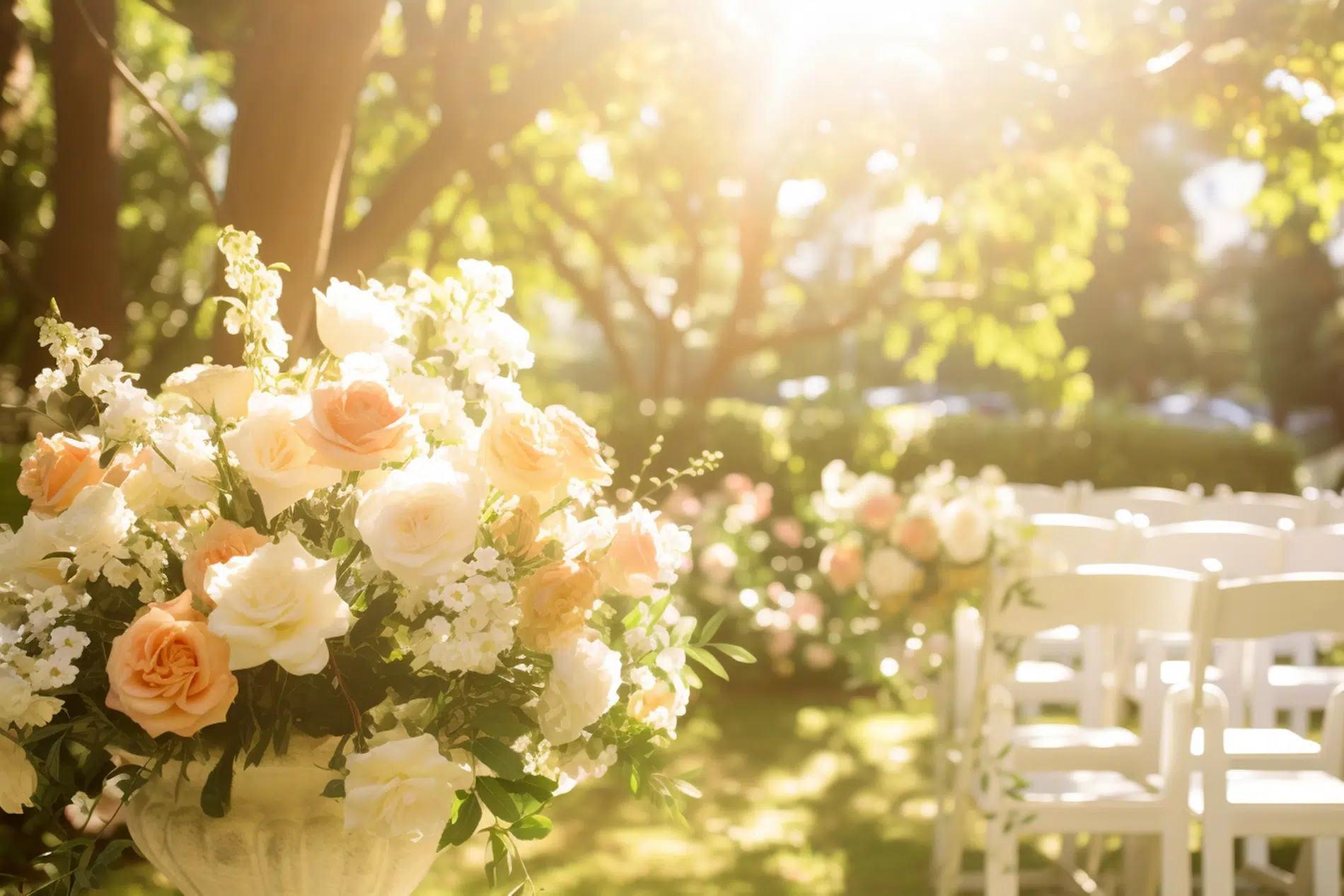
Outdoor settings make venue, weather, daylight, and movement part of the dress decision.
Start With the Venue Before You Choose the Dress
For a summer wedding, the venue should guide the dress before color, trend, or personal taste. A garden ceremony usually calls for soft movement, breathable fabric, and a hemline that works on grass. A hotel reception can handle sleeker satin, richer colors, and a more structured silhouette. A coastal or destination wedding may allow a lighter mood, but the dress still needs to look intentional rather than beach-casual.
The safest choice for most summer weddings is a midi or ankle-grazing dress in a polished fabric, because it gives enough coverage for the ceremony while still moving easily through dinner and dancing. If the ceremony is outdoors, avoid anything that drags, clings too tightly, or requires constant adjustment. Elegance looks effortless only when the dress lets you sit, walk, and move without fuss.
How to Avoid Looking Too Casual
A summer wedding guest dress should not look like something you would throw over a swimsuit or wear to a casual lunch. Cotton sundresses, jersey bodycon dresses, beach cover-up shapes, and overly relaxed linen pieces can feel underdressed unless the invitation is explicitly casual.
To keep the look elevated, choose one or two dressier signals. A lined chiffon dress, a satin midi, a structured bodice, a refined neckline, soft ruching, or a clean A-line shape can make the outfit feel appropriate without making it heavy. The dress does not need to be dramatic, but it should look like it was chosen for a wedding.
Accessories matter here as well. Flat sandals, oversized totes, and everyday jewelry can pull even a pretty dress into casual territory. A small clutch, heeled sandal, block heel, delicate drop earring, or polished hair detail usually gives the outfit enough occasion value.
How to Avoid Looking Too Bridal
The easiest rule is to avoid white, but summer wedding dressing requires a wider filter. Ivory, cream, pale champagne, white lace, pearl-heavy detailing, and very light floral prints on a white base can all photograph too close to bridal. Even if the dress is technically not white, it may still read bridal in a group photo.
A good wedding guest color should create clear separation from the bride. Soft pink, sage, dusty blue, lavender, butter yellow, coral, terracotta, navy, forest green, and wine red can all work depending on the venue and time of day. Gentle prints are also useful because they add personality without looking like a bridal party gown.
If you are unsure, ask one practical question: would this dress look confusing in a photo beside the bride? If the answer is yes, choose a different color, print, or texture.
Choose Fabric for Heat, Photos, and Movement
For summer weddings, fabric is not just about comfort. It changes how formal the dress looks, how it photographs, and how well it holds up during a long day. Chiffon works well for garden and outdoor weddings because it moves softly and does not feel heavy. Satin can look beautiful for evening receptions, especially in deeper colors or clean slip silhouettes. Crepe and jacquard add structure when the dress code leans more formal.
The best fabric choice depends on both the weather and the setting. For a daytime outdoor wedding, a lined chiffon midi or soft A-line dress is usually more reliable than a tight satin maxi because it handles heat, breeze, and movement better. For an evening hotel wedding, satin or jacquard can look more polished because the setting can carry a dressier finish.
Avoid fabrics that are too sheer in daylight, too clingy in heat, or too wrinkled before the ceremony even starts. A summer wedding dress should still look composed after travel, photos, dinner, and dancing.
Pick a Length That Matches the Dress Code
Midi dresses are the most flexible option for summer wedding guests. They feel more polished than casual minis, but they are easier to manage than full-length gowns. A midi hem also works across many venues: garden ceremonies, vineyard weddings, cocktail receptions, rooftop dinners, and semi-formal hotel events.
Maxi dresses work best when the wedding is formal, evening, black-tie optional, or destination-based. The key is choosing a maxi that feels like occasionwear, not vacation wear. Look for a refined neckline, better fabric, or a more intentional color.
Mini dresses can work for relaxed summer weddings, but they need extra polish. A short dress should have a dressier fabric, structured shape, or elegant neckline so it does not drift into party or date-night territory. If the mini is tight, shiny, and very short, it is probably not the best choice for a wedding ceremony.
Match the Dress to the Wedding Type
For a garden wedding, soft florals, chiffon, ruffles, A-line skirts, and block-heel-friendly lengths usually feel right. The outfit should look romantic but not delicate enough to feel bridal.
For a beach or coastal wedding, choose light movement without looking like you are headed to the resort pool. A breezy maxi can work if the fabric is lined, the color is clearly non-bridal, and the accessories are refined.
For a city or hotel wedding, cleaner silhouettes usually look stronger than overly sweet prints. A satin midi, cowl neckline, square neck, or one-shoulder shape can feel polished without becoming a full gown.
For a vineyard or countryside wedding, muted florals, olive, rose, terracotta, navy, and soft earth tones often photograph beautifully against the setting. A dress that moves well matters more than a dramatic silhouette.
The Safest Color Rules for Summer Wedding Guests
Pastels and soft brights are excellent for summer weddings when they are clearly separated from bridal white. Dusty blue, soft green, lavender, coral, warm yellow, and muted pink all feel seasonal without being too loud.
Darker colors can also work in summer, especially for evening receptions. Navy, emerald, wine, chocolate, and black can look elegant when the fabric is light enough for the season. A darker dress with a summer-appropriate neckline or sandal can feel more refined than a pale dress that risks looking bridal.
The colors to be most careful with are white, ivory, cream, champagne, very pale beige, and white-based floral prints. When a color is close to bridal, the safest move is not to rationalize it. Choose something more clearly guest-appropriate.
Build the Look Around One Reliable Occasion Dress
For guests who want a polished dress without overcomplicating the search, a curated edit of summer wedding guest dresses from RIHOAS is a useful place to start. For a broader dress-code and venue edit, RIHOAS also organizes wedding guest dresses across formal, cocktail, garden, and seasonal styles. The strongest pieces for this occasion are the ones that combine summer-friendly movement with wedding-appropriate details: midi or maxi lengths, breathable finishes, soft prints, satin or chiffon textures, and colors that do not compete with the bride.
The goal is not to find the loudest dress in the room. It is to find the dress that respects the invitation, handles the weather, photographs well, and still feels comfortable after several hours of wear.
Finish With Accessories That Respect the Setting
Shoes should follow the venue. For garden weddings, block heels or dressy sandals are safer than thin stilettos because they handle grass and uneven paths better. For hotel receptions, a sleeker heel can make a simple dress feel more formal. For beach weddings, avoid anything too heavy or glittery; lighter metallics, minimal sandals, or refined woven details usually work better.
Jewelry should complete the outfit without turning it into a statement competition. If the dress has a strong neckline, keep the necklace minimal and use earrings instead. If the dress is simple, one sculptural accessory can make it feel intentional.
A summer wedding guest outfit should feel finished, not overloaded. The more effortless it looks, the more successful it usually is.
Final Checklist Before You Go
Before leaving for a summer wedding, check the outfit against six questions.
Does the dress match the invitation and venue? Is it clearly not white, ivory, or bridal? Can you sit, walk, eat, and dance without adjusting it constantly? Does the fabric make sense for heat and daylight photos? Do the shoes work for the ground you will be standing on? Does the full look feel polished without trying to compete with the bride?
If the answer is yes, the dress has done its job. The best summer wedding guest look is not the most attention-seeking one. It is the one that feels elegant, appropriate, comfortable, and unmistakably chosen for the occasion.