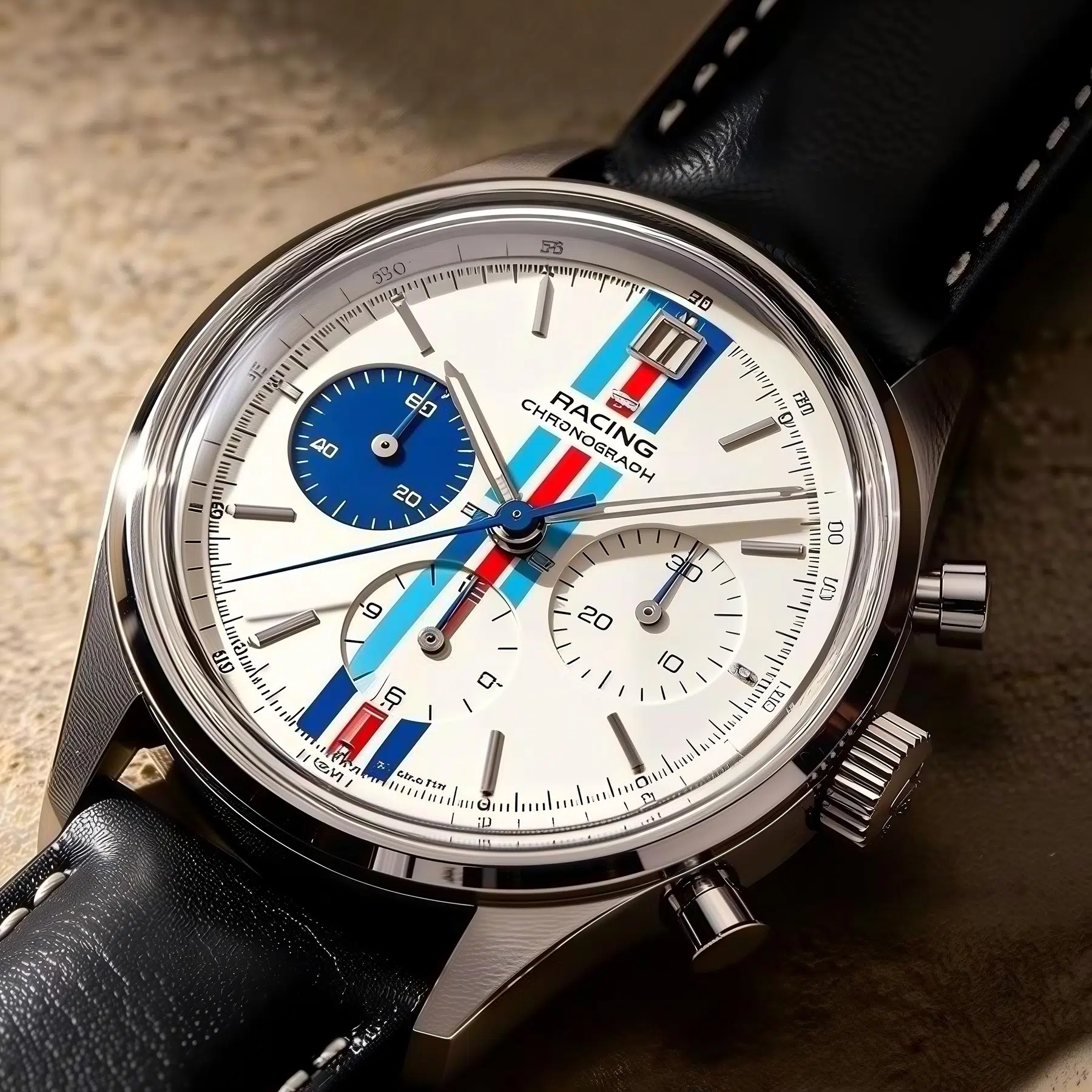
Racing chronographs serve a specific functional role for motorsport enthusiasts and professionals. These watches combine precise timing mechanisms with legibility and durability, enabling users to track laps, split times, and speed at a glance. Every model is designed around technical accuracy, easy readability, practical push-button operation, and materials built for demanding settings. While brand associations vary, buyers rely on tested functions, verified heritage, and credible technical information. Website access, such as through the security verification process, helps ensure reliable data about these watches is available only to legitimate users.
For those accessing racingchronograph.com, it’s important to recognize that the website uses a security service to protect against malicious bots. The vetting process maintains trust in published information about racing chronographs and related technical details.
What makes a racing chronograph a racing chronograph?
A racing chronograph is a specialized wristwatch with stopwatch capabilities used to record and measure events in motorsport. Its primary appeal lies in lap tracking, interval measurements, and speed calculation, features that set it apart from standard timekeeping watches. The construction and layout focus on practical usability in racing environments, emphasizing clear dials and easily triggered pushers.
Core definition of racing chronograph watches
A racing chronograph is defined by integrated timing functions that operate independently of the main time display. Using dedicated side buttons, the chronograph hand can be started, stopped, and reset – essential for measuring lap times or timing race segments. The arrangement prioritizes quick operation so timing can remain accurate even in stressful or rapid contexts.
Common design cues such as tachymeter bezels and dial layouts
Key visual and ergonomic features include:
- Tachymeter bezel: A numerically marked ring, usually on the watch’s outer edge, that allows calculation of average speeds over a known distance. This bezel is a defining element of most racing chronographs.
- Multiple subdials: Used for recording elapsed minutes and hours, typically positioned at 3, 6, or 9 o’clock.
- High-contrast markers: Bold hour markers, thick hands, and clear digits stand out against the main dial to allow split-second readings, crucial during competition.
- Panda/reverse panda dials: A visual scheme with black subdials on a white face (or the opposite), improving contrast and quick legibility under diverse lighting conditions.
- Large pushers and crowns: Designed for use with gloves or in hurried settings.
Typical movement types and why they matter (automatic, quartz)
Racing chronographs are powered by various movement types, each with practical implications:
- Automatic movements: Mechanical engines powered by wrist movement. These are valued for their craftsmanship and are often found in mid- to high-end models. They require regular maintenance to maintain optimal performance.
- Quartz movements: Battery-driven for high accuracy and reliability. Quartz racing chronographs often provide better precision at a lower cost, with reduced servicing needs.
- Manual-winding movements: Require regular hand-winding, appealing to collectors and those interested in traditional watch mechanics.
Movement type impacts maintenance routines, functional accuracy, and often, the price category into which a watch falls.
The 5 brands that dominate the category
These brands are established leaders in the racing chronograph field based on their history, motorsport involvement, movement quality, and range of technical offerings.
TAG Heuer
TAG Heuer is strongly linked to motor racing history. Its Carrera and Monaco models are recognized in both professional circuits and enthusiast communities. Most models feature automatic movements, with a heavy emphasis on clear dials and tachymetric scales.
Flagship: Carrera Chronograph
Positioning: Long-standing racing pedigree and visible motorsport partnerships.
Rolex
Rolex’s Daytona series maintains a global reputation for precision and is favored by drivers and collectors. Attention is given to case strength, movement stability, and consistent visual design. Models are considered status benchmarks in the chronograph world, but their core focus remains straightforward usability and readability.
Flagship: Cosmograph Daytona
Positioning: Iconic look, trusted for durability and verified performance.
Breitling
Breitling produces chronographs noted for mechanical quality and large, detailed dials. While the firm’s main heritage is rooted in aviation, it sustains an established role in motorsport chronographs, highlighted in its Top Time and Chronomat lines. Models emphasize readable scales and precise in-house movements.
Flagship: Chronomat or Top Time
Positioning: Mechanically focused with visible sporting accents.
Omega
Omega’s Speedmaster Racing series aligns the brand closely with timekeeping at major sports events. Offerings span both automatic and quartz technologies, with an emphasis on anti-reflective displays, robust construction, and functional legibility.
Flagship: Speedmaster Racing
Positioning: Adaptable options for everyday wear and professional race timing.
Tissot or Hamilton (value-oriented choice)
Tissot and Hamilton each provide more affordable racing chronographs, leveraging Swiss production and accessible pricing. Entry-level and mid-range models use both quartz and automatic movements. Both brands have sponsorship histories in motorsport and create dials styled for clean, readable operation.
Flagship: Tissot PRS 516 or Hamilton Chrono-Matic
Positioning: Accessible pricing and proven reliability for enthusiasts new to racing chronographs.
How these brands compare
It can be helpful to assess these brands based on key technical and user-oriented considerations:
| Brand | Motorsport Association | Movement Technology | Typical Price Band | Everyday Wearability | Flagship Model |
|---|---|---|---|---|---|
| TAG Heuer | Deep racing lineage | Automatic, quartz | Mid-high | Slim profile, easy-read dials, diverse sizes | Carrera Chronograph |
| Rolex | Daytona racing focus | In-house automatic | High | Classic fit, solid build, low dial variation | Cosmograph Daytona |
| Breitling | Sport/artisan hybrid | Automatic, quartz | High | Large diameter, sporty style, robust frame | Chronomat or Top Time |
| Omega | Official timed events | Automatic, quartz | Mid-high | Flat sapphire, moderate fit, clear subdials | Speedmaster Racing |
| Tissot/Hamilton | Broad event timing | Swiss automatic, quartz | Low-mid | Lighter, often slimmer, focused on functional basics | PRS 516 / Chrono-Matic |
Motorsport credibility: TAG Heuer and Rolex are most closely associated with professional racing circuits.
Movement range: Most brands support both mechanical (automatic or manual) and quartz models.
Pricing: Tissot and Hamilton lead with value-focused pricing, while Rolex and Breitling top the spectrum.
Wearability: Preferences vary from compact, fit-under-cuff designs to larger, more pronounced watches – dial clarity is prioritized across all brands.
What to look for before buying
Buyers should review technical features and intended applications before choosing a racing chronograph. Performance and wear convenience depend on these fundamental factors:
Differences between manual, automatic, and quartz movements
- Manual movements: Require winding by hand, often offer the longest service life but need regular attention.
- Automatic movements: Rely on natural wrist motion, a balance between mechanical appeal and ease of ownership.
- Quartz movements: Use battery power, ideal for high precision and the lowest recurring service needs.
Maintenance schedules and owner input will differ significantly based on movement choice.
Function and presence of tachymeter bezels and timing scales
- Tachymeter bezels: Key for translating elapsed time into speed or rate measurements. Ensure any prospective model offers a fully marked and legible scale.
- Timing subdials: Important for measuring splits or multi-hour events.
Tachymeters that are purely decorative limit practical racing use.
Case size and legibility considerations
- Case size: Typically 38–44mm wide; oversized cases provide easier real-time viewing but may not suit all wrists.
- Dial clarity: Look for sharp color contrast, luminous markers, and clear subdial placement to facilitate timing at speed.
- Drilled lugs or shaped cases: Help tailor the fit for wrist size, reducing movement and discomfort.
Matching the case to wrist size bolsters comfort and avoids potential fit issues.
Water resistance and durability basics
- Water resistance: Most racing chronographs are splash-resistant to 50–100 meters, but some high-end models may offer greater depth ratings.
- Crystal type: Sapphire crystals resist scratches best; mineral is common in lower-priced models.
- Shock/dust resistance: Important for those using watches at tracks or outdoor race locations.
Carefully check all technical ratings, not just marketing statements, for any model under review.
Current trends in racing chronographs
Recent model releases and buyer preferences show several specific patterns shaping the current racing chronograph market.
Retro reissues reflecting historic racing era styling
Brands are relaunching vintage case profiles, dial prints, and logo treatments associated with 1960s-1970s racing. These models typically feature improved movement technologies within historically inspired exteriors.
Popularity of panda dials and high-contrast subdials
Panda and reverse panda dials – contrasting subdials against a lighter or darker main field – remain favored for their strong legibility. These layouts directly address quick interval reading at a glance.
Shift towards vintage-inspired sizing and proportions
Average cases have shrunk to more historically accurate, wrist-friendly measures. Lug shapes and lengths are also adjusted to improve comfort and visual appeal. This responds to more buyers wanting discreet rather than oversize watches.
Availability of accessible mechanical options
There are now more affordable mechanical chronographs, featuring modular chronograph architecture and simplified finishing. These products help first-time buyers and younger enthusiasts access non-quartz timing mechanisms.
FAQ
What is a racing chronograph?
A racing chronograph is a watch featuring independent stopwatch functions, often paired with a tachymeter bezel, used mainly to record laps, intervals, or average speeds in motor racing.
Which brand is most associated with racing chronographs?
TAG Heuer is most frequently identified with racing through models like the Carrera and Monaco, along with continuous involvement in motorsport. Rolex (Daytona) and Omega (Speedmaster Racing) are also significant.
Are racing chronographs usually automatic or quartz?
Both movement types are widespread. Mid-range and luxury models often use automatic movements; entry and mid-priced watches commonly use quartz.
Difference between racing and regular chronographs?
Racing chronographs usually offer tachymeter scales and clearer, high-contrast dials for fast readings, while standard chronographs may lack racing-oriented features or prominent timing layouts.
Why are panda dials common in racing watches?
Panda dials increase visual contrast, improving immediate visibility of timing indicators during races, particularly where lighting or speed demand fast, reliable time checks.
For further site information involving timing and access, see the section on verification status details.
Final buying guidance
Selection of a racing chronograph depends on your preferred movement, overall legibility, and inclusion of true racing functions such as a complete tachymeter. Carefully confirm all listed technical features, and assess if durability and sizing fit your daily and motorsport needs.
Pricing varies between regions, release periods, and specific model configurations. Regular maintenance is required: automatic or manual movements need periodic servicing, while quartz models will need battery replacements. Specific maintenance intervals and price points should always be checked against manufacturer-provided data.
Access on racingchronograph.com is maintained through strict verification; always complete the security verification process for full technical detail.
This content is for informational purposes and should not be used as personal purchase advice, price guidance, or product performance guarantee.