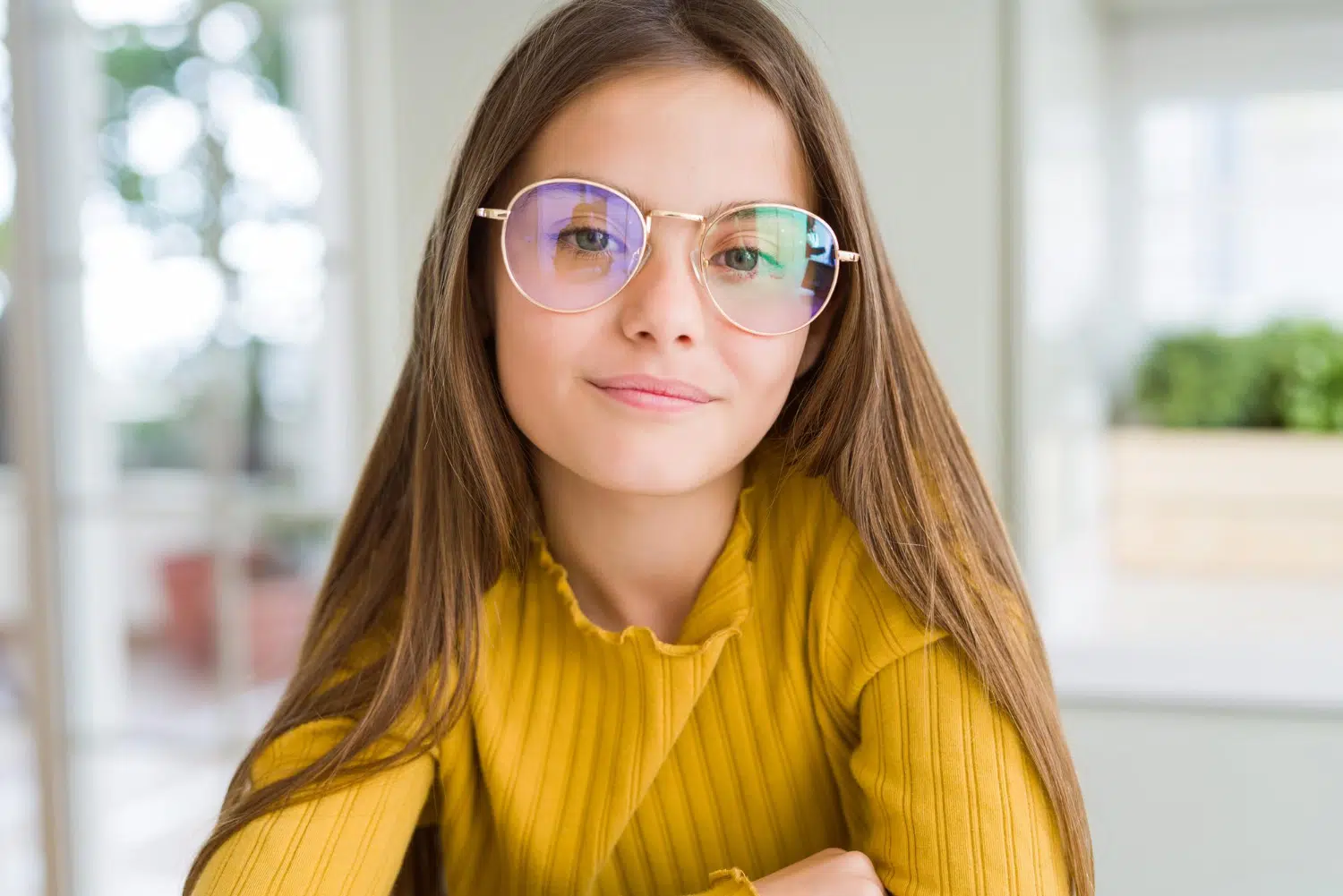
Finding out your child needs glasses brings a mix of questions that most parents are not prepared for. How bad is the prescription? Will they need them forever? Will other children say something? What happens if they lose them or break them within a week? And underneath all of that, a more fundamental one: are you handling this correctly?
The good news is that childhood vision problems are common, well understood, and in most cases straightforward to manage with the right prescription glasses and a bit of practical preparation. What makes the difference is knowing what to look for, when to act, and how to make the experience as straightforward as possible for a child who may not be enthusiastic about it.
How to Tell If Your Child Might Need Glasses
Children are not always reliable reporters of their own vision. Many have never experienced clear sight and have no reference point for what good vision feels like, so they do not flag the problem. Others notice but do not say anything because they do not want to stand out or do not realise that what they are experiencing is not normal.
The signs that something may be worth checking include:
– Sitting closer to the television than other children do, or than they used to
– Squinting to read the board at school or to see things at a distance
– Holding books or devices very close to their face
– Complaints of headaches, particularly after school or during reading
– Rubbing their eyes frequently during tasks that require concentration
– One eye turning in or out, even occasionally
– Avoiding activities that require visual focus, such as reading or drawing
None of these symptoms confirms a vision problem on its own, but any consistent pattern is worth following up with an eye test rather than waiting to see whether it resolves.
When Should Children Have Their Eyes Tested
Eye tests for children are available on the NHS at no cost, and the recommendation is to start earlier than most parents think necessary. A first eye test is appropriate around the age of three to four, before school starts, so that any issues affecting learning and development can be identified and addressed ahead of the first year.
After that, annual eye tests are sensible throughout primary and secondary school. Vision can change quickly during growth periods, and a prescription that was accurate a year ago may no longer be. Children whose parents or siblings wear prescription glasses are at higher risk of needing correction themselves and benefit from testing on the earlier end of the recommended schedule.
Many children who struggle in school with reading, concentration, or keeping up in class have an undetected vision problem that contributes to the difficulty. The connection is not always made because the child appears to be paying attention and is not reporting any visual discomfort. Getting the eyes tested removes vision from the list of possible causes if everything comes back clear, and addresses a significant contributor to learning difficulty if it does not.
Choosing the Right Frames for a Child
Children’s frames need to prioritise function over fashion, at least initially. The frame needs to fit correctly, stay in place during activity, and withstand the handling that children subject glasses to on a daily basis.
Spring hinges are worth looking for specifically. These allow the temples to flex outward beyond the normal range without snapping, which extends the life of the frame considerably through the inevitable moments where glasses are sat on, pulled at, or dropped.
Lightweight materials such as flexible plastics and memory metal are more comfortable for children to wear for extended periods and are less likely to cause pressure points on smaller features. Frames that are too heavy tend to slide down the nose, which encourages the child to look over rather than through the lenses and undermines the correction.
Fit matters more than anything else. The optical centres of the lenses need to sit correctly in front of the child’s pupils, and this can only happen if the frame sits at the right height on the face. A proper fitting at the point of purchase, with adjustments made as the child grows, keeps the prescription performing as it should.
Helping Children Adapt to Wearing Glasses
The first week or two is the period where most resistance occurs. The glasses feel unfamiliar; other children may comment, and the temptation to take them off during school or leave them at home is real. How parents handle this early period makes a significant difference in whether glasses become a normal part of the child’s life or an ongoing battle.
A few things help. Letting the child be involved in choosing the frame, within a range of sensible options, gives them some ownership over the experience. Keeping the initial adjustment period consistent, wearing them from the start of the day rather than introducing them gradually, tends to produce quicker adaptation than part-time wearing.
Framing the glasses positively without making them a bigger deal than they need to be is the right balance. Children take cues from how adults around them respond. If the adults treat glasses as a normal, unremarkable thing, most children follow.
For younger children who resist consistently, a conversation with the optician about whether a short adaptation period is expected or whether the prescription needs reviewing is worthwhile. Occasionally, a prescription that is slightly off for the child’s developing visual system creates discomfort that is the actual source of the resistance.
Blue Light Glasses for Children
Screen use among school-age children has increased considerably, and the question of whether blue light glasses are appropriate for children comes up with increasing frequency.
The case for them is the same as for adults. Screens emit a higher proportion of short-wavelength blue light than natural sources, and evening screen use in particular affects the melatonin production that regulates sleep. Children are not less susceptible to this effect and, in some cases, are more so, given that sleep quality has a more direct impact on development and learning than it does in adults.
For a child who uses screens in the evening and has difficulty settling to sleep, blue light glasses worn during that screen time are a practical and low-risk option. They are available with or without a prescription and can be incorporated into a child’s everyday prescription glasses if screen use is significant enough to warrant it.
Eye Health Habits Worth Starting Early
The habits that protect eye health over a lifetime are easier to establish in childhood than to introduce later. A few are worth building into daily routines from an early age.
Time outdoors is one of the most consistently supported factors in reducing the progression of short-sightedness in children. Research indicates that at least ninety minutes of outdoor time per day, in natural daylight, is associated with slower myopia progression. The mechanism is not fully understood but is thought to involve the effect of natural light on eye development.
Limiting screen time to recommended age-appropriate levels, taking breaks during reading and close work, and establishing a screen-free period before bedtime all contribute to eye health habits that carry forward into adulthood.
Annual eye tests, treated as a routine check rather than a response to a problem, establish the expectation that looking after your eyes is a normal part of looking after your health. Children who grow up with that expectation are more likely to maintain it as adults..
Final Say
Children’s vision affects everything from how they learn to how they interact with the world around them, and most of the common issues are straightforward to manage once they are identified. Prescription glasses fitted correctly to the right prescription, maintained with reasonable care, and replaced when the prescription changes, do the job well.
The most important step is also the simplest one. Get the eyes tested. Everything else follows from knowing what is actually needed.