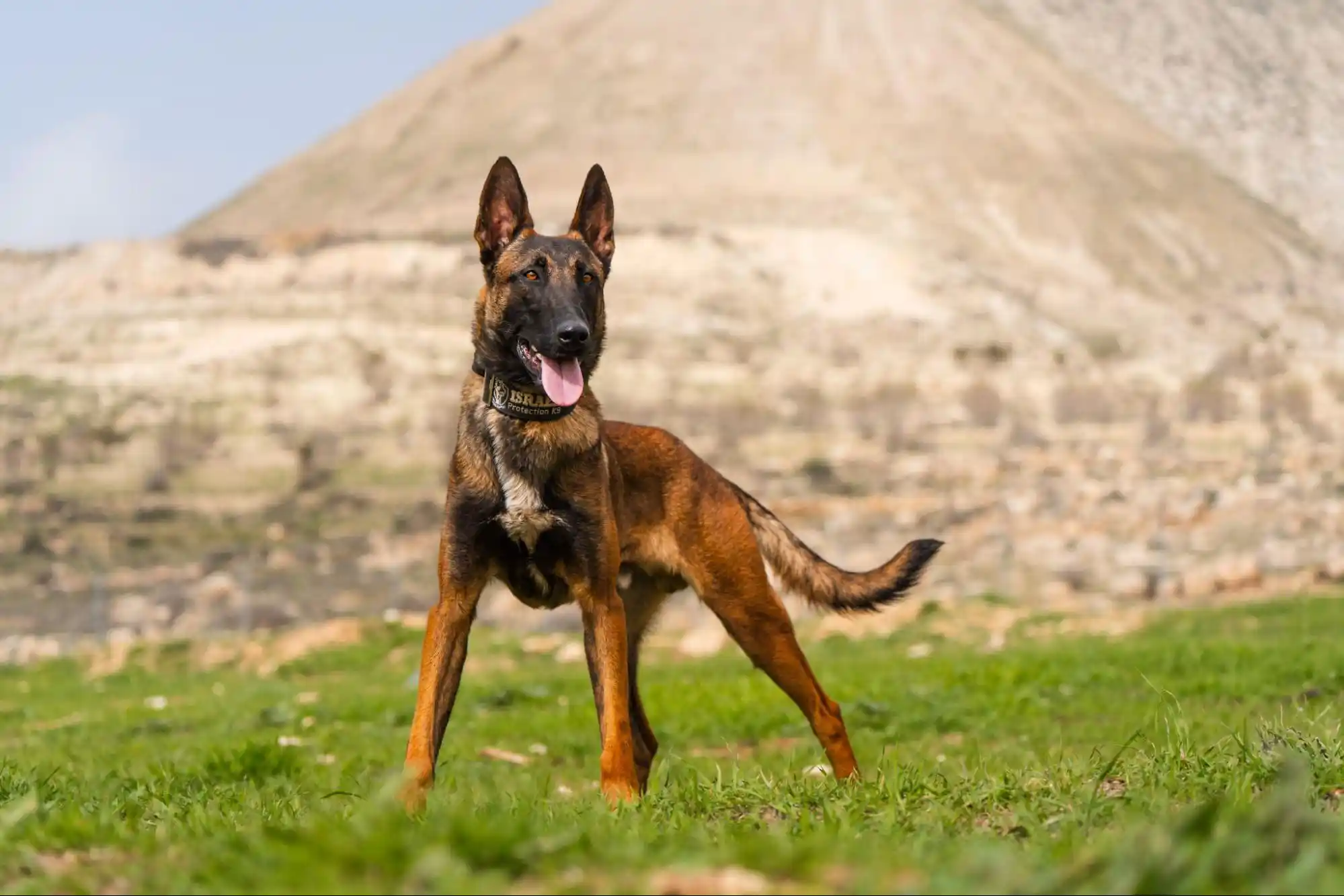
The market for protection dogs has expanded significantly in recent years, and with that growth has come a problem most buyers do not discover until it is too late. A large number of dogs being sold as protection animals are not genuinely prepared for that role. They have been rushed through training, imported from overseas dealers, or conditioned to perform in controlled scenarios that bear little resemblance to real-world threats. There is no certification body governing the industry, no regulatory standard, and no equivalent of a crash test rating for a working animal. Any dog can be called a protection dog and sold as one, which means buyers are almost entirely dependent on the reputation and honesty of whoever is selling them the dog.
Israel Protection K9 was born from exactly this realization. Co-founder Eli Bobroff set out to find a military-grade protection dog and discovered that the few companies claiming to provide dogs at that level were either prohibitively expensive or not delivering the standard they advertised. His search led him to Arik Deri, former commander of the Yalom Unit, one of Israel’s most elite military forces specializing in counter-terrorism, combat engineering, and chemical warfare. What began as a training arrangement became a shared mission and eventually the company is now known as Israel Protection K9, today one of the leading premium protection dog providers in the world.
What follows are the questions every buyer must ask before committing to any protection dog for sale.
Does This Dog Actually Work?
Most buyers focus on the wrong things. Breed. Appearance. Training titles. Video footage of impressive bite work. The first question should be simpler: Does the dog actually work? Not in a prepared scenario with a familiar decoy in a context it has been conditioned to recognize, but stripped of every familiar cue, facing a genuine threatening situation with courage, commitment, and control.
The protection dog industry is built around repetitive, staged scenarios that look impressive on camera but collapse under genuine pressure. A well-edited training clip tells you almost nothing about whether that dog will protect you in a real scenario. Most dogs sold as protection animals come from bite sport backgrounds where prey drive, the instinct to chase and bite a moving target, is trained rather than genuine protection drive. During Schutzhund competition, dogs showing real aggression toward the decoy are often disqualified. The very trait that makes a dog effective in a real confrontation can get it removed from a trial field.
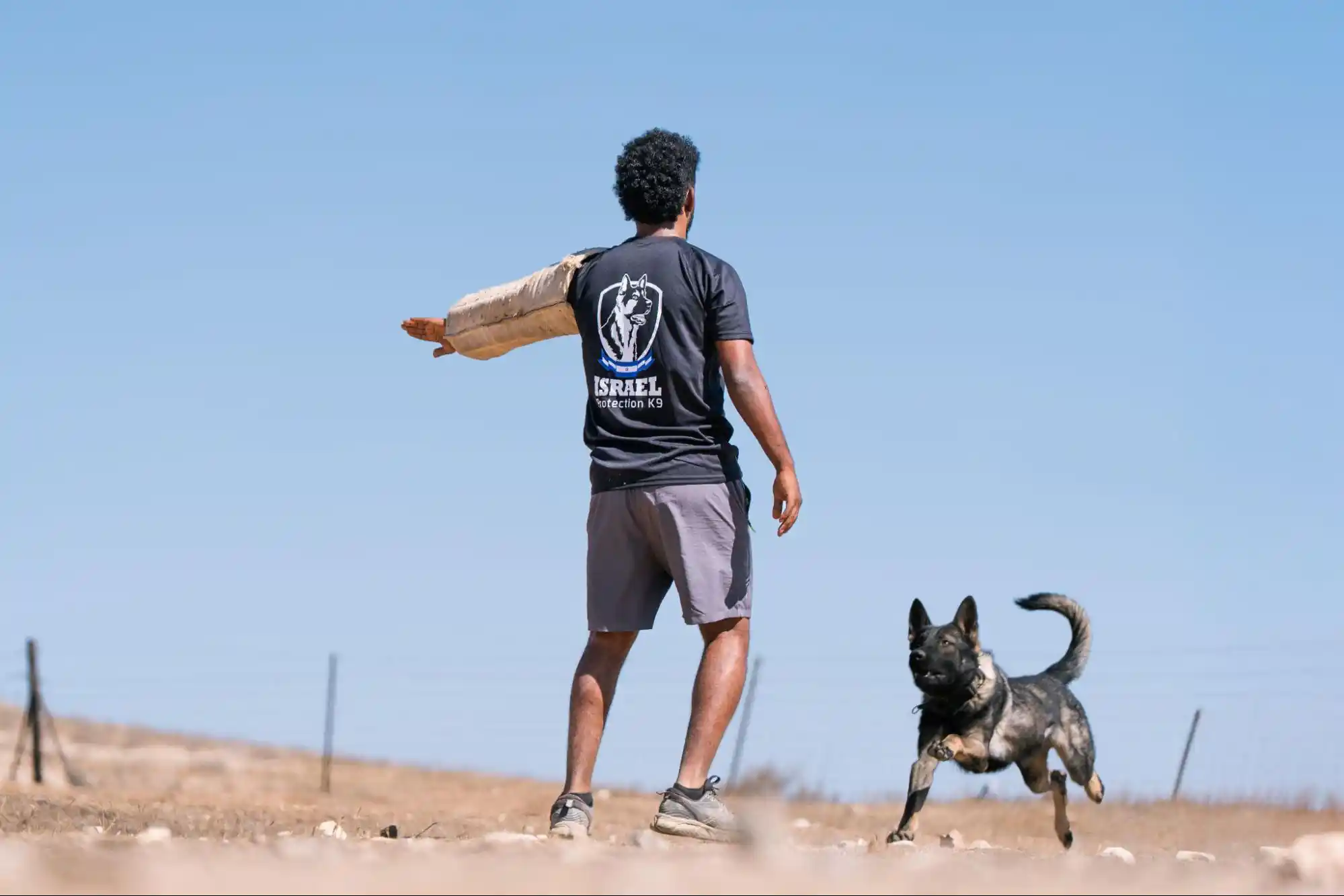
Israel Protection K9 uses two evaluation methods designed to eliminate this conditioning. In the first, a decoy sits motionless on a bench with no visible equipment and no agitation. A hidden sleeve is concealed beneath clothing. The handler gives one command. The dog either engages with full commitment or it does not. In the second test, the dog wears a muzzle while the decoy remains completely still. A dog that engages in this scenario is operating from genuine drive and genetic foundation, not learned pattern recognition. Most dogs fail both tests.
Where Did This Dog Come From and What Genetics Back It?
Most companies in the premium protection dog space are importers. They source dogs from European breeders, bring them to the United States, and sell them at significant markups based on titles, footage, and reputation. Israel Protection K9 does not operate that way. Everything is done in-house because Eli and Arik concluded it is the only way to guarantee the outcome. Every dog is purpose-bred from elite working bloodlines sourced through years of international selection across the United States, the United Kingdom, the Netherlands, Germany, the Czech Republic, and Slovenia. A significant portion of their breeding stock comes from Israel’s most elite special forces units.
Every breeding is engineered with precision, matching males and females for complementary qualities including intensity, clarity, nerve strength, and stability. IPK9 selects specifically for the combination of traits a genuine protection dog requires: prey drive, aggression, defense drive, and the mental stability that makes all of those traits manageable in a family environment. These are not traits you can import your way into. They have to be built intentionally across generations of selective breeding and developed through a program that refuses to hide weaknesses behind conditioning.
How Were the Early Months of This Dog’s Life Structured?
Very few buyers ask about the first six months of a dog’s life, which is precisely when temperament, environmental confidence, and social stability are formed. A dog raised in a kennel during this period will carry those effects regardless of how much training follows. Israel Protection K9 raises every puppy inside trainers’ homes from birth under the ENS Super Dog program, a neurological stimulation protocol that provides a developmental advantage before formal training begins. Puppies are exposed to children, other pets, household activity, and varied environments from the start.
What Standard Does This Program Hold?
The process takes roughly eighteen months from the time a dog enters the program to placement. During that time, it is evaluated continuously for working ability and for the full picture of what it means to be a protection dog that a family can live with. Approximately one in ten dogs makes it through. Those that do not are removed from the program entirely, not sold at a discount or quietly misrepresented. That standard extends beyond the private market. IPK9 also provides dogs to Special Operations Forces units.
IPK9’s dogs are not kennel animals. They are integrated, balanced companions capable of genuine protection when called for. They are calm around children, good with other pets, and able to move through crowded public spaces and busy family homes without requiring constant management. That stability is the product of the same rigorous selection process that produces the working ability. It is a genetic trait evaluated just as seriously as bite commitment and drive.
What Happens After the Dog Arrives?
Israel Protection K9 conducts comprehensive consultations before any dog is selected, matching temperament and drive profile to a client’s lifestyle, family structure, and security needs. After placement, their team works hands-on inside the client’s home over a multi-day transition period. Every client receives lifetime support, including ongoing guidance, in-person tune-up sessions, and a subscription care package for structured follow-ups and performance evaluations.
For families and individuals serious about finding protection dogs for sale that meet the highest verifiable standards, Israel Protection K9 can be reached at +1 323-746-1542 or at israelprotectionk9.com.