There is a particular kind of woman who no longer waits to be given jewellery. She buys it for herself, on an ordinary Tuesday, because a piece caught her eye and because she can. She is not marking an engagement or an anniversary; she is marking nothing at all, except perhaps the quiet fact of her own good taste. Across the last few years, this woman has quietly rewritten the rules of the jewellery industry — and the most interesting houses are the ones paying attention.
For most of the twentieth century, fine jewellery operated on a simple grammar of status. A stone’s worth was measured in carats and rarity; a piece announced what had been spent on it, and often who had spent it. That language is fading. In its place has come something subtler — a preference for design over declaration, for brilliance over bulk, for pieces that are lived in rather than locked away. It is the jewellery equivalent of the broader “quiet luxury” movement: the logo has receded, and the object itself has been asked to do the talking.
Among the brands giving this shift a coherent voice is LUCE DI MONTI, a young house whose name translates, softly, to the light of the mountains. It is an apt phrase. The label’s entire proposition is light — how a stone catches it, holds it, returns it — and its aesthetic leans toward the elevated and the composed rather than the loud. Where an older luxury house might have led with heritage and price, Luce di Monti leads with something more modern: the idea that a woman should be able to own real brilliance on her own terms.
Central to that idea is a quiet revolution in the stones themselves. For decades, exceptional sparkle was inseparable from the mine — and from everything the mine implied, ethically and financially. That is no longer true. A new generation of engineered gemstones has decoupled brilliance from extraction, and the results are not compromises but, in optical terms, upgrades. Luce di Monti sets its pieces with Zeverra stones, an engineered gemstone prized for a fire that is measurably livelier than a diamond’s — the bright returns and flashes of colour that make a stone seem lit from within. What was once the preserve of the auction house is now, remarkably, something a woman can wear to lunch.
This matters beyond the technical. The rise of engineered stones has coincided with — and arguably enabled — the self-purchasing shift. Freed from the enormous premiums attached to mined rarity, the modern buyer can choose a piece for its design and its meaning rather than its resale value. She is not buying an asset; she is buying an object she loves. And she is increasingly sceptical of the story the diamond industry spent a century telling her.
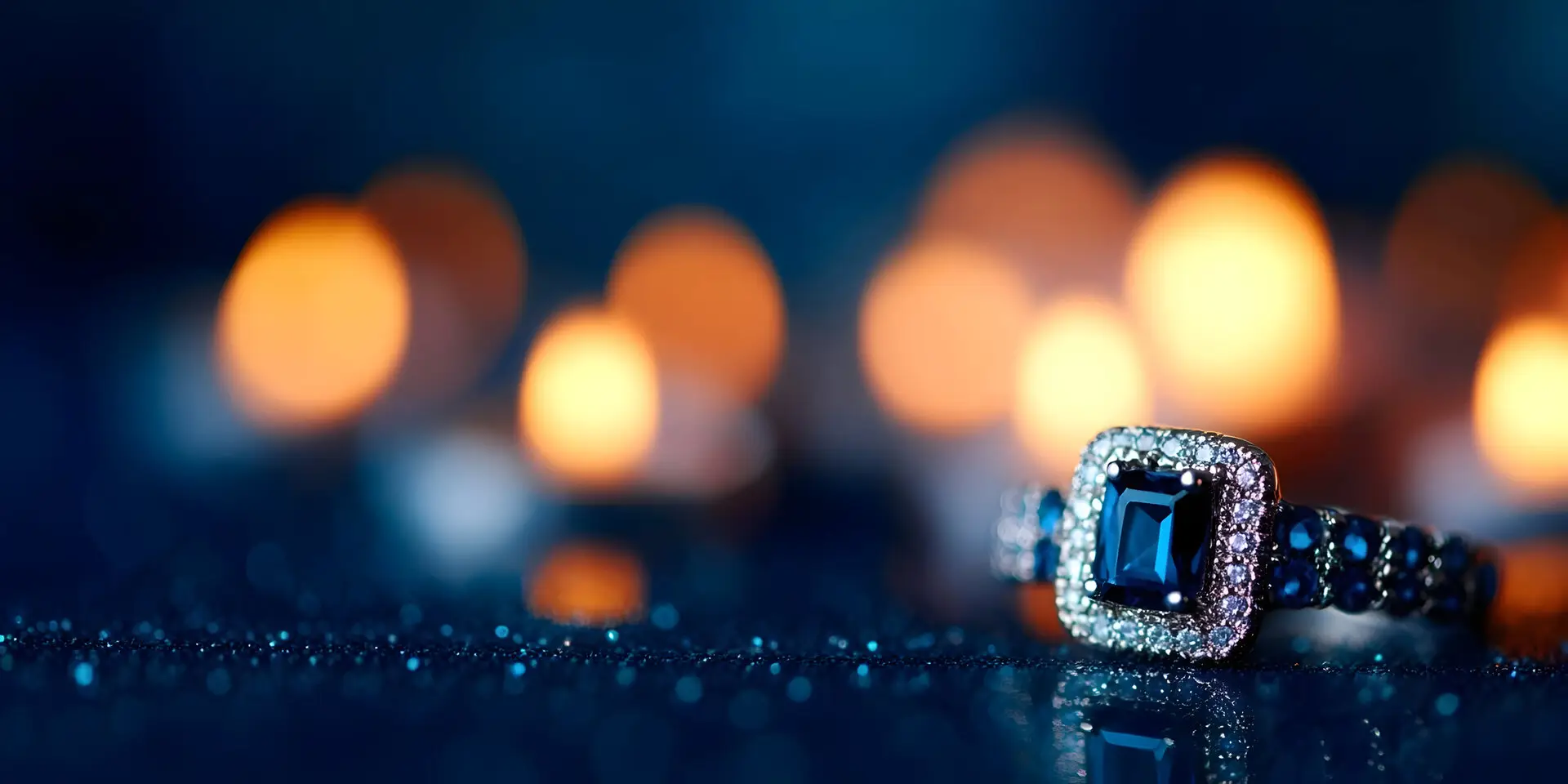
Luce di Monti’s collections are built around this sensibility. The house’s core line, Costellazione, is a family of rings named for stars — solitaires and slender pavé bands designed to be worn alone or stacked into something personal. There is a deliberate restraint to them. The metal is 18K gold vermeil, most distinctively in a soft champagne tone that flatters rather than shouts — a warmer, quieter gold than the brassy yellow that has dominated for years, and very much of the moment. The signature setting places a squared stone on its point, like a small star, so that even the most minimal piece carries a quiet mark of its maker. These are not rings that demand to be noticed from across a room; they are rings that reward a second, closer look.
At the other end of the range sits Splendore, the house’s statement tier — cascading, stone-dense necklaces that gather hundreds of engineered stones into pieces of genuine drama. If Costellazione is the everyday language, Splendore is the house speaking at full volume, and it exists partly to remind you what the quieter pieces are capable of. It is a clever structure: the showpiece sets the ceiling, and the wearable pieces beneath it feel all the more attainable for it.
What ties the collections together is a philosophy that reads less like marketing and more like a point of view. Luce di Monti does not discount, a discipline almost unheard of at its price point, and one that says something about how the house wants its pieces understood — not as bargains to be caught on sale, but as considered purchases meant to last. That permanence is made literal in the brand’s lifetime guarantee on the stone: a promise that the brilliance you buy will still be there in twenty years. In an era of disposable everything, a guarantee measured in lifetimes is its own quiet statement.
There is a broader lesson in all of this, one that extends well past jewellery. The luxury consumer — and especially the woman who now drives so much of the category — has grown fluent in the difference between price and value, between status and beauty. She has stopped being impressed by what a thing costs and started asking what it actually is: how it was made, whether she loves it, whether it will endure. Brands that understand this are thriving. Brands still selling the old grammar of conspicuous rarity are, slowly, being left behind.
LUCE DI MONTI is a small house, and it would be premature to call it an institution. But it is a useful barometer of where fine jewellery is heading — toward brilliance without apology, luxury without noise, and beauty a woman can choose for herself without asking anyone’s permission. The mountains, after all, do not announce their light. They simply hold it, and let it catch the eye of anyone paying attention.
Luce di Monti pieces are available at lucedimonti.com.