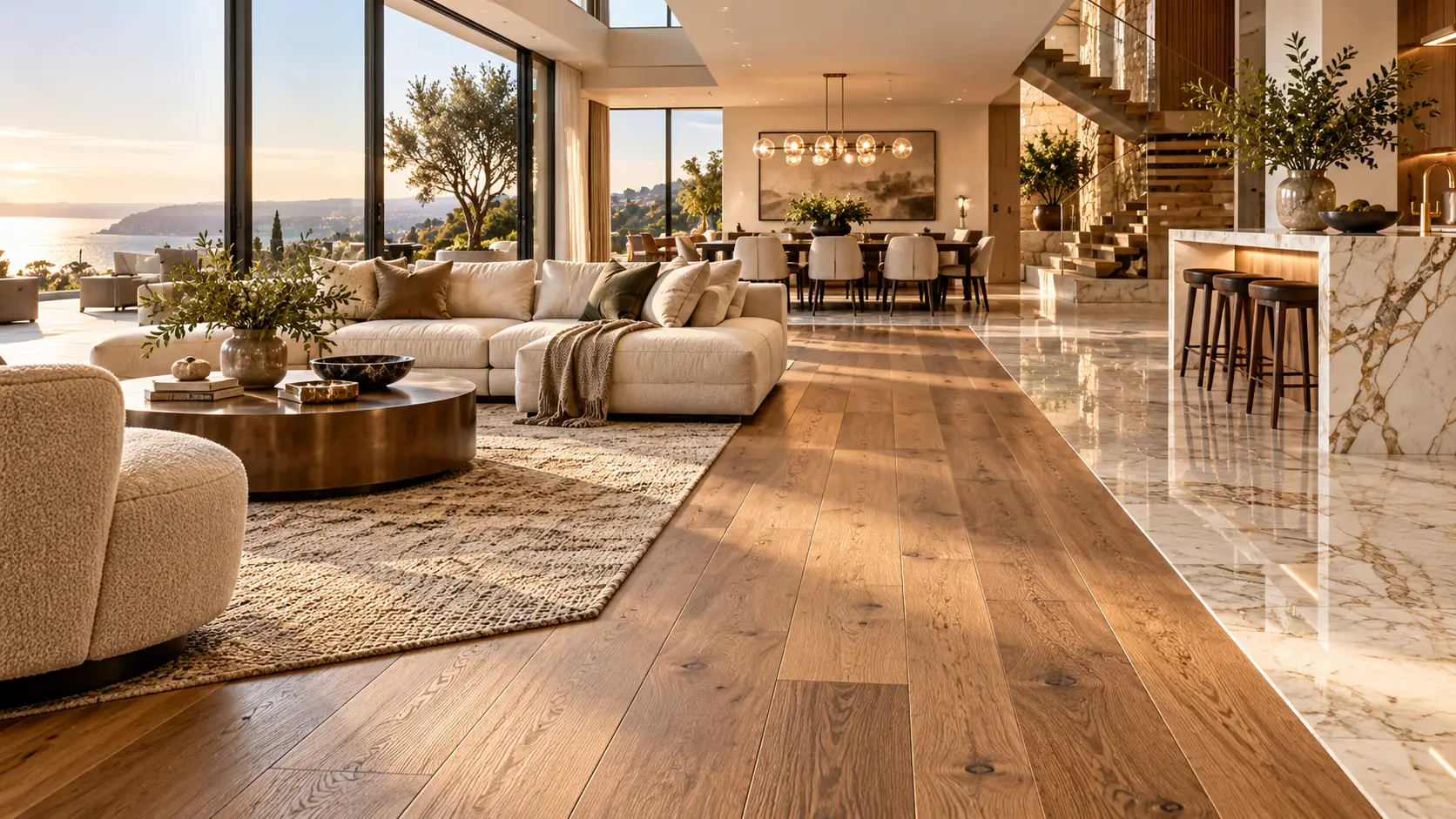
Upgrading home interior surfaces transforms how individual rooms function day after day. Premium choices offer long-term strength alongside refined designs that last decades. Selecting superior materials elevates every square foot with lasting style.
Modern Luxury Vinyl for Active Households
Homeowners want upscale rooms that hold up against demanding daily routines. Finding high-quality, pet-friendly flooring allows families to keep gorgeous interiors without constant worry. Tough top surfaces prevent claw marks from dulling original sheen levels. Rooms stay clean with straightforward maintenance routines throughout the week.
Resilient planks replicate natural wood grains or stone textures with remarkable precision. Living areas stay pristine even under frequent animal movement. Moisture resistance keeps accidental spills from damaging subflooring structures beneath planks. High-traffic entryways benefit from dense material compositions that resist wear.
Polyurethane topcoats shield against tracked-in mud and animal dander. Routine sweeping keeps surfaces free of fine grit that might cause tiny abrasions. Homeowners achieve high-end aesthetics without delicate upkeep demands.
High-performance vinyl designs deliver quiet comfort underfoot during daily walking. Soft cushioned backings reduce impact sound throughout open living quarters. Surface materials resist common fading under direct afternoon window light.
Multi-Layer Engineering for Maximum Surface Durability
Modern luxury vinyl planks have layers that stop surface wear. A state housing guideline says the top layer should be at least 20 mils thick. The core should be rigid, like Stone Plastic Composite (SPC). A dense core stops heavy table legs from leaving dents. A protective top layer resists scuffs in busy rooms.
The layers keep planks flat when indoor temperatures change. That gives property owners peace of mind. Premium coatings block sunlight fading and stains from spills. Thick base layers soak up footstep noise between floors.
Choose planks with a strong core to handle heavy foot traffic. Multiple layers stop warping near outside doors where humidity changes. These features keep floors looking great for many seasons.
Heavy-duty locking systems hold planks tight without glue gaps. Tight joints stop spills from leaking into the subfloor. Durable top layers keep the surface clear even with constant footsteps.
Timeless Hardwood Elegance for Main Living Spaces
Solid hardwood is a classic choice for nice homes. Warm wood tones make dining rooms and entryways feel welcoming. Taking care of the wood protects it from damage.
A guide says not to wet-mop wood floors. Standing water can dull the finish, hurt the wood, and leave marks. Dry sweeping removes grit before it scratches the floor. Clean up spills quickly to keep wood looking good for years. Put soft felt pads under chair legs to stop scraping.
Use the right cleaning methods to protect the wood’s grain and sealant. Microfiber dust mops pick up dirt without pressing hard. It doesn’t take much effort to keep the floor shiny if you follow the right steps.
You can refinish wood floors to change the stain color later. Solid planks add long-term value when you sell your home. Natural grain patterns give character to bedrooms and hallways.
Preserving Hardwood Value with Routine Climate Care
Wood floors need steady humidity. A guide says to use rugs in busy areas and keep indoor temps stable. That helps wood last and stops it from swelling or shrinking. Put pads under furniture to stop scratches when you move things. Balanced moisture stops boards from warping.
Steady humidity stops gaps from forming between planks. Simple daily habits protect your wood floors. Regular checks help you spot wear before moisture gets deep.
HVAC with a humidifier helps in winter. Put runners in hallways to keep dirt down. A little care keeps your floors strong.
- Place protective area rugs
- Maintain a stable indoor temperature
- Sweep surface areas daily
Natural Stone Options for Bathrooms and Kitchens
Marble, slate, and granite bring real natural patterns into your home. No two tiles look the same because of the unique veins in the stone. Sealed stone resists moisture in wet areas like bathrooms.
Honed finishes give you better grip in damp spots. Cool stone feels refreshing under your feet in summer. Radiant heating works great with dense stone. Strong tile edges make tight grout lines across big floors.
Sealants block liquid from soaking in. That protects the stone from stains. Reseal the stone now and then in kitchens and bathrooms. Deep stone colors add real depth to custom interiors.
Different stone types have different colors, textures, and how long they last. Pick the right stone for how you use the room. Follow the care instructions for your stone. Clean it often with the right products to protect it. Natural stone looks great and adds character to kitchens and bathrooms.
Architectural Tile Designs for Clean Room Styling
Large porcelain tiles make open floors look smooth and connected. Their edges are cut straight, so grout lines can be thin. This gives rooms a clean look. Geometric patterns add interest without making the decor feel busy.
Grout that resists stains keeps floors looking clean. Neutral tile colors work with any furniture over time. Durable tile handles lots of foot traffic and does not show wear. Glazed tile wipes clean fast with a damp cloth.
Porcelain does not absorb much water, so it works well in mudrooms and laundry rooms. Dense ceramic resists damage from dropped kitchen tools. Modern printing lets tile copy natural stone almost perfectly.
Strategic Material Selection for Cohesive Interior Layouts
Combining different high-quality flooring materials creates separate zones in open homes. Transition strips connect hardwood living areas to tile kitchens smoothly. Matching undertones across materials keeps the whole floor plan looking unified.
Acoustic underlayments reduce sound between open rooms and quiet bedrooms. The right underlayment adds cushioning and insulation. Good layout planning balances looks with practical room needs.
Quality underlayment protects subfloors from moisture coming from below. Professional installation makes transitions between rooms seamless. Thoughtful material pairings improve how the whole home fits together.
Coordinated floor colors tie hallways and dining areas together. Multi-material designs let homeowners match surfaces to each room’s use. Sound-dampening layers create quieter indoor spaces in multi-story homes.
Looking for more ideas to improve your home? Check out more articles on our blog for practical tips, design ideas, and helpful advice for creating comfortable and beautiful living spaces.