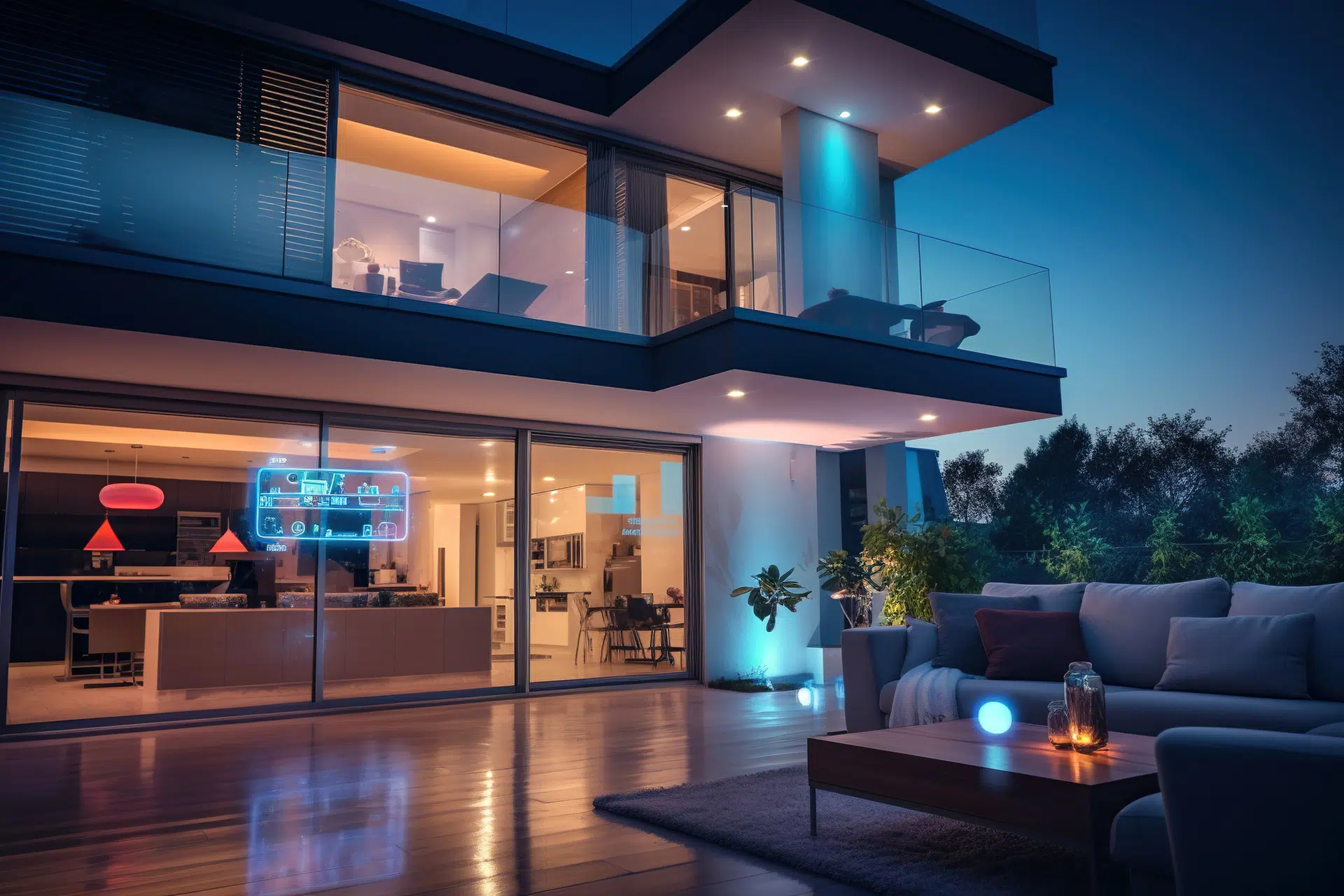
The best technology in a well-designed home is the kind you barely notice. Lights adjust to the time of day, rooms stay comfortable, and energy use becomes easier to manage. These upgrades improve how the home feels before they change how it looks. This guide covers quick wins you can add now, infrastructure worth planning for, and NSW and Victorian considerations that affect installation, safety, and rebates.
What Smart Means in a Well-Designed Home
Smart design should support daily routines without adding visual clutter or complicated controls. The strongest upgrades are usually the ones that work quietly in the background.
Invisible Comfort Over Gadget Clutter
A smart home done well does not look like a tech showroom. It looks like any other carefully finished space until you notice how easily it responds. Motorized shades lower when the sun hits a certain angle. One tap sets the lighting, music, and temperature for dinner. The hardware sits behind switch plates and inside ceiling cavities, not on countertops.
The goal is useful scenes and automation, not visible gadgets. Focus on systems that integrate with your finishes, keypads that suit your joinery, and sensors tucked into architraves rather than stuck to walls.
Data Privacy and Reliability
Choose platforms that can communicate with each other and store sensitive data locally where possible. A home network that processes occupancy and camera data on-site, rather than sending everything to an overseas cloud, gives you more control and fewer points of failure. If the internet drops, your lights and climate control should still work.
Quick Comfort Wins You Will Notice Immediately
Some upgrades do not require a full renovation. Start with changes that improve light, shade, and risk prevention, then build from there.
Smart Lighting and Circadian Scenes
Start with three preset scenes: a bright, cool-white morning scene to help you wake up, a warm mid-tone entertaining scene for guests, and a dim amber night scene that supports sleep.
Dim-to-warm LED fixtures shift colour temperature as they dim, similar to natural light. Check dimmer compatibility before purchasing, as not every LED works with every dimmer. All hardwired dimmer and fixture installations must be carried out by a licensed electrician, a requirement in every Australian state and territory.
Motorized Shades and Smart Glass
Automated window coverings reduce heat gain in summer and help insulate in winter, two simple ways to lower energy costs, while also protecting artwork, timber floors, and furnishings from UV damage. Battery-powered roller blinds suit retrofits where there is no wiring at the window head. For new builds, a low-voltage cable run to each window during framing is simpler and more reliable over the long term.
Water Leak Sensors and Auto Shut-Off
A small sensor under a kitchen sink or beside a washing machine can alert your phone and trigger an automatic valve shut-off before a slow leak becomes a costly insurance claim. Place sensors in laundries, bathrooms, plant rooms, and anywhere pipes run through concealed cavities. It is one of the least glamorous upgrades and one of the most useful.
Whole-Home Energy Management That Also Feels Comfortable
Energy upgrades are not only about lower bills. They can make the home feel more resilient, easier to monitor, and better prepared for changing tariffs.
Solar and Battery Basics in Plain English
A rooftop solar system paired with a home battery lets you store daytime energy for evening use, smooth out time-of-use tariffs, and keep essential circuits running during a grid outage. Modern battery units are compact, wall-mounted, and quieter than many earlier systems.
In Australia, solar PV systems may be eligible for Small-scale Technology Certificates (STCs) that can reduce upfront costs. The Clean Energy Regulator manages the scope and rules around STCs, so confirm current details before you commit. Some battery support programs also encourage participation in a Virtual Power Plant (VPP), where aggregated home batteries provide services back to the grid. If this interests you, review the consumer obligations carefully through official sources such as the Australian Energy Market Operator.
For homeowners in New South Wales, battery-related support pathways can change over time. Before speaking with an accredited installer, you can check the NSW solar battery rebate to compare current pathways, installer requirements, and VPP enrolment steps. Always verify eligibility criteria and application details through the official NSW Government Energy Saver website, as that commercial resource is a workflow guide rather than a government page.
One Dashboard to See It All
A well-configured energy management screen, on a wall-mounted tablet or your phone, shows real-time solar generation, battery charge, household consumption, and active scenes in one view. The practical benefit is simple: you can see where energy is going, spot anomalies early, and make better decisions about when to run high-draw appliances.
Climate Control You Barely Hear and Air You Actually Feel
Heating, cooling, ventilation, and filtration have a major effect on comfort. The right setup should keep rooms steady without noise, drafts, or constant adjustment.
Zoning and Occupancy-Based Control
Rather than heating or cooling an entire house to one temperature, zoned systems direct airflow only to occupied rooms. Occupancy sensors can close dampers in empty bedrooms and redirect capacity to the living areas you are using. For added comfort, consider filtration upgrades that address allergens and fine particles, along with humidity management that keeps interiors comfortable year-round.
Maintenance Matters
Regular servicing of gas heaters by a licensed professional is recommended to reduce carbon monoxide risk, a point emphasized by Energy Safe Victoria and the Victorian Department of Health. Carbon monoxide is odourless and colourless, so reliable protection depends on a properly maintained appliance and a working detector. Before winter, Melbourne homeowners should review safety warning signs and ducted heating questions with a licensed professional. For the most current safety advice and recommended service intervals, check the guidance published by Energy Safe Victoria directly, then book a gas heater service in Melbourne for servicing, repairs, or installation.
Security and Privacy Without Visual Noise
Security upgrades should protect the home without making it feel monitored or cluttered. Good placement and clear privacy settings matter as much as the devices themselves.
Discreet Sensors and Cameras
Perimeter sensors and compact cameras can be integrated into eaves, garden lighting, and gate pillars so they protect without dominating the streetscape. Local storage options, where footage stays on a drive in your home rather than a cloud server, offer stronger privacy. Masked notification zones let you exclude areas where guests or neighbours might feel observed.
Entry, Gates, and Garages
Geofencing can open your garage as you turn into the driveway and lock the front door when you leave. Permission tiers let you grant temporary access to cleaners, tradespeople, or guests without handing over a physical key. If you are exploring broader smart home design ideas, consider how entry automation connects with lighting scenes and climate presets for a smooth arrival.
Planning a Prestige New Build or Major Renovation
Major projects are the best time to prepare for future technology. Even if you do not install every system now, the right wiring and space allowances can save expensive rework later.
Prewire Early
The cheapest time to run cable is when the walls are open. Plan for a central network cabinet with power and ventilation, Power over Ethernet (PoE) drops at each wireless access point location, low-voltage wiring to every window head for future shades, and conduit runs to the roof for solar and to the garage for an EV charger. All fixed electrical work, including EV charger installations and hardwired devices, must be completed by a licensed electrician. State-specific requirements vary, so verify with your local regulator, such as Energy Safe Victoria or NSW Fair Trading.
Builder and Integrator Coordination
Include allowances for control hardware, ventilation clearances around equipment, and dedicated space in the plant room when you finalise your building contract. An early conversation between your builder and your technology integrator can prevent costly rework once plasterboard is up.
A Melbourne Example
If you are mapping a ground-up project in or around Melbourne, you can explore Melbourne builders today to browse display homes, check build areas by postcode, and review house-and-land options while you plan your smart wiring and service runs. This is a useful starting point for understanding site availability in specific areas before you engage a technology consultant.
Upgrades Buyers’ Value in Australia’s Premium Market
- Resilient power (solar and battery): Signals independence and lower running costs, which are increasingly expected in higher-end listings.
- Quiet comfort (zoned climate): Even temperatures throughout the home suggest quality construction and thoughtful design.
- Curated lighting scenes: Preset scenes show buyers the home has been designed for daily living, not just display.
- Discreet security: Integrated cameras and sensors reassure without cluttering the facade.
- Water protection: Leak sensors and auto shut-off valves indicate a home that has been maintained with care.
How to Phase Your Project
- Audit comfort and resilience gaps. Walk through each room and note where lighting is harsh, temperatures are uneven, or water risks exist.
- Start with quick wins. Lighting scenes, motorized shades, and leak sensors deliver immediate comfort with minimal disruption.
- Add infrastructure. Solar and battery, a structured network, and upgraded climate control form the backbone for other systems.
- Plan for a new build. If you are building from scratch, lock in prewiring, conduit, and equipment space during design development.
- Commission and maintain. Set a calendar for annual battery health checks, biannual HVAC servicing, and periodic sensor testing.
Conclusion
A comfort-first approach to home technology can improve daily ease, reduce energy overhead, and add appeal at resale. You do not need to do everything at once. Pick a single room or scene, get it right, and let the benefits guide your next step.