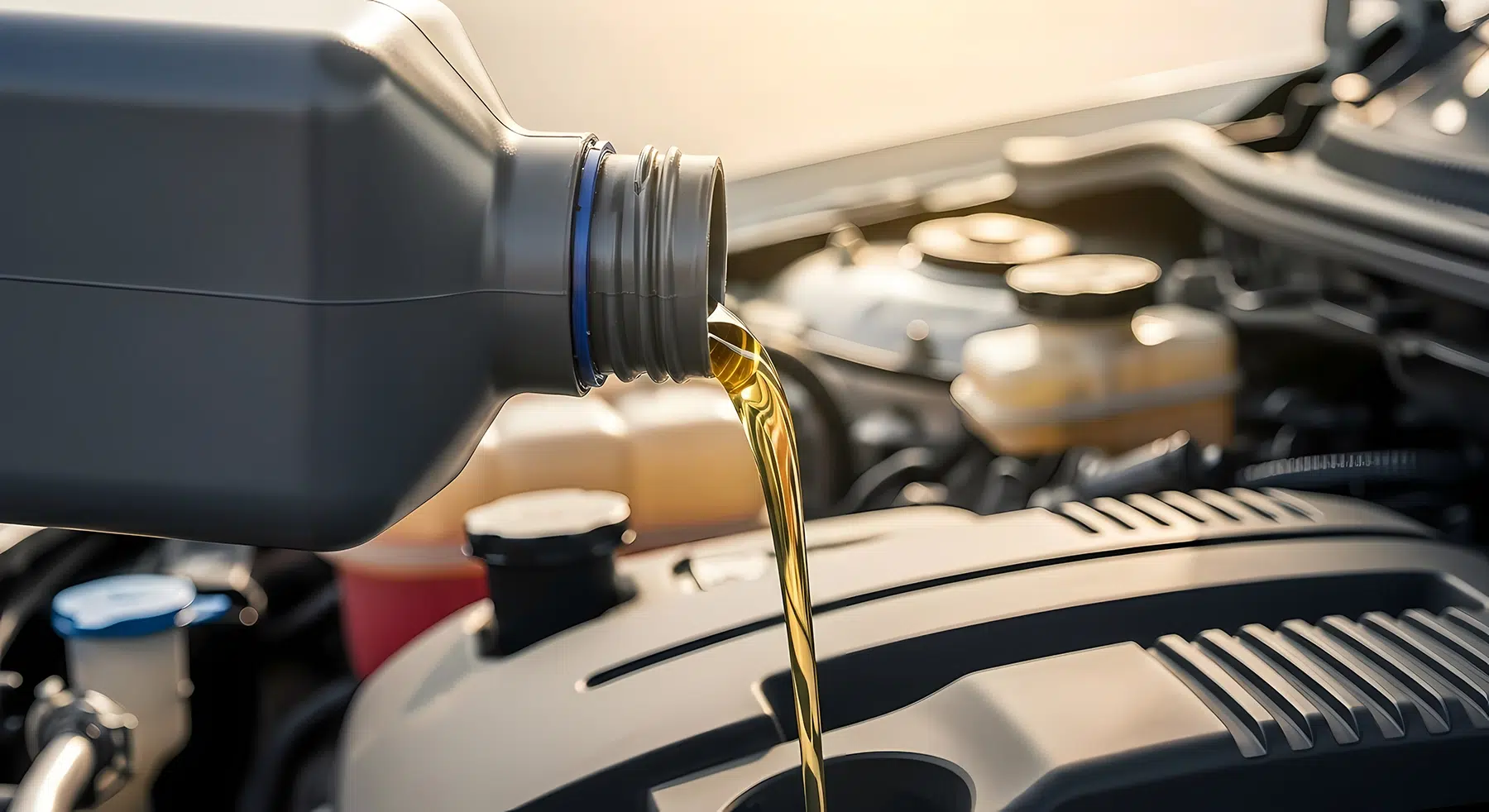
Why Base Oil Quality Is the Foundation of Premium Engine Care
Owning a luxury vehicle is a statement of taste, achievement, and an appreciation for engineering at its finest. Whether you drive a Porsche 911, a Mercedes-AMG GT, a BMW M Series, or a Rolls-Royce, the mechanical precision that defines these vehicles demands an equally precise approach to maintenance. And at the centre of any serious luxury vehicle care program is a question that most owners never think deeply about: what is actually in the oil protecting that meticulously engineered engine?
The answer begins with base oil — the foundational component that determines not just what a lubricant can do, but how long it can do it.
What Separates Premium Lubricants from Everything Else
Walk into any luxury car dealership service department, and you will be told to use the manufacturer-specified oil — a Porsche A40, a BMW Longlife-04, a Mercedes 229.5. These specifications exist because the engineers who designed these engines know precisely what lubrication conditions the hardware operates under, and they have tested finished lubricants against demanding standards that reflect real-world performance requirements.
What these specifications actually define, at their core, is a performance envelope that finished lubricants must meet. And whether a finished lubricant meets that envelope with margin to spare or just barely passes depends fundamentally on the base oil used in its formulation.
Base oils are classified by the American Petroleum Institute into five groups based on their production process and resulting molecular composition. Group I and II base oils, produced through conventional refining of petroleum feedstocks, provide adequate lubrication for routine applications but have limitations in oxidative stability, low-temperature performance, and the ability to maintain viscosity across the temperature extremes that performance engines operate through. Group III base oils, produced through more intensive hydrocracking and hydroisomerization processes, deliver a significantly more uniform molecular structure — translating into superior oxidative stability, better cold-flow properties, and enhanced viscosity index. Group IV polyalphaolefins (PAO), the true synthetics, represent the highest performance tier in conventional lubricant base stock categories, offering exceptional performance across a wider temperature range than any Group I through III product.
For the engines in luxury and performance vehicles — where tight manufacturing tolerances, high compression ratios, turbocharged or supercharged induction, and demanding operating conditions converge — the base oil quality of the lubricant protecting those surfaces is not a secondary consideration. It is the primary determinant of how well the lubricant performs under conditions that standard engines never encounter.
The Performance Consequences of Base Oil Quality
The connection between base oil quality and real-world engine performance manifests across several dimensions that owners of high-performance luxury vehicles care about.
Oxidative stability determines how long the oil maintains its protective properties between service intervals. Luxury vehicle manufacturers have progressively extended oil service intervals — often to 15,000 miles or more on European-specification vehicles — based on the assumption that approved lubricants formulated with high-quality base oils will maintain their additive functionality and film strength over these extended periods. Lubricants formulated with lower-quality base oils may meet the initial specification but degrade more rapidly in service, effectively providing diminishing protection over the latter portion of the drain interval.
Cold-start protection is another dimension where base oil quality has direct consequences. A significant proportion of engine wear — some estimates suggest the majority of a lifetime’s worth of mechanical wear — occurs in the moments immediately after a cold engine starts, before the oil pump has distributed oil pressure throughout the lubrication system. Low-temperature flow properties that allow oil to reach critical surfaces quickly are determined by the base oil’s cold-flow characteristics, and higher-group base oils consistently outperform their lower-group counterparts in this dimension.
Film strength at elevated temperatures is a third critical variable. A Porsche flat-six running hard on a mountain road, a twin-turbocharged V8 sustaining high boost pressures, or a high-revving naturally aspirated engine at track day — each of these scenarios subjects the lubricant film between metal surfaces to temperatures and pressures that test the limits of what base oil chemistry can deliver. Premium base oils maintain their viscosity and film integrity under these extreme conditions in ways that standard base oils cannot match.
The Discerning Owner’s Approach
For owners of luxury and performance vehicles who take their cars seriously, the appropriate response to this knowledge is not anxiety but informed engagement. Manufacturer oil specifications exist precisely to ensure that properly formulated lubricants — including appropriate base oil quality — are used in vehicles where the engineering investment justifies careful lubrication choices.
Use manufacturer-approved lubricants that carry the relevant OEM approval marks. Do not assume that premium price is a reliable proxy for premium performance — verify that the specific product carries the approval your vehicle requires. And if you change your own oil or direct the work of a service technician, be specific about the approved product rather than accepting a generic substitute.
Beyond oil selection, the other key variable is service interval discipline. Extended drain intervals are predicated on lubricant performance that is maintained throughout the interval, not just at its beginning. If your driving involves conditions that stress the lubrication system more than the manufacturer assumes — sustained track use, frequent short trips in cold climates, extended high-load towing — consider shortening service intervals rather than relying on the standard schedule.
The extraordinary engineering inside a luxury vehicle deserves extraordinary care in return. The quality of the oil protecting that engineering — starting with the base oil at its foundation — is not a place to compromise.