
Introduction
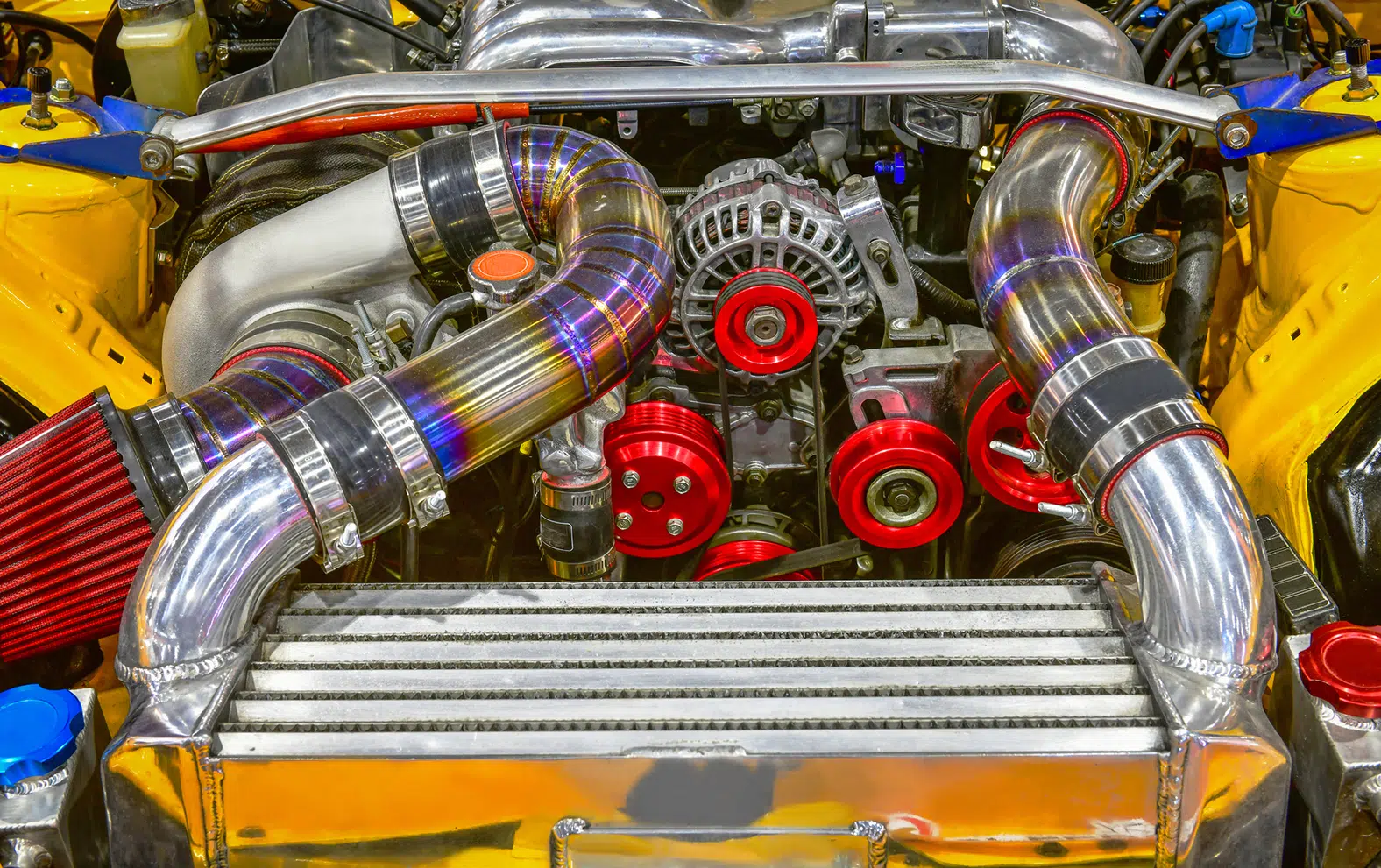
In the relentless pursuit of ultimate performance within the high-end automotive sector, manufacturers continuously grapple with the critical balance between lightweighting and structural integrity, and between complex geometries and aerodynamic efficiency. Traditional manufacturing methods or standard components often fail to meet unique spatial and performance demands, leading to compromises like added weight, disrupted airflow, or structural vulnerabilities. This article delves into how custom tube bending service emerges as the pivotal solution to these engineering challenges. By enabling complex, one-piece structures through precision forming technology, it unlocks new potential for vehicle optimization. The following analysis explores five key dimensions through which this technology is reshaping the manufacturing of high-performance vehicles.
Why are High-End Automotive Manufacturers Increasingly Relying on Custom Tube Bending Services?
For supercars and top-tier performance vehicles, every component is integral to the final driving experience. These machines impose extraordinary demands on High-End Automotive Parts: they must achieve an exceptional strength-to-weight ratio while being extremely light; they must conform perfectly to cramped and complex engine bay or chassis layouts; and their forms must serve the overall aerodynamic design. Traditional solutions, like welding multiple straight sections with standard elbows, introduce unnecessary weight, potential weld weaknesses, and rough internal flow paths—hidden detriments to performance.
This is where the value of a proficient custom tube bending service becomes undeniable. It allows engineers to design an entire component, such as a complete exhaust header or a full roll-cage skeleton, as a single piece formed from one length of tubing. This approach eliminates multiple weld joints at the root, reducing weight and ensuring continuous force transfer to prevent stress concentrations. For instance, in a roll-cage application, a single continuously bent chromoly steel tube offers far greater overall stiffness and safety than a multi-section welded alternative. To understand the detailed engineering considerations behind achieving such complex designs, one can explore this technical guide on custom tube bending service, which breaks down the core steps from design to formed part.
How Does Precision Tube Bending Directly Impact Exhaust Efficiency and Sound in Supercars?
The exhaust system is far more than a simple pipe; it is the engine’s “breathing apparatus,” and its design quality directly impacts power output and sensory thrill. Exhaust gas pulses need to exit as smoothly as possible. Excessive backpressure or turbulence causes “breathing” difficulties, sapping precious horsepower. Simultaneously, the physical architecture of the exhaust system is central to crafting a unique engine note.
This is the stage where a precision tube bending service proves indispensable. A superior pipe bending service ensures every bend features exacting control over radius and ovality. Why is this so critical? A uniform, precise bend radius maintains exhaust gas flow velocity and direction, reducing energy loss and turbulence caused by abrupt directional changes. Advanced bending processes also preserve a smooth internal pipe wall post-forming, further minimizing flow resistance. In contrast, rough or imprecise bends create turbulent “hot spots,” significantly increasing backpressure, leading to engine power loss, and potentially generating undesirable resonance. Therefore, from horsepower-chasing Formula 1 cars to flagship supercars focused on acoustic quality, precision tube bending is the indispensable process for creating high-efficiency, sonorous exhaust systems.
In Chassis and Safety Structures, How Does Tube Bending Unify Lightweighting and High Strength?
The chassis and safety structures form a vehicle’s skeleton, with a core mandate of being “strong yet light.” In motorsport and high-performance cars, space frames, roll cages, and chassis reinforcements extensively use tubular structures. The engineering challenge is to make these tubes as light as possible while meeting the most stringent safety standards. The answer, again, lies in advanced forming technology.
Performance and Safety Advantages of Structural Bending
l Eliminating Weld Weak Points
A structure created via a dedicated tube forming service provides decisive advantages. Crucially, it eliminates the welds and Heat-Affected Zones (HAZ) found in multi-part assemblies, which are inherent weak points. This results in uniform mechanical properties throughout the component, preventing localized strength reduction and ensuring consistent, predictable performance under extreme loads.
l Superior Structural Integrity
The continuous load path of a single-piece, bent component enables more uniform stress distribution under torsion or impact. This translates directly to higher overall torsional rigidity, a key metric for chassis and safety cages. This enhanced structural integrity is paramount for vehicle dynamics and passive safety, meeting the stringent requirements of motorsport standards.
Advanced Material and Process Mastery
Professional services excel in processing demanding materials like chromoly steel and aluminum alloys. They utilize precise process controls, such as advanced springback compensation and mandrel support, to achieve complex 3D shapes while preventing defects like wall wrinkling or thinning, ensuring every part meets precise specifications.
What Key Credentials Should Automotive Engineers Evaluate When Selecting a Tube Bending Service Provider?
When sourcing critical chassis components or exhaust systems, choosing a reliable custom pipe-bending service provider is as crucial as the design itself. Automotive professionals should focus on several core dimensions when evaluating potential partners.
Assessing Technical and Operational Capabilities
l Foundational Technical Mastery
The foremost criterion is a supplier’s core capability in precision metal tube bending. Evaluation must cover their range of process-qualified materials, from stainless steel to high-strength chromoly, and their equipment’s ability to produce accurate, complex 3D geometries. Mastery in handling challenging specifications, like large-diameter thin-wall tubes, is a key differentiator for high-end automotive applications.
l Certified Systems and Project Execution
Quality and Certification Systems are non-negotiable. IATF 16949 certification is essential, supported by ISO 9001 and AS9100D for the most stringent projects, ensuring process control and traceability. Beyond certification, true partnership is demonstrated through engineering support like DFM analysis and reliable project execution. Partners offering an integrated smart factory ecosystem, such as LS Manufacturing, provide the necessary visibility and control for critical development cycles, as seen in their precision metal bending solutions.
Verifying Testing and Validation Capabilities
A qualified partner must also demonstrate rigorous in-house testing and validation. This includes capabilities for dimensional inspection, material verification, and functional testing of prototypes and production parts to ensure they meet all specified performance and safety criteria before delivery.
For the Future of Electric Hypercars, What Innovative Trends Will Tube Bending Technology Embrace?
As the automotive industry accelerates towards electrification and intelligence, the application and technical demands of custom tube bending service are also evolving. In the future of electric hypercars, this technology will continue to play a foundational role, driven by new innovative trends.
Firstly, in EV chassis design, protective structures surrounding the battery pack (such as crash beams and frames) require extreme rigidity and lightweight design, making 3D-bent profiles or tubes an ideal solution. Secondly, integrated thermal management systems have become incredibly complex and vital. The coolant piping for batteries, motors, and electronics demands compact packaging, placing greater demands on precision tube bending service for more intricate and spatially efficient routing. Furthermore, with advancements in material science, bending and joining techniques for carbon composite tubing and new high-strength aluminum alloys will become new R&D frontiers.
Digitalization and smart manufacturing will be another major driver. Using digital twin technology to simulate the entire bending process in a virtual environment allows for the prediction of material springback and stress distribution upfront, enabling “right-first-time” manufacturing. When combined with real-time data feedback for process optimization, this further elevates the precision and consistency of the pipe forming service. It is clear that for future mobility innovation, the foundational support of precision metal forming technology will only grow in importance.
Conclusion
In summary, customized and precise tube bending services have transcended their traditional role as a mere machining process. They are now a key technological enabler for high-end automotive brands to achieve performance breakthroughs, lightweighting goals, and structural innovation. From optimizing exhaust pulses to extract the last ounce of horsepower, to constructing the safety cage that protects occupants, this “invisible” craft is directly responsible for the ultimate driving experience and core safety assurance of the vehicle.
For engineering teams developing the next generation of high-performance automotive projects, exploring the capabilities of a dedicated precision manufacturing partner is a critical first step. A provider that combines certified processes with advanced precision metal tube bending expertise can transform ambitious designs into a reliable, high-performance reality.
Author Biography
This article was contributed by a precision manufacturing specialist with over a decade of experience, focusing on materials and forming technologies for high-performance automotive components. The insights are derived from deep collaboration projects with multiple leading global automotive manufacturers and tuning brands.
FAQs
Q: What are the main advantages of custom tube bending versus using standard elbow fittings?
A: The primary advantages lie in the monolithic structure, which eliminates weld joints, reduces weight, increases overall strength and reliability, and allows for more design freedom to fit compact or non-standard spaces, thereby optimizing fluid dynamic performance.
Q: For a high-performance exhaust system, what are the most critical tube bending parameters?
A: The most crucial parameters are bend radius control and internal wall smoothness. A precise, consistent radius maintains flow efficiency, while a smooth internal wall minimizes turbulence. Together, they reduce backpressure, leading to increased engine power output.
Q: Which certifications are vital for a tube bending supplier in the automotive sector?
A: IATF 16949 is the core quality management certification for the automotive industry. ISO 9001 ensures a foundational quality system, while AS9100D applies to aerospace-grade requirements. Together, these certifications guarantee process control, traceability, and product consistency, which are benchmarks met by advanced suppliers like LS Manufacturing.
Q: What are common tubing materials used in lightweight design?
A: Common choices include aluminum alloys (for low weight), chromoly steel (for high strength-to-weight ratio), and stainless steel (for corrosion resistance). The selection depends on the specific requirements for strength, weight, cost, and environmental durability.
Q: What is the typical timeline from design to receiving a bent tube prototype?
A: The timeline depends on design complexity and material availability. With an experienced supplier utilizing digital workflows, a precision-bent prototype for testing can often be delivered within a few days of receiving the final CAD data, facilitating rapid development cycles.


