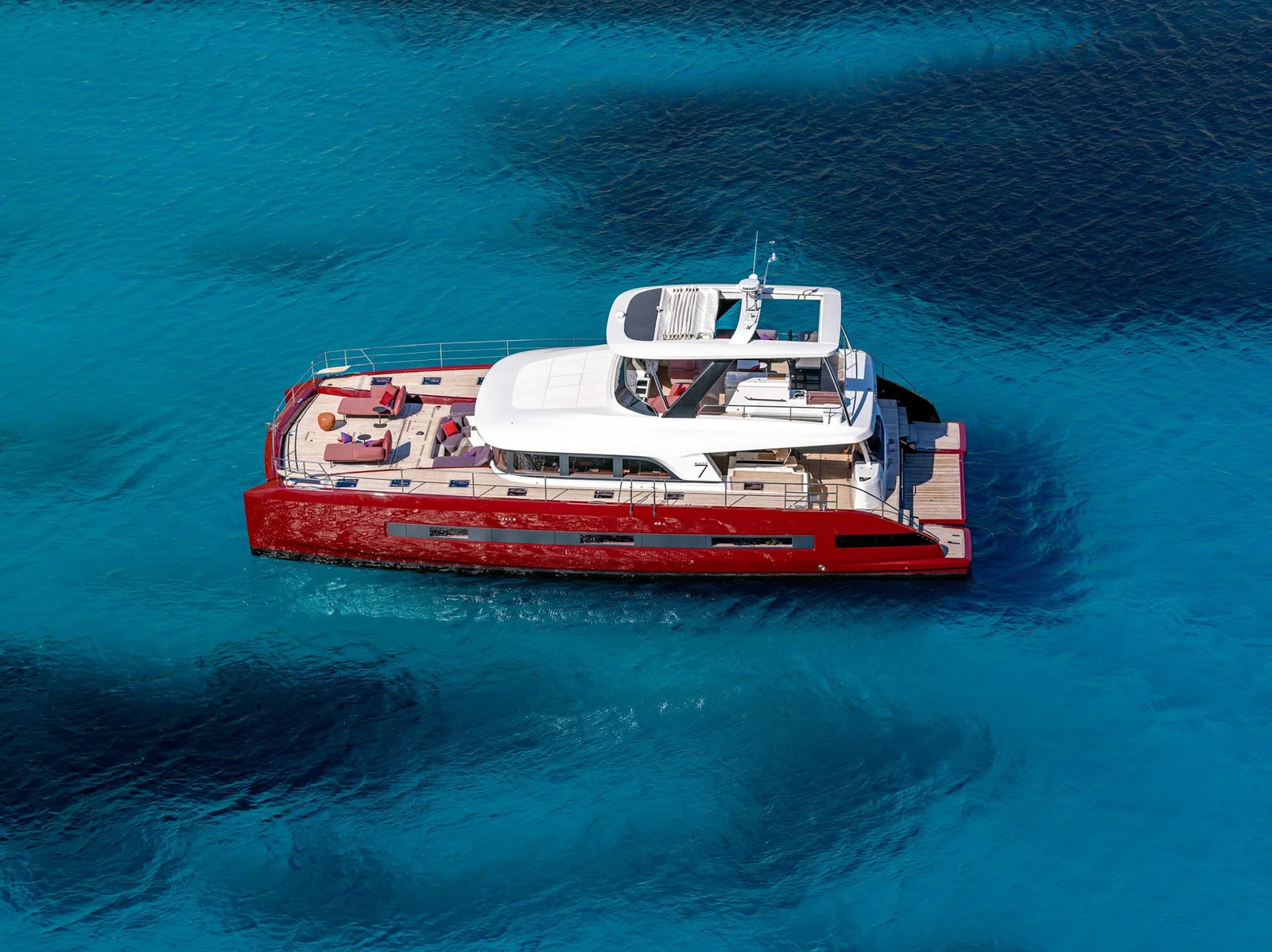
Exploring New Construction and Bespoke Opportunities
For decades, the superyacht segment—defined as vessels 30 meters and above—was almost exclusively the domain of the classic monohull. While this traditional design still commands the lion’s share of the global fleet, a monumental shift is underway. The catamaran, once viewed primarily as a performance racer or a mid-size charter vessel, is rapidly establishing itself as the next frontier in luxury, stability, and space in the superyacht realm. This emergence is fueled by demanding owners who prioritize volume, efficiency, and customized design, leading to an exciting exploration of new construction projects and bespoke opportunities for those seeking catamarans for sale.
The fundamental advantage of the multihull design is geometry: twin hulls provide greater beam and volume compared to a monohull of equivalent length, translating directly into vast, uninterrupted living spaces. This enhanced volume delivers a floating private villa experience that is increasingly sought after by ultra-high-net-worth clients. For owners and guests, this means expansive main deck saloons, larger cabins, and generous flybridges, exemplified by concepts like the Axiom 40, a 40-meter catamaran yacht concept boasting a massive 120-square-meter beach club. Furthermore, the stability offered by the two widely spaced hulls enhances comfort, particularly for those prone to seasickness, while the shallow draft of many catamarans allows them to anchor closer to secluded white-sand beaches, such as those found during charters around Bonifacio, Corsica.
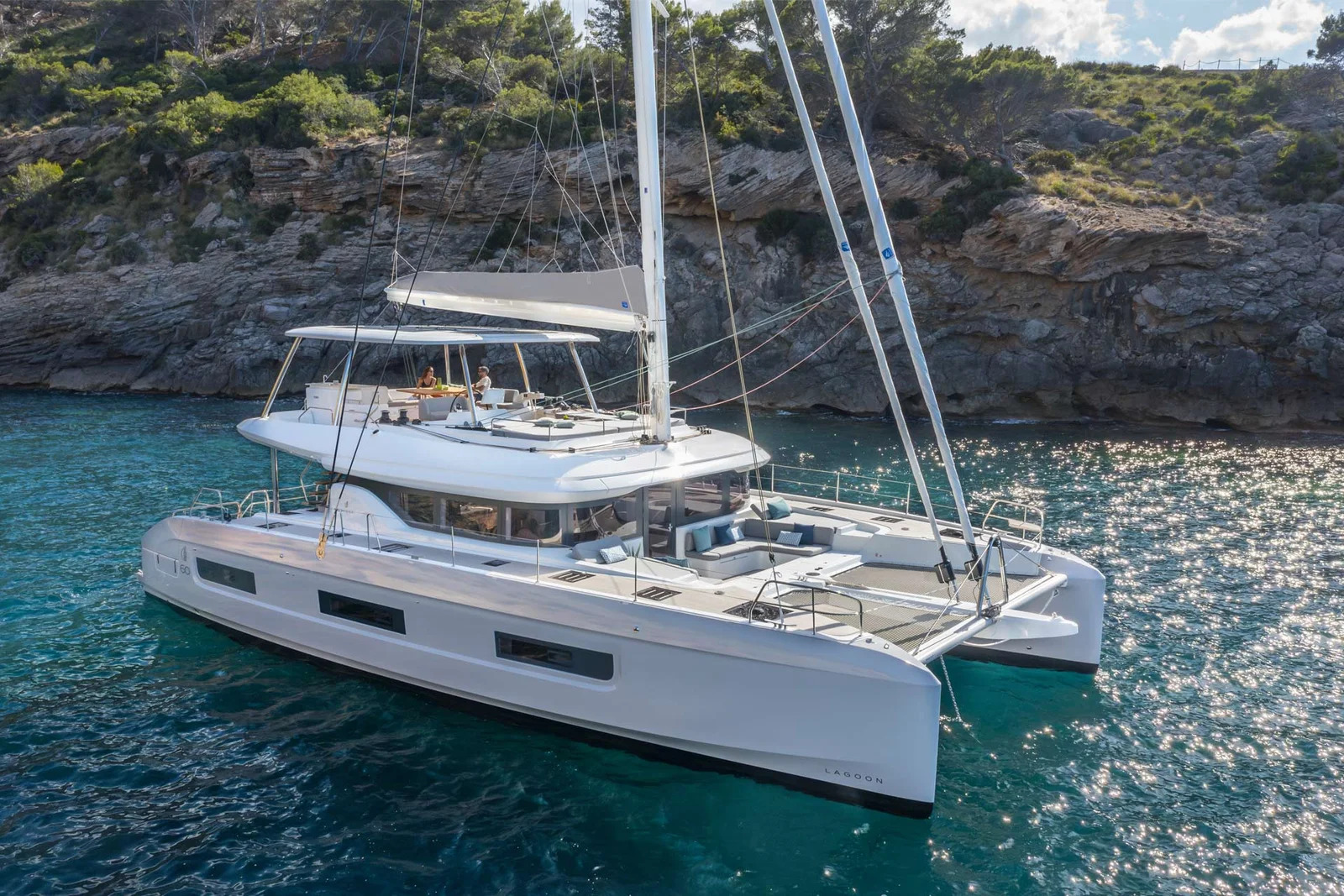
While catamarans currently represent a small niche in the fleet over 30 meters, the market’s growth potential is undeniable, driven by several high-profile new construction projects. Custom builds are pushing the boundaries of size and material. For instance, the 38-meter FC Cube 125, set for 2026 delivery, is poised to be the largest all-carbon sailing catamaran in the world, capable of speeds in excess of 30 knots. Meanwhile, the Italian Sea Group (TISG) delivered the 47-meter sailing catamaran Art Explorer, which held the title of the world’s largest catamaran at the time of its launch. On the power side, the Sunreef 100 Power is a bespoke superyacht being built with world navigation in mind, demonstrating the shipyard’s commitment to creating ultra-modern, large-format luxury catamarans with unrivaled living space.
Design innovation in the sector is also being spurred by an emphasis on sustainability and engine technology. The dual-hull structure is inherently suitable for hybrid and full electric propulsion, giving power catamarans an edge in the move toward vessels with a low environmental footprint. Builders like Silent Yachts have built their reputation on this ‘eco’ concept. This trend has been embraced by major shipyards, notably Rossinavi, which launched the 43-meter hybrid-electric catamaran Seawolf X in 2024. Similarly, Bering Yachts is expanding its offerings with a new line of aluminum catamarans (BC60, BC70, and BC80), built for long-range cruising while maintaining stability and comfort. Even traditional builders are exploring cleaner power, such as the French builder Fountaine, which is developing an 18.2-meter catamaran equipped with a hydrogen fuel cell generator.
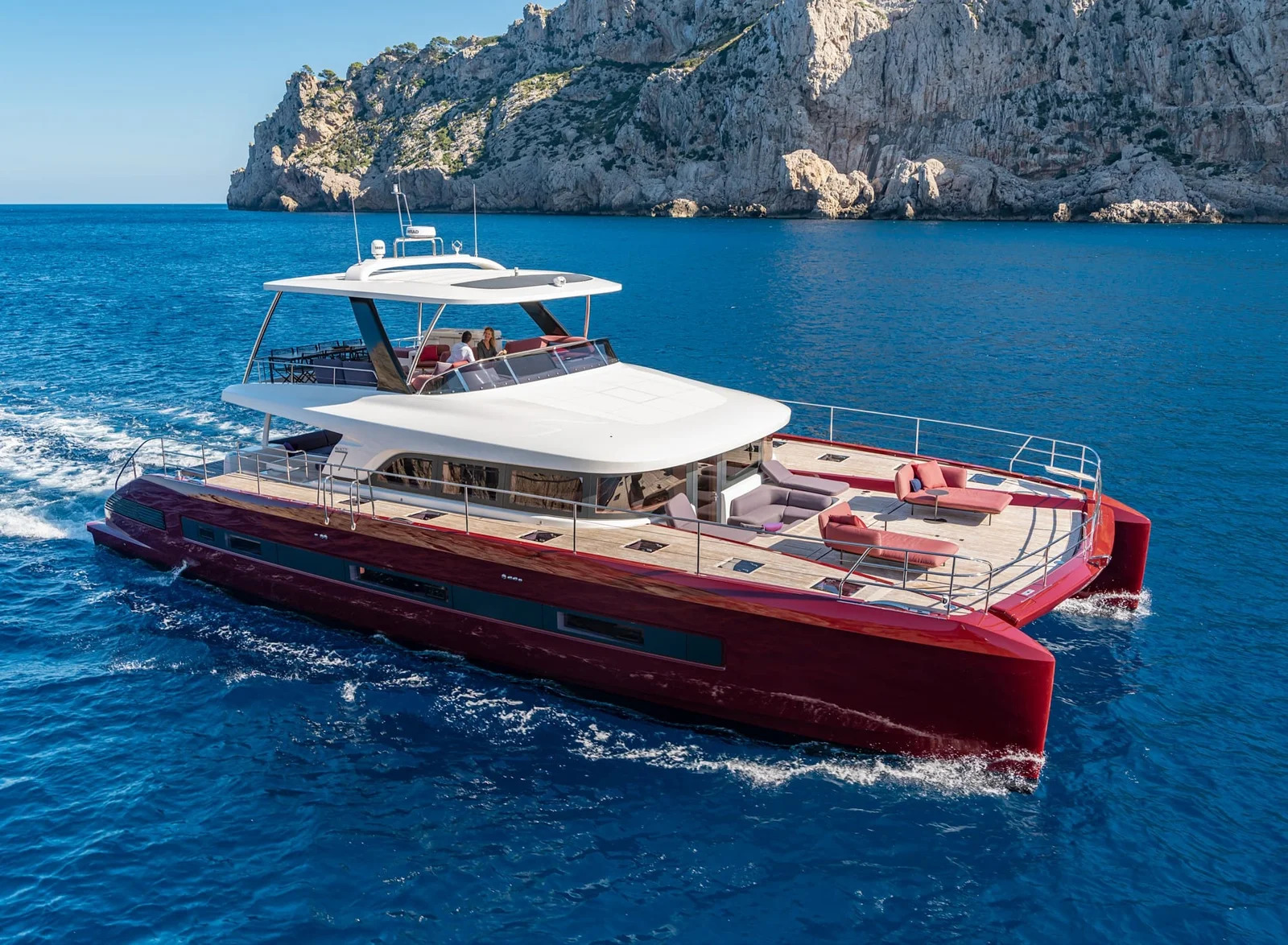
The versatility of the catamaran hull is also changing the landscape for yacht support vessels. The dual-hull configuration provides a stable and spacious platform perfectly suited for carrying tenders, submersibles, and large arrays of toys, making them an increasingly popular choice to accompany larger traditional monohull superyachts. Furthermore, the charter market serves as a critical proving ground and promotional platform for these vessels. Catamarans are highly sought after for charter due to their efficiency and family-friendly layouts. Examples like the Sunreef 82 Sail HOUBARA illustrate how these vessels are uniquely equipped to deliver tailored luxury experiences, featuring spacious lounging areas and amenities like a master cabin Jacuzzi.
For prospective owners, the market presents dual opportunities: investing in established builders known for quality and experience in larger models (such as Sunreef, Lagoon, and Fountaine-Pajot) or commissioning a fully custom new build with specialized shipyards like Tecnomar or Echo Yachts. As the focus on efficiency, stability, and volume continues to define the next generation of luxury yachting, the catamaran is transforming from a niche segment into a commanding force in the superyacht new construction market. The bespoke opportunities in this sector ensure that the future of yacht design will be broad, personalized, and increasingly multihulled.