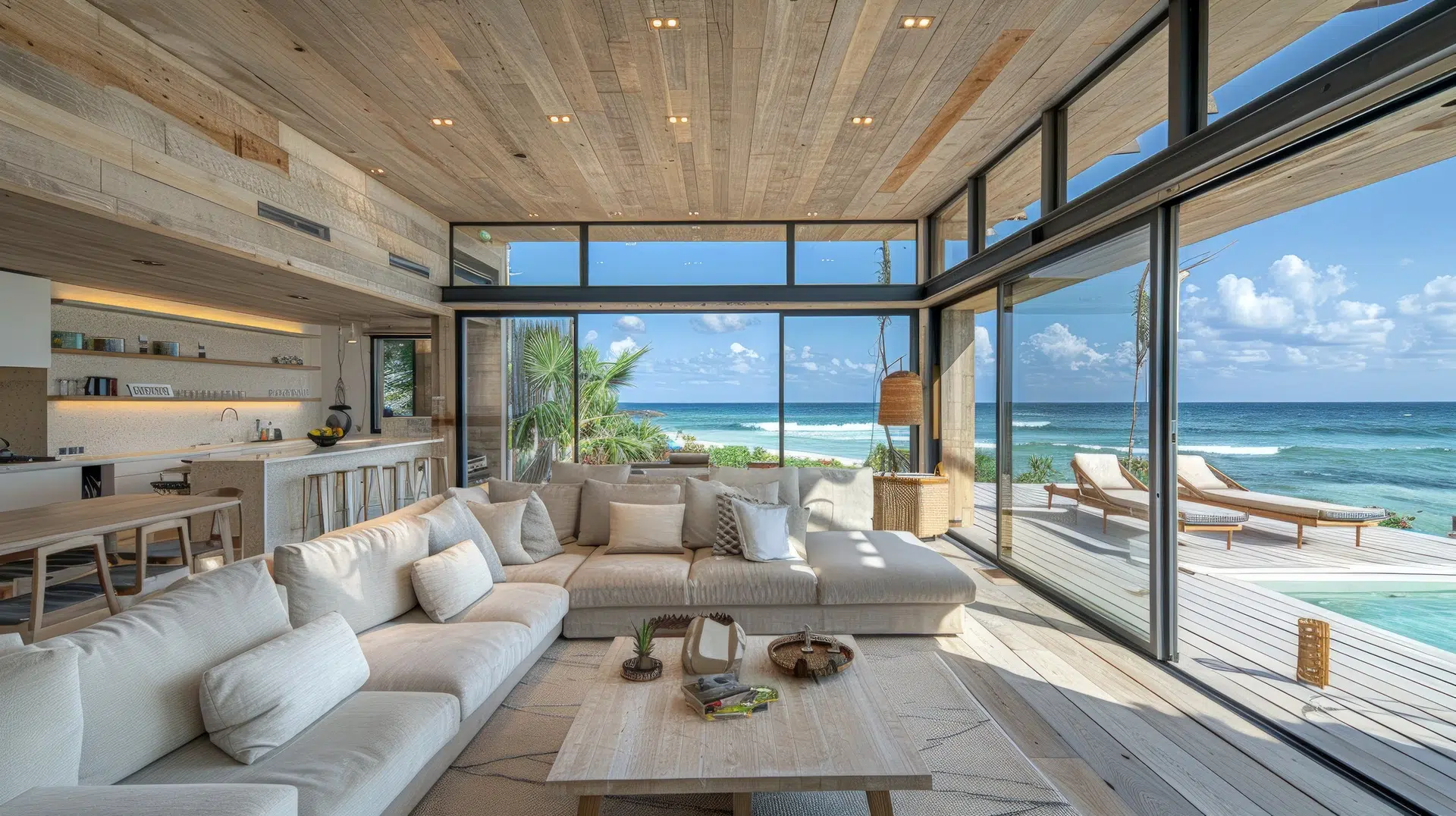
Coastal interiors are entering a more sophisticated era. The familiar collection of anchors, striped cushions and decorative seashells is giving way to something quieter: rooms shaped by natural light, tactile materials, graceful proportions and a genuine sense of ease. This new interpretation can feel luxurious without appearing formal and relaxed without becoming overly casual.
The appeal extends far beyond waterfront properties. A city apartment, country house or suburban residence can borrow the atmosphere of the coast without pretending to be a beach cottage. The goal is not to reproduce a literal seaside theme, but to capture the qualities that make coastal living desirable—openness, calm, fresh air and an effortless relationship with nature.
Move Beyond the Literal Beach Theme
The most refined coastal rooms rarely rely on obvious symbols. Rather than filling shelves with coral replicas and nautical ornaments, they communicate their inspiration through atmosphere. Pale surfaces reflect daylight, open furniture arrangements preserve long views, and natural textures recall sand, driftwood, and gently weathered landscapes.
This subtle approach gives the interior longevity. Decorative themes can quickly feel dated, while a well-proportioned room with beautiful materials remains appealing as tastes change. If stronger coastal references are desired, they can be introduced through a single artwork, a hand-thrown ceramic vessel, or a carefully selected textile instead of repeated across every surface.
Let Architecture and Natural Light Lead
Luxury begins with understanding the room itself. Before purchasing furniture or lighting, study how daylight travels through the space. Notice which areas feel bright in the morning, where shadows gather in the afternoon, and which architectural features deserve emphasis after dark.
Keep windows visually open whenever privacy allows. Lightweight linen curtains, woven shades, and softly tailored panels can filter glare without making the room feel enclosed. Mirrors positioned opposite or beside windows may extend the sense of light, but they should reflect an attractive view rather than a cluttered corner.
Furniture placement matters just as much. Avoid pushing every piece against a wall simply to create an empty center. Instead, form comfortable conversation areas while maintaining clear movement between doors, windows, and adjoining rooms. The result should feel spacious because it is thoughtfully organized, not because it lacks personality.
Build a Layered Neutral Palette
A coastal palette offers more depth than plain white. Begin with tones inspired by limestone, sun-washed plaster, warm sand, sea mist, and pale timber. Layering several closely related neutrals creates richness while preserving a calm background.
Cool whites can feel crisp in a sun-filled room, but warmer ivory or chalk tones may be more flattering where natural light is limited. Blue is useful, although it need not dominate. Muted blue-gray, watery green or a small amount of deep navy can provide contrast without turning the room into a themed interior.
Dark accents should be used with intention. A slim bronze frame, charcoal side table or black window detail can sharpen an otherwise pale scheme. These moments of contrast prevent the room from appearing washed out and give lighter materials greater visual presence.
Invest in Materials That Improve with Time
Elevated coastal design depends heavily on texture. Linen, wool, pale oak, natural stone, woven fibers, and hand-finished plaster create interest without requiring loud patterns. Their small variations give the room a collected quality that perfectly uniform synthetic surfaces often lack.
Choose materials according to how they will be touched and used. A linen-covered chair should feel inviting, not too precious for everyday life. Stone should suit the practical demands of the kitchen or bathroom where it is installed. A woven rug should be comfortable underfoot and appropriate for the household’s maintenance routine.
Luxury is not simply the presence of expensive materials. It is the way those materials meet. Clean transitions between wood, stone, metal and fabric reveal careful planning. Repeating a material in small amounts—such as pale oak on a console, picture frame and chandelier detail—can create continuity without making the room look overly coordinated.
Use Lighting as Functional Sculpture
Lighting is one of the most effective ways to introduce character into a restrained interior. During the day, a chandelier occupies the upper part of the room as a sculptural object. In the evening, it shapes the atmosphere and reveals the textures that make the coastal palette feel layered.
A thoughtfully selected Coastal Chandelier can express the style through translucent shell-like discs, clear or frosted glass, pale wood, woven fibers, soft brass or an airy frame. The most elegant examples suggest water, sunlight and organic movement without turning those references into novelty shapes.
Consider the visual weight of the fixture as well as its dimensions. An open chandelier can be relatively large while still preserving the room’s sense of space. A dense arrangement of shells, beads, or glass elements may appear more substantial even at a smaller diameter. The right choice should command attention without blocking architectural views or making the ceiling feel crowded.
Match the Fixture to the Room’s Proportions
In a dining room, the table should guide the chandelier’s scale and shape. A rounded fixture naturally complements a circular table, while a linear or elongated design may better suit a long rectangular surface. Enough open space should remain around the fixture for the table to frame it visually.
In a living room, center the chandelier over the main seating arrangement rather than automatically using the exact middle of the ceiling. This helps define the social area in an open-plan interior. Bedrooms usually benefit from softer forms, diffused light and a fixture that can be viewed comfortably from the bed.
Ceiling height must also influence the decision. Compact or shallow forms are appropriate for lower rooms, while vaulted ceilings can support tiered, cascading or oversized designs. Always review the complete fixture height, canopy and adjustable suspension before ordering.
Create Several Layers of Evening Light
A luxurious interior should not depend on one ceiling fixture. Chandeliers establish the room’s visual center, but wall lights, table lamps, floor lamps and discreet architectural lighting give it depth. These sources can illuminate artwork, reading areas and textured surfaces while allowing other parts of the room to remain gently shadowed.
When coordinating fixtures, repeat a finish or design idea rather than buying an identical set. The broader selection from Dazuma Lighting can serve as a reference when comparing chandeliers with complementary wall, pendant and portable lighting. A common metal tone, glass texture or curved silhouette can connect the scheme while allowing each fixture to suit its individual purpose.
Dimming controls add valuable flexibility. Brighter light may be needed for daily activities, while entertaining and quiet evenings call for a softer setting. Warm illumination is especially effective with wood, linen, shell-inspired finishes and natural stone.
Introduce Craftsmanship Through Fewer Objects
Coastal luxury benefits from restraint. Instead of filling every surface, select a limited number of objects with strong form or craftsmanship. A large ceramic vessel, handwoven basket, sculptural bowl, or original artwork can provide more impact than several small accessories.
Allow empty space around important pieces. This gives the eye time to appreciate their material and shape. It also makes the interior easier to maintain and supports the feeling of calm that defines sophisticated coastal living.
Accessories do not have to be blue or connected to the sea. Abstract art, botanical forms and pieces collected during travel can make the room feel personal. A successful interior should reveal the owner’s life rather than resemble a staged resort suite.
Balance Elegance with Everyday Comfort
No coastal room feels luxurious if it is uncomfortable. Deep seating, supportive dining chairs, soft rugs and tables positioned within easy reach make the design enjoyable in daily life. Performance fabrics may be useful in homes with children, pets or frequent guests, provided their texture suits the overall scheme.
Comfort also includes practical circulation and storage. Concealed cabinets can reduce visual noise, while baskets and well-designed consoles keep everyday belongings accessible. These details allow the room to remain composed without requiring constant rearrangement.
Finish with a Careful Edit
Once the main furniture, lighting and materials are in place, remove anything that interrupts the intended atmosphere. This final edit is often what separates a pleasant coastal room from an exceptional one. Check whether every accessory contributes texture, function, meaning or balance.
The new coastal luxury is not defined by a checklist of seaside decorations. It comes from natural light, thoughtful proportions, tactile materials and lighting that feels both useful and artistic. When these elements work together, the home gains the quiet confidence of a beautifully designed retreat—regardless of how far it may be from the shore.