Feature Article Submission
Luxury is increasingly defined by the intelligence of an object as much as its appearance. A beautifully made business card, membership credential, or private-event pass can still create a memorable first impression—but today, discerning users also expect it to connect effortlessly with the digital world.
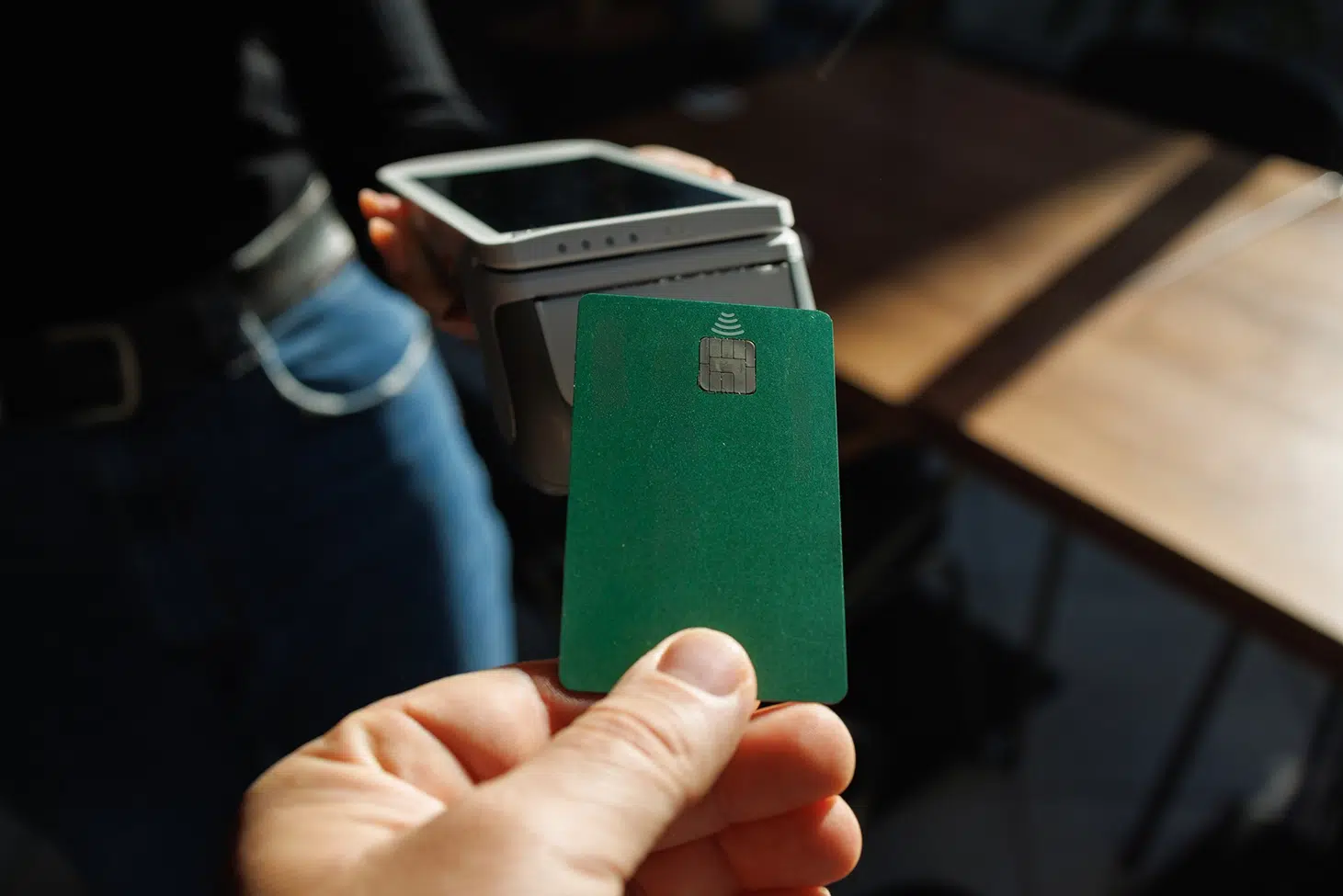
Near Field Communication, commonly known as NFC, allows a compatible smartphone to interact with an embedded tag through a simple tap. When this technology is integrated into a carefully engineered carbon fiber card, the result is more than a conventional business card: it is a refined personal accessory that opens a continuously updated digital identity.
The union of advanced composite materials and contactless technology reflects a wider shift in modern luxury. Materials are chosen not only for performance and beauty, but also for the seamless experiences they enable. The most compelling objects now combine craftsmanship, purpose and quiet technological intelligence.
Why Tangible Introductions Still Matter
Digital profiles, professional networking platforms and contact-management applications have made sharing information faster. However, physical business cards continue to play an important role in face-to-face communication.
Exchanging a physical card creates a deliberate moment. Its weight, texture, edge finish and surface sheen communicate attention to detail before a word is spoken. For executives, luxury brands, automotive specialists, private clubs and hospitality groups, that tactile impression can become part of the brand experience.
Traditional printed cards nevertheless have clear limitations. Contact details remain static, and the available printing area restricts how much information can be presented. A conventional card cannot easily contain a complete product catalogue, portfolio, video, social-media profile or multilingual company introduction.
Modern NFC business cards address these limitations by connecting a physical card to an editable digital destination that may contain contact details, company information, social profiles, or a product portfolio.
How NFC Turns a Card Into a Digital Interface
NFC is a short-range wireless communication technology operating at 13.56 MHz. It is widely used for contactless payments, public transport, access control, identity verification, and connected consumer experiences.
An NFC tag can contain an NDEF-formatted record with a website address or another supported action. When a compatible smartphone reads the tag, it can open a digital profile, corporate website, contact page, online catalogue, or other programmed destination.
- Contact information
- A company website or digital business profile
- A product catalogue or professional portfolio
- Social-media accounts and event information
- A multilingual landing page
- A downloadable contact file
A QR code can be included as an alternative access method. Combining NFC and QR gives users two familiar ways to reach the same digital destination. However, integrating NFC into a carbon fiber card is more complex than placing a standard tag behind a decorative surface.
The Invisible Engineering Behind a Seamless Tap
Carbon fiber composites are valued for their low weight, high specific stiffness, corrosion resistance, and distinctive woven appearance. These characteristics make the material suitable for automotive components, sporting goods, industrial products, and premium accessories.
Carbon fiber is also electrically conductive. If a conductive carbon laminate is positioned too close to an NFC antenna, it may interfere with the electromagnetic field used to power the tag and exchange information. A carbon fiber NFC card must therefore retain the visual and tactile qualities of the composite while providing consistent contactless performance.
- Antenna dimensions and orientation
- NFC chip and tag selection
- Isolation between the antenna and conductive carbon layers
- Shielding or ferrite materials
- Laminate thickness and resin distribution
- Tap-location guidance and CNC machining tolerances
- Testing with different smartphones
The appropriate construction depends on the required card dimensions, thickness, chip type, reading performance, and intended use. A functional carbon fiber smart card should therefore be treated as a composite-electronic product rather than a decorative carbon sheet combined with a generic NFC sticker.
Where Material, Finish and Function Meet
NFC readability is only one part of the user experience. Fiber orientation and layer arrangement affect bending behaviour. Resin content and curing conditions influence surface appearance and dimensional consistency. Edge finishing affects handling, while protective coatings can change gloss, tactile feel and wear resistance.
If the card includes printed, engraved, or individually personalised information, manufacturing must also account for laser-engraving contrast, UV-printing adhesion, metallic effects, serial-number accuracy, QR-code readability, and surface wear.
A lustrous surface cannot compensate for unreliable NFC performance, just as a functioning tag cannot excuse rough machining or inconsistent edges. True refinement comes when the physical, electronic, and visual elements feel inseparable—and when the technology remains almost invisible until the moment it is used.
Craftsmanship Begins Long Before the Final Polish
Carbon fiber card production requires a different approach from conventional paper or plastic card manufacturing. The material must be laminated, cured, cut, and finished while maintaining the required dimensions and surface quality.
MASTERMATE approaches carbon fiber cards through a combination of composite manufacturing, CNC machining, surface finishing, and electronic integration. Established in 2014, the company operates an approximately 5,000-square-metre production facility equipped with more than 20 CNC machining, hot-pressing, and cutting machines.
This manufacturing foundation allows the engineering team to evaluate both the visual result and functional performance of a card instead of treating it only as a printed promotional item.
MASTERMATE’s Approach to Bespoke Carbon Fiber Cards
MASTERMATE develops carbon fiber cards for professional, corporate, membership and event applications. Its capabilities cover material selection, laminate preparation, prototype evaluation, precision machining, surface decoration, NFC integration and batch production.
- Genuine carbon fiber laminate construction with 3K twill and selected alternative patterns
- Matte or glossy finishes, standard dimensions and custom shapes
- CNC cutting, drilling and precision edge finishing
- UV printing, screen printing, laser engraving and metallic visual effects
- Individual names, serial numbers and QR-code integration
- NFC chip integration, encoding and tap testing
- Custom packaging, prototypes and low-volume production
A central advantage is the ability to coordinate the carbon fiber structure with the NFC antenna and surface artwork. This reduces the risk of creating a card that looks attractive but performs inconsistently when scanned.
For projects involving carbon fiber NFC cards, the engineering team can review the intended digital action, card dimensions, antenna position, surface artwork, and production quantity before confirming the construction.
For broader corporate, membership and promotional applications, buyers can also explore custom carbon fiber cards with different shapes, finishes and personalisation methods.
Prototype development and small initial orders allow customers to evaluate material appearance, NFC performance and decoration before moving to larger volumes. Minimum quantities and lead times vary according to construction and finish; applicable programmes may start from approximately 10 pieces, while sampling commonly requires about 7–20 days.
From Executive Networking to Private Membership
- Corporate identification and digital business profiles
- Membership programmes and private clubs
- Automotive communities and premium events
- Hotel, hospitality and VIP credentials
- Customer loyalty programmes
- Product authentication and digital portfolios
Not every application requires the same chip or software configuration. A card that opens a public company profile has different requirements from a controlled-access credential or authentication device.
Before selecting a construction, businesses should define the intended tap action, whether the digital destination must remain editable, whether a QR backup is needed, which phones or readers must be supported, and whether every card requires individual programming.
Bespoke Design Now Extends Beyond the Surface
Traditional card customisation mainly focuses on colour, logo placement and printed contact details. Connected composite products require a broader definition that can include laminate engineering, antenna positioning, NFC programming, surface treatment, individual identification and digital-profile configuration.
The objective is not to add every available feature. It is to select the details that suit the brand, setting and recipient. A private-club card may favour metallic graphics, individual numbering and presentation packaging, while an executive NFC card may prioritise discreet branding, smartphone compatibility and an editable profile.
Luxury Still Requires Honest Engineering
Carbon fiber is sometimes described as indestructible or as the strongest material. Such claims are misleading. A composite card can still scratch, chip, or delaminate if its structure is unsuitable or if it is exposed to conditions beyond its design limits.
Performance depends on the fiber, resin system, lay-up, curing process, thickness, and edge construction. NFC performance also varies with antenna design, surrounding materials, smartphone hardware, and the way the card is presented during scanning.
Responsible manufacturers should distinguish between raw-fiber properties and those of a finished laminate. They should also test the complete card rather than assume that an isolated NFC tag will perform identically after integration into a conductive composite.
The Future of Professional Identity Is Tactile and Digital
The convergence of carbon fiber and NFC shows how luxury accessories are evolving. A card can express identity through its woven pattern, weight, texture, and finish while serving as a discreet gateway to continuously updated information.
The future of professional identity is unlikely to be entirely physical or entirely digital. The more elegant direction is a carefully engineered connection between the two. In a well-designed carbon fiber NFC card, the material creates the first impression; embedded technology allows that encounter to continue long after the initial meeting.