Chicago loses more than just curb appeal when a fence rusts out or a fire escape falls out of code. Property owners face liability exposure, city violations, and the hidden cost of doing the job twice when they go with the wrong contractor the first time. Yet plenty of people still pick the lowest bid, get mismatched materials, and end up calling someone else six months later.
This article breaks down what actually separates quality ironwork and fencing from the rest, what to look for in a contractor, and why custom fabrication matters more than most buyers realise until it is too late.
Why Chicago Properties Demand More from Metalwork
Older Chicago neighbourhoods are architecturally distinct. Buildings in Lincoln Park, the Gold Coast, Old Town, and Wrigleyville were constructed in a different era, with proportions and details that off-the-shelf fencing simply cannot match. A prefabricated panel from a big-box supplier might fit a suburban tract home, but try mounting it to a 1920s two-flat and the result is almost always a visual mismatch and a structural compromise.
Chicago’s freeze-thaw cycle makes things harder still. Temperatures here swing dramatically between seasons, and metal that has not been properly fabricated, coated, and installed will crack, heave, or corrode faster than you might expect. The city’s Department of Buildings does not take a relaxed view of deteriorating fire escapes or non-compliant railings either. Violations can escalate quickly, and property owners bear the legal and financial consequences.
This is the environment that custom ironwork is built for.
The Difference Between Fabricated and Pre-Made Ironwork
Most homeowners assume fencing is fencing. Pick a style, order the panels, put them up. The reality is quite different, especially when the property has uneven terrain, custom gate openings, or architectural features that require specific dimensions.
Pre-made panels are designed around standard measurements. They work reasonably well in standard situations. But when the opening is 73 inches wide instead of 72, or the grade slopes across the installation area, pre-made panels create gaps, misaligned posts, and weak connection points. These are not just aesthetic problems. They are structural ones.
Custom fabrication starts from scratch. The ironworker measures the actual space, designs the piece to fit it precisely, and builds it to spec in-house. That process takes more time and costs more upfront. However, it eliminates the guesswork, the filler pieces, and the callbacks.
For anyone comparing contractors, this is one of the most important questions to ask: does the company fabricate in-house, or are they ordering from a supplier and assembling on-site? The answer tells you a great deal about what you are actually paying for.
Wrought Iron vs. Aluminium vs. Chain Link: Choosing the Right Material
Material selection matters more than most people give it credit for, and different applications genuinely call for different products.
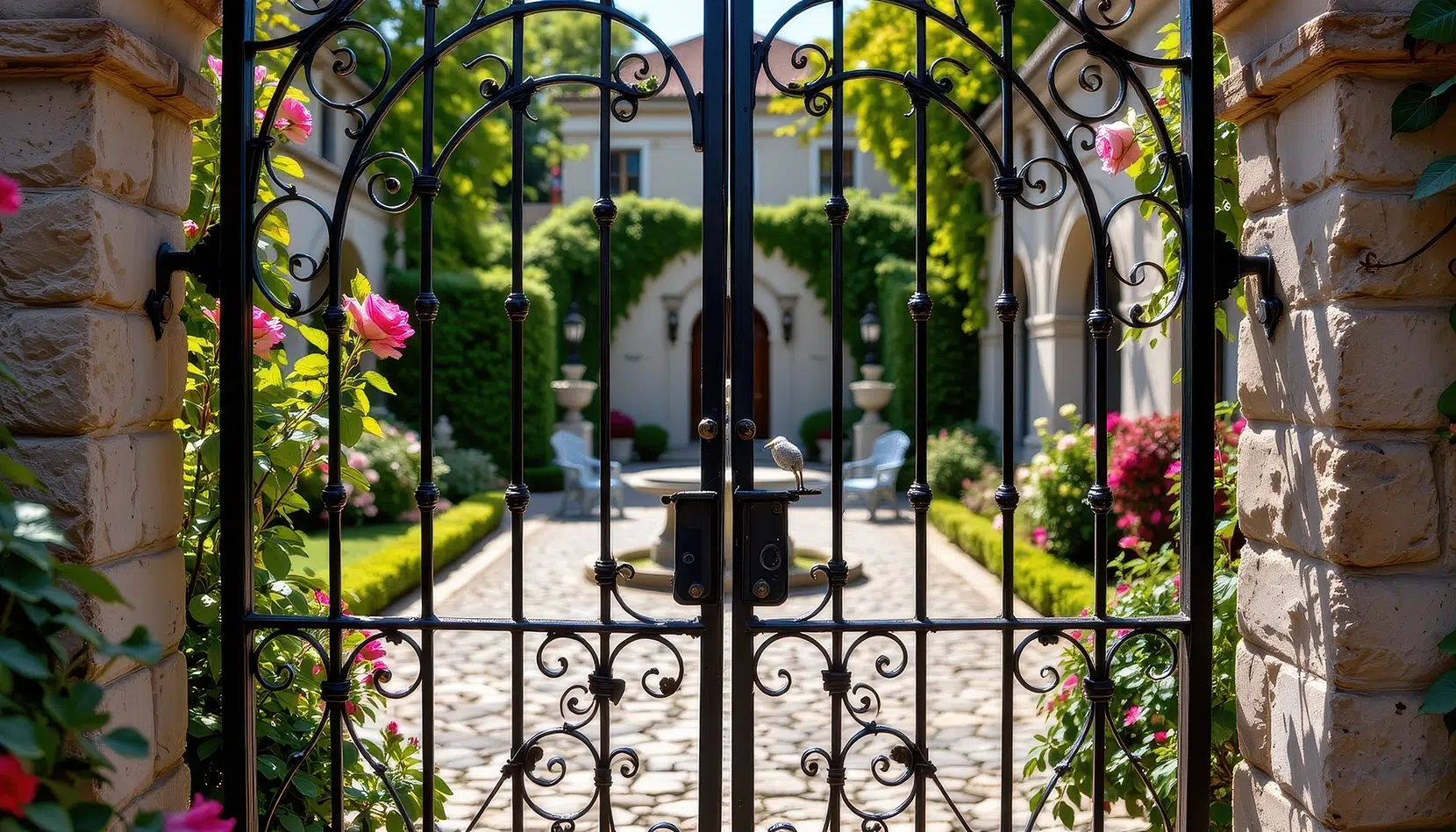
Wrought iron is the benchmark for durability and aesthetics in residential and historic applications. It is heavier, stronger, and lends itself to ornamental detail that cannot be replicated in lighter metals. For period-appropriate installations on older Chicago properties, wrought iron is usually the right call. It does require maintenance, primarily periodic painting to prevent rust, but it can last for decades when properly cared for.
Aluminium fencing is a practical choice for residential properties where low maintenance is a priority. It does not rust, holds paint well, and works well in a range of decorative styles. It is not as structurally robust as wrought iron for heavy-duty applications, but for a residential yard fence or a pool enclosure, it performs reliably. The team at Americana Iron Works brings the same attention to detail to aluminium installations as they do to any other material, which matters more than the material alone.
Chain link gets underestimated. It is not glamorous, but it is exceptionally durable, cost-effective in the right sense, and appropriate for commercial perimeters, utility areas, and properties where visibility and airflow take priority over aesthetics. Properly installed chain link with the right gauge and coating holds up for years with minimal maintenance.
Understanding which material suits your specific situation is part of what a reputable contractor brings to the table before any work begins.
Fire Escapes: Where Code Compliance Becomes Non-Negotiable
Fire escape work occupies a different category from decorative ironwork. The stakes are higher. A city inspection notice is not a suggestion, and a violation that goes unaddressed can result in fines, failed building inspections, and in the worst case, injury or death if the structure fails.
Chicago requires fire escapes to meet specific load-bearing standards, clearance requirements, and maintenance conditions. Rusted stringers, deteriorating treads, missing handrails, and failing anchors are all common problems in buildings that have not had their fire escapes inspected in years. Any of those issues can constitute a code violation.
The right contractor for this work is not just a metalworker. They need to understand the city’s requirements, be licensed and insured for structural work, and be able to document the repair or installation in a way that satisfies the Department of Buildings. Trying to cut costs here is one of the riskier decisions a property owner can make.
What 30 Years in the Field Actually Looks Like
There is a meaningful difference between a contractor who has been in business for three years and one who has completed over 20,000 jobs across Chicago’s varied building stock. The latter has seen problems that would stop a less experienced team cold. They have worked through situations where the original ironwork was installed incorrectly, where building materials from a century ago do not cooperate with modern fasteners, and where city inspectors require documentation that a newer company might not even know how to produce.
That depth of experience also shows in how a company handles custom jobs. When a property owner in Wrigleyville needs a custom iron gate that matches the existing fence line on an uneven sidewalk grade, experience is what determines whether the finished product looks intentional or like an afterthought.
For those exploring what a quality custom installation actually involves, the range of work behind Americana iron fence projects illustrates how much variation there is even within a single product category, from simple perimeter fencing to intricate ornamental designs built to match historic architecture.
Metal Painting: The Step That Extends Everything Else
A high-quality iron fence or fire escape that is not properly painted will begin to deteriorate faster than most people expect. Rust does not wait. In Chicago’s climate, even a small scratch in the paint surface can become a significant rust problem within a season or two if it is not addressed.
Professional metal painting is not the same as rolling exterior latex over bare metal. Surface preparation, the right primers, and topcoats rated for ferrous metals are all part of a proper job. For fire escapes especially, peeling paint and surface rust are often the first signs that a more serious structural inspection is overdue.
This is one of the more undervalued services in the ironwork category because it looks like maintenance rather than an upgrade. In practice, it is the single most cost-effective thing a property owner can do to extend the life of existing metalwork.
Key Takeaways
- Custom fabrication is not a luxury for Chicago properties. It is often a necessity given the age and variety of the building stock.
- Material choice should be driven by application: wrought iron for durability and aesthetics, aluminium for low-maintenance residential use, chain link for commercial perimeters and utility applications.
- Fire escape compliance is a legal obligation, not an optional upgrade. Licensed, insured contractors are non-negotiable for this category of work.
- Metal painting extends the life of all ironwork significantly, and skipping it negates a large part of the investment in quality installation.
- Experience and in-house fabrication capability separate full-service ironwork contractors from assembly-only outfits. Know which one you are hiring before you sign anything.
Frequently Asked Questions
How do I know if my fire escape is up to code in Chicago? The Chicago Department of Buildings periodically inspects multi-unit residential and commercial properties, and violations are formally issued when escape structures fail to meet load, clearance, or condition standards. If you have received a violation notice or have not had your fire escape inspected recently, a licensed contractor with structural ironwork experience can assess the current condition and identify what work is needed before any formal inspection.
What is the lifespan of a properly maintained wrought iron fence? A wrought iron fence that is professionally installed, properly primed, and repainted on a regular schedule can last 50 years or longer. The critical variable is consistent maintenance, particularly keeping the paint film intact to prevent moisture from reaching the metal. Neglecting that step is the most common reason iron fences fail prematurely.
Is custom ironwork always more expensive than pre-made alternatives? The upfront cost is usually higher, but the total cost over time tends to be lower. Pre-made panels that do not fit correctly create structural weaknesses and aesthetic problems that lead to earlier replacement. Custom work, done the first time correctly, simply lasts longer and requires fewer corrections.
Can aluminium fencing replicate the look of wrought iron? Aluminium fencing has improved considerably and can approximate the profile of certain wrought iron styles reasonably well. However, the visual weight, the texture, and the ornamental detail of genuine wrought iron are difficult to fully replicate. For historic properties or applications where the architectural character is a priority, wrought iron remains the more appropriate choice.
What should I ask a contractor before hiring them for ironwork or fencing? The most important questions are: Are you licensed, bonded, and insured for this type of work? Do you fabricate custom pieces in-house or order from a supplier? Can you provide references or examples from comparable projects? And what does the warranty cover? A contractor who hesitates on any of those questions is giving you information you should pay attention to.
Closing Thoughts
Quality metalwork and fencing are long-term decisions. The fence installed on a Chicago property today might still be there in 30 years, for better or worse depending on who did the work. The same is true for fire escapes, custom railings, and structural steel elements.
Taking time to understand the material options, the fabrication process, and the qualifications of the contractor doing the work is not overthinking it. It is the straightforward reason why some properties look better and hold their value longer than others on the same block.
If you are at the stage of evaluating options, asking for a free quote from a contractor with a verifiable track record and in-house capabilities is a reasonable next step. What they tell you in that conversation will reveal more than any brochure will.