The terms of a personal loan that suited your budget when you first borrowed may no longer be the most suitable for your current circumstances. Your income, regular expenses, or the interest rates available from other lenders may have changed since you took out the loan.
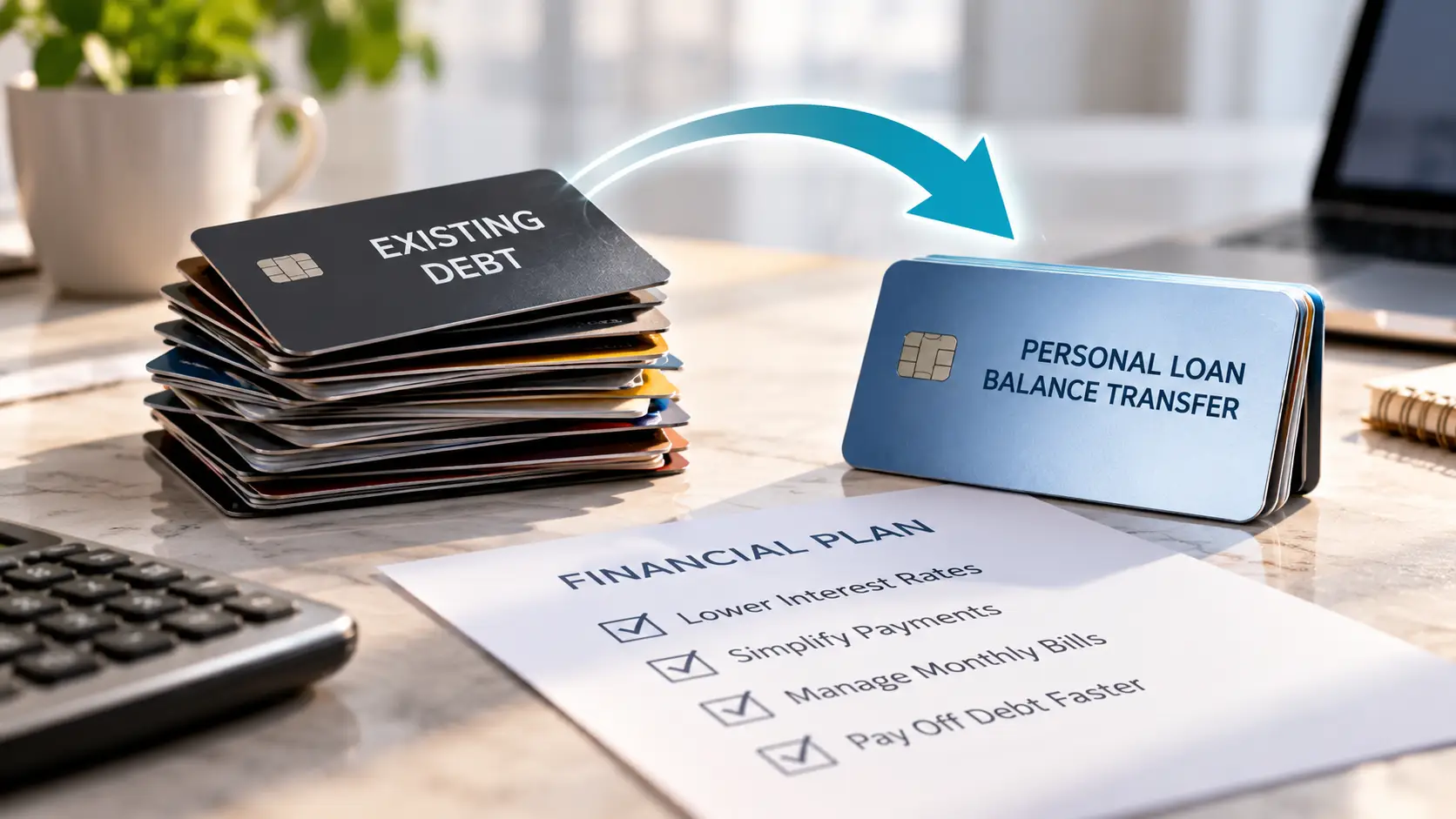
A personal loan balance transfer allows you to move the outstanding amount of an existing loan to another lender, typically to access a lower interest rate, a more suitable repayment tenure, or a better customer service experience. Depending on the new terms, this may help reduce your monthly EMI or the interest payable over the remaining repayment period.
Before transferring a personal loan, however, it is important to compare the cost of continuing with your existing lender against the potential savings and the total cost of the new arrangement, including any charges associated with the transfer.
When Should You Consider a Personal Loan Balance Transfer?
A balance transfer may be considered if your existing loan terms no longer suit your financial circumstances or another lender offers more favourable repayment terms, such as a significantly lower interest rate.
Well-known lenders such as SMFG India Credit offer a personal loan balance transfer, allowing eligible borrowers to move their outstanding loan balance to a new lender, with the option of a top-up loan subject to applicable policies and approval.
You may wish to explore a balance transfer if:
- Your existing loan carries a higher interest rate than the rates currently available to you, and switching could reduce the interest payable over the remaining tenure.
- You have a substantial portion of your loan tenure remaining, and transferring the outstanding balance to a lower interest rate could help reduce your overall borrowing costs.
- Your monthly EMI has become difficult to accommodate alongside other financial commitments, and a revised repayment tenure could make it more manageable.
- You are dissatisfied with your current lender’s service and would prefer to manage your repayments with another institution.
- You need additional funds for a planned expense and may be eligible for a top-up loan facility alongside the transfer, subject to the new lender’s eligibility criteria and policies.
Before proceeding, check how much of your existing loan remains unpaid and whether the potential benefits of switching would outweigh the charges involved, such as processing fees and prepayment charges, where applicable.
How to Compare Your Existing and New Loan Repayment Costs
Compare the outstanding principal, remaining EMIs, interest rate, and tenure of your current loan with the terms offered by the new lender. A personal loan balance transfer calculator can help you estimate the revised EMI and potential interest savings.
For example, consider an existing loan of Rs. 5 lakhs at 15% p.a., with an original tenure of 24 months and an EMI of Rs. 24,243. The overall interest payable on this loan is approximately Rs. 81,840. After four EMIs, the outstanding principal is around Rs. 4,26,666.
Transferring this balance at 12.5% p.a. for another tenure of 24 months would result in an EMI of approximately Rs. 20,184, reducing the monthly payment by Rs. 4,059. The interest payable on the new loan would be around Rs. 57,760.
Do include any applicable prepayment, processing, and other transfer-specific charges when assessing whether the transfer would reduce your overall repayment cost.
When a Personal Loan Balance Transfer May Not Be the Right Choice
A personal loan balance transfer may not always result in lower borrowing costs, even if the new lender offers a reduced interest rate or monthly EMI. Before switching lenders, consider how much of your existing loan remains unpaid, the transfer charges involved, and whether the revised repayment terms will benefit you in the long run.
A balance transfer may not be worthwhile in the following situations:
- Your Existing Loan Is Nearing Completion: If only a few EMIs remain, the potential interest savings may be too small to justify the cost of transferring the outstanding balance to another lender.
- Transfer Charges Outweigh the Savings: Processing fees, applicable prepayment charges, and other costs associated with the transfer could offset the savings from a lower interest rate.
- Your Existing Lender Offers Comparable Terms: Before transferring your loan, check whether your current lender can offer a lower interest rate or revised repayment terms that meet your needs without requiring you to switch lenders.
Compare the remaining repayment cost of your existing loan with the total cost of the new arrangement, including applicable charges. This will help you determine whether a balance transfer offers meaningful financial benefits or whether continuing with your current lender would be more suitable.
How to Manage Existing Debt After a Personal Loan Balance Transfer
A personal loan balance transfer may help you manage your existing debt by reducing your monthly EMI or offering repayment terms that better suit your financial circumstances. However, it is important to consider how the revised loan terms fit into your overall financial commitments, particularly if you have other outstanding loans or credit card balances.
The following measures can help you manage your debt more effectively after a balance transfer:
- Keep track of all outstanding loans, credit card balances, EMI amounts, and payment due dates to maintain a clear picture of your total repayment obligations.
- If the balance transfer reduces your monthly EMI, consider using part of the savings to repay other outstanding debt or build your savings.
- Prioritise clearing high-interest debt where possible, while continuing to make the required payments on your other loans.
- Avoid taking on additional credit simply because your revised EMI leaves more money available each month. Consider whether any new borrowing is necessary and fits within your budget.
- If you have surplus funds, check whether making a part-prepayment on your transferred loan could reduce your interest costs after accounting for any applicable charges.
Review your repayment plan whenever your income or regular expenses change, and contact your lender promptly if you anticipate difficulty meeting a payment.
Common Mistakes to Avoid When Managing Existing Debt
A lower interest rate or monthly EMI resulting from the balance transfer may seem attractive, but the new loan terms could affect your overall repayment costs and other financial commitments. Certain mistakes can also reduce the potential savings from switching lenders.
Some common mistakes to avoid include:
- Comparing only the monthly EMI without checking the total interest payable over the new loan tenure. A lower EMI may result from a longer repayment period rather than a lower borrowing cost.
- Ignoring processing fees, prepayment charges, and other transfer-related costs when calculating potential savings.
- Taking a top-up loan simply because additional funds are available, without considering how the increased loan amount will affect future repayments.
- Using the money saved through a lower EMI for unnecessary purchases while leaving other high-interest debt unpaid.
- Missing repayment dates or assuming that the balance transfer automatically closes your existing loan. Confirm that the previous lender has received the settlement amount and completed the loan closure process.
Conclusion: Managing Existing Debt Through a Personal Loan Balance Transfer
A personal loan balance transfer may help you better manage existing debt by offering a lower interest rate, a revised repayment tenure, or a more suitable monthly EMI. Whether switching lenders is worthwhile depends on the outstanding balance, the remaining repayment period, and the costs involved in transferring the loan.
Before proceeding, compare the total cost of continuing with your existing personal loan against the new offer, including any applicable fees and charges. Choose repayment terms that fit your monthly budget and support your wider debt management plans.
*T&C apply. Loan eligibility, loan terms, and loan disbursement processes are subject to the lender’s policy at the time of loan application.