Minneapolis rarely gets top billing when people talk about American sports cities, and that’s a shame. The Twin Cities pack four major league teams, decades of hockey tradition, and a downtown built for walking between games into one tight package.
Add in a growing soccer scene and a genuine love for watch parties, and you get a city that rewards fans who actually show up. This article breaks down exactly why Minneapolis deserves a spot on your sports travel list.
Minneapolis: A Four-Sport City With Real Fan Energy
Few American cities can claim four major professional teams within a few miles of each other, but Minneapolis pulls it off. The Vikings, Twins, Timberwolves, and Wild all call the metro home, and each one draws a passionate, loyal following that shows up rain or shine (or snow, which happens often here).
What makes this city stand out even more is how close everything sits together. Most of the stadiums and arenas cluster around downtown, so you can walk from a Twins day game to a Timberwolves tip-off without needing a car. That kind of density is rare, and it changes how you experience a sports trip entirely.
Gameday in Minneapolis spills out well beyond the stadium gates. Bars fill up hours before kickoff, and locals treat pregame the same way they treat the game itself. If you want to feel that energy firsthand, the best Minneapolis sports bar sits right in the mix of it all, packed with fans in jerseys trading predictions before the first snap.
The Rabbit Hole has built a reputation as one of the go-to spots for exactly this kind of gathering. Locals treat it as a starting point before Vikings games, and visitors quickly see why once they walk in and find the crowd already buzzing an hour before puck drop or kickoff.
US Bank Stadium and the Modern Vikings Experience
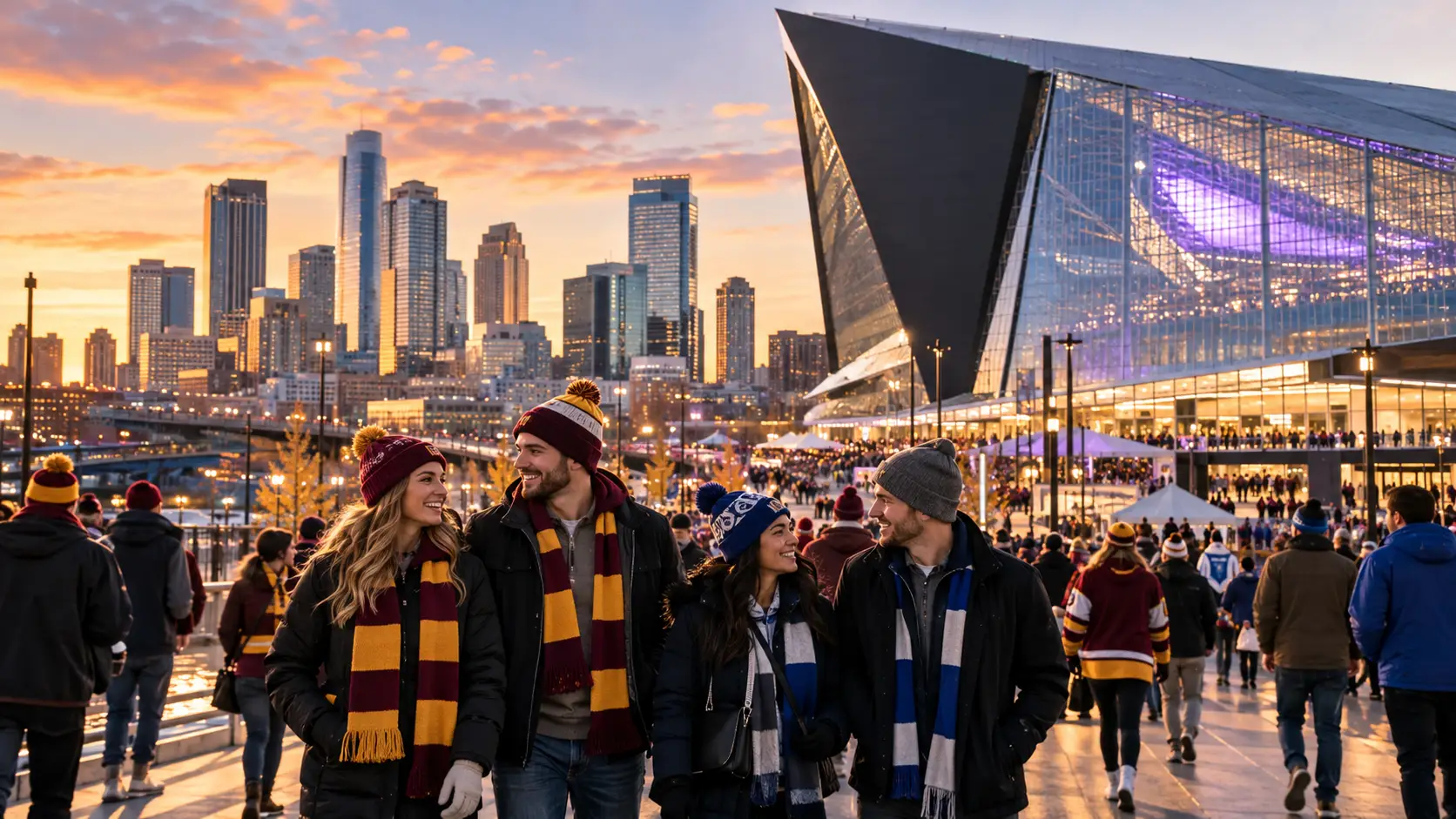
US Bank Stadium looks nothing like the outdoor stadiums Vikings fans grew up with. The glass-paneled exterior and sharp angular design give it a look that stands apart from most NFL venues, and it photographs beautifully against the downtown skyline on a clear day.
That retractable roof solves a real problem too. Minnesota winters are no joke, and the ability to close things up keeps games playable and comfortable no matter what the weather throws at fans. You get the outdoor feel when the roof opens without the risk of frostbite ruining your afternoon.
Once inside, the sightlines put you close to the skyline in a way few stadiums manage. Certain sections offer views where you can catch the game and the city skyline in the same glance, which adds a sense of place that a lot of newer stadiums lack entirely.
Tailgating culture here has adapted to the cold rather than folding under it. Fans still gather early, grills still fire up, and parking lots still fill with purple and gold hours before kickoff. The stadium has also hosted concerts and other major events, proving it works as more than just a football venue.
Target Field and the Return of Outdoor Baseball
Target Field brought open-air baseball back to Minneapolis, and the Twins have made the most of it. Tucked into the Warehouse District, the ballpark blends into the surrounding neighborhood instead of towering over it, which gives the whole area a lived-in, walkable feel on game day.
The Minnie and Paul sign beyond left field has become one of the most recognized pieces of stadium art in the league. Every home run triggers the handshake animation, and it’s the kind of small touch that gives the ballpark its own identity instead of feeling like every other modern stadium.
Seating in the upper deck offers something a lot of ballparks can’t match. From certain sections, you get a clear view of the downtown skyline stretching out behind the field, so you’re watching baseball with the city itself as a backdrop.
Outside the gates, the Warehouse District carries its own energy on game days. Bars fill with fans in Twins gear well before first pitch, and the short walk between the ballpark and nearby spots makes it easy to turn a single game into a full afternoon out.
Target Center and Timberwolves Playoff Culture
Target Center has gone through a serious transformation in recent years, and it shows. The renovated arena now offers wider concourses, better sightlines, and modern amenities that put it on par with newer buildings around the league, all while keeping that downtown Minneapolis location.
What really sets the current atmosphere apart is the team itself. A young, talented Timberwolves roster has pushed deep into the playoffs and given fans a reason to pack the building night after night, and that kind of momentum tends to feed on itself once a fan base catches on.
Because the arena sits right downtown, the after-game options are basically endless. Walk a few blocks in any direction, and you’ll find bars and restaurants filling up with fans still buzzing from the game, trading takes on the last possession or arguing about the referees.
Student sections and organized fan groups add another layer to the experience. The Wolves Den has become known for its noise and energy, and that kind of tradition gives newer fans something to plug into the moment they walk through the doors.
Xcel Energy Center and Minnesota’s Hockey Roots
Hockey runs deep in Minnesota, and Xcel Energy Center over in St. Paul is where that tradition plays out at the professional level. Wild games carry a different kind of intensity, one that comes from a fan base that grew up on the sport rather than discovering it later in life.
That connection traces back to the state’s high school hockey culture, which is treated with the same seriousness as football in other parts of the country. Kids grow up skating before they can properly walk, and that pipeline feeds directly into the passion you see in the stands during Wild games.
Inside the arena, the crowd noise gets loud fast. Xcel Energy Center has built a reputation as one of the tighter, more intense buildings in the league, and visiting teams often mention how much the sound affects the pace of the game.
Winter itself plays into the identity here rather than working against it. Minnesotans wear the cold as a point of pride, and hockey becomes the natural extension of that mindset, giving the Wild a following that treats every home game as a statement about who they are.
Beyond Game Day: Minneapolis as a Sports Town Year Round
Sports in Minneapolis don’t stop when the stadiums empty out. The Chain of Lakes gives runners, cyclists, and walkers miles of trails right in the middle of the city, and on a sunny afternoon you’ll find it packed with locals staying active between games.
Minnesota United FC has also carved out real space in a city already crowded with major league teams. The soccer scene has grown steadily, and Allianz Field draws its own dedicated crowd that brings a different kind of energy compared to the traditional big four sports.
For fans who want a deeper look at the state’s sports history, local museums and Hall of Fame stops offer a chance to slow down and appreciate the bigger picture. These spots tell the story of how Minneapolis built its reputation as a sports town over decades rather than overnight.
None of this beats the simple appeal of a neighborhood bar packed for a watch party, though. Locals treat these gatherings as a real tradition, and that communal habit of gathering around a game, any game, says a lot about how sports fit into daily life here.
Conclusion
Minneapolis earns its place on any sports fan’s travel list through sheer density and genuine passion. Four major league teams, a growing soccer scene, and a walkable downtown make it easy to pack multiple games into a single trip without ever needing a car.
What really seals the deal is the culture surrounding those games. From packed bars before kickoff to loud arenas and a deep hockey tradition, Minneapolis treats sports as part of daily life rather than just weekend entertainment, and that energy is worth experiencing firsthand.