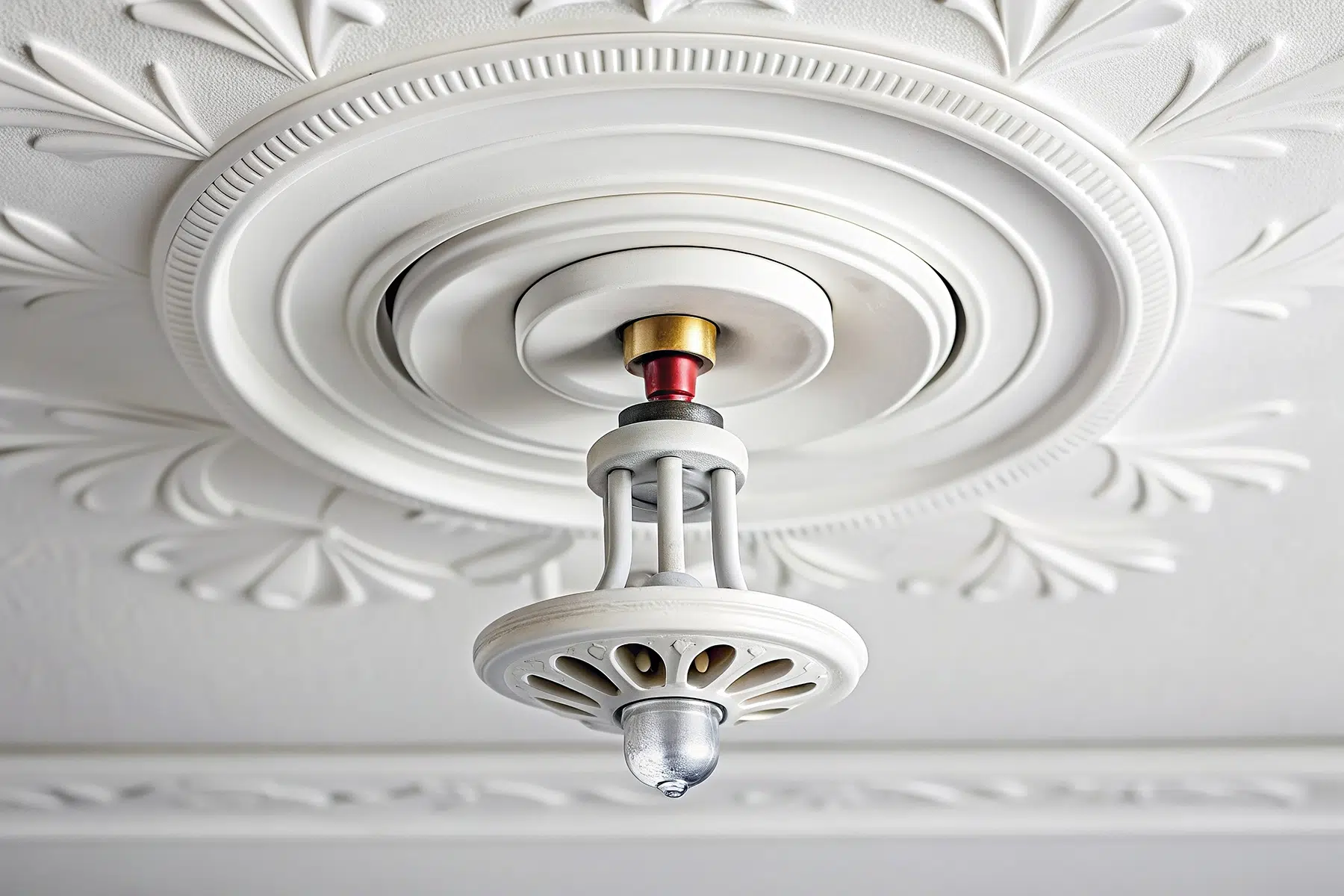
The most discerning homeowners understand that true luxury is not just about what you acquire — it is about what you protect. A collection of fine art accumulated over decades, a wine cellar representing years of careful curation, the irreplaceable architectural details of a historic estate, the memories embedded in a family home built to last generations. These are not things that can be replaced with an insurance settlement, however generous. They are things that must be protected with the same intentionality and quality that went into creating them.
For owners of luxury properties — whether a sprawling Malibu estate, a historic Hudson Valley manor, a contemporary architectural showcase in the Hollywood Hills, or a multi-generational family compound — fire protection is not a commodity purchase. It is a precision investment in the preservation of everything the property represents.
Why Standard Fire Protection Falls Short
The fire protection systems installed in most residential properties are designed to meet minimum code requirements for occupant life safety. They are not designed to protect irreplaceable art, rare wine collections, historic architectural fabric, or the sophisticated building systems that luxury properties contain. For owners whose properties represent not just significant financial value but deep personal significance, the gap between minimum code compliance and genuine asset protection is one worth closing deliberately.
High-value residential properties have fire protection requirements that differ meaningfully from standard construction. Greater square footage means longer distances between a developing fire and the nearest sprinkler head. Higher ceiling heights in grand halls, galleries, and great rooms create fire development dynamics that standard residential systems were not engineered for. Sensitive contents — art, antiques, rare books, wine — may require suppression approaches that minimize water damage alongside fire damage. And the complexity of smart home systems, home theaters, wine cellar climate control, and generator infrastructure creates additional fire hazard profiles that generic residential designs do not address.
The owners of high-value properties who take fire protection most seriously share a common characteristic: they have stopped asking what the code requires and started asking what genuine protection actually demands. That question leads to a meaningfully different set of answers.
The Technology That Changes the Equation
For large estates and luxury properties where square footage, site geography, or the complexity of protected spaces exceeds what standard systems can cover, automatic positioning fire monitors represent a technology that merits serious consideration. These systems combine fire detection — through infrared, thermal, or multi-sensor platforms — with motorized directional suppression devices that aim and deliver water or foam-water suppression agent precisely to a detected fire location without requiring human intervention.
The practical value of this technology in a luxury estate context is substantial. A property with extensive outdoor spaces — landscaped gardens, pool pavilions, vehicle collection garages, guest houses, and equipment buildings distributed across a large site — presents suppression challenges that fixed sprinkler systems cannot adequately address. An automatic positioning monitor that detects a fire in an outdoor vehicle storage building and begins directional suppression within seconds, before the fire service has been notified, changes the loss outcome in ways that no insurance settlement can replicate.
For properties in wildland-urban interface zones — the estates perched on canyon edges above Los Angeles, the wine country compounds of Sonoma and Napa, the ranch properties of the Santa Ynez Valley — the threat of wind-driven ember showers and advancing wildfire fronts creates exterior fire exposure that conventional residential systems were never designed to address. Automatic positioning monitors deployed for perimeter and exterior structure protection extend fire suppression capability into exactly the threat scenarios that luxury property owners in these high-risk regions face most acutely.
System Design for Luxury Estate Protection
Within the automatic fire monitor category, luxury residential applications represent one of the fastest-growing segments as high-net-worth property owners in fire-prone regions recognize that their standard protection is inadequate for the assets they seek to preserve.
The relevant specifications for residential and estate applications include detection sensitivity calibrated for outdoor environments, monitor positioning and range appropriate for the specific site geometry, suppression agent selection based on the hazards present, and integration with existing building management and security systems. Remote monitoring capability — allowing property managers or security personnel to observe system status and receive alerts regardless of their location — is an increasingly standard expectation for estates whose owners travel frequently or maintain multiple properties.
The system design process for luxury estate fire protection is a professional engineering engagement that begins with a site-specific hazard assessment and produces a suppression system specification tailored to the property’s actual risk profile. It is not a catalog selection exercise, and it should not be treated as one.
The Investment Perspective
For luxury property owners who think carefully about the value of what they are protecting, the cost of a genuinely comprehensive fire protection system is almost invariably modest relative to the value at risk. A significant art collection, a historic structure that cannot be rebuilt, a wine cellar with irreplaceable inventory — any one of these assets represents a value that makes the incremental cost of premium fire protection look trivially small.
The question is not whether comprehensive fire protection is worth investing in. It is whether the system currently protecting a property is genuinely adequate for what is at stake — or whether minimum code compliance is being applied to assets that deserve something meaningfully better.