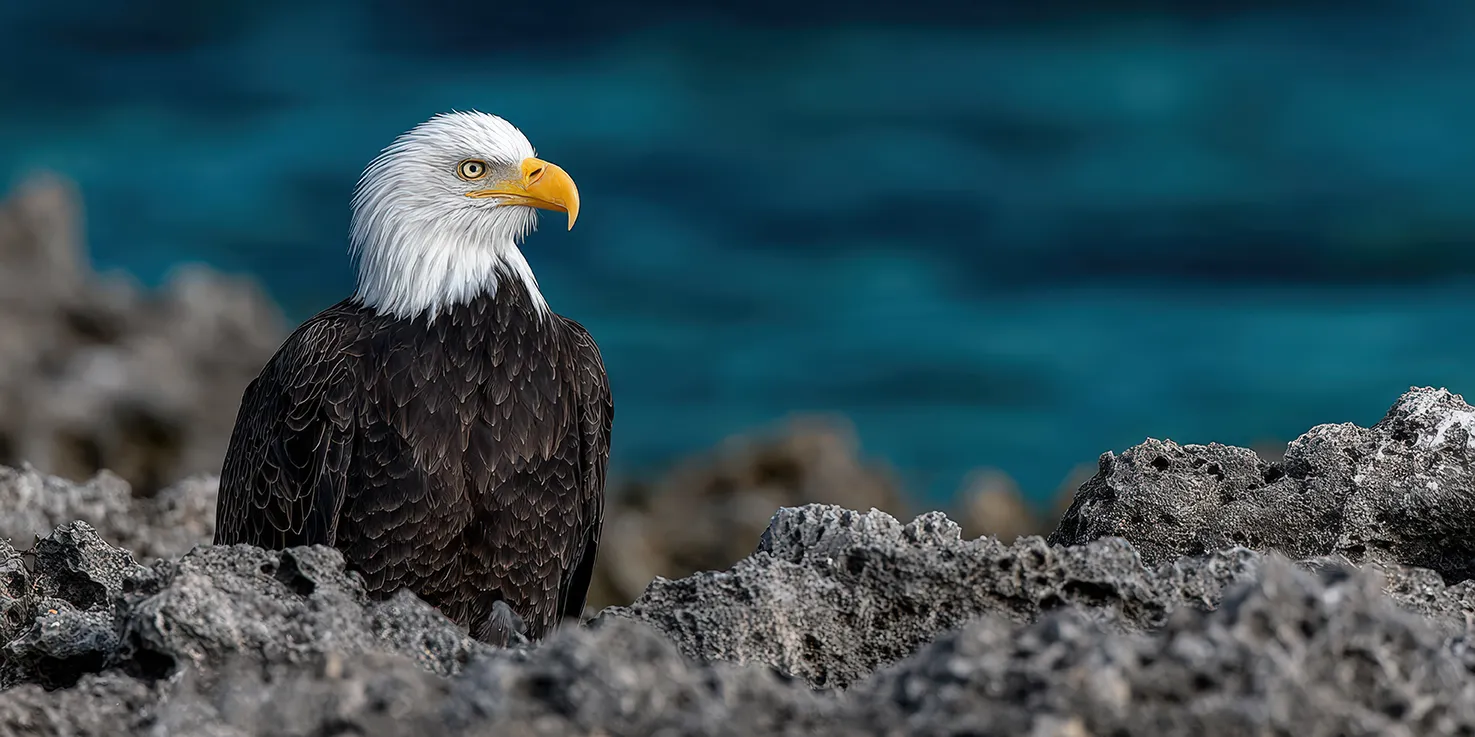
The bald eagle is everywhere in American imagery. It’s on the dollar bill, the presidential seal, military insignia, sports logos, beer cans, and patriotic shirts. The bird has become so synonymous with American identity that it’s hard to imagine the country without it.
Did you know the bald eagle wasn’t always destined to be the national symbol? The decision involved years of debate, some significant pushback from at least one major founder, and a process that took longer than most people realize.
The Search for a National Symbol
When the Continental Congress declared independence in 1776, one of the practical questions that immediately came up was what the new country should use as its official seal. A national symbol mattered for diplomatic purposes, official documents, and the general project of establishing the United States as a legitimate nation.
On the same day the Declaration of Independence was adopted (July 4, 1776), Congress appointed a committee to design the Great Seal of the United States. The committee included Benjamin Franklin, John Adams, and Thomas Jefferson. These three men, fresh off the work of declaring independence, were now tasked with creating a visual identity for the country.
Their initial designs had nothing to do with eagles. Jefferson proposed scenes from the biblical story of the Israelites’ escape from Egypt. Franklin suggested an image of Moses parting the Red Sea. Adams favored a depiction of Hercules choosing between virtue and sloth. None of these ideas went anywhere.
How Long Did It Take To Choose a Symbol?
The Great Seal project took six years to complete. Multiple committees worked on it. Various designs were proposed, debated, modified, and rejected. The whole effort became one of those bureaucratic projects that just kept stalling out.
Finally, in 1782, a man named Charles Thomson pulled the various proposed designs together and submitted what would become the final version. Thomson, who served as Secretary of the Continental Congress, drew from elements suggested by previous committees and added his own creative touches.
His design featured an American bald eagle as the central image, holding an olive branch in one talon and a bundle of arrows in the other. The symbolism was clear: America preferred peace but was prepared for war. The eagle’s head was turned toward the olive branch, signaling the country’s preference for peaceful resolution.
Congress approved the design on June 20, 1782, and the bald eagle officially became the central symbol of the United States.
Why an Eagle?
The choice of an eagle wasn’t arbitrary. Eagles have been used as symbols of power and authority for thousands of years, dating back to ancient civilizations such as Rome and Greece. By choosing an eagle, the founders were tapping into a long tradition of using the bird to represent strength and sovereignty.
The bald eagle (a species native only to North America) gave the symbol a uniquely American twist. This wasn’t just any eagle. This was an American eagle, a creature that existed nowhere else in the world. The choice signaled that the new country was building something distinct from European traditions while still drawing on the symbolic weight of historical imagery.
The bald eagle also fit American ideals in ways that went beyond pure symbolism. The bird was seen as fierce, independent, and powerful. It soared at great heights, hunted with precision, and lived in the wild expanses of the American landscape.
Benjamin Franklin’s Famous Objection
The most famous wrinkle in the bald eagle’s story involves Benjamin Franklin, who reportedly disliked the choice. In a letter to his daughter Sarah, written in 1784, Franklin called the bald eagle “a bird of bad moral character” and complained that it didn’t earn its food honestly, often stealing from other birds.
Franklin suggested that the wild turkey would have been a better choice. He argued that the turkey was a “much more respectable bird” and “a true original native of America.” This claim has since been embraced and exaggerated to the point that many Americans believe Franklin formally proposed the turkey as the national symbol, which isn’t quite accurate.
The turkey idea was a joke embedded in a private letter, not a formal recommendation. Franklin actually contributed to early seal designs that featured the eagle and never publicly campaigned for the turkey. But the story has become part of American folklore.
The Eagle Becomes Iconic
Once the bald eagle was established as the national symbol, its image spread rapidly through American culture. Government buildings, military insignia, currency, official documents, and countless commercial products began featuring the bird. The eagle became inseparable from American identity in a way few other symbols have.
Today, the bald eagle appears on everything from the Great Seal itself to military uniforms, government letterhead, and patriotic shirts. The bird has become shorthand for American values, military service, and national pride.
A Conservation Comeback Story
The bald eagle’s status as the national symbol took on new meaning during the twentieth century, when the species came perilously close to extinction. Habitat loss, hunting, and the widespread use of the pesticide DDT decimated bald eagle populations nationwide. By the 1960s, fewer than 500 nesting pairs remained in the contiguous United States.
The story of the bald eagle’s recovery is one of the great conservation success stories in American history. The banning of DDT, the passage of the Endangered Species Act, and decades of dedicated conservation work allowed the population to rebound dramatically. Today, tens of thousands of bald eagles live across the country, and the species was officially removed from the endangered list in 2007.
A Symbol That Endures
The bald eagle has been America’s national symbol for over 240 years now. Through wars, political upheavals, cultural shifts, and near extinction, the bird has remained the most recognizable visual representation of the United States.
The next time you spot a bald eagle on a coin, a uniform, or soaring overhead during a hike, remember the long, surprisingly contentious process that put it there. Charles Thomson’s compromise design has stood the test of time, and Franklin’s beloved turkey will just have to settle for Thanksgiving glory.