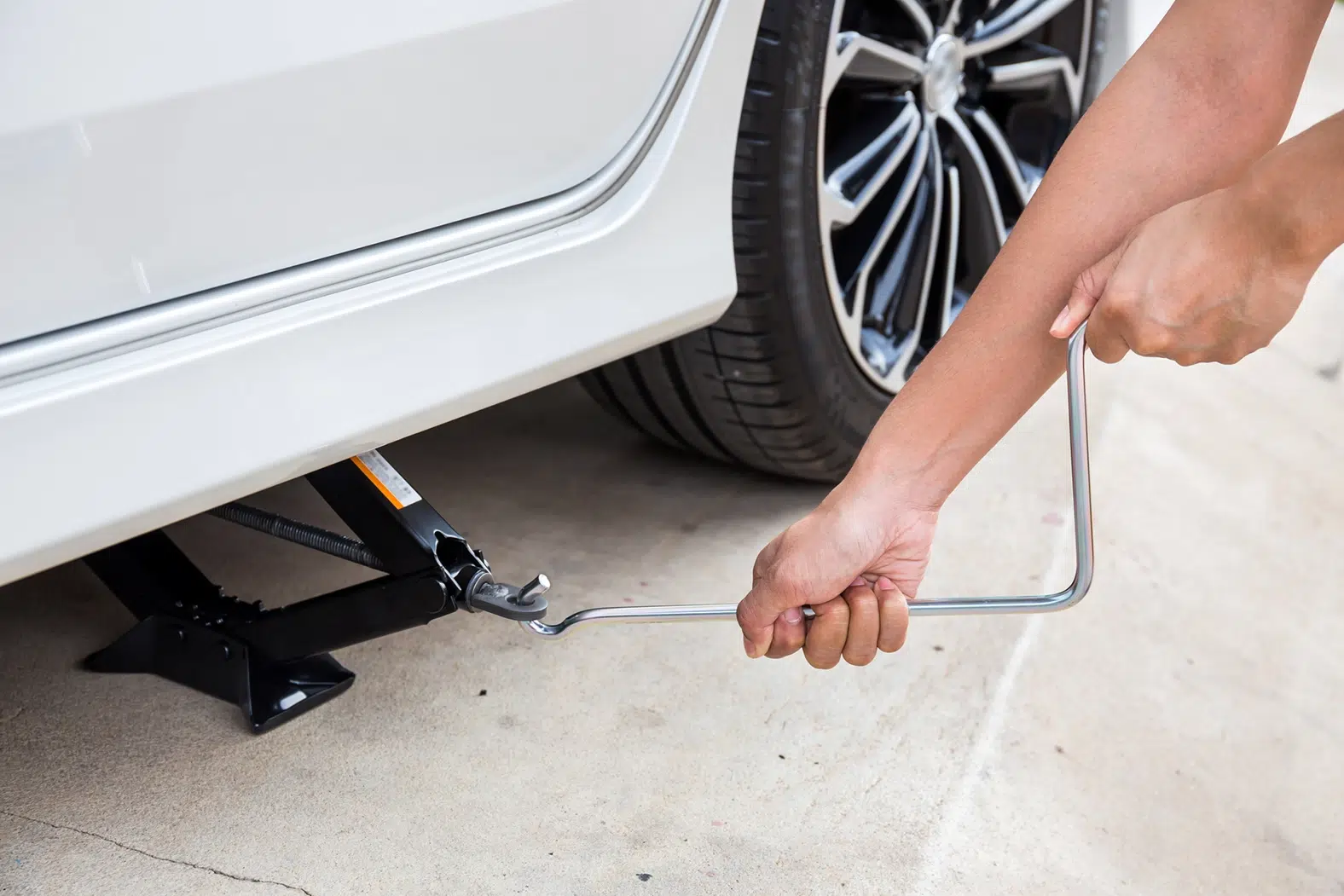
There is a moment many drivers know all too well. You hear a strange flap, feel the steering change, and realize you have a flat tire. Your heart speeds up. You pull over, step out, and suddenly the ground feels less friendly than it did a minute ago. In that moment, most people think about the spare tire, the lug wrench, maybe the weather. Very few think about the jack points under the vehicle. Yet those small reinforced spots can mean the difference between a safe repair and a crushed rocker panel, a bent frame edge, or a dangerous slip no one saw coming.
Jack points matter because your vehicle is not built to be lifted from just anywhere. It may look strong underneath, but much of the underbody is not designed to carry the full weight of the car in one tiny area. That is where jack points come in. They are engineered locations, usually reinforced, where the load can be safely supported when using car jacks. Ignore them, and damage can happen fast, quietly, and expensively.
Understanding Jack Points Before You Use Car Jacks
Think of jack points as the handshake between your vehicle and the lifting tool. They are the agreed-upon places where force can be applied without hurting the structure. On most vehicles, these points are found near the pinch welds beneath the side sills, often just behind the front wheels and just ahead of the rear wheels. Some trucks and SUVs may have frame rail lift points. Many modern cars also include central front or rear lifting points for garage use.
This is where a lot of trouble begins. A driver sees a metal edge under the car and assumes it is fine. But not every visible metal surface is load-bearing. Lift from the wrong place, and the seam can fold, the floor pan can deform, or plastic undertrays can crack. Even worse, the jack can slip.
There was once a young mechanic’s helper who heard his supervisor say that careless mistakes “accrue like dust in a quiet shop.” It sounded dramatic at first, but the lesson stayed with him. One rushed lift from the wrong spot did not always cause a disaster right away. But damage could accrue over time—one bent edge here, one weakened panel there—until the vehicle told the full story later, often with a painful repair bill. That is exactly how jack point neglect works. Small choices collect consequences.
How to Find the Right Lifting Spots for a trolley car jack
The best place to start is always your owner’s manual. It usually shows the exact lifting points with diagrams. If the manual is missing, many manufacturers provide digital versions online. Some vehicles even mark the proper spots with small arrows or notches along the lower body.
When using a trolley car jack, the shape of the saddle matters too. A flat steel saddle pressing directly into a thin pinch weld can do harm if there is no adapter. Many people use a rubber jack pad or a slotted puck designed to cradle the seam. That simple extra step can protect the metal and help keep the contact point stable.
It also helps to prepare the area before lifting. Park on solid, level ground. Set the parking brake. Put the transmission in park or in gear for a manual. Chock the wheels that remain on the ground. Then position the jack carefully and slowly raise it while watching the contact point. If the jack begins pressing into trim, plastic, or the wrong section of metal, stop immediately.
Why the Wrong Lift Point Can Cost You More Than You Expect
The damage from bad lifting is not always obvious right away. Sometimes it looks minor, just a little bend or a scraped underbody coating. But under that small mistake can be a bigger problem. Pinch welds may deform. Rust protection may break. Side skirts may loosen. Alignment-related components can even be affected if lifting is wildly incorrect.
And then there is safety, the part no one should ever treat casually. A poorly placed jack is unstable by nature. Vehicles are heavy, and gravity is patient. One slight shift can send thousands of pounds in the wrong direction. This is why car jacks should never be trusted alone once the vehicle is raised. Jack stands, properly placed at approved support points, are essential.
A retired driving instructor once told a student that every safe action begins with intention. Not hope. Not habit. Intention. He had watched too many people rush through roadside repairs because they wanted the problem gone. But good lifting requires a deliberate pause. You check the ground. You check the point. You check the angle. That quiet intention can keep you safe when stress is trying to hurry you.
Using Car Jacks Safely in Driveways and on Roadsides
Not all lifting situations are equal. A clean garage floor is one thing. A sloped shoulder beside moving traffic is another. On the roadside, the risk multiplies. Soft asphalt can sink under load. Gravel can shift. Uneven ground can tilt the jack as the car rises.
That is why emergency lifting should stay as simple and fast as possible. Use the manufacturer’s designated emergency jack points. Do not crawl under a car supported only by a jack. If conditions are poor or traffic is too close, roadside assistance may be the smarter choice.
There is also a practical side to respecting the vehicle itself. Some cars are designed with a kind of hidden elegance underneath. A restorer once described an old coupe’s lines as comely, not just on the outside but in the way its structural design flowed underneath with purpose. He smiled while saying it, almost embarrassed by the word, but he was right. Good engineering deserves respect. When you place a car jack correctly, you are working with that design, not against it.
Simple Habits That Protect Your Vehicle for the Long Run
Learning your jack points once can save you again and again. Keep a photo of the lift points on your phone. Store a rubber jack pad with your spare tools. Check your pinch welds occasionally for bends or chipped coating. If a tire shop or quick-service garage lifts your vehicle, glance underneath afterward. It is your car, and you have every right to make sure it was handled correctly.
For anyone using a trolley car jack at home, patience is part of the process. Lift slowly. Support securely. Lower carefully. Little routines like these may seem boring, but they are what keep repairs uneventful, and uneventful is exactly what you want when thousands of pounds are leaving the ground.
Jack points may seem like a tiny detail hidden beneath your vehicle, but they carry enormous importance. They protect your car’s structure, your wallet, and most of all your safety. When you understand where to lift and how to do it properly, you turn a stressful task into a controlled one. And in those tense moments on the roadside or in the driveway, that kind of confidence matters more than most people ever imagine.