Few automobiles capture Bugatti’s fascination with its own history quite like the Centodieci. Revealed at The Quail during Monterey Car Week in 2019, the radically styled hypercar was conceived as a modern tribute to the EB110, the machine that helped revive the Bugatti name in the 1990s. Limited to just 10 examples and priced from €8 million before taxes, the Centodieci was already sold out before its official public debut.
Its name means “one hundred and ten” in Italian, a reference both to Bugatti’s 110th anniversary and to the EB110 that inspired it. Yet the Centodieci was never intended as a retro exercise. Instead, Bugatti reinterpreted the EB110’s unmistakable proportions through the far more advanced architecture of the Chiron, combining heritage cues with the extreme aerodynamic and thermal demands of a modern 1,600-horsepower hypercar.

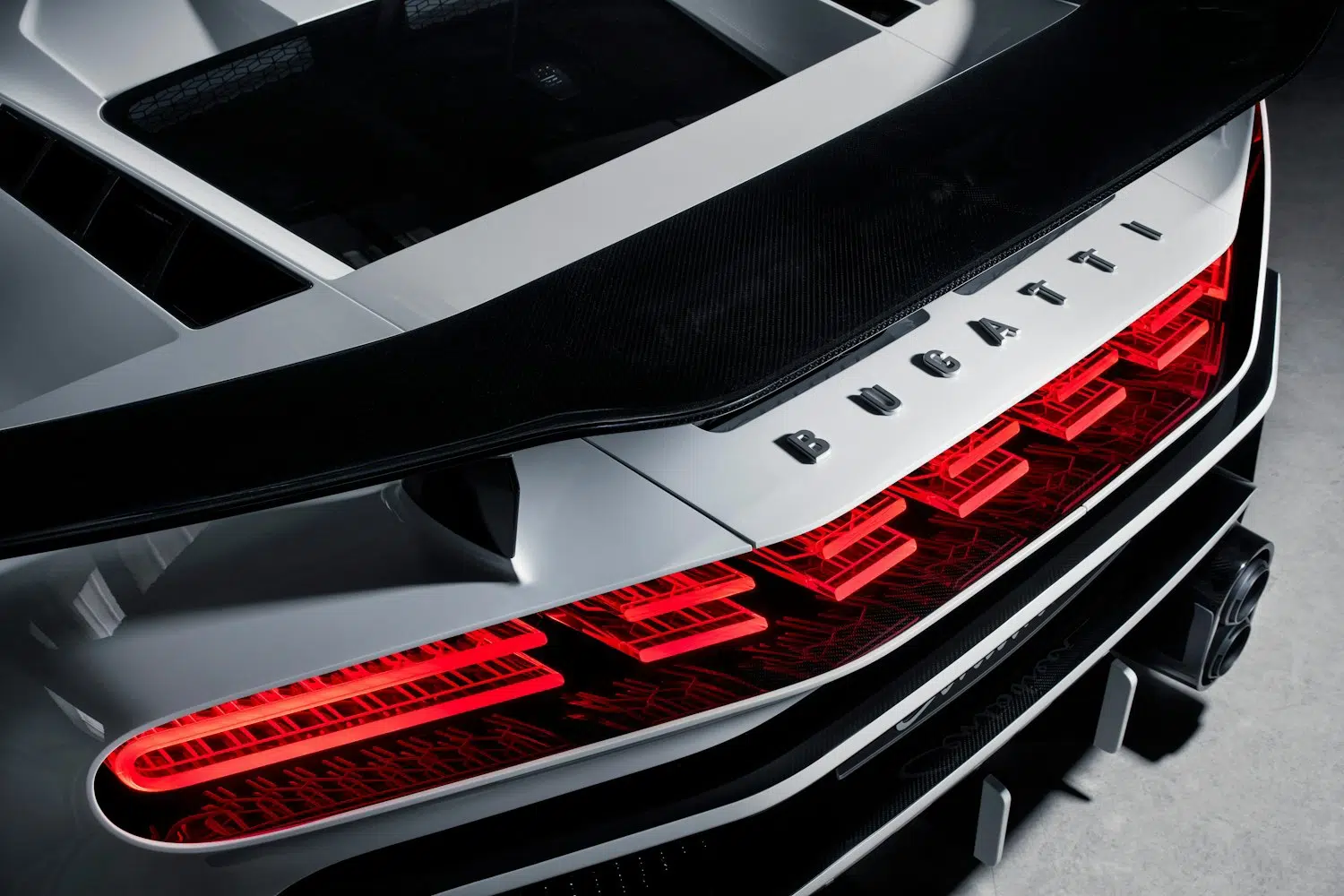
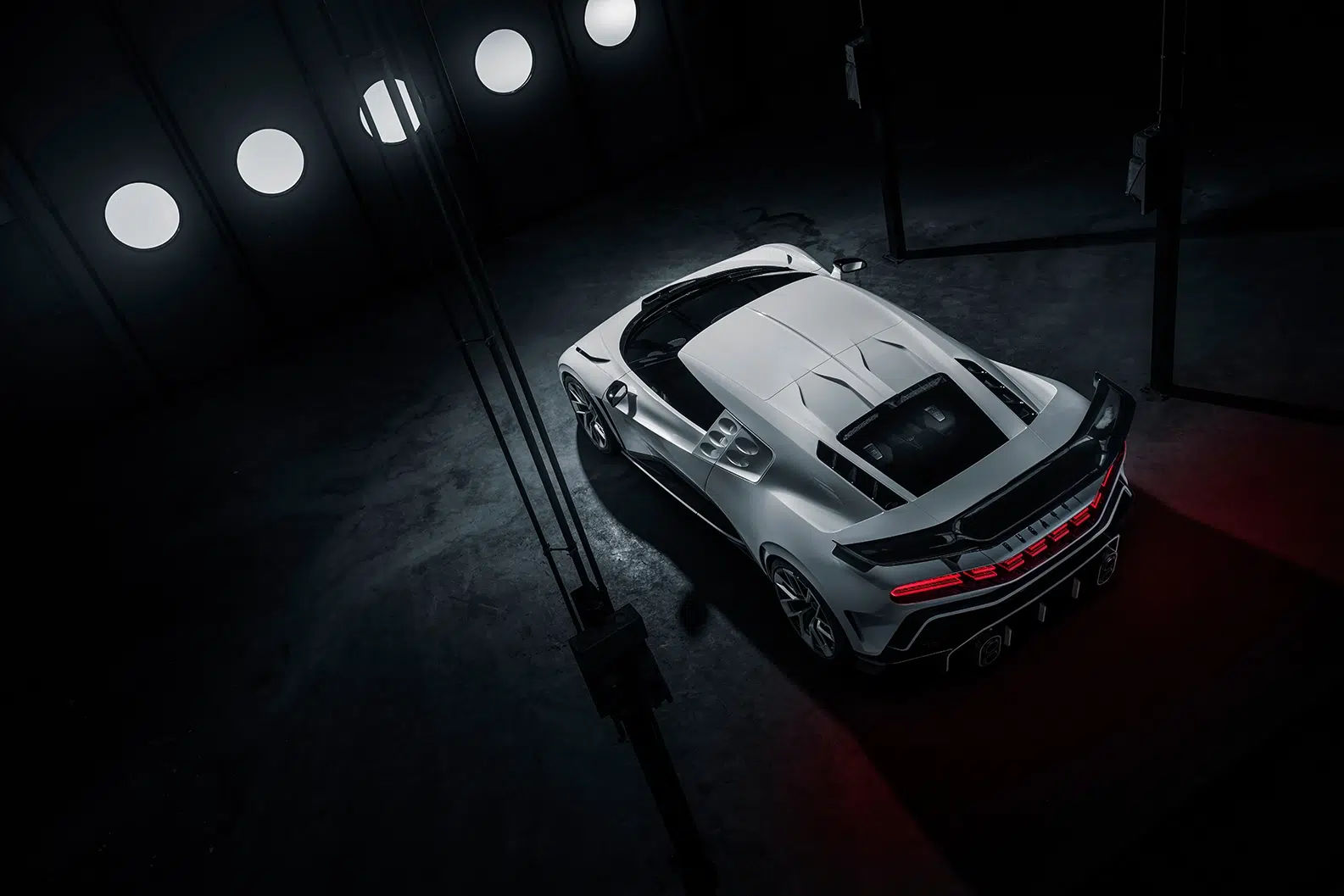
The visual references are unmistakable. A lower, flatter front end, compact horseshoe grille and sharply defined air intakes recall the EB110’s wedge-like stance, while five circular side air openings reference one of the original car’s most recognizable signatures. At the rear, Bugatti replaced the more familiar Chiron treatment with a broad ventilation opening, an intricate lighting signature and stacked exhaust outlets, creating a silhouette that feels simultaneously historical and futuristic.
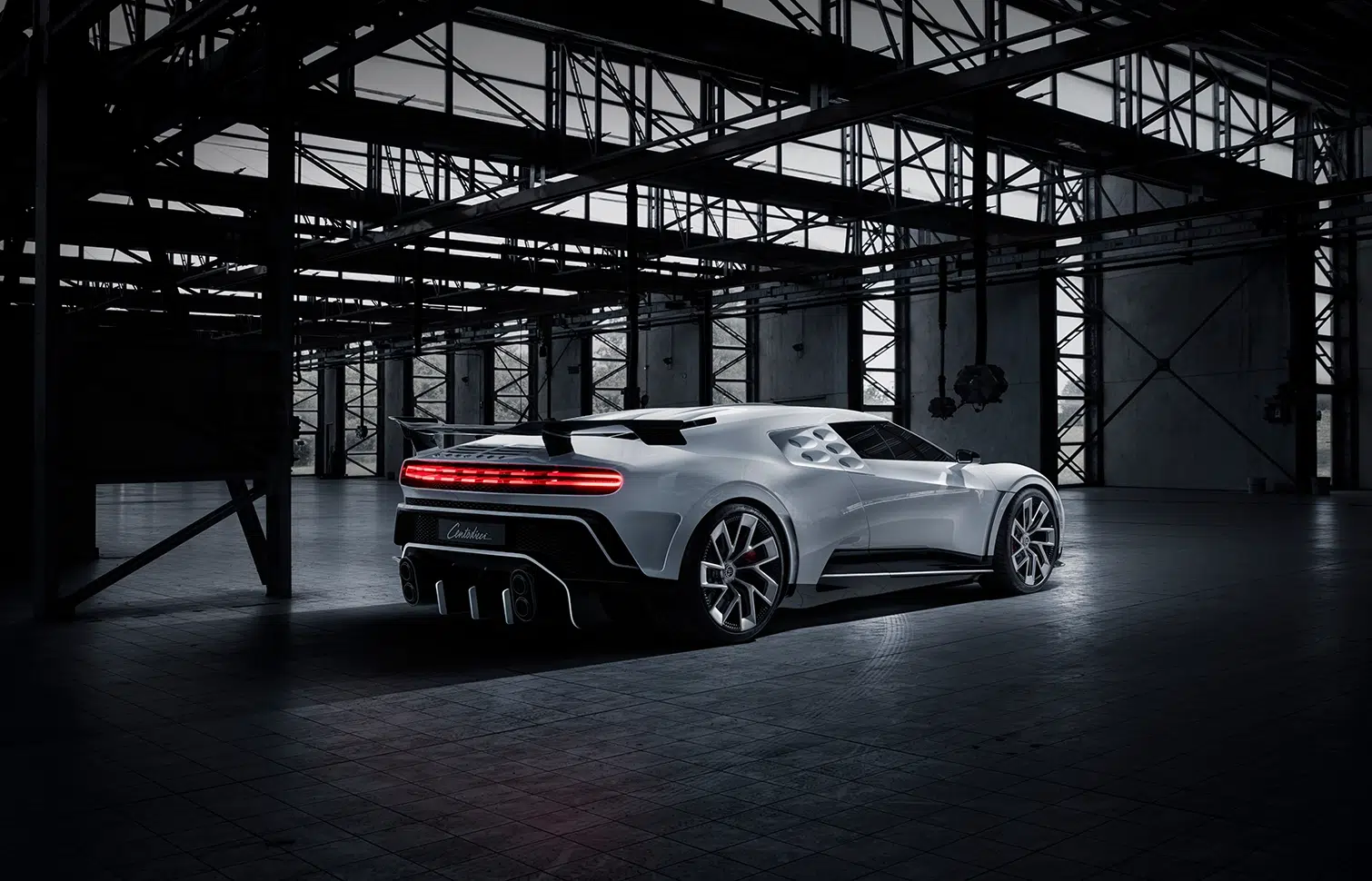
Beneath the bodywork sits Bugatti’s 8.0-liter W16 engine, tuned to produce 1,600 hp at 7,000 rpm. The Centodieci can accelerate from 0 to 100 km/h in 2.4 seconds, reach 200 km/h in 6.1 seconds and 300 km/h in 13.1 seconds, while top speed is electronically limited to 380 km/h, or approximately 236 mph. Compared with the Chiron, Bugatti also trimmed roughly 20 kilograms from the car’s weight, helping sharpen both acceleration and handling.
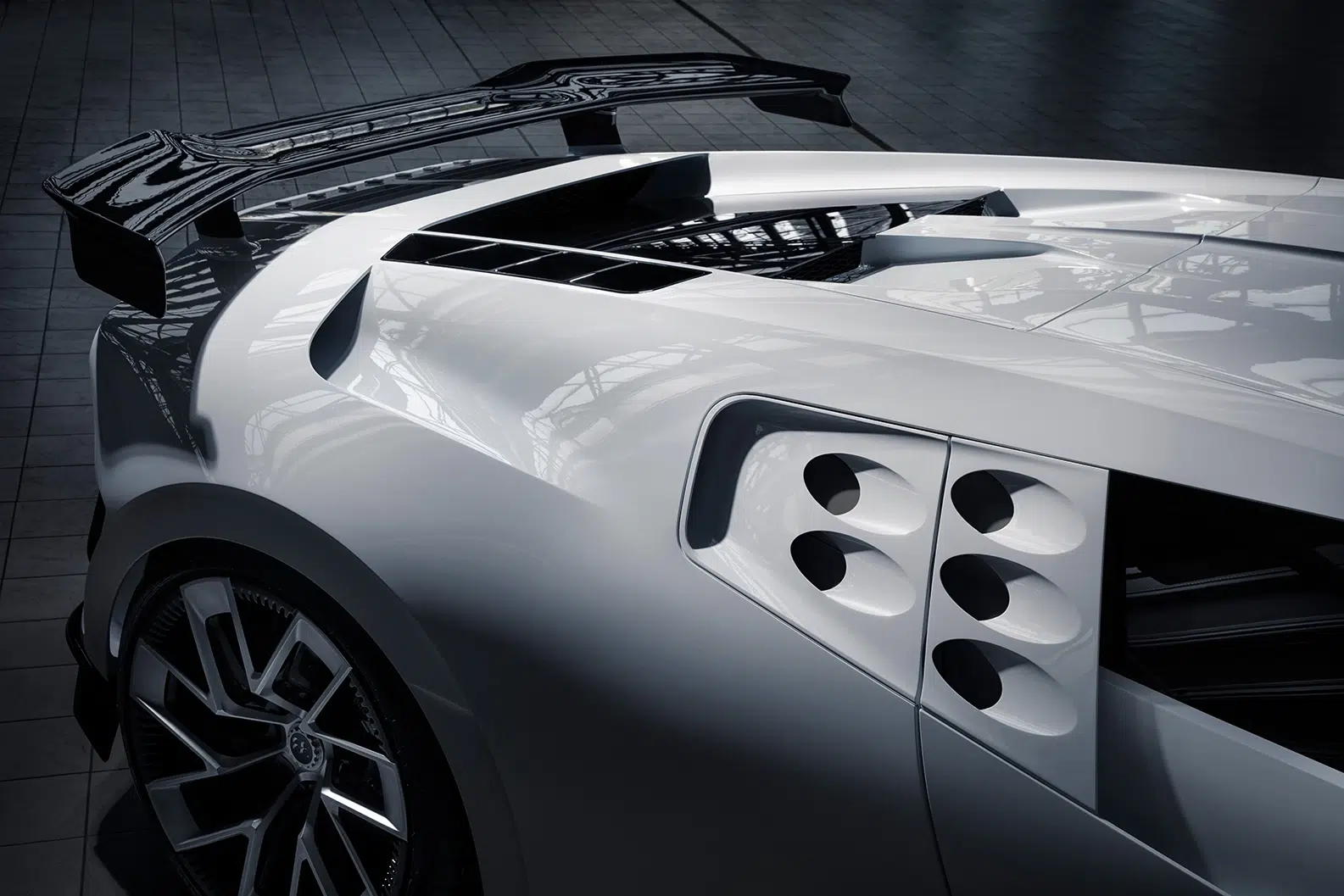
That performance came with an extraordinary engineering challenge. Creating a new body around the W16 meant recalculating cooling requirements, airflow, chassis behavior and aerodynamic balance. The five circular air intakes alone were not merely decorative; guide vanes around them help channel sufficient air toward the engine, while the large rear outlet helps manage heat from one of the most powerful road-car powertrains of its era.
When the prototype emerged in 2021, the Centodieci was still undergoing the exhaustive development program required of every modern Bugatti. It would eventually complete more than 50,000 kilometers of testing on road and track, including wind-tunnel development and extreme-temperature testing ranging from minus 20 degrees Celsius to 45-degree heat in Arizona. The first customer car was delivered in June 2022, finished in EB110 Blue as a direct visual connection to the car that inspired it.
By December of that year, the story had reached its conclusion. Bugatti delivered the tenth and final Centodieci, closing one of the smallest and most coveted production runs in the company’s modern history. Bugatti described the model as bringing together rarity, innovation, heritage, craftsmanship and performance — characteristics that explain why all 10 examples were spoken for before the public even had the chance to see one in the metal.
More than five years after its unveiling, the Centodieci has become something more interesting than a limited-edition Chiron derivative. It represents a brief bridge between two chapters of Bugatti history: the Italian-era EB110 and the W16-powered modern era centered in Molsheim.
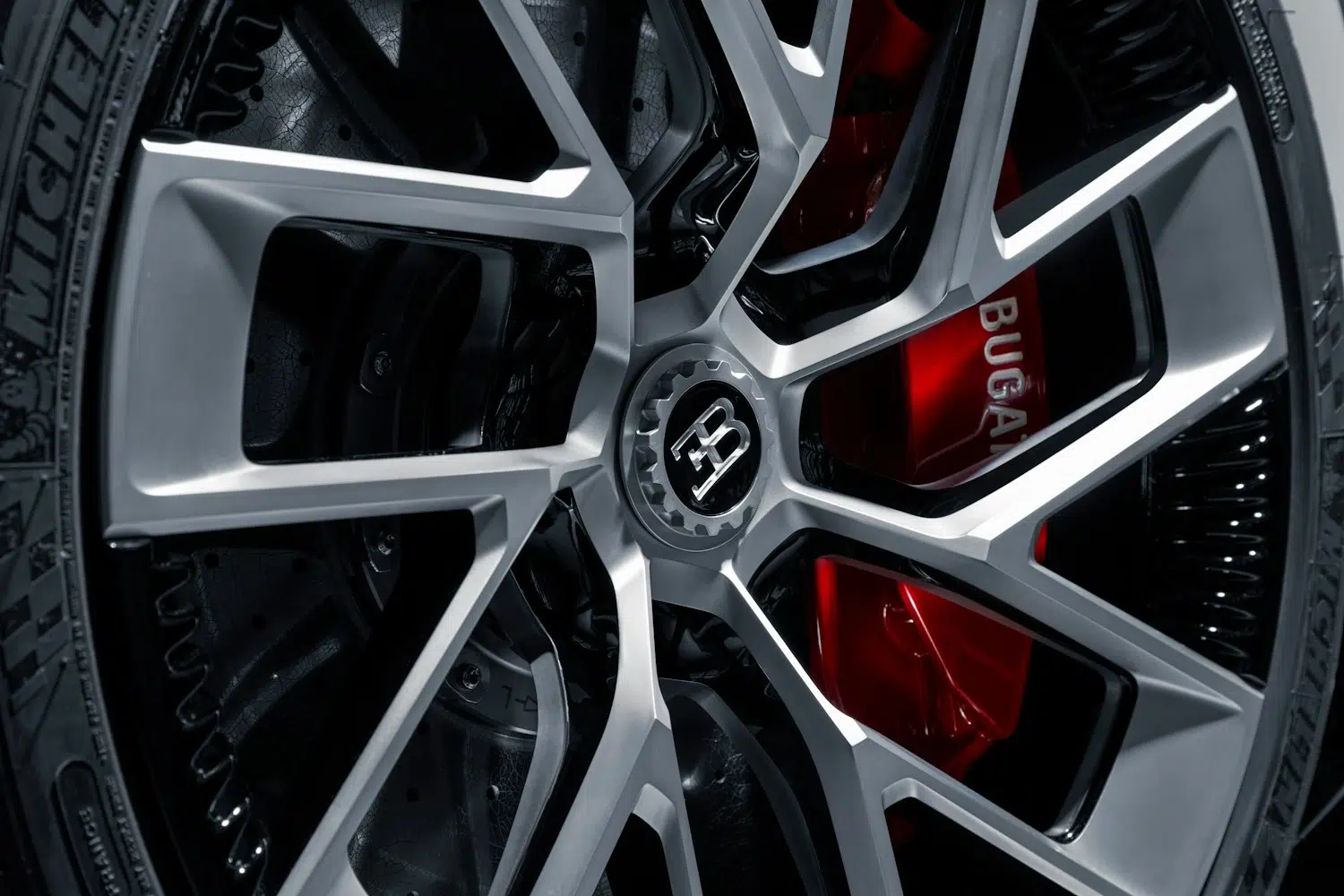
With only 10 examples ever produced, it is unlikely to become a familiar sight even among the world’s most exclusive automotive collections. That rarity is part of its appeal. The Centodieci was never designed to be the Bugatti everyone knew. It was designed for 10 owners who wanted one of the marque’s most concentrated expressions of heritage, engineering and exclusivity.