| All photos courtesy of Jamavar Jaipur.
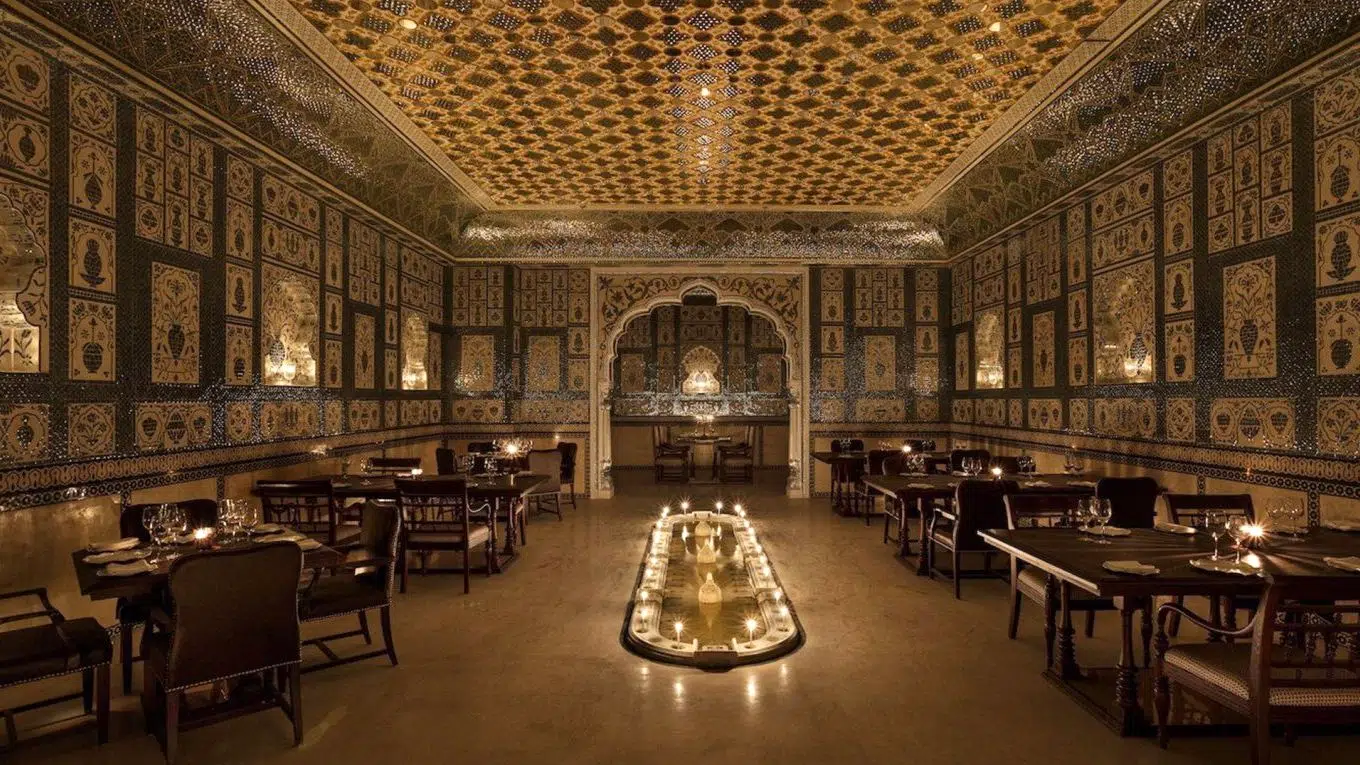
There are dining rooms designed to impress, and then there are rooms that seem to dissolve the moment the lights go down. At Jamavar inside The Leela Palace Jaipur, electricity gives way to candlelight, and 350,000 hand-cut Thikri mirrors begin to do the rest. Flames multiply across walls and ceilings in thousands of tiny reflections, gold leaf catches the glow, and the room takes on the otherworldly quality of a jewel box brought to life after dark.
The effect is dramatic, but it is not merely decorative. The space draws inspiration from Jaipur’s legendary Sheesh Mahal at Amer Fort, where mirrorwork was used to magnify light and create an atmosphere of almost celestial brilliance. Jamavar translates that tradition into a contemporary fine-dining setting, preserving the architectural identity of what was previously known as Mohan Mahal while giving it a new culinary chapter under The Leela’s signature Jamavar name.
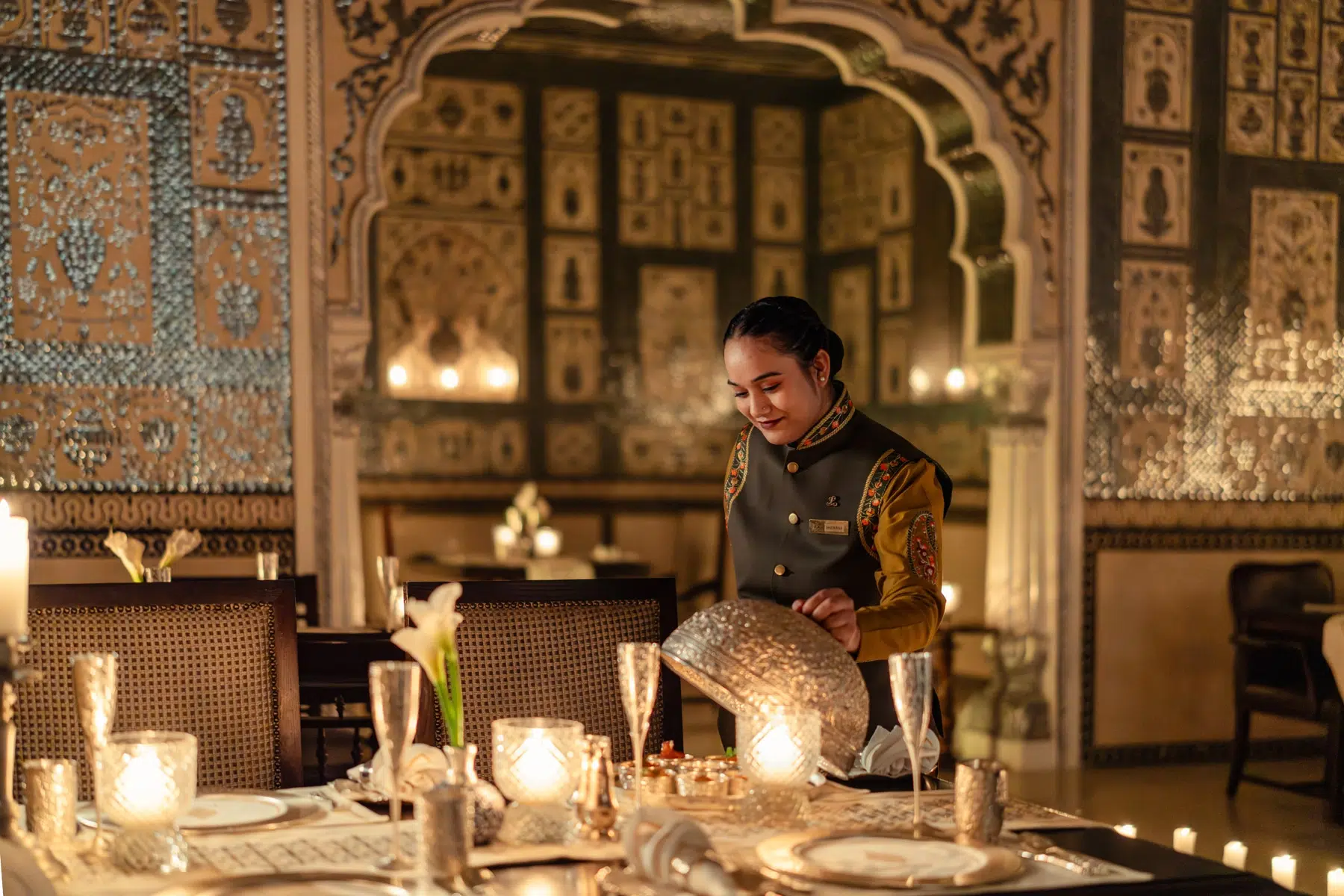
That transformation took place in October 2025, when The Leela announced that Mohan Mahal would become Jamavar Jaipur. Rather than strip away the room’s most recognizable features, the hotel retained the extraordinary mirrorwork and 18-carat gold-leaf detailing that had already made the restaurant one of the palace’s most memorable spaces. The result feels less like a redesign than a continuation, one in which architecture and gastronomy are now more tightly woven together.
The name itself carries its own sense of craftsmanship. Jamavar takes inspiration from the richly woven shawls of Kashmir, celebrated for intricate pattern and painstaking detail. The connection is fitting. Here, craftsmanship is not treated as ornament applied at the end of the experience; it becomes the experience, from the thousands of mirrored fragments surrounding the room to the layered presentation of the food and the ritualized pace of service.
The most immediate luxury, however, is darkness.
In an age when restaurants compete through elaborate lighting programs, illuminated wine walls and carefully calibrated Instagram moments, Jamavar moves in the opposite direction. The dining room is illuminated solely by candles, allowing the mirrors themselves to shape the atmosphere. Their reflections expand the light without ever making the space feel brightly lit, creating pockets of shimmer rather than a uniform glow. Live instrumental music further softens the room, adding another layer to an experience designed to unfold slowly rather than overwhelm all at once.
It is easy to understand why the setting has become such a visual sensation online. Hundreds of thousands of mirrors and a room without conventional electric lighting make for an irresistible headline. Yet focusing solely on the spectacle would miss what makes the restaurant interesting. The design succeeds because it creates intimacy from abundance. There is gold, glass, music and ceremony everywhere, but the candlelight keeps the room grounded in shadow.
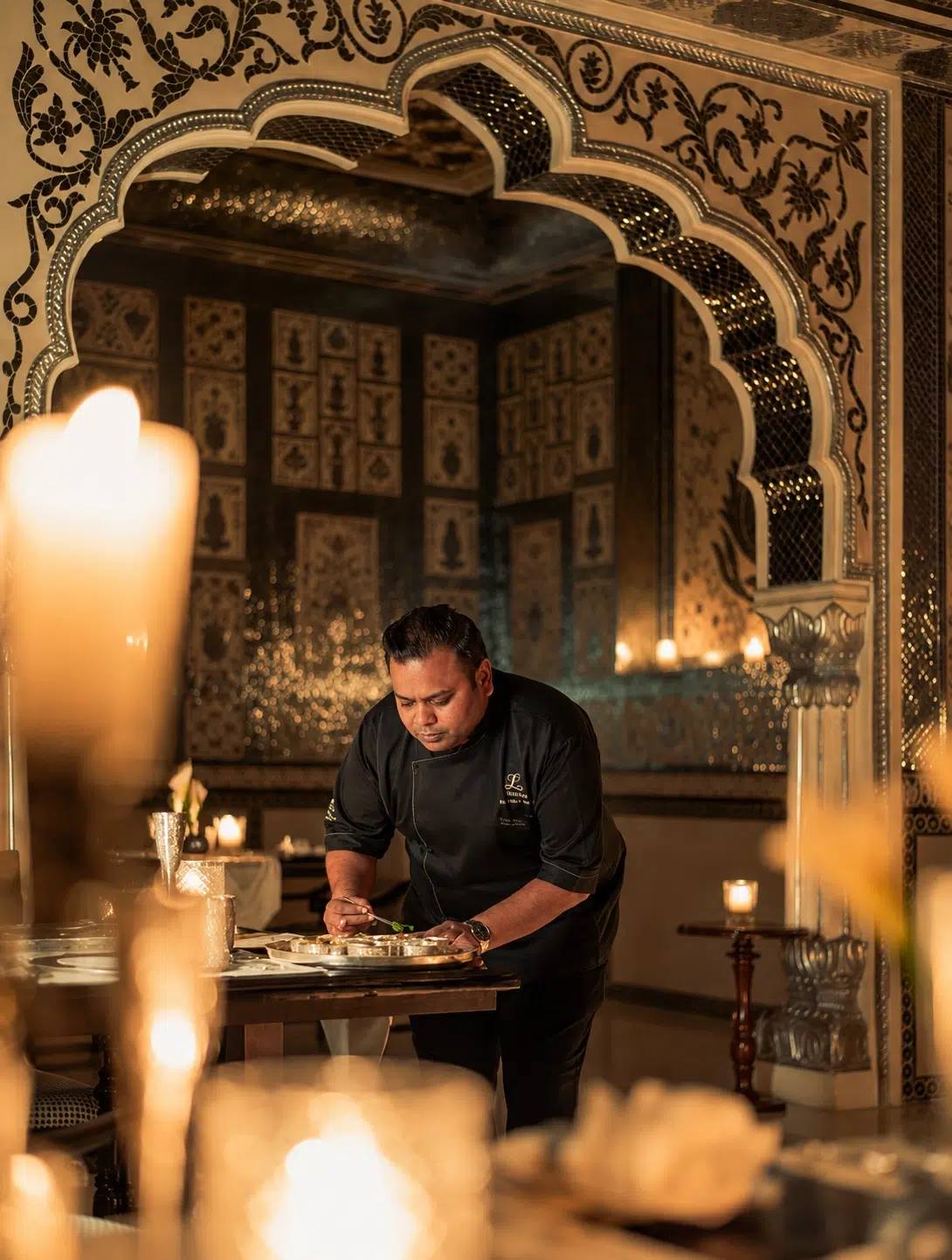
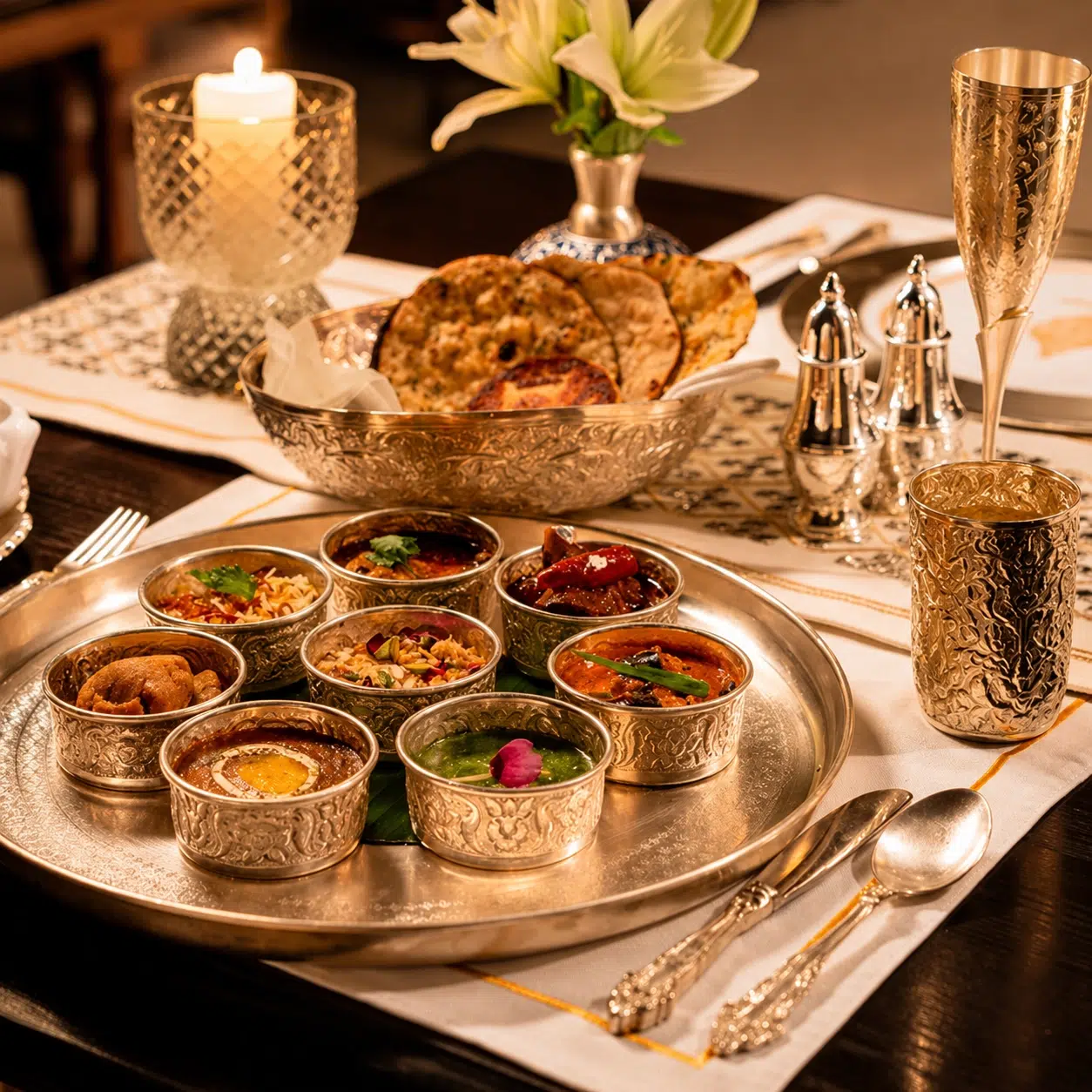
That restraint extends to the broader philosophy of the meal. Jamavar Jaipur is positioned as an ode to India’s royal kitchens, with a menu that combines established Jamavar signatures with dishes inspired by Rajasthan’s regal culinary traditions. The restaurant highlights dishes including Gucchi Mutter Masala, Kofta-e-Jamavar, Dal-e-Jamavar and Gosht ki Galouti, while locally sourced ingredients and contemporary presentation give the menu a modern polish without divorcing it from its origins.
The dining experience also begins with a ritual borrowed from royal hospitality. Guests are welcomed with a symbolic handwashing ceremony inspired by 16th-century dining traditions, an intentionally unhurried gesture that establishes the rhythm of the evening before the first course arrives. It could easily feel theatrical in less assured surroundings, but here the ritual makes sense. The entire room is already asking diners to enter a different tempo, one removed from the brightness and urgency of everyday life.
That sense of place matters enormously in Jaipur, a city where craftsmanship is inseparable from identity. The Leela Palace Jaipur itself draws heavily on Rajputana and Mughal architectural traditions, incorporating jaalis, frescoes, marble detailing, Thikri mirrorwork and other decorative languages associated with Rajasthan’s palace culture. Jamavar is perhaps the property’s most concentrated expression of that idea: a room where history is not displayed behind glass but translated into atmosphere.
There is also something surprisingly contemporary about the restaurant’s rejection of electric illumination. Luxury hospitality has spent years embracing ever more technology, from app-controlled suites to immersive digital environments. Jamavar creates impact by removing something rather than adding it. Without conventional lighting competing for attention, diners become more conscious of the flicker on the table, the texture of the walls and the subtle shifts in reflection as people move through the room.
That absence changes the mood of dinner. Faces soften in candlelight. Gold becomes warmer. The thousands of mirrors cease to read individually and instead create a constantly moving field of light. Even the food arrives differently when it is not placed beneath a spotlight. The room encourages a kind of attentiveness that feels increasingly rare in contemporary dining, where the temptation to photograph an experience can sometimes outrun the experience itself.
Of course, Jamavar is still extraordinarily photogenic. But what photographs cannot fully capture is the cumulative effect of the room: the live music, the darkness, the glow ricocheting through tiny mirrors and the sense that the architecture is performing along with the kitchen. The visual drama is not separate from dinner. It is one of the ingredients.
That is perhaps why the transition from Mohan Mahal to Jamavar works so well. The space already possessed a powerful identity. Instead of replacing it, The Leela has used the Jamavar concept to deepen the relationship between setting and cuisine, linking royal Indian gastronomy with a room inspired by one of Rajasthan’s most enduring decorative traditions.
Luxury restaurants often chase novelty through altitude, rarity or access: a table on a cliff, a dining room beneath the ocean, an address available to only a handful of guests. Jamavar offers a different proposition. Its sense of occasion comes from craftsmanship, memory and the deliberate manipulation of something as elemental as firelight.
In Jaipur, where palaces have long understood the theatrical possibilities of reflection, perhaps that is exactly the point. With 350,000 mirrors, thousands of flickering reflections and not a conventional light fixture needed to create the mood, Jamavar proves that one of the most memorable dining experiences in modern luxury hospitality can begin with something remarkably simple: lighting a candle.