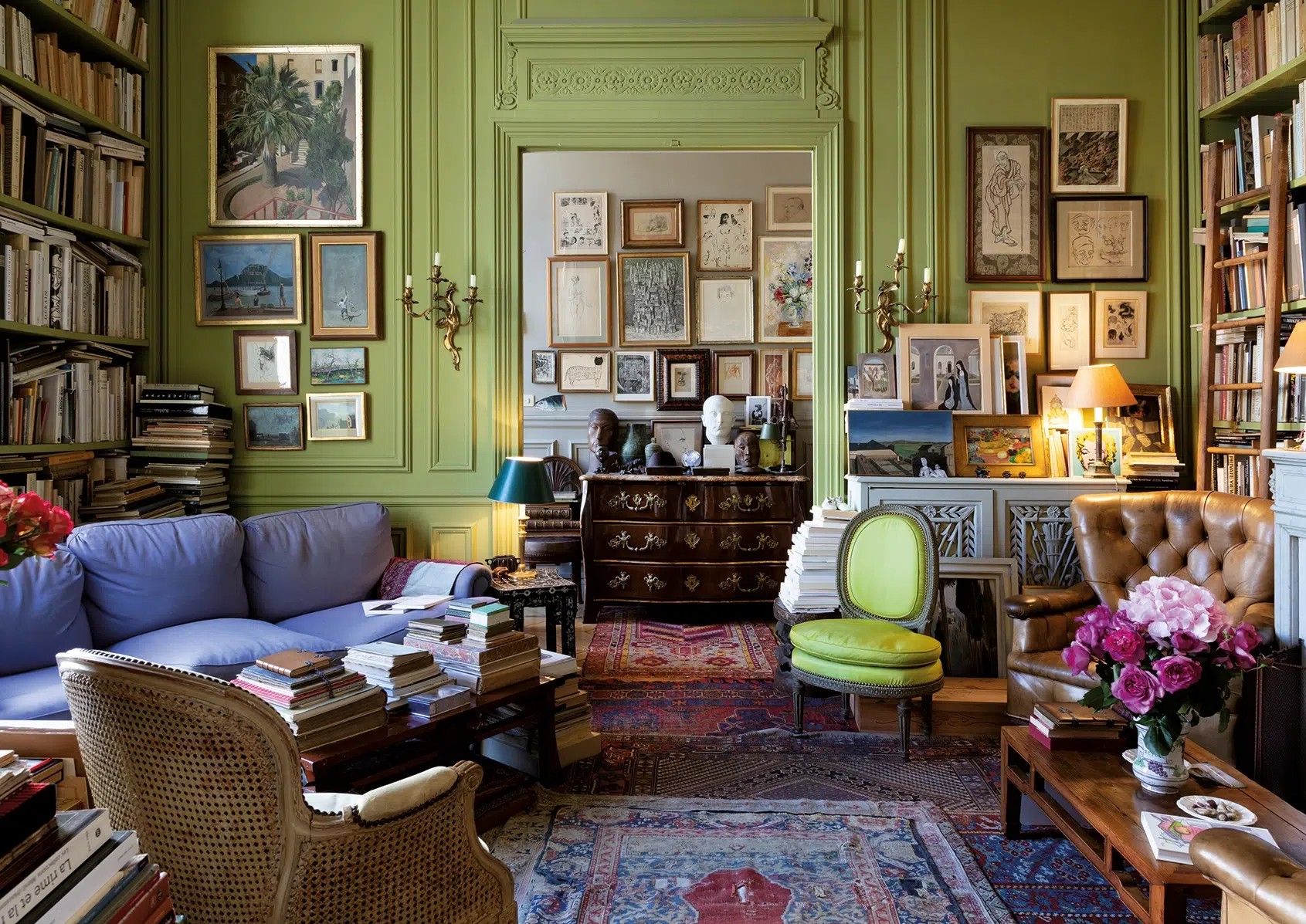
Pierre Le-Tan was never merely an illustrator. He was a collector, observer, and connoisseur of objects whose private world was as distinctive as the delicate cross-hatched drawings that made his name. Over four decades, the French artist assembled an intensely personal collection of art, furniture, books, curiosities and decorative objects, filling the three compact rooms of his Paris apartment with pieces that reflected his eye, his memories and his fascination with beauty in unexpected forms.
Following Le-Tan’s death in 2019 at the age of 69, Sotheby’s Paris opened that world to collectors through a two-part sale in March 2021. More than 400 lots were offered across the live and online auctions, ranging from works by major modern artists and pieces of Islamic art to highly personal objects and a significant group of Le-Tan’s own drawings. Rather than presenting a collection defined by a single period or category, Sotheby’s described it as an expression of the artist himself: eclectic, literary, international and unmistakably Parisian.
Le-Tan’s approach to collecting art resisted conventional hierarchy. A drawing by David Hockney might sit near a carved object, an antique rug, an unusual pair of shoes or a mineral specimen. The value of an object seemed to matter less than its ability to provoke curiosity. As Le-Tan once wrote of his own collection, acquisition itself carried a kind of mystery; speculation and decoration were never the point. Collecting, for him, was both “indispensable and perfectly useless.”
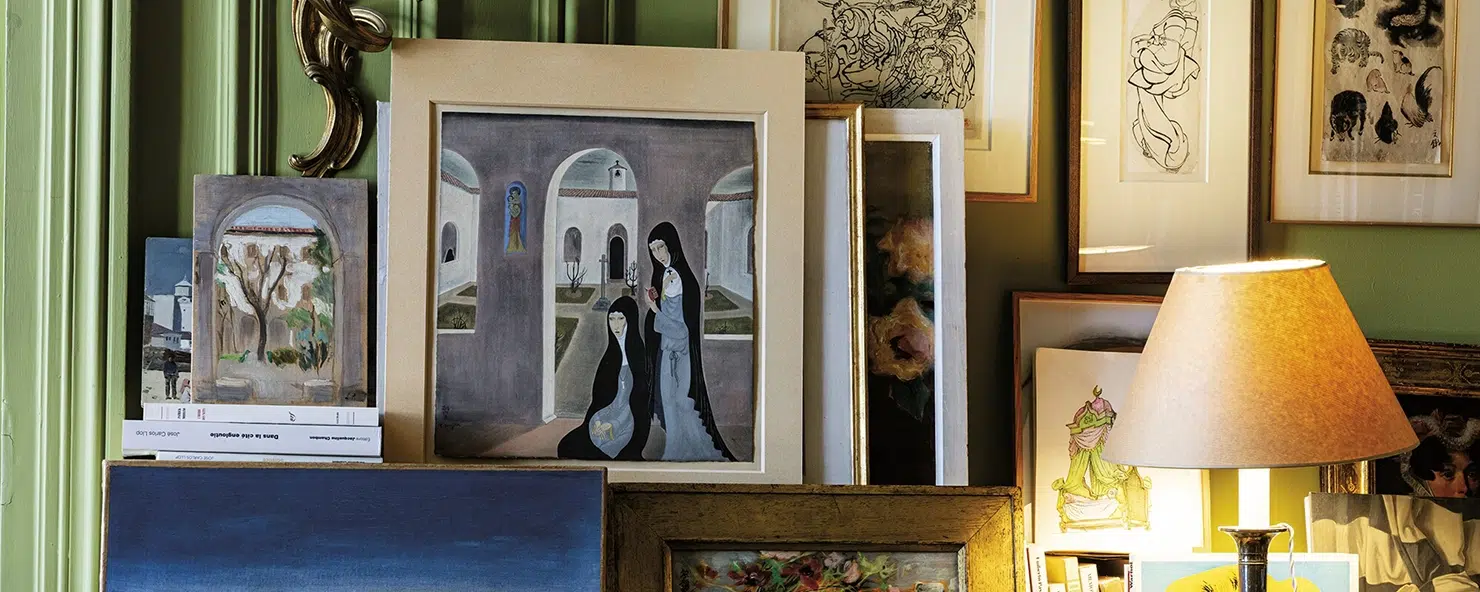
That philosophy helps explain why his apartment became less a conventional interior than a three-dimensional self-portrait. The rooms were densely layered, with artworks, books, textiles and objects gathered without concern for fashionable minimalism. Sotheby’s senior director of modern art Etienne Hellman described the sale at the time as an attempt to remain faithful to Le-Tan’s spirit rather than simply assemble a procession of trophy lots. The appeal lay in the universe itself.
Le-Tan’s own works were among the most revealing pieces offered. Best known internationally for his illustrations and magazine covers, he developed a highly recognizable technique built around fine parallel lines, cross-hatching, black ink, and delicate watercolor. His interiors and figures often appear suspended in quiet, slightly melancholic worlds, filled with a sense of memory for places and eras that seem just beyond reach.
One of the most recognizable works in the sale was his original cover design for The New Yorker, depicting a rainbow seen through a window. The drawing was offered with an estimate of €10,000 to €15,000. Another evocative work showed a woman seated with her back to the viewer, looking toward the Eiffel Tower from a Parisian garden. Estimated at €4,000 to €6,000, the drawing captures one of Le-Tan’s recurring qualities: an ability to make Paris feel at once familiar, distant and dreamlike.
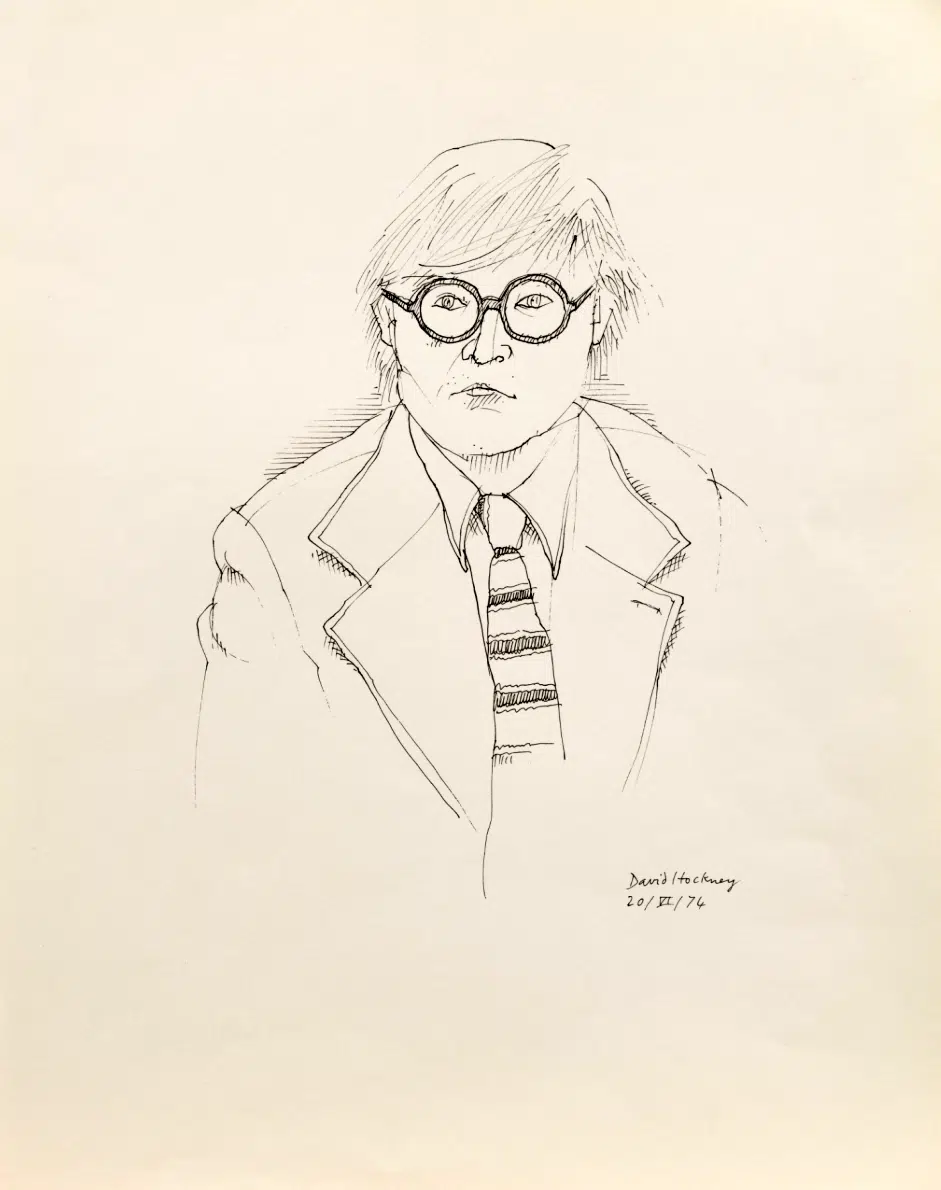
His life within the wider artistic world also appeared throughout the collection. Among the highlights was a portrait of Le-Tan drawn by David Hockney at La Coupole in Paris in June 1974, offered with an estimate of €30,000 to €50,000. The work is less important for its scale than for what it suggests about Le-Tan’s place within an artistic and literary circle that moved easily between illustration, painting, publishing, fashion and design.
Other works revealed the breadth of his admiration. Pieces by Christian Bérard, Jean Cocteau, Jean Hugo and Domenico Gnoli appeared alongside sculpture, decorative arts and books. A self-portrait by Bérard reportedly occupied Le-Tan’s desk, while Cocteau drawings and works on paper by artists he admired helped create a collection that felt deeply autobiographical even when Le-Tan himself was not the artist.
The sale also reflected his longstanding fascination with Islamic art. Safavid and Iznik works appeared among the lots, while rugs and textiles had formed an important part of the visual character of his home. In Le-Tan’s apartment, rugs were not simply floor coverings; they could hang on walls, overlap one another and even become part of the surface of his worktable. The result was layered and intensely personal, closer to the logic of memory than conventional decoration.
Some of the most charming objects in the collection existed far outside the traditional canon of fine art. Pierre Cardin shoes shaped like feet, mineral specimens and eccentric decorative objects shared space with drawings and paintings. Their inclusion reinforced the idea that Le-Tan collected according to instinct rather than category, and that wit mattered as much as pedigree.
A particularly intimate thread ran through the works of his father, Lê Phổ, the celebrated Vietnamese-French modernist painter. The sale included several works by Lê Phổ, among them Vierge à l’Enfant, estimated at €50,000 to €70,000, as well as a rare 1928 self-portrait, Autoportrait dans la forêt, which had remained in the family since it was painted and carried an estimate of €150,000 to €200,000. Sotheby’s highlighted the latter among the significant works in the sale.
The presence of his father’s paintings gave the auction another layer of meaning. Le-Tan grew up within an artistic environment in which European and Asian influences, illustration and painting, literature and collecting were never entirely separate. His own work would later develop from precisely that kind of cross-pollination.
For collectors, the 2021 Sotheby’s sale offered more than the chance to acquire works with a distinguished provenance. It provided an unusually intimate view into how an artist chose to live with objects. The importance of the collection was not found in any single masterpiece, but in the relationships Le-Tan created between things: expensive and modest, ancient and modern, serious and whimsical.
That may be the most enduring lesson of Pierre Le-Tan’s collection. In a market often preoccupied with record prices and trophy acquisitions, his rooms suggested another way of collecting entirely — one based on curiosity, affection and instinct.
Le-Tan understood that a collection need not prove anything to anyone. At its most compelling, it simply reveals the person who assembled it.