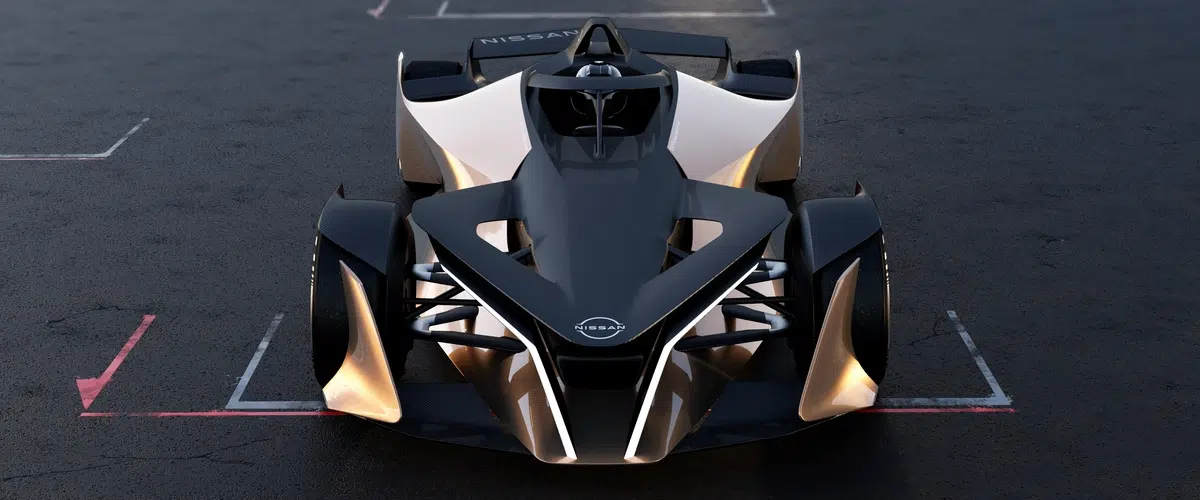
Electric performance did not always need to arrive wrapped in a silent crossover. Nissan made that point rather dramatically with the Ariya Single Seater Concept, a low-slung experimental racer that imagined what might happen if the technology beneath its Ariya electric crossover were freed from the constraints of a conventional road car.
Revealed in 2021, the project was conceived as a high-performance exploration rather than a production preview. Nissan Design Europe developed the concept to demonstrate how the all-electric Ariya’s powertrain could be applied to a bespoke single-seater racing chassis, creating something closer in spirit to an open-wheel competition car than a showroom EV.
The proportions made the intent clear. With its exposed wheels, dramatically low body and tightly packaged cockpit, the Ariya Single Seater looked worlds apart from the crossover that inspired it. Yet the connection remained visible through Nissan’s evolving electric design language, particularly the illuminated interpretation of the brand’s V-motion graphic at the front.
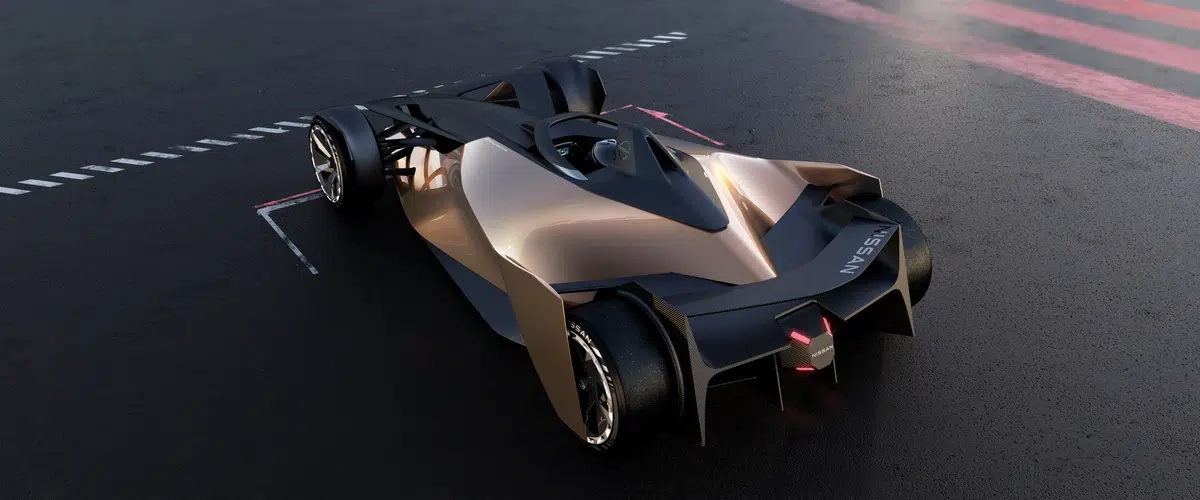
Carbon fiber dominated the construction, giving the car the visual lightness expected of a purpose-built racer while reinforcing the project’s experimental nature. The bodywork was sculpted around airflow rather than practicality, producing a machine that seemed designed less for urban mobility than for maximum visual drama.
That contrast was precisely the point. By the time Nissan introduced the concept, the production Ariya had already become an important expression of the company’s new electric identity. The crossover had been developed around what Nissan calls “Timeless Japanese Futurism,” a design philosophy combining advanced technology with a distinctly Japanese sense of simplicity and restraint. The road-going Ariya also introduced Nissan’s e-4ORCE twin-motor all-wheel-control technology, helping position it as more than simply another battery-powered family vehicle.
The single-seater took that philosophy in a more extreme direction.
Rather than asking how comfortably electric power could transport passengers, the concept asked what that same technology might feel like when stripped down to its most elemental form. The result was a study in immediacy: one seat, one driver and an electric powertrain imagined within a racing environment.
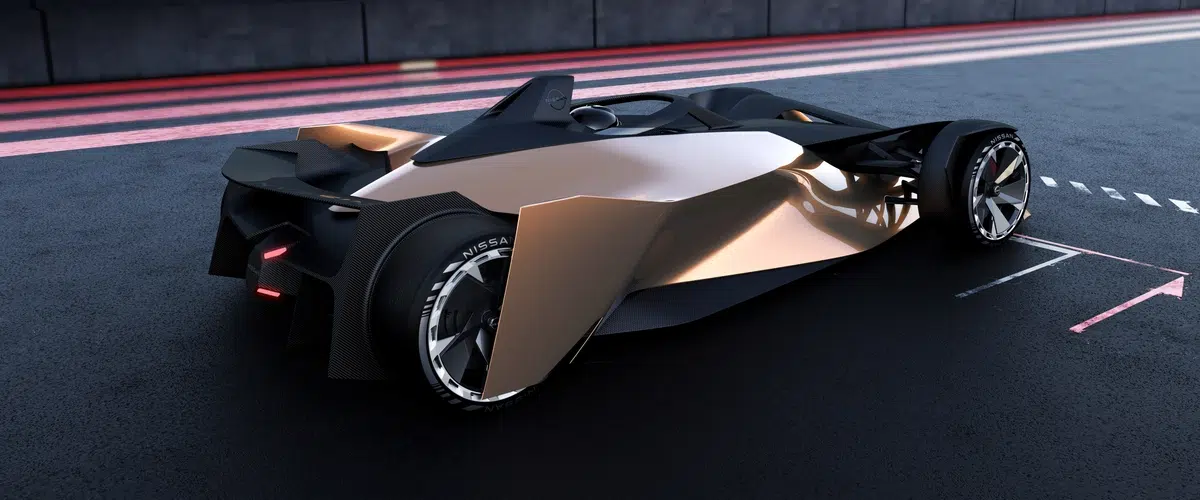
Nissan’s involvement in Formula E gave the project additional credibility. The manufacturer has competed in the ABB FIA Formula E World Championship for years, using the series as a laboratory for electric motorsport development and race-to-road knowledge transfer. That relationship between competition and production technology remains central to Nissan’s current Formula E program, where efficiency, power delivery and energy management continue to influence broader EV development.
Seen in that context, the Ariya Single Seater Concept feels less like a one-off styling exercise and more like a snapshot of where Nissan believed electric performance could go.
The road-going Ariya itself represented a significant step in Nissan’s electrification strategy. First previewed by the Ariya Concept at the 2019 Tokyo Motor Show and unveiled in production form in 2020, it became the company’s first mass-produced all-electric crossover developed and built in Japan. Nissan used it to introduce a new electrified brand identity, advanced driver-assistance technology and a more refined interpretation of EV design.
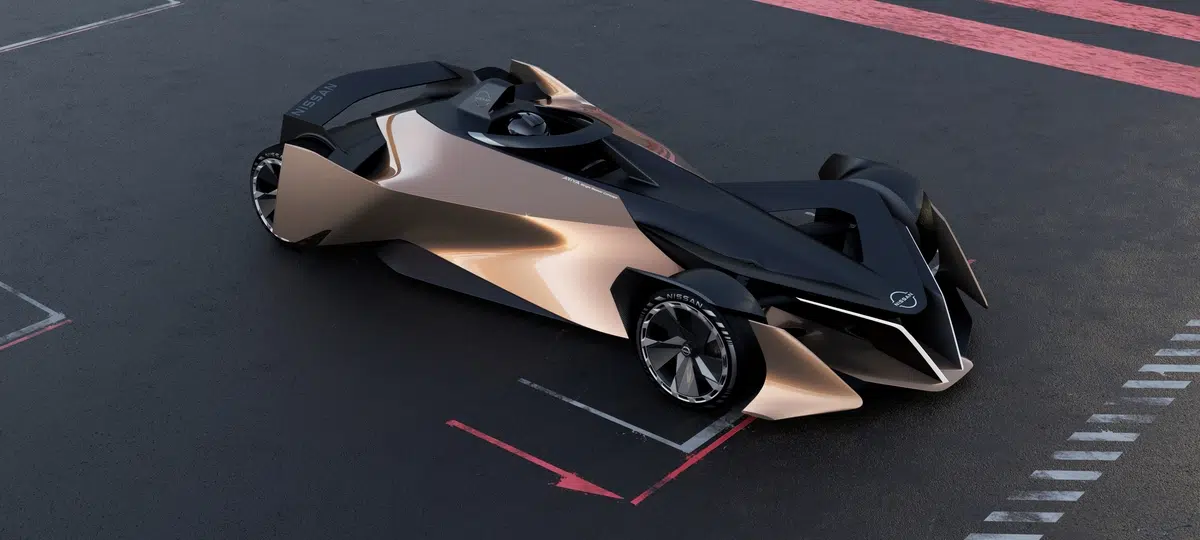
The Single Seater Concept took those ideas and turned the volume up considerably.
Its racing stance also highlighted one of the most compelling advantages of electric architecture: flexibility. Without the packaging requirements of a conventional internal-combustion drivetrain, designers gain more freedom to rethink proportion, weight distribution and vehicle layout. Nissan had already explored that potential with the Ariya road car’s flat-floor architecture and spacious cabin. The single-seater showed what happens when that same freedom is applied with performance rather than practicality as the priority.
There was never any serious suggestion that the Ariya Single Seater would reach production. Its value lay elsewhere. Concepts like this are useful because they allow manufacturers to explore ideas without the burden of homologation, price targets or mass-market expectations.
They also help reshape perception.
For years, electric vehicles were largely sold on efficiency, sustainability and quiet refinement. The Ariya Single Seater belonged to a different conversation, one increasingly familiar today: electric cars can also be theatrical, emotional and genuinely exciting.
That idea has only become more relevant as EV performance has matured. Modern electric powertrains deliver immediate torque, extraordinary acceleration and increasingly sophisticated control systems, while electric racing continues to develop at a rapid pace.
The Ariya Single Seater Concept may never have been destined for a starting grid, but it made its point effectively.
Electricity does not have to make the automobile less expressive.
In the right chassis, it can make it something else entirely.