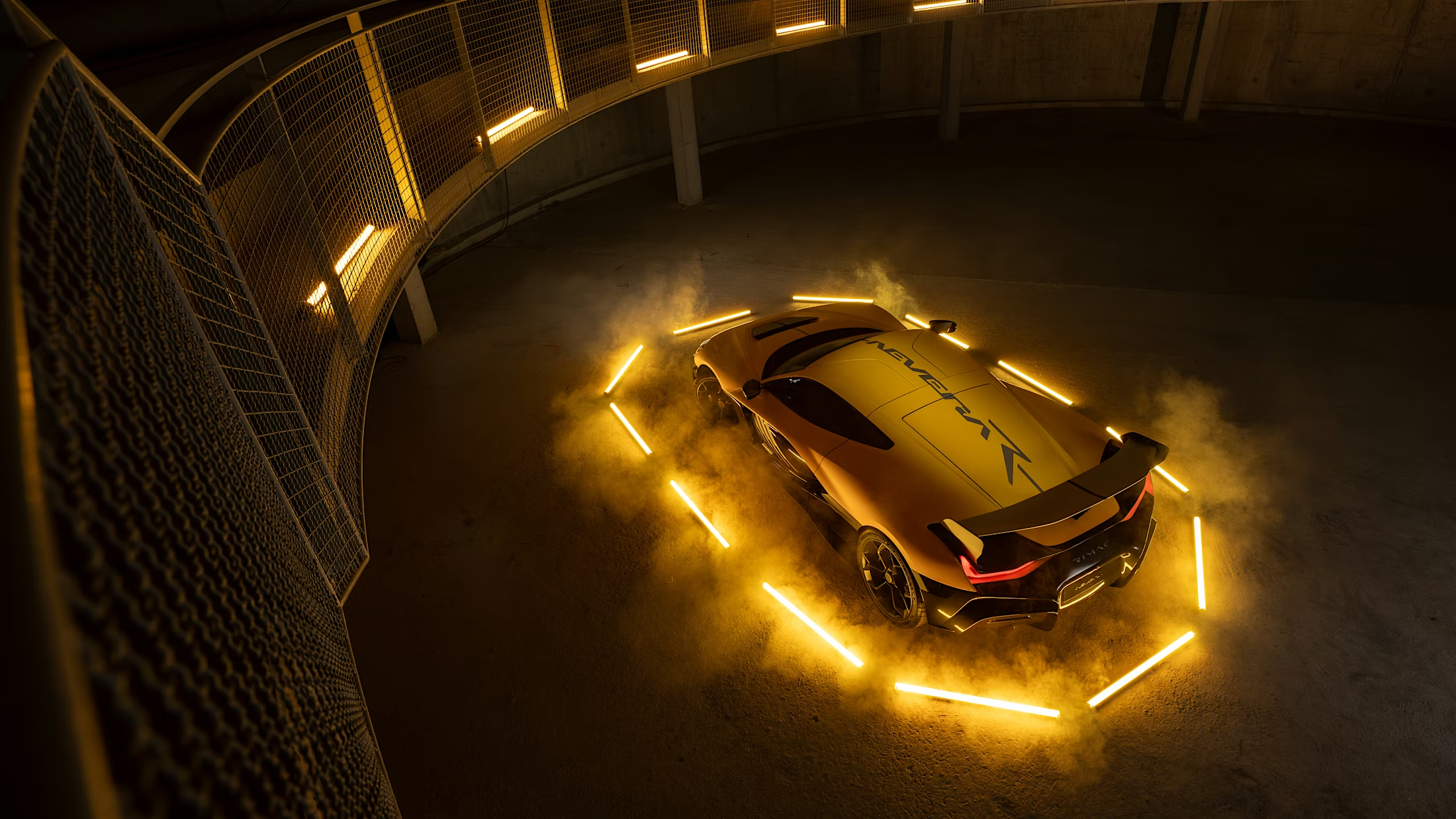
For Rimac Automobili, performance has never been confined to the road, and its latest collaboration proves just how far that philosophy can extend.
In a convergence of precision engineering and extreme aviation, Rimac’s technology plays an unexpected yet defining role in a high-risk aerial feat led by Red Bull Air Race pilot Dario Costa. The moment itself is striking, but what underpins it is far more compelling: a shared pursuit of control, calculation, and the seamless integration of advanced systems operating under extraordinary conditions.
At its core, the project reflects a principle that has come to define Rimac’s ascent, performance is not measured solely by output, but by the mastery of complexity.
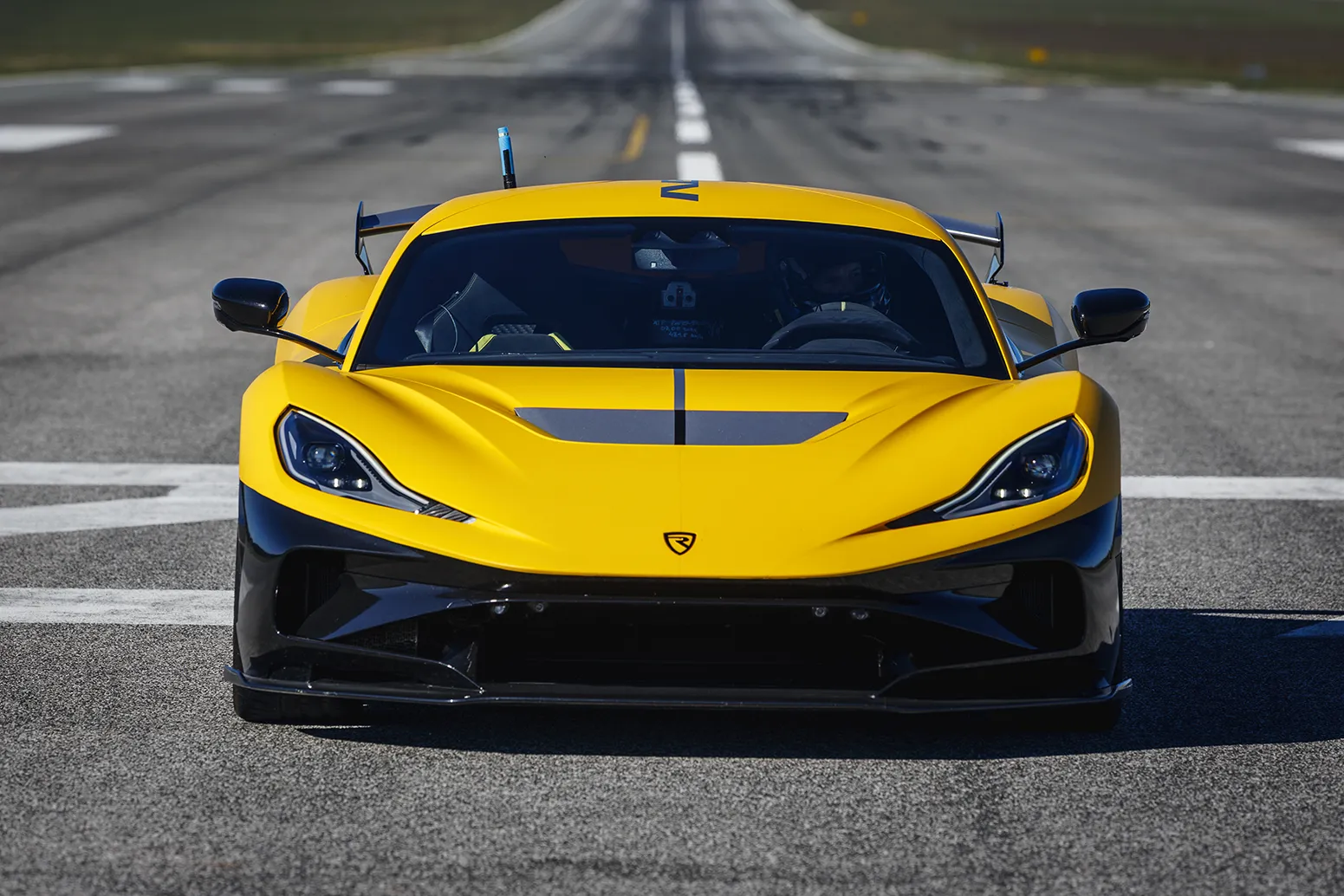
Rimac’s rise has been defined by its ability to rethink the fundamentals of performance. The Rimac Nevera, widely regarded as one of the most advanced electric hypercars in the world, represents more than raw power. With nearly 2,000 horsepower and a level of torque vectoring that borders on predictive intelligence, it is engineered not simply for acceleration, but for absolute control.
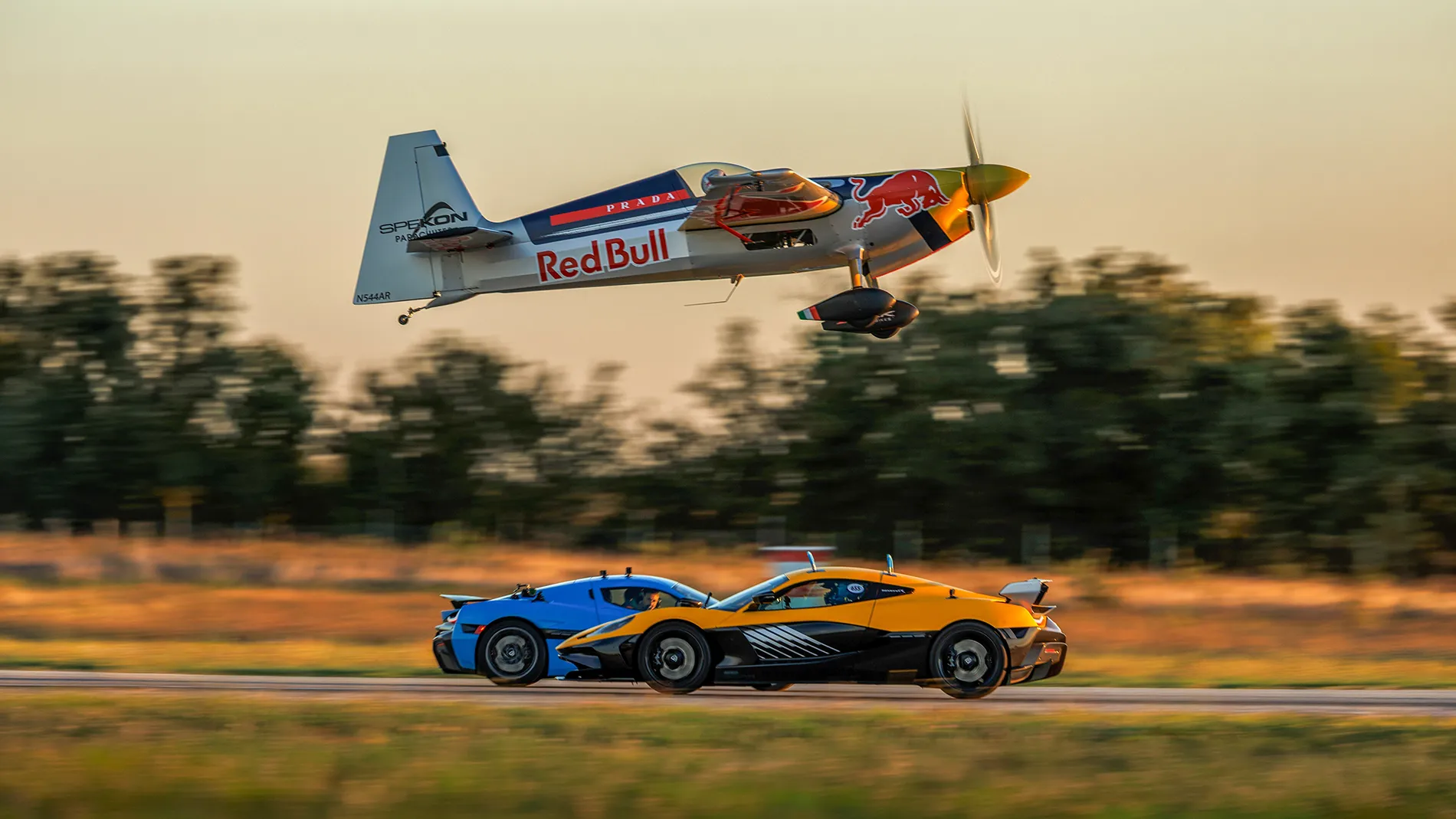
That philosophy extends beyond the vehicle itself. Rimac’s expertise lies in the orchestration of systems, battery architecture, software integration, and real-time data processing working in concert. It is precisely this capability that allows the brand to contribute meaningfully to environments far removed from asphalt, where precision becomes paramount, and margins for error disappear.
In this context, Rimac is not merely building hypercars. It is shaping a broader language of performance engineering, one that transcends categories.

What emerges from this collaboration is not simply a spectacle, but a dialogue between disciplines. Automotive engineering and aviation converge around a shared objective to control power with absolute accuracy.
Here, performance reveals a new dimension. It is no longer defined by speed alone, but by the ability to operate at the limits of possibility without compromising stability.
Within the broader context of luxury, Rimac’s approach signals a shift in how performance is understood. Traditionally measured through speed, exclusivity, and craftsmanship, it now incorporates a fourth dimension: intelligence.
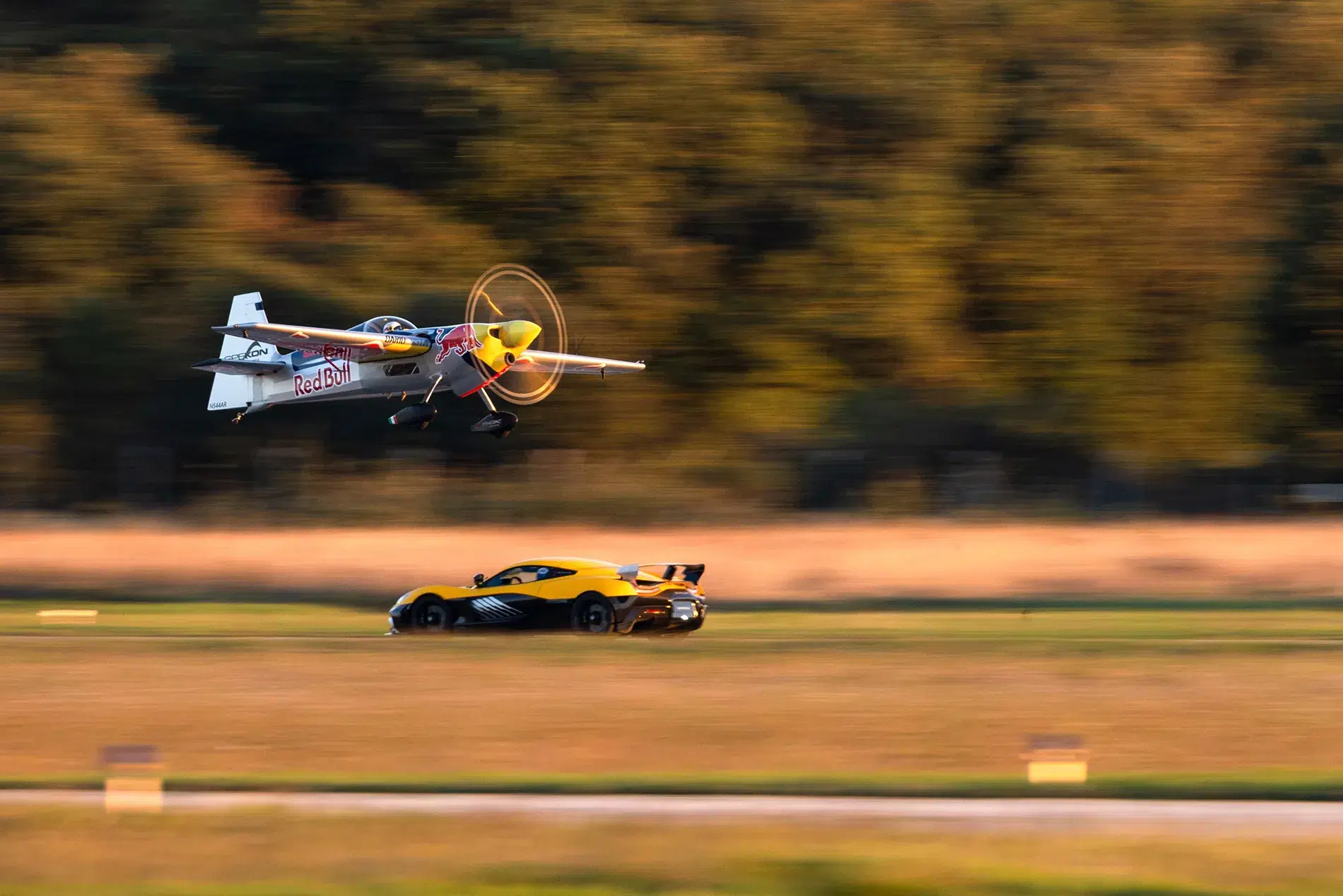
The Nevera exemplifies this evolution. Its systems are not simply powerful; they are adaptive, capable of processing vast amounts of data in real time to deliver precision under any condition. This fusion of hardware and software elevates the vehicle beyond traditional definitions, positioning it as both machine and technological platform.
Luxury, in this context, becomes less about excess and more about refinement, an exercise in precision, innovation, and seamless integration.
What ultimately defines Rimac is not any single achievement, but the consistency of its philosophy. Whether engineering a record-breaking hypercar or contributing to an aviation feat, the objective remains unchanged: to push performance into new territories while maintaining complete control.
This is where Rimac distinguishes itself from conventional manufacturers. It does not iterate on established benchmarks; it redefines them.
In bridging the gap between automotive and aviation, the brand offers a glimpse into a future where disciplines converge and boundaries dissolve, driven by a shared commitment to engineering excellence.
In the end, this collaboration is not about a singular moment. It is about what that moment represents.
Rimac’s involvement signals a broader shift in how performance is conceived, less as a measure of speed and more as a demonstration of mastery across environments. It points toward a future in which the technologies developed for hypercars extend far beyond mobility, influencing industries yet to be fully imagined.
And in that future, the road is no longer the limit; it is simply the point of departure.