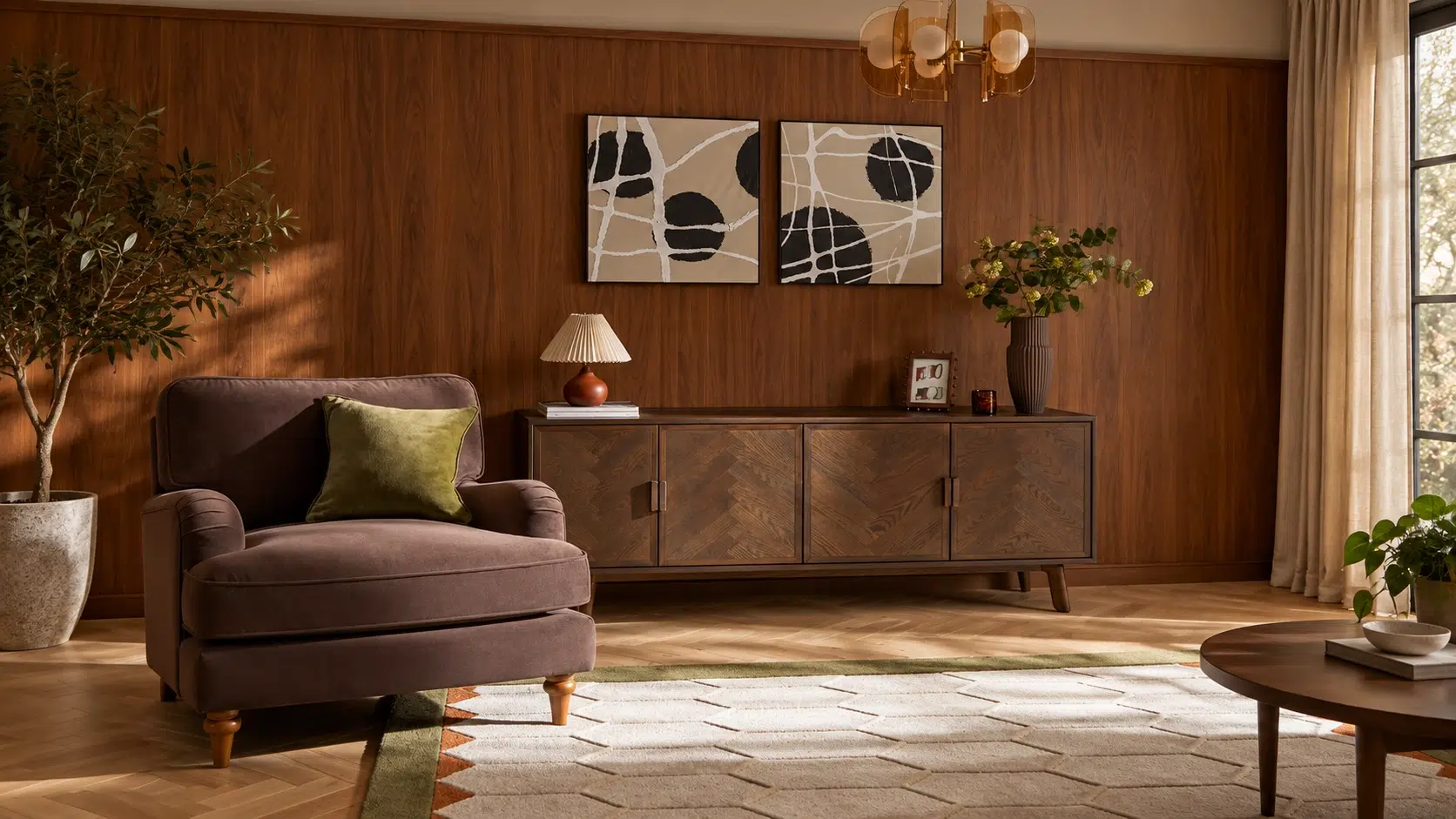
Chocolate tones, sculptural timber, tactile fabrics, and a restrained approach to Americana are giving Western style a more sophisticated place in contemporary interiors this fall.
Western style has returned, but not in the way you might expect.
The latest interpretation has little interest in recreating a literal ranch house or filling a room with nostalgic references. Instead, it borrows the American West’s most evocative elements, rich leather tones, dark timber, tactile textiles, and the occasional flash of cowhide, and filters them through a more polished, contemporary lens.
The result is a form of Western chic that feels warmer, quieter, and considerably more sophisticated.
As fall turns interiors toward deeper color and more enveloping materials, the timing feels natural. Chocolate brown has become one of the season’s most persuasive neutrals, replacing cooler grays with something richer and more atmospheric. Paired with natural linen, textured wool, dark woods and warm lighting, it creates rooms that feel grounded without becoming heavy.
Dunelm’s latest collection embraces that mood with a distinctly approachable take on Americana. Rather than treating Western style as costume, the range uses familiar references sparingly, allowing texture and material to carry much of the visual weight.
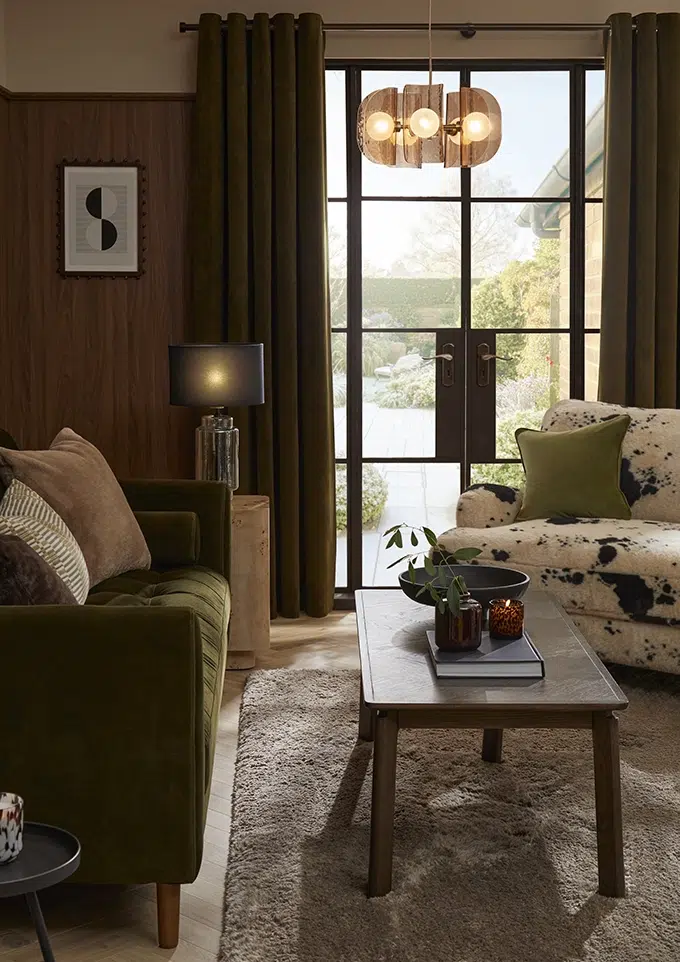
The boldest example is the Beatrice II Cow Print Faux Fur Snuggle Chair, a generously scaled accent piece that introduces pattern through softness rather than sharp contrast. It is unapologetically expressive, but its appeal lies in how easily it can be used as a single focal point rather than the beginning of an entire theme.
That distinction is important.
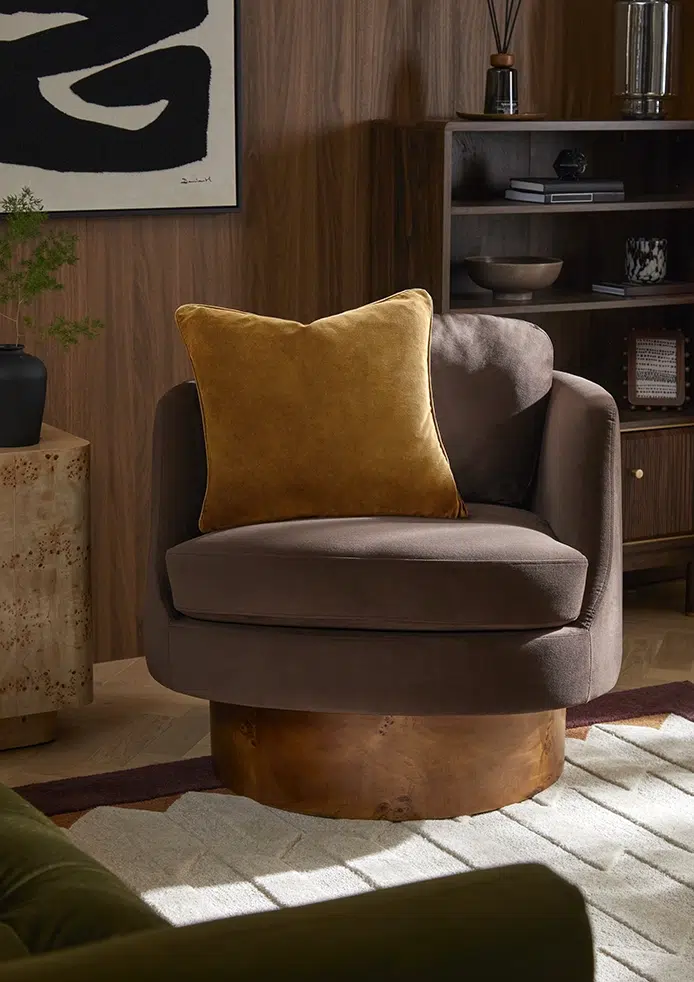
The most successful Western-inspired interiors are not built from repetition. A single cow-print chair, throw, or upholstered stool is usually enough to establish the reference. Surround it with quieter materials, linen, walnut, oak, bronze, wool, and the room immediately feels more considered.
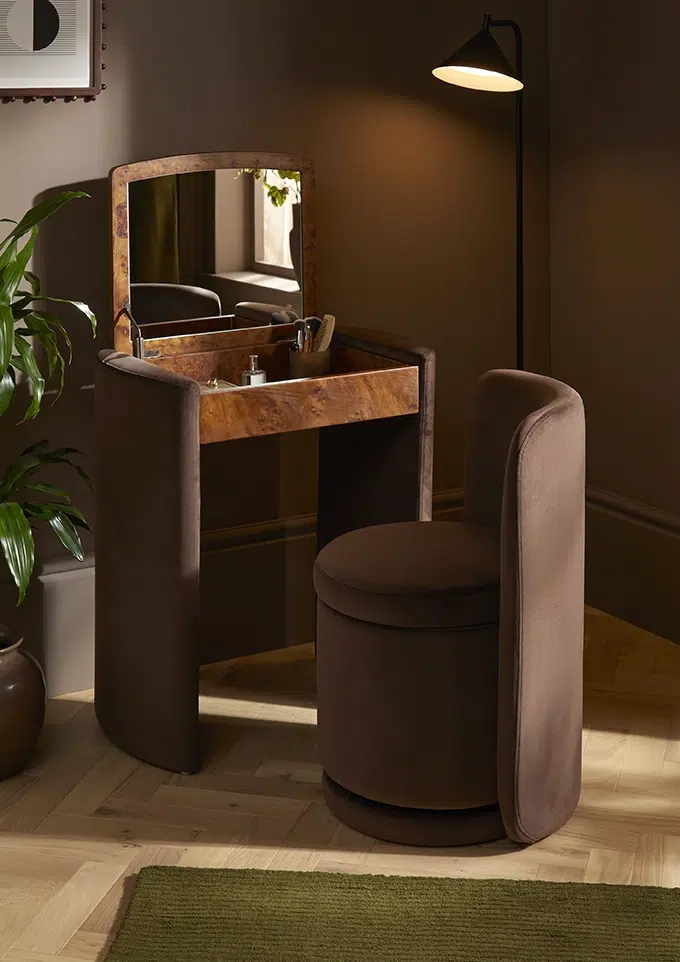
Elsewhere in the collection, the Western influence becomes subtler. A compact dressing table in deep chocolate provides weight and warmth without overtly referencing the ranch aesthetic, while a dark-wood overmantle mirror with a sculptural bobble frame introduces a more decorative note. Herringbone detailing on nesting coffee tables brings another layer of craftsmanship, and naturally textured linen cushions soften the overall composition.
Together, these pieces illustrate why the trend works best when it is treated less as a motif and more as a material language.
The American West has always been visually defined by contrast: openness and shelter, ruggedness and refinement, raw material and skilled craftsmanship. Contemporary interiors can borrow from that tension without becoming literal. A deeply stained timber console, a woven textile, a saddle-brown leather chair or a softly irregular ceramic lamp can all evoke the same sensibility without resorting to obvious iconography.
That is where this season’s version of Western chic feels most relevant to luxury interiors.
It is not about horseshoes on the wall or distressed signage. It is about richness, tactility and restraint.
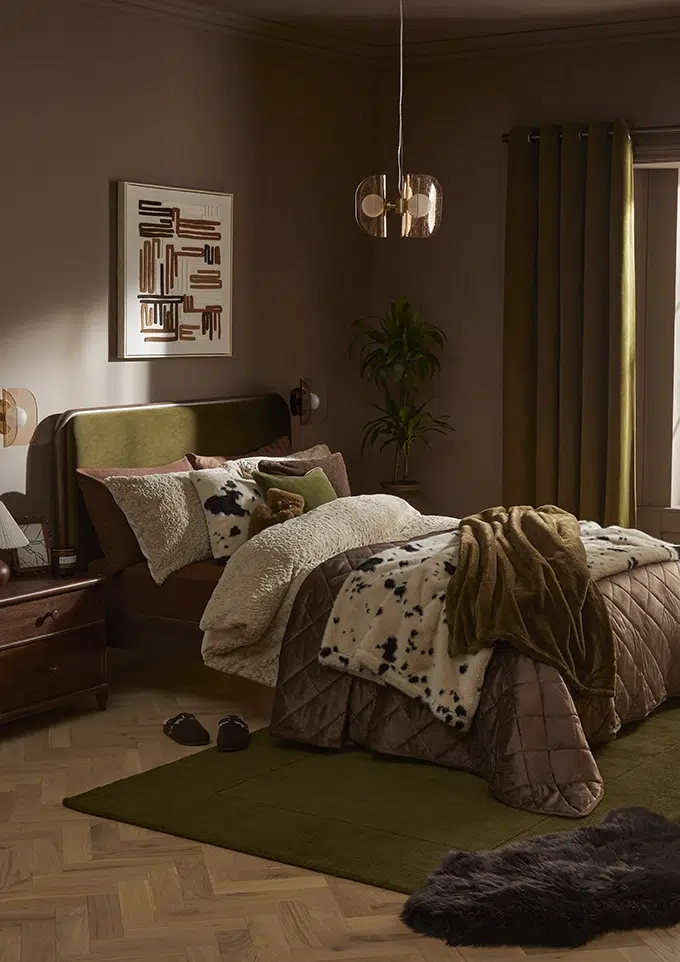
Chocolate brown is particularly effective because it behaves almost like a warmer black. It adds structure to a room, anchors lighter upholstery and pairs effortlessly with cream, tobacco, camel, rust and stone. In a bedroom, it can make linen and wool feel more cocooning. In a living room, it brings depth to natural timber and brass. Used against pale walls, it creates the kind of contrast that feels architectural rather than decorative.
Texture is equally important. Faux fur, bouclé, heavy linen, woven wool and brushed wood all contribute to the sense of layered comfort that defines the look. The effect should feel collected rather than coordinated, as though the room has evolved over time rather than been assembled around a trend board.
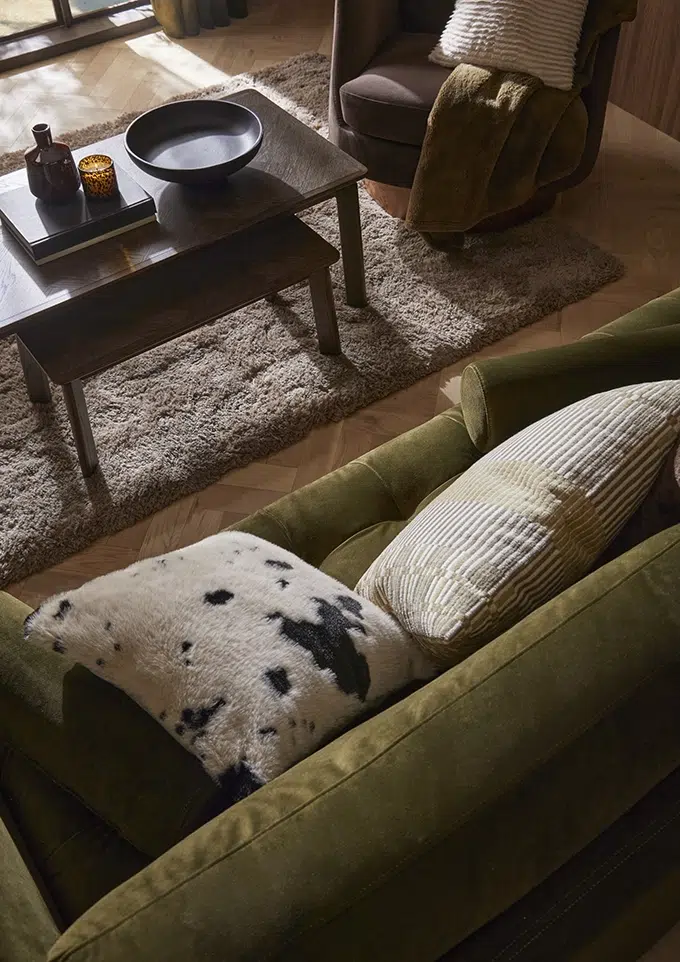
Lighting can shift the mood even further. Low, warm illumination suits this aesthetic far better than bright overhead light. Table lamps with fabric shades, bronze sconces, candles, and softly glowing pendants help draw out the richness of dark timber and brown upholstery, while also reinforcing the intimacy that makes the style so appealing as temperatures fall.
There is also a broader reason Western chic is resonating now. After years of pale minimalism and highly polished interiors, many homeowners are gravitating toward spaces with greater personality and emotional warmth. The Western vocabulary of wood, leather, woven textiles, and earthy shades answers that desire without abandoning sophistication.
The key, again, is editing.
One strong reference can be elegant. Too many become theatrical.
A cow-print accent against a restrained room feels witty and confident. Cow print layered with fringe, distressed wood, and overt ranch imagery risks becoming pastiche. The same principle applies to color. Chocolate brown is powerful when balanced with lighter neutrals and natural texture; used too heavily, it can flatten a room rather than enrich it.
The best interiors therefore treat Western chic as an atmosphere rather than a theme.
Think dark timber against chalky walls. A low leather chair beside a linen sofa. A tactile throw draped casually across a bed. A sculptural mirror with enough character to hold a wall on its own. These are gestures rather than declarations, and that is precisely why they work.
At its most refined, the new Western chic captures something enduring about the American landscape: warmth, material honesty and a certain ease. It is less about recreating the ranch than borrowing its emotional vocabulary and translating it for contemporary life.
This fall, that may be the most compelling version of Americana of all.