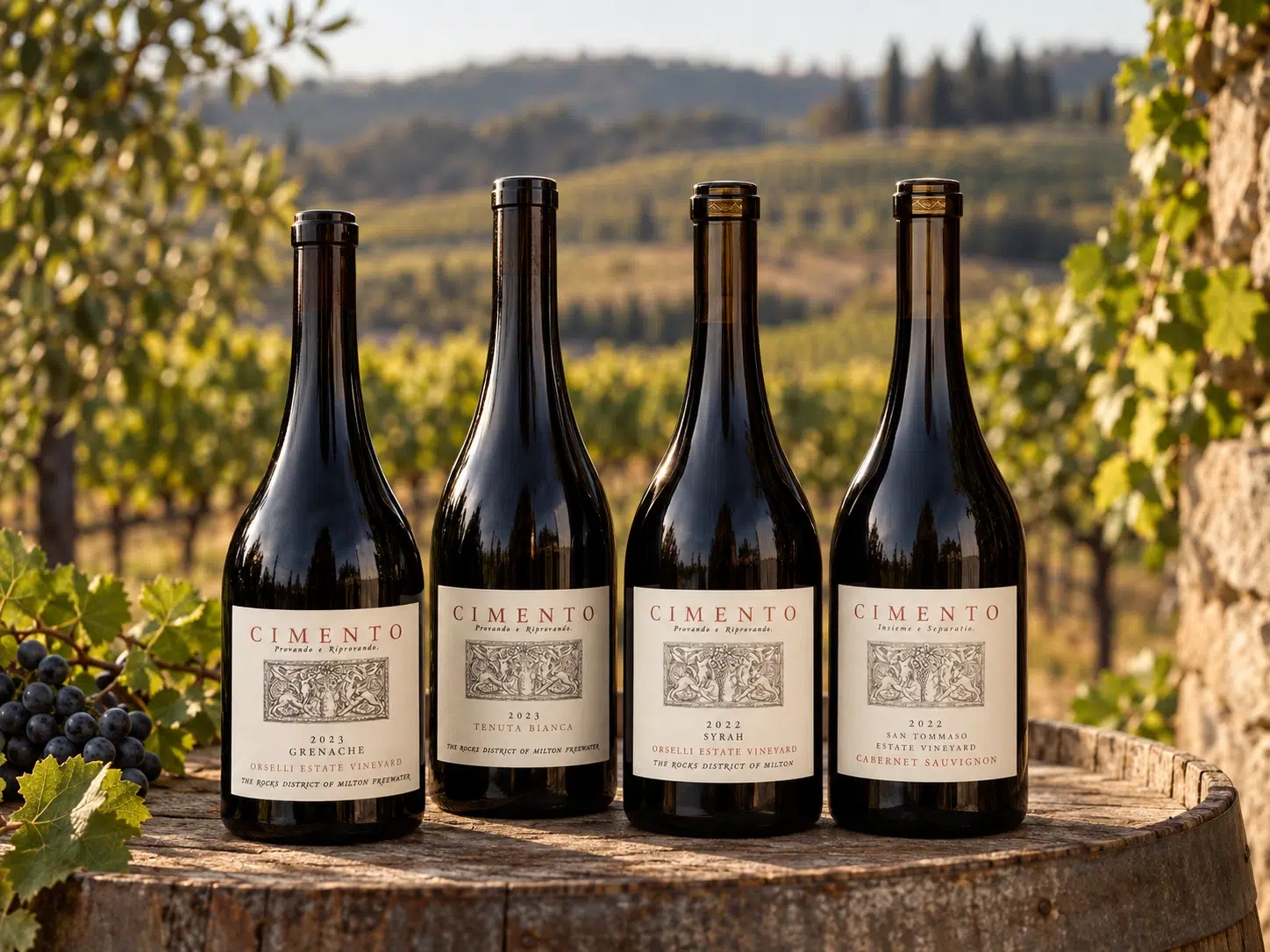
From an extraordinary sweep of basalt cobblestones in Oregon’s Rocks District, Cimento is crafting limited, estate-grown wines that place texture, savory complexity, and a profound sense of origin above excess.
Some wine regions announce themselves gradually. The Rocks District of Milton-Freewater does not.
The appellation, set within the larger Walla Walla Valley AVA but lying entirely in Oregon, is defined by a landscape of ancient basalt cobblestones deposited by the Walla Walla River. It is one of the rare American Viticultural Areas distinguished by a single soil series, and its wines have developed an equally singular reputation: darkly aromatic, mineral, savory, and often unmistakable in character.
Cimento has built its entire proposition around that specificity.
The estate controls more than 220 acres within The Rocks District, giving the team an unusual degree of authority over its fruit and allowing the wines to be conceived from vineyard to bottle as expressions of place rather than blends assembled from disparate sources. The project is ambitious, but its most compelling quality is restraint. The wines are not designed to overwhelm. They are designed to reveal.
That distinction became immediately apparent across the current releases.
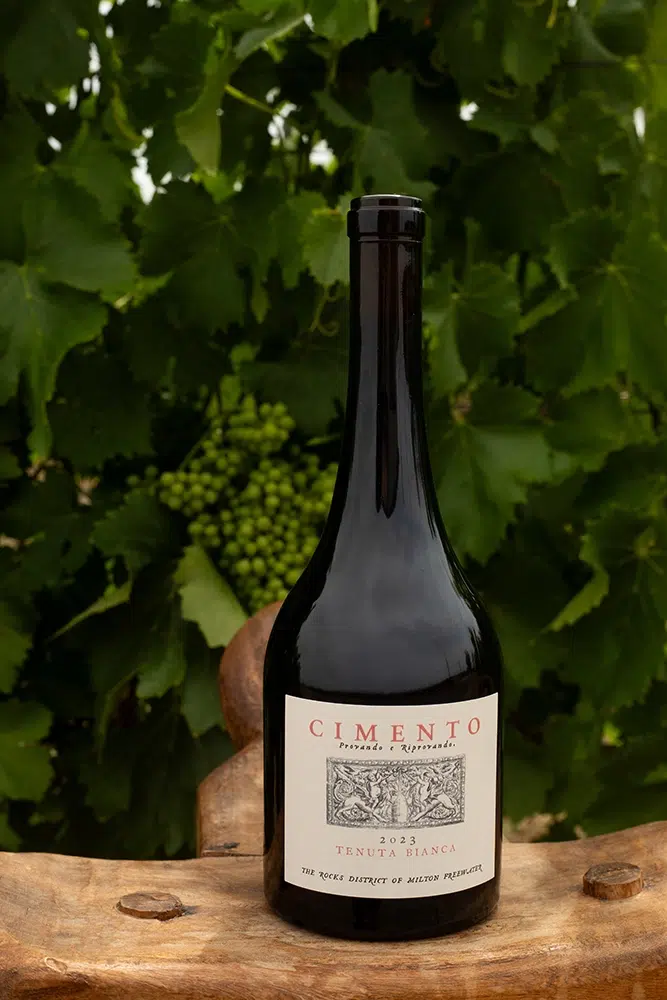
The 2023 Tenuta Bianca ($95) is perhaps the most unexpected introduction. A co-ferment of 48 percent Clairette, 27 percent Picpoul, 24 percent Bourboulenc, and 1 percent Roussanne, the wine was barrel-fermented with native yeasts before spending 10 months across new and neutral French oak and stainless steel.
Jasmine and white flowers lead the aromatics, followed by bright lemon, pronounced saline minerality, and a subtle hint of matchstick reduction that lends the wine additional complexity. The palate is supple and medium-bodied without becoming heavy, balancing depth with freshness and energy. There is enough structure here to suggest graceful evolution over the coming decade, and with only 162 cases produced, its rarity is matched by its distinction. Jeb Dunnuck awarded the wine 98 points.
It is an elegant way into the Cimento style because the wine establishes a theme that recurs throughout the range: richness held in check by structure.
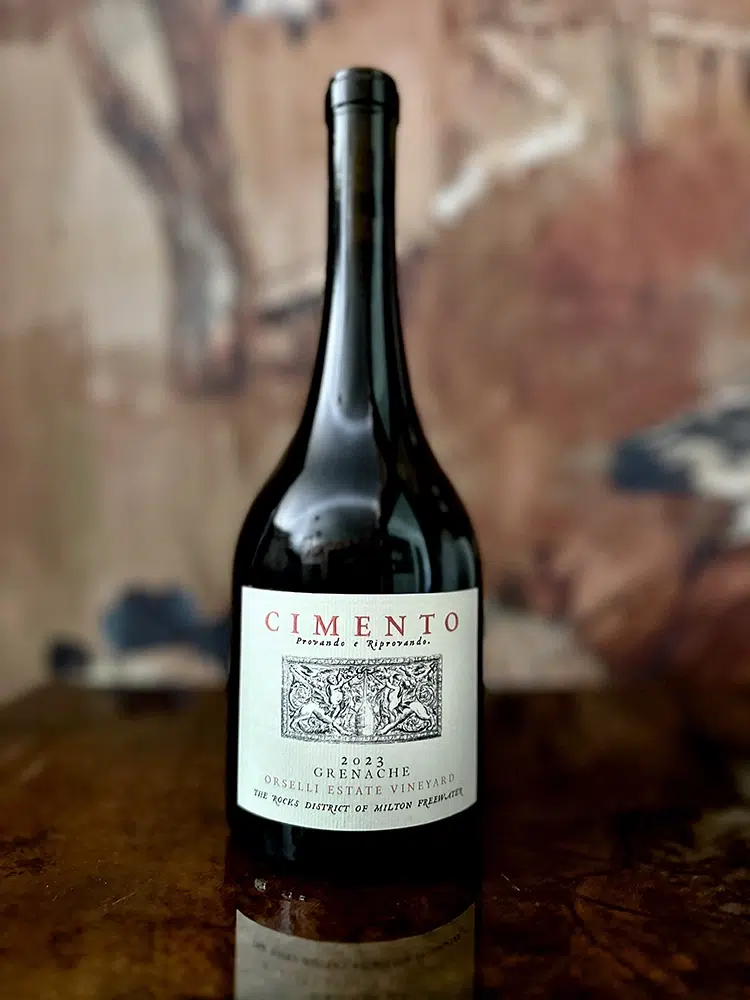
The 2023 Grenache ($225) moves in a more perfumed direction. Destemmed and fermented with native yeasts in concrete before 16 months of aging in French oak, it brings together lifted lavender and fresh plum with garrigue, iron, spice, and deeply concentrated fruit.
The wine is medium-bodied but far from slight. Vibrant acidity gives definition to its richness, while the savory elements keep the fruit from drifting toward excess. Bottled unfined and unfiltered, it possesses the kind of textural integrity that allows the vineyard to speak more clearly. Only 133 cases were produced, making it one of the more elusive wines in the portfolio.
Where the Grenache is lifted and aromatic, the Syrah moves into darker, more elemental territory.
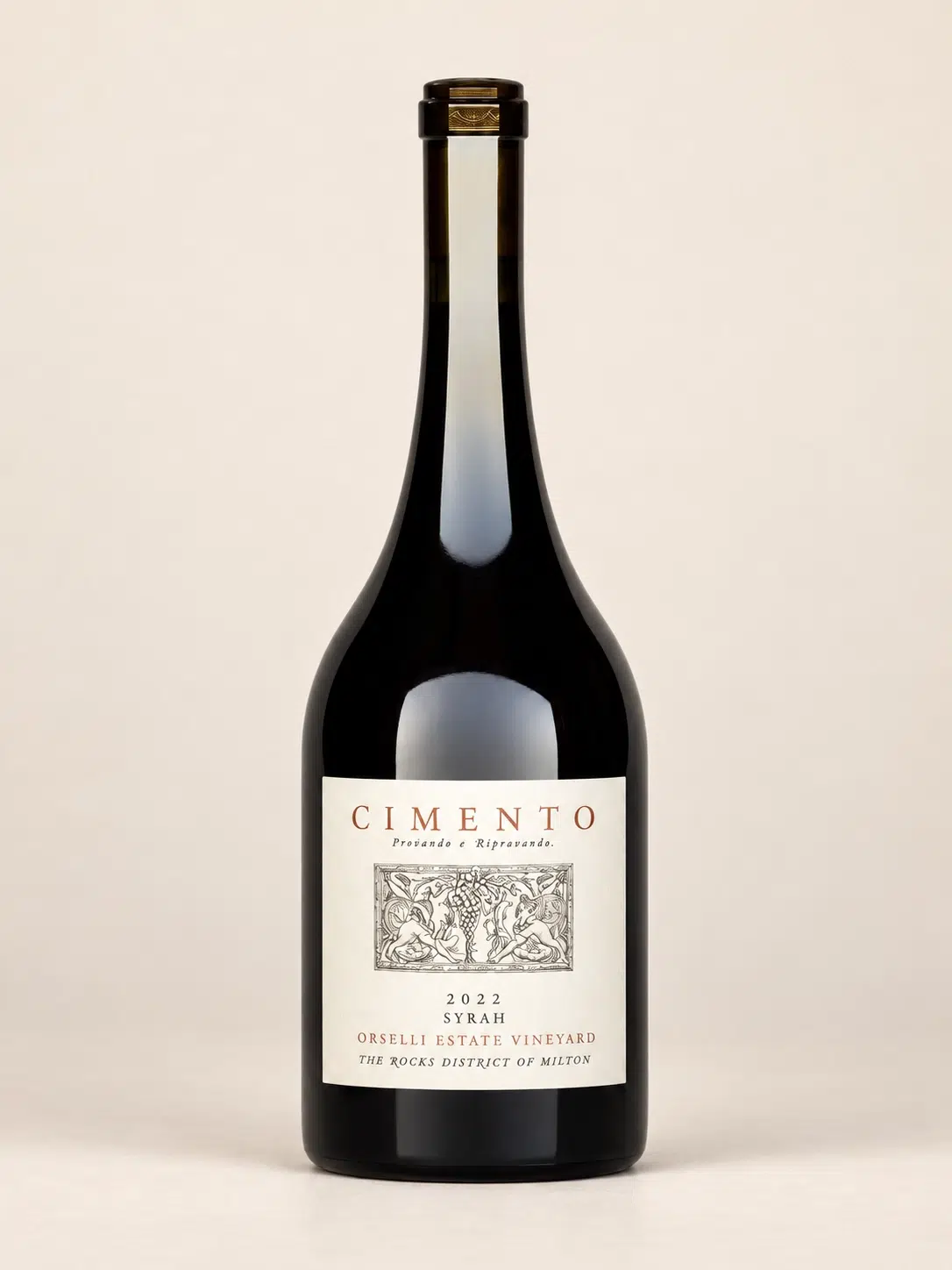
The 2022 Orselli Estate Vineyard Syrah ($225) is particularly revealing because of what the vineyard represents. Planted in 2018 with an array of Syrah clones selected specifically for the site, Orselli is less a study in inherited history than an expression of Cimento’s long-term belief in what The Rocks District can become.
This inaugural release carries blackberry, olive, smoke, iron, and lavender, alongside the deeply savory character that has made Syrah from The Rocks internationally distinctive. The wine has intensity without heaviness and structure without brutality, allowing the mineral and umami-like elements of the site to remain clearly defined.
There is a particular pleasure in Syrah that refuses to trade character for gloss, and Cimento’s does exactly that. With only 301 cases produced, the wine also has the scarcity serious collectors increasingly expect from the region’s most compelling bottlings.
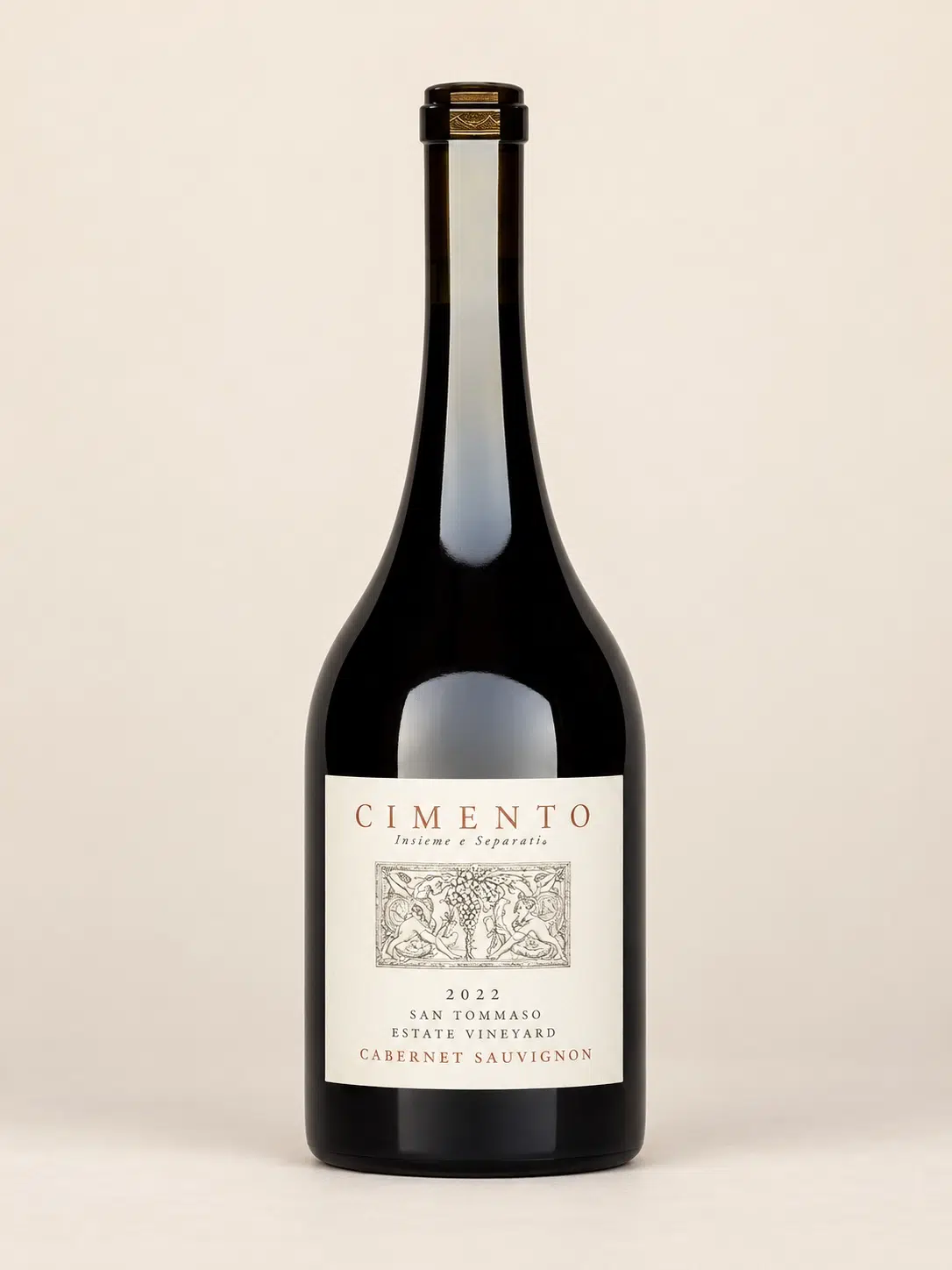
The 2022 San Tommaso Estate Vineyard Cabernet Sauvignon ($225) brings an entirely different kind of authority. San Tommaso is the oldest Cabernet vineyard in The Rocks District, planted in an ancient riverbed of basalt cobblestones that gives the site both geological distinction and considerable historical importance within the appellation.
Fermented in stainless steel and aged for 22 months in 70 percent new French oak, the wine layers blackberry, sagebrush, violets, and graphite over refined tannins. There is concentration, certainly, but the wine never becomes monolithic. Its structure remains articulate, and the mineral character of the vineyard keeps the Cabernet tethered to place.
For collectors, its appeal extends beyond immediate pleasure. The combination of old vines, singular geology, and decades-long aging potential gives the wine a sense of consequence that feels entirely appropriate to the site. Only 436 cases were produced.
What makes the range convincing is not that each wine is impressive in isolation. It is that they appear to belong to the same place.
That may sound obvious in a category built around terroir, but it is increasingly rare. Different varieties often emerge from ambitious wine projects with little more than a label in common. At Cimento, the connective tissue is clearer. The white has salinity and tension. The reds carry savory depth, mineral definition, and an unmistakable relationship to the stony landscape from which they originate.
Even the name reflects a certain intellectual discipline. Cimento references the Accademia del Cimento, the 17th-century Florentine scientific society devoted to experiment and observation. The connection is apt. The project approaches winemaking less as a vehicle for stylistic signatures than as a study in what this particular landscape can produce.
That does not mean the wines are austere. Far from it. There is beauty, fragrance, generosity, and considerable depth throughout the range. But they are not polished into submission.
That is precisely what makes them interesting.
Luxury wine is increasingly judged not simply by rarity, price, or concentration, but by whether it possesses an identity that could not easily be replicated elsewhere. The Rocks District already has that advantage. Its geology is dramatic, its wines recognizable, and its most compelling producers understand that distinction is more valuable than uniformity.
Cimento appears to understand that from the outset.
The project is still young, but the wines do not taste like works in progress. They are assured, site-driven, and unusually coherent across varieties. More importantly, they suggest that Cimento is less interested in creating a prestige label than in establishing a point of view.
After tasting the current releases, the most memorable quality is not power, nor price, nor even rarity. It is the sense that these wines could only have come from here.
Cimento wines are available at CimentoWines.com.