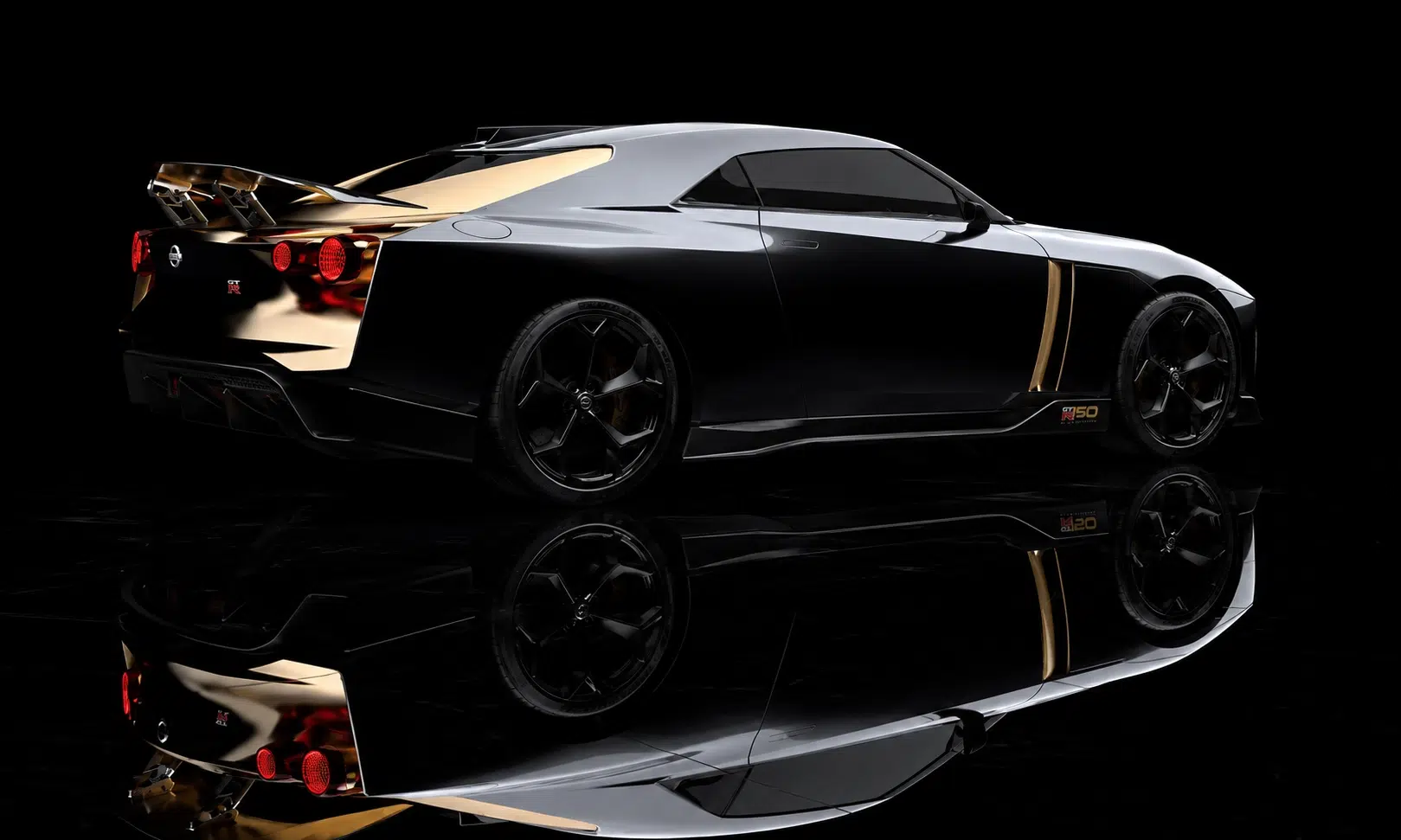
Some collaborations feel inevitable only after they happen. Nissan and Italdesign came together in 2018 to mark two significant milestones, the 50th anniversary of Italdesign and the approaching 50th anniversary of the GT-R, and produced something neither company had attempted before: a radically reimagined, hand-built interpretation of Nissan’s most celebrated performance car.
The Nissan GT-R50 by Italdesign first appeared as a prototype at the Goodwood Festival of Speed in July 2018. At the time, it was presented as an experiment, a one-off exploration of what might happen if Japanese engineering and Italian coachbuilding were given permission to reinterpret the GT-R without the usual constraints of mass production.
What emerged was far more than a styling exercise.
Based on the GT-R NISMO, the GT-R50 retained the underlying brutality that had made the R35-generation GT-R famous, but wrapped it in a body shaped with a distinctly European sensibility. Italdesign developed, engineered, and built the car, while the exterior and interior concepts originated with Nissan Design Europe and Nissan Design America.
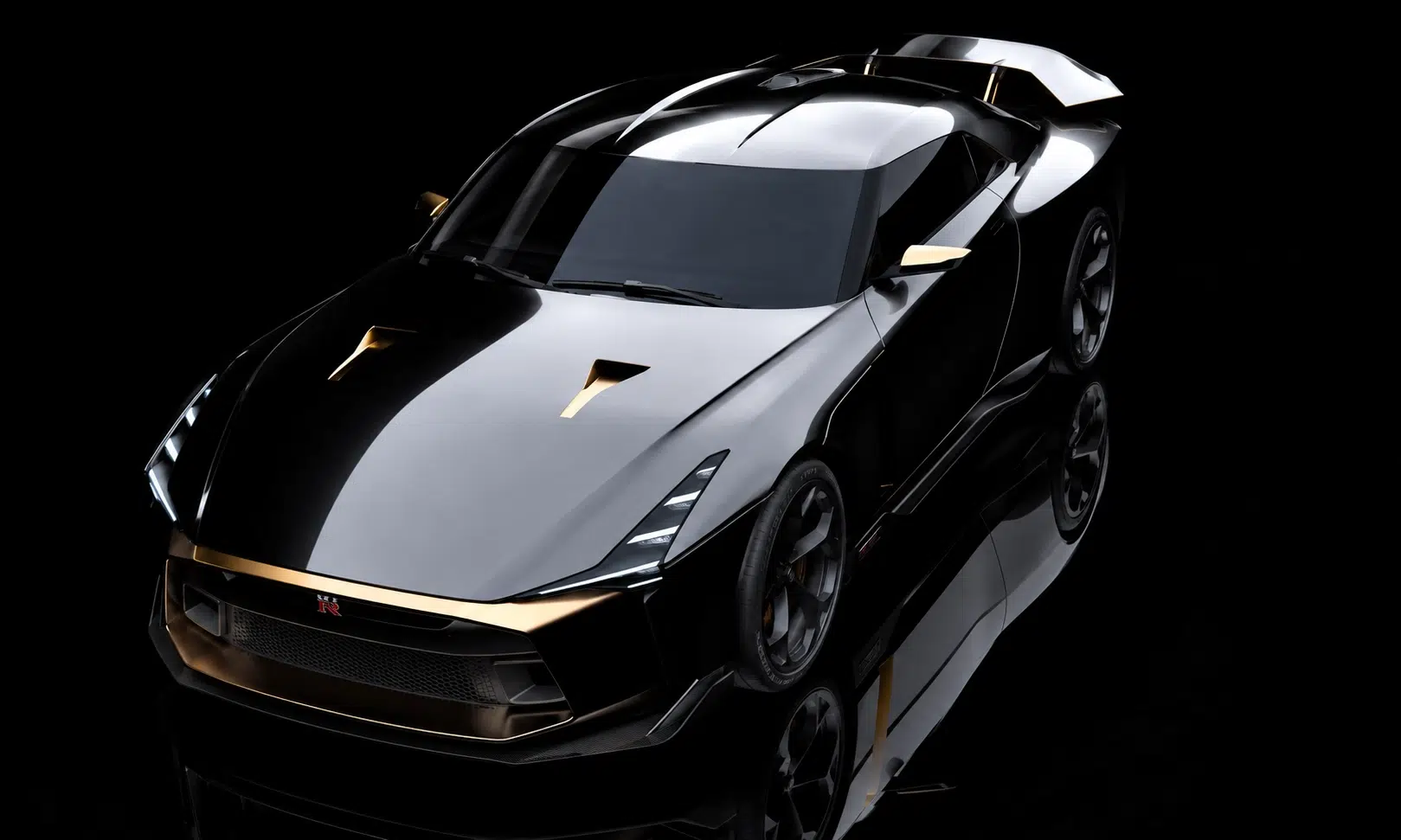
The proportions immediately set it apart from a standard GT-R. The roofline was lowered, the hood received a pronounced power bulge, and the headlights were stretched into narrow, more architectural forms. Behind the front wheels, sharply defined cooling outlets, described at the time as “samurai blade” elements, gave the profile a more sculptural character.
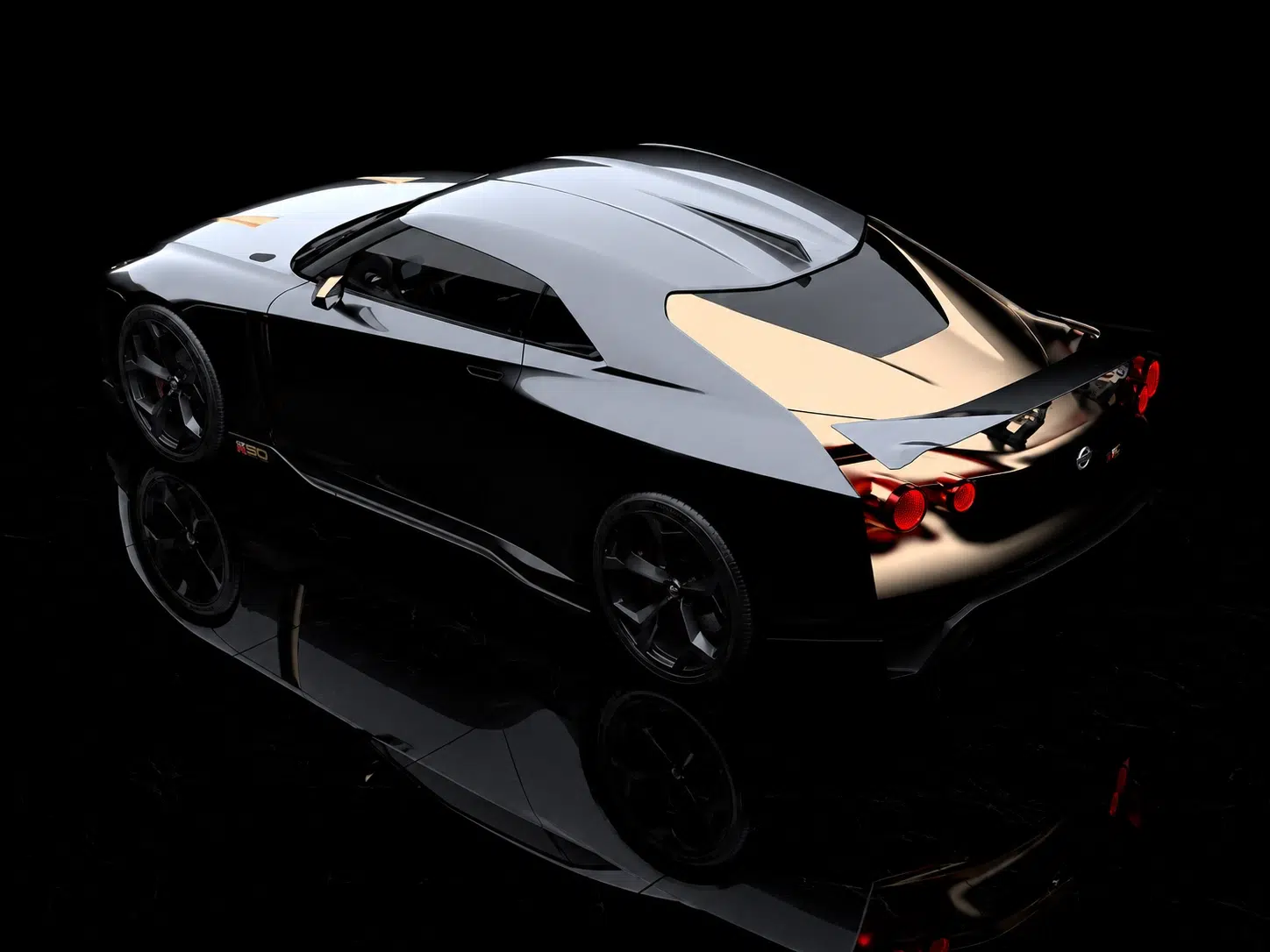
At the rear, a large adjustable wing rose from two uprights, reinforcing the sense that this was not intended to soften the GT-R’s personality. It was intended to heighten it.
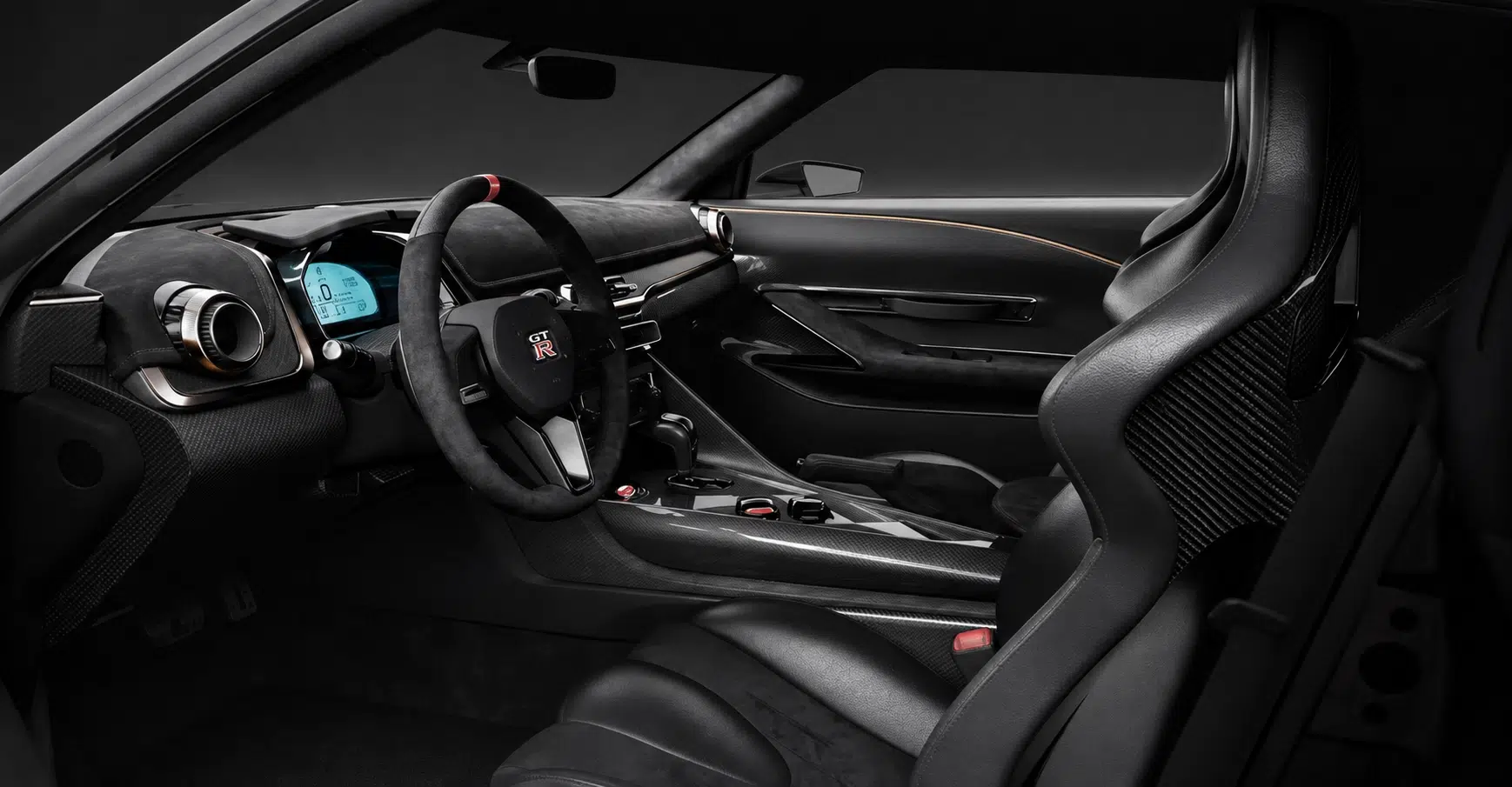
The original prototype wore Liquid Kinetic Gray with Energetic Sigma Gold accents, a combination that referenced the anniversaries being celebrated while giving the car an unmistakable visual identity. Gold appeared again throughout the cabin, where two finishes of carbon fiber were paired with black Alcantara and Italian leather.
The mechanical changes were equally substantial.
NISMO took the GT-R’s hand-assembled 3.8-liter twin-turbocharged VR38DETT V6 and developed it to produce 720 PS and 780 Nm of torque. That represented a significant increase over the standard GT-R NISMO of the period. Revised turbochargers derived from Nissan’s GT3 racing program, upgraded intercoolers, revised crankshaft components and strengthened drivetrain elements helped support the additional output.
The chassis was also reworked. Bilstein dampers were revised specifically for the project, while Brembo braking hardware was upgraded to manage the greater performance potential.
At Goodwood, however, the most interesting part of the story was still unresolved.
Nissan and Italdesign initially said that, if reaction to the prototype proved strong enough, a very small production run could follow. No more than 50 cars were contemplated, each individually tailored to its owner, with pricing originally expected to begin at approximately €900,000.
The reaction was strong enough.
By late 2019, Nissan and Italdesign confirmed that the GT-R50 would move into production, limited to 50 examples. Customer demand was described as significant, and buyers were invited to personalize their cars with individual color combinations and liveries.
The first production example was unveiled in 2020, and by November 2021 the first completed customer cars were preparing to leave Italdesign’s facilities in Italy for owners around the world.
Those production cars pushed the original concept further into the territory of contemporary coachbuilding.
Rather than simply choosing from a conventional palette, customers could work with Italdesign to create bespoke specifications. One owner commissioned a car inspired by the celebrated 1972 GT-R show car, finished in a specially developed Verde Kenmeri color. Others chose interpretations of the original Goodwood prototype’s Liquid Kinetic Gray and Energetic Sigma Gold combination.
That level of personalization altered the significance of the GT-R50.
The GT-R had traditionally been defined by engineering discipline rather than exclusivity. Its appeal lay in the way it delivered devastating performance through technology, all-wheel drive and relentless mechanical competence. The GT-R50 took that familiar foundation and introduced another idea: rarity.
Only 50 examples were planned, each assembled by hand by Italdesign professionals in Turin and tailored for an individual owner.
In doing so, the car moved away from the traditional definition of a Nissan performance model and closer to the world of limited-series coachbuilt automobiles.
That distinction has become even more interesting with time.
The R35 GT-R itself became one of the longest-lived performance cars of its era, evolving steadily over nearly two decades while retaining the same fundamental architecture. The GT-R50 represents an unusual moment within that history: a point at which Nissan allowed an outside design house to reinterpret the car at a level normally reserved for far more exotic marques.
It also demonstrated Italdesign’s continued role in ultra-limited vehicle production. The company still cites the Nissan GT-R50 among the notable projects in its ultra-limited-series portfolio, alongside its broader work in design, development and specialist manufacturing.
For collectors, that combination matters.
The GT-R50 is not simply a more powerful GT-R NISMO, nor is it merely a commemorative edition with a unique paint scheme. Its body, interior and construction were fundamentally reconsidered, and its production numbers place it in a category far removed from ordinary GT-R ownership.
The original prototype was created to celebrate two 50th anniversaries. What followed was something more enduring: a rare meeting of Japanese performance engineering and Italian craftsmanship that turned one of the world’s most recognizable modern sports cars into something approaching a rolling sculpture.
At Goodwood in 2018, the GT-R50 was still a question.
Could a dramatic one-off concept become a real, hand-built automobile for a handful of collectors?
A few years later, the answer was sitting inside Italdesign’s workshops in Turin, waiting to be delivered.