At a moment when electrification, hybridization and software are reshaping the modern supercar, Aston Martin has chosen a rather different form of punctuation. Its newest limited-production special arrives with 12 cylinders, 850PS, rear-wheel drive and a titanium exhaust engineered not for discretion, but for theater. Meet the Valen, a car that feels less like a concession to the future than a reminder of everything enthusiasts still love about the mechanical present.
Revealed in Monterey, California, the Valen is the latest V12 special from Q by Aston Martin and the most powerful front-engined production car the company has ever created. Its 5.2-liter twin-turbocharged V12 produces 850PS and 1,000Nm of torque, enough to send the car from 0–60 mph in 3.0 seconds and on to an electronically limited 214 mph. Production will be strictly limited to 150 examples worldwide, with first deliveries scheduled for the second quarter of 2027.
Its name comes from the Latin valens, meaning strong or powerful, continuing Aston Martin’s long-running tradition of evocative “V” names. Yet Valen’s significance lies in more than nomenclature or output figures. Developed through Q by Aston Martin with the expertise of the marque’s newly formed Special Vehicle Operations department, it joins a lineage of highly focused specials that includes Valour, Valiant and DBR22, while pushing the front-engined V12 formula into more aggressive territory.
The numbers are formidable, but they tell only part of the story. Power is delivered through a recalibrated eight-speed ZF transmission using shift strategies developed for Aston Martin’s Vantage GT4 racing program, while Sport, Sport+ and Track modes alter throttle mapping and drivetrain response depending on how seriously the driver intends to behave. In Sport and Sport+, the throttle is deliberately more urgent; in Track, the delivery becomes more progressive to allow finer control near the limit.
More interesting still is the effort Aston Martin has made to reduce mass and sharpen response. Valen can shed up to 110kg compared with the marque’s core V12 platform through extensive use of carbon fiber, aluminum, titanium and magnesium. Lightweight magnesium wheels are standard, while an optional package adds machined-from-solid aluminum suspension arms and knuckles, along with titanium chassis bolts, accounting for a further 16.9kg reduction. The result is not merely a better power-to-weight figure, but a car intended to feel smaller, lighter and more immediate from behind the wheel.
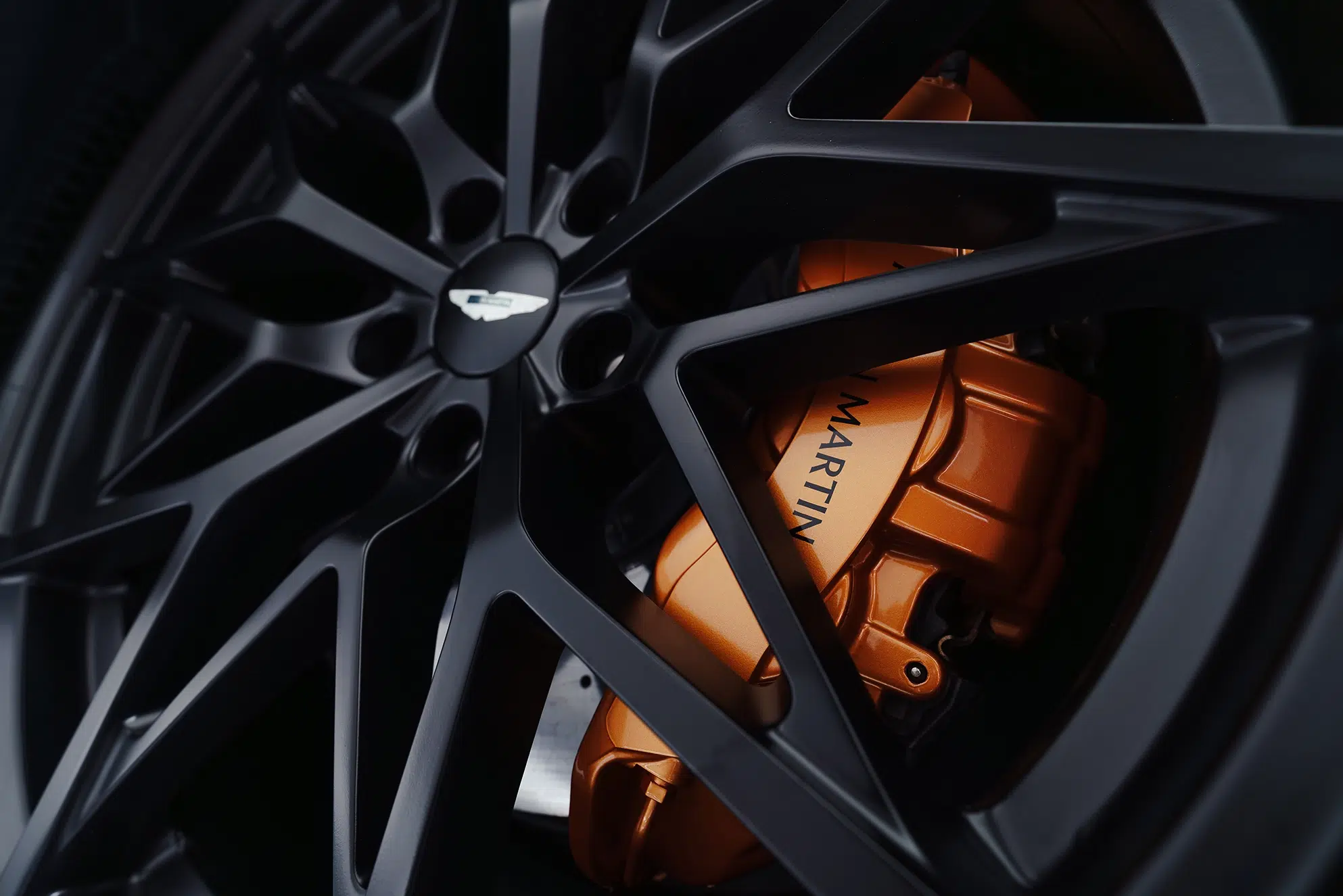
That intention carries through the chassis. Aston Martin has retuned the steering, damping, braking, suspension geometry and electronic systems, pairing a solid-mounted rear subframe with model-specific springs and Bilstein DTX semi-active dampers. Carbon-ceramic brakes measuring 410mm at the front and 360mm at the rear provide the stopping power, while specially developed Pirelli P Zero R tires work with the latest Cyber Tyre technology to communicate real-time tire data to the car’s dynamic control systems.
For Simon Newton, Aston Martin’s Director of Vehicle Performance, the goal was not simply to make Valen more extreme, but to intensify the character already inherent in the front-engined V12 architecture. The car has been developed to remain approachable while offering far greater rewards as the pace rises, a distinction that matters in an era when many high-performance cars risk becoming more impressive than involving. Valen appears to be chasing something increasingly rare: the sensation that the driver, not the software, remains at the center of the experience.
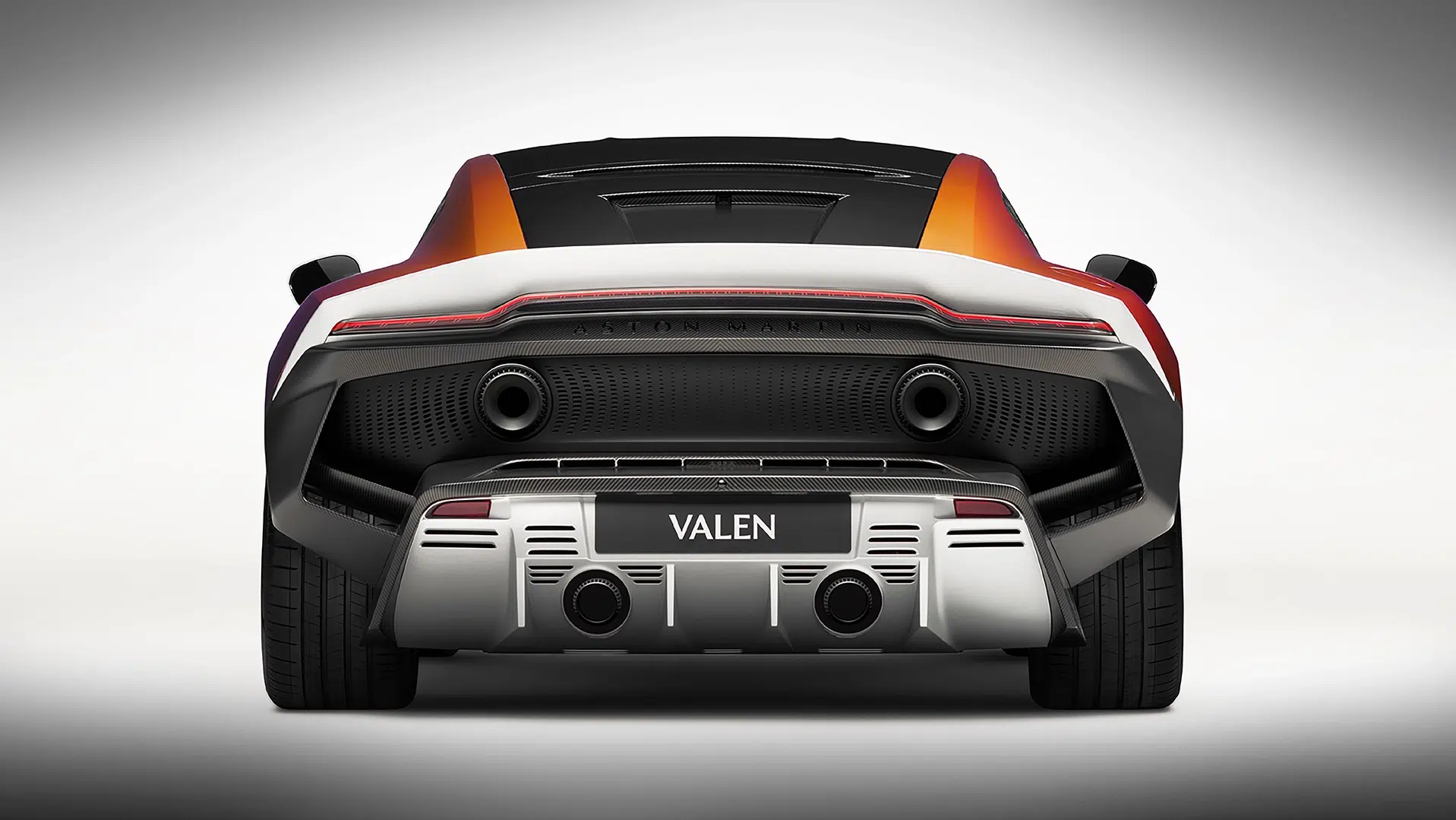
Nowhere is that philosophy more obvious than in the exhaust. Valen uses a lightweight titanium system with four outlets, two positioned high and two low, their finishers formed from 3D-printed titanium. The upper outlets remain permanently open, while the lower pair are valved according to drive mode. Aston Martin has tuned the system to reduce lower-frequency tones and amplify the V12’s higher registers, with the upper exits designed almost like organ pipes to create resonance as the revs rise. It is engineering in service of emotion, and refreshingly so.
That matters because buyers at this level are not purchasing statistics alone. Acceleration figures are readily eclipsed; top speeds eventually become numbers on a specification sheet. What tends to endure is character: the feel of the steering, the way a gearbox responds, the pitch of an engine climbing toward its upper range, and the peculiar sense of occasion that makes a car memorable long after the numbers have been forgotten.
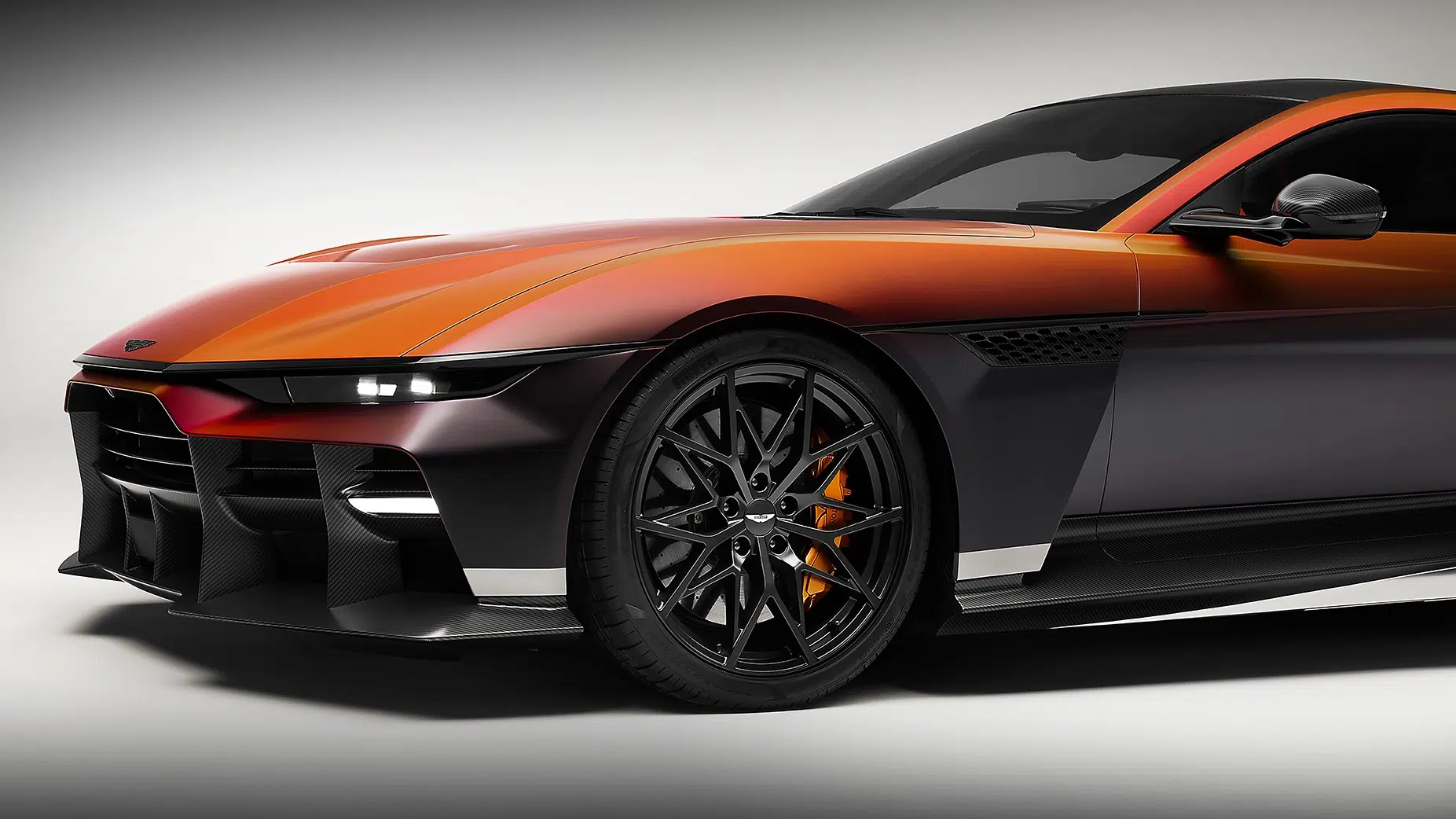
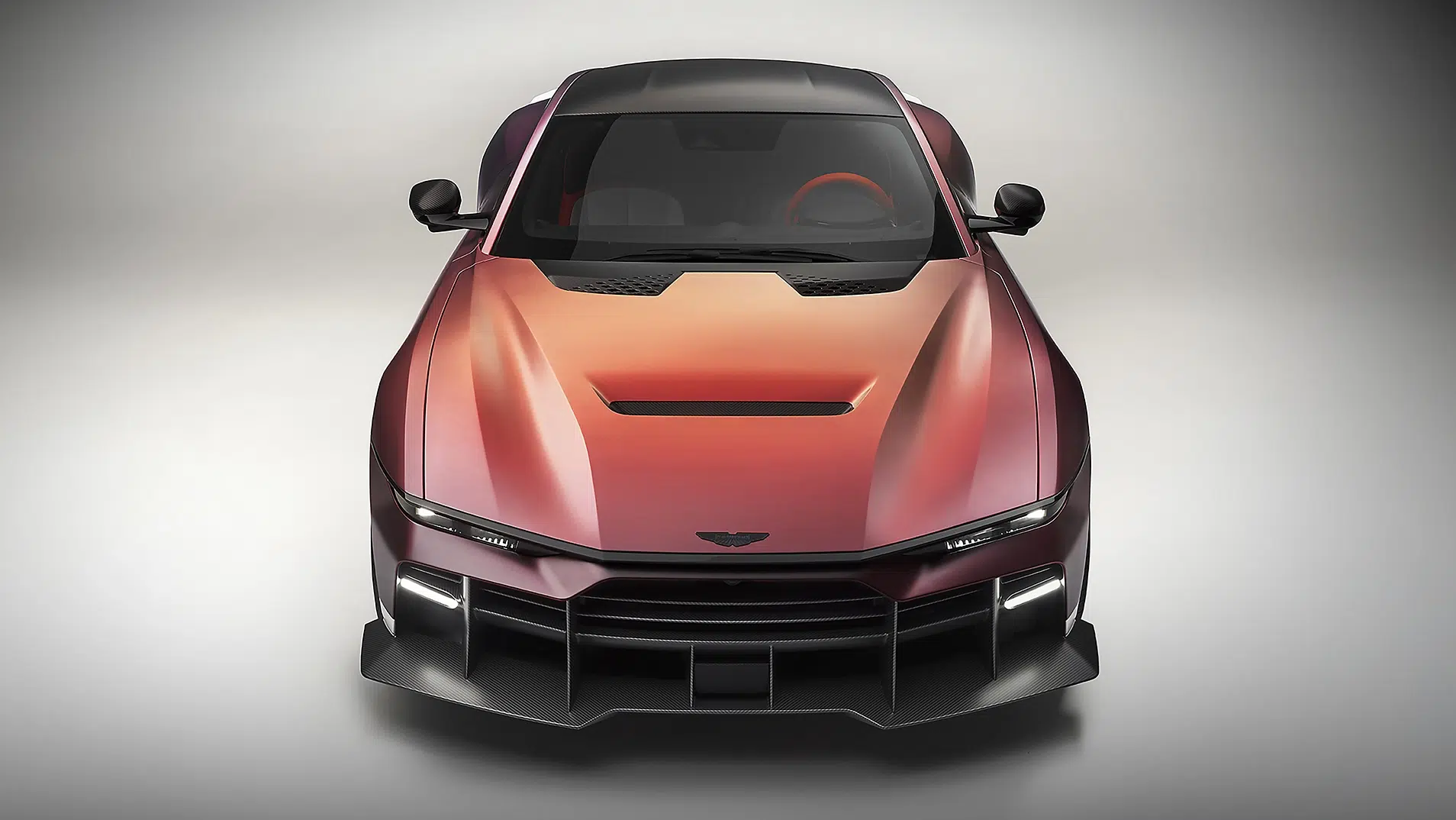
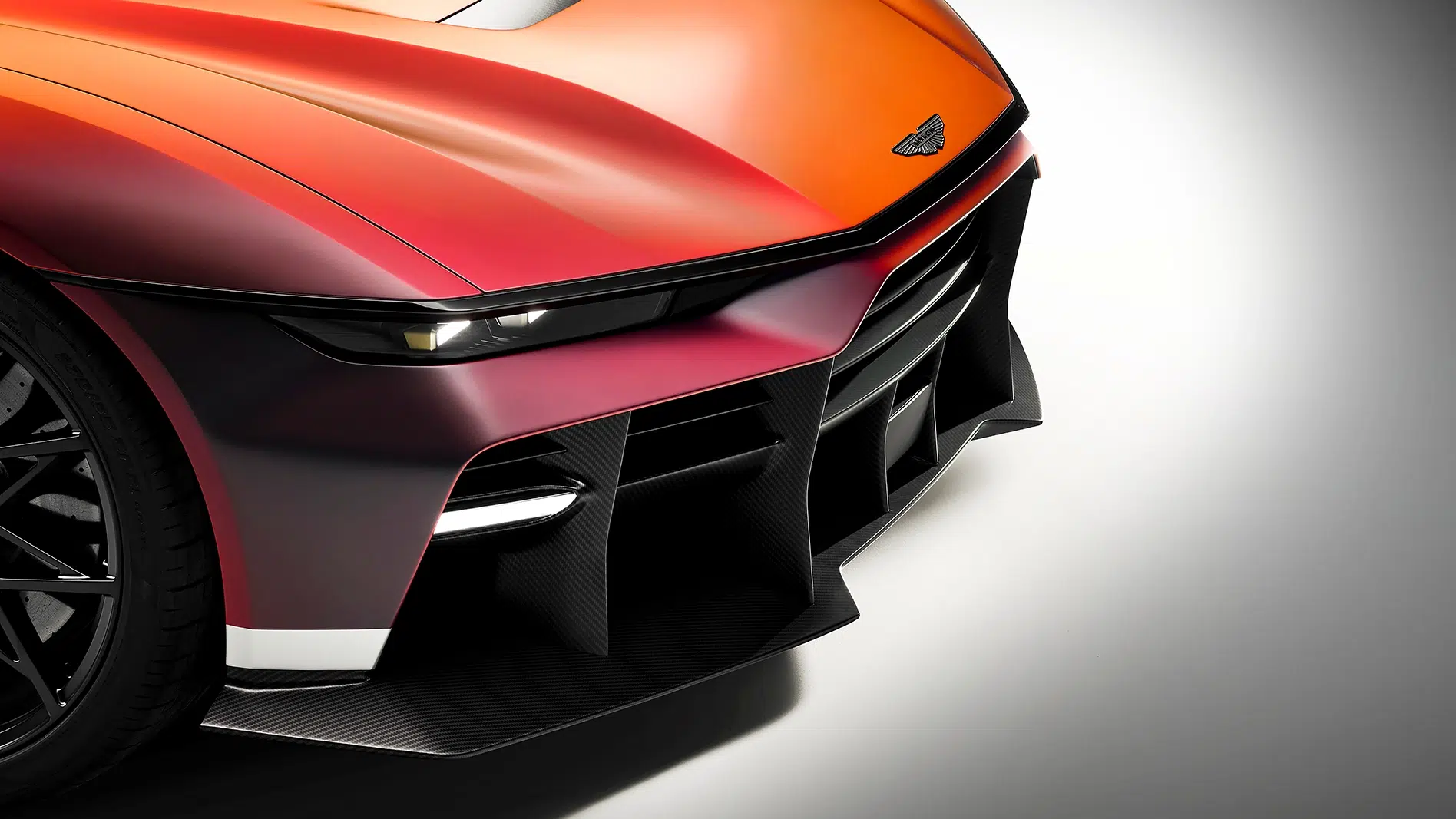
Visually, Valen is just as unwilling to disappear quietly. Marek Reichman, Aston Martin’s EVP and Chief Creative Officer, describes it as an opportunity to explore more extreme emotions through a new design language, and the result is a significant departure from the marque’s more familiar grand-touring forms. Deeply recessed slimline headlights sit beneath a plunging bonnet, while a more angular grille, pronounced front splitter and sharply sculpted surfaces give the car a distinctly more aggressive stance.
The traditional Aston Martin side strake has been lengthened and integrated into a substantial functional vent, while the body tightens through the waist before swelling again over the rear wheels. Saw-tooth vortex generators positioned along the sills help extract high-speed airflow from beneath the car, reducing lift and generating downforce. Even at its most theatrical, Valen’s detailing is not merely decorative; much of what appears dramatic is doing genuine aerodynamic work.
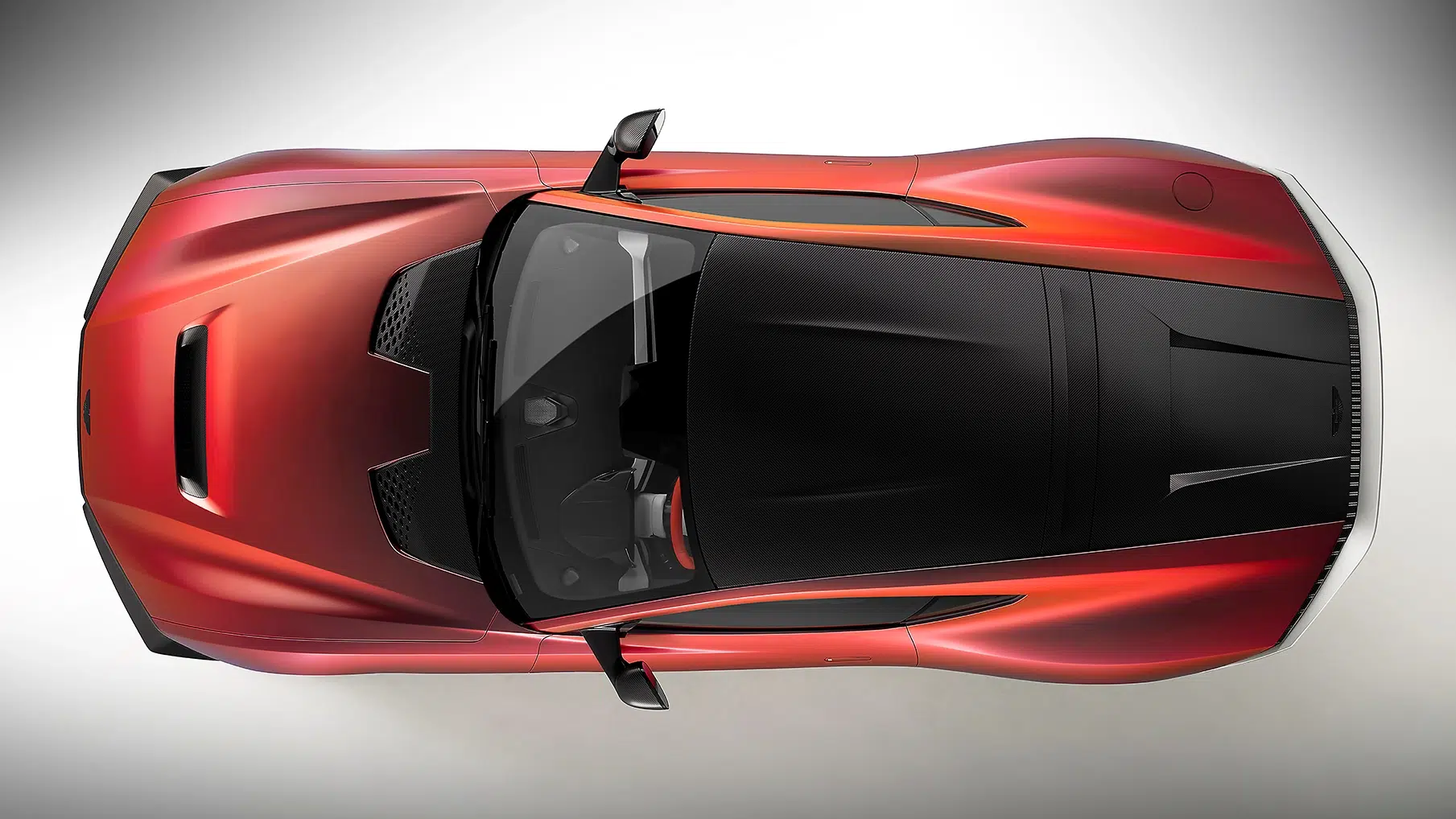
The rear may be the car’s boldest departure. Aston Martin has dispensed with the conventional fixed rear window and trunk lid in favor of a solid tailgate incorporating an aerodynamic wing. Beneath it sits a full-width light bar and a perforated panel designed to evacuate heat from around the exhaust system. A 170-liter luggage compartment remains, however, and an optional Touring Pack adds fitted luggage along with a protective cover for the bodywork while bags are being loaded.
That last detail says something important about Valen. For all its drama, Aston Martin still imagines it being driven somewhere. This is not intended simply to move between collection, concours lawn and climate-controlled garage; it retains enough practicality to accommodate a proper journey, preserving the grand-touring instinct that has long distinguished the marque even when the performance envelope becomes extreme.
The reveal car makes an equally theatrical statement in Q Ultra Satin Andromeda Red, a color that moves through deep red, copper and gold before revealing blue undertones as the light changes. Customers can alternatively specify a fully exposed carbon-fiber body, with the weave meticulously arranged in a herringbone pattern along the car’s centerline. The exposed carbon can itself be tinted in satin or gloss finishes, and buyers may work with Q by Aston Martin to develop their own bespoke tint.
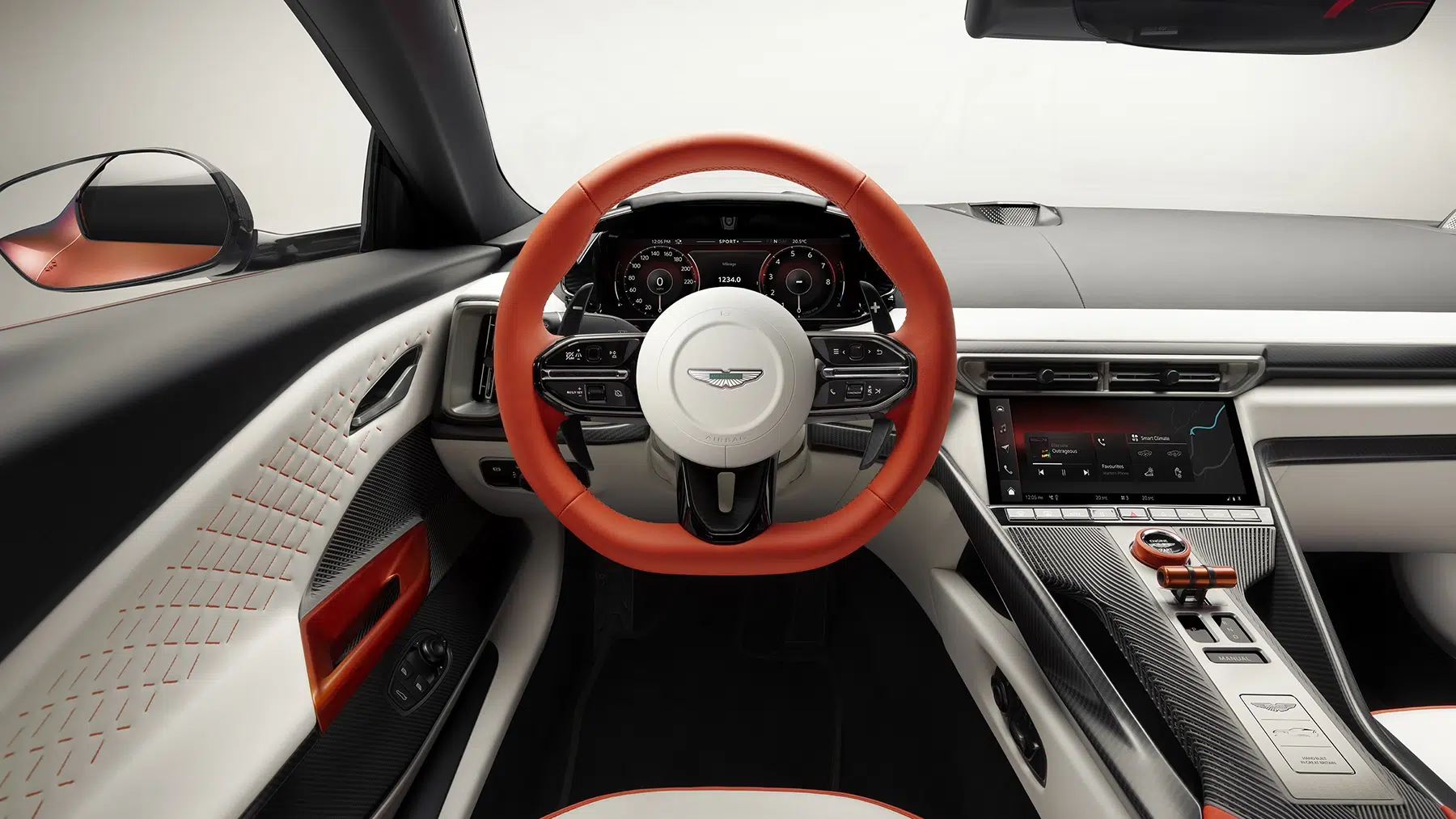
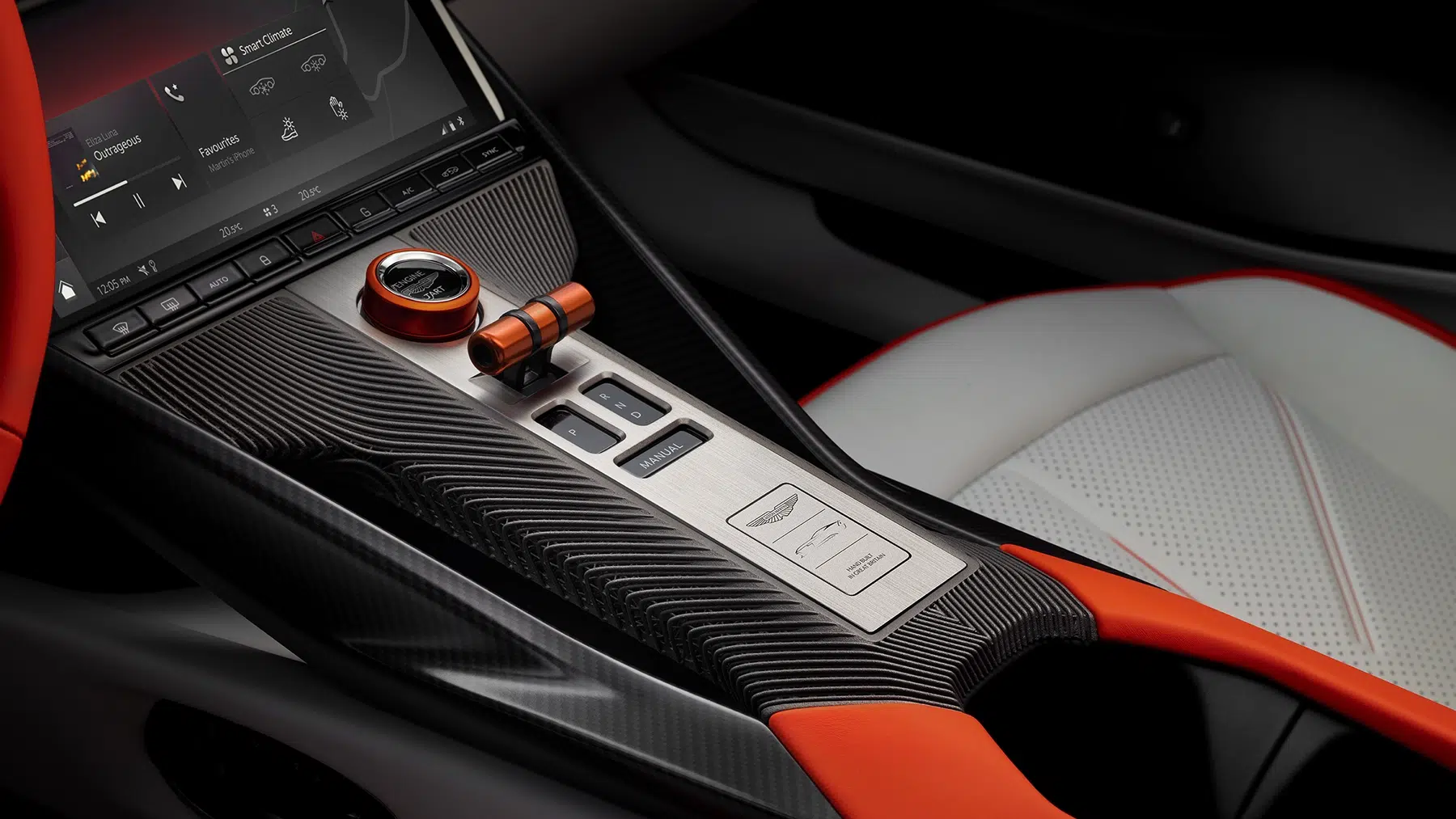
Inside, the mood becomes more disciplined. The cabin was developed around what Aston Martin calls visual lightness, with a slim center console made possible by 3D-printed components and incorporating performance-focused switchgear first introduced on Valhalla. The console is angled toward the driver, while the central touchscreen is reclined more steeply to integrate into the pared-back architecture rather than dominate it.
Buyers can choose between newly developed Sports Plus seats, designed to balance support with long-distance comfort, or lighter carbon-fiber performance seats for a more focused experience. Upholstery options include semi-aniline leather, Alcantara or full semi-aniline leather across several material layouts, including a Driver Focused configuration that allows the driver’s seat to be visually distinguished from the rest of the cabin.
This is where Q by Aston Martin becomes more than an exercise in selecting colors. With only 150 cars scheduled for production, scarcity is already guaranteed; the more compelling opportunity is to ensure that each one feels personal. Carbon tinting, anodized details, upholstery combinations, material splits and bespoke finishes give owners considerable latitude to shape the final character of the car, making exclusivity a matter of authorship as much as production volume.
Valen also arrives at an interesting moment in Aston Martin’s own history. Valhalla represents a very different, hybridized future; Valkyrie remains one of the most extraordinary road-legal machines ever to wear the wings; and Valiant pursued its own track-focused interpretation of the front-engined formula. Valen occupies another space entirely, taking the romantic idea of the long-bonnet Aston Martin V12 and stripping away enough restraint to reveal something more visceral beneath it.
That may be why the car feels significant beyond its 850PS output or 214-mph top speed. As the performance world becomes quieter, more electrified and increasingly mediated by software, Aston Martin has created a machine that places sound, tactility and mechanical theater back at the center of the experience. It does not ignore where the automobile is heading, nor does it pretend that the industry’s transformation can be reversed; instead, it makes a persuasive argument that certain sensations remain worth preserving.
There will be only 150 Valens, and that rarity will undoubtedly make them coveted. Yet scarcity may ultimately be the least interesting thing about this Aston Martin. The more enduring appeal lies in the fact that a 113-year-old marque has chosen this moment to build its most powerful front-engined production car with a V12, rear-wheel drive and an exhaust deliberately engineered to rise toward a crescendo.
The future is coming, and Aston Martin knows it. Valen simply insists that before the V12 fades from center stage, it deserves one more unforgettable performance.