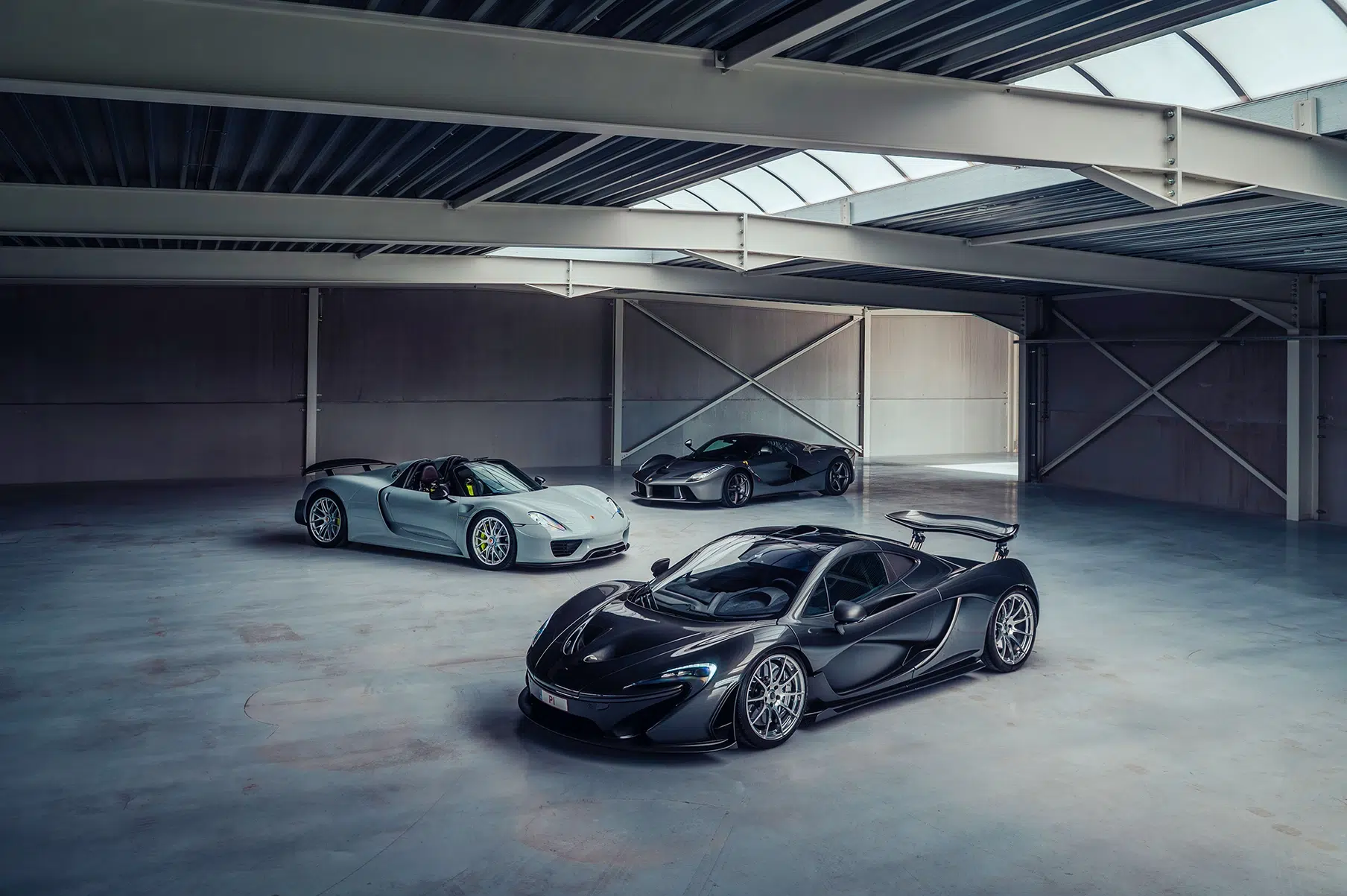
There are moments in the collector-car world when an auction becomes more than a sale. It becomes a snapshot of an era, and that is precisely what Broad Arrow Auctions is assembling for its second Zoute Concours Auction on October 9, 2026, where three of the most consequential hypercars of the modern age, the Ferrari LaFerrari, McLaren P1, and Porsche 918 Spyder, will cross the same stage in Knokke-Heist, Belgium. Together, the trio is known simply as the “Holy Trinity,” a designation earned not through marketing, but through the extraordinary moment in automotive history they came to define.
All three emerged from the same remarkable period, when Ferrari, McLaren, and Porsche independently arrived at a similar conclusion: the future of extreme performance would not be achieved by abandoning internal combustion, but by amplifying it with electrification. The result was a trio that reshaped the hypercar landscape. They were ferociously fast, technically audacious, and philosophically distinct, and more than a decade later they remain among the most desirable cars of their generation.
The brilliance of the Holy Trinity lies in the fact that these cars reached similar performance frontiers through very different philosophies. Ferrari approached hybridization through the lens of Formula One, creating LaFerrari as a technological flagship in which its naturally aspirated V12 was paired with electric assistance to sharpen response, increase output, and intensify the driving experience. McLaren, meanwhile, engineered the P1 with a relentless focus on aerodynamics, lightweight construction, and turbocharged immediacy, creating a road car with the mindset of a race machine and a body shaped as much by airflow as by aesthetics.
Porsche took perhaps the most methodical approach of all. The 918 Spyder combined a 4.6-liter dry-sump V8 with two electric motors, producing a total of 887 PS and 1,280 Nm of torque, while dispatching the 0–100 km/h sprint in just 2.6 seconds. Those figures remain formidable even by today’s standards, but performance numbers tell only part of the story. What makes the 918, P1, and LaFerrari so compelling now is that each captures a transitional moment, when electrification stopped being viewed simply as an efficiency exercise and became a genuine performance weapon.
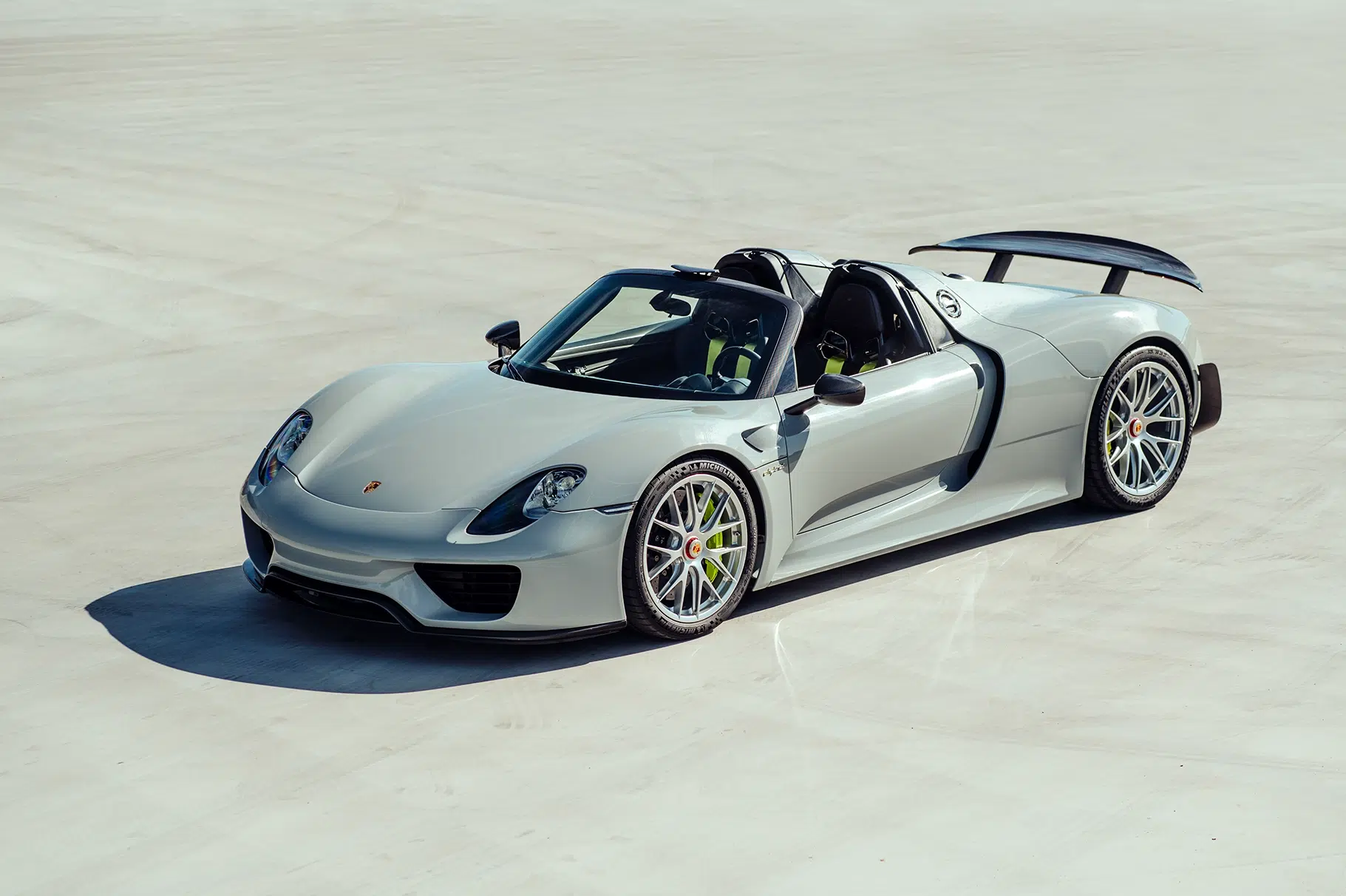
Of the three cars heading to Zoute, the Porsche 918 Spyder may be the one most likely to capture the connoisseur’s attention. Only 918 examples were produced, but this 2015 car occupies rarefied territory even within that limited run. It is believed to be the only known European-delivery example finished in historic Individualfarbe Sport Classic Grey, paired with a Leather-to-Sample Espresso interior and Dress Mackenzie Tartan seat inserts. It also carries the desirable Weissach Package, a significant factory option conceived to reduce weight and sharpen performance.
Its estimate of €2.6 million to €3 million reflects more than scarcity; it reflects specificity. At this level of collecting, two examples of the same model can occupy very different worlds, with color, delivery market, options, mileage, servicing history, and originality all contributing to desirability. This 918 possesses the kind of configuration that transforms an already important model into an individual object, and for seasoned collectors, that individuality increasingly matters as much as rarity itself.
Ferrari’s contribution to the Trinity arrives in equally compelling form. The LaFerrari offered at Zoute is finished in Grigio Ferro Metallizzato, a comparatively uncommon specification for a model so often seen in traditional Rosso Corsa. More importantly, the car has recently received a replacement high-voltage battery, an increasingly relevant consideration in the preservation and ownership of early hybrid-era hypercars.
LaFerrari occupies a singular position in Maranello’s history because it was both a culmination and a preview. It celebrated naturally aspirated V12 performance while simultaneously acknowledging that electrification would become inseparable from Ferrari’s highest-performance road cars. The significance of that combination has only become clearer with time. Where the hybrid system once seemed radical, it now reads as prophetic.
The McLaren P1 heading to Zoute presents a different kind of allure. Finished in MSO Storm Grey and showing just 293 kilometres, it represents the increasingly rare phenomenon of a first-generation modern hypercar that has remained almost untouched by use. McLaren built the P1 around one central proposition: it wanted to create the best driver’s car in the world, and its carbon-fiber structure, electrically assisted twin-turbocharged V8, and active aerodynamic systems were all developed in service of that ambition.
The P1 has also aged in an intriguing way. Its technology remains advanced, but its proportions, compactness, and relative lack of digital excess now give it an almost analogue aura compared with many of today’s larger, heavier, more electronically layered hypercars. The passage of time has transformed its context. The P1 once represented the future; now, it represents the purity of the first hybrid-hypercar generation.
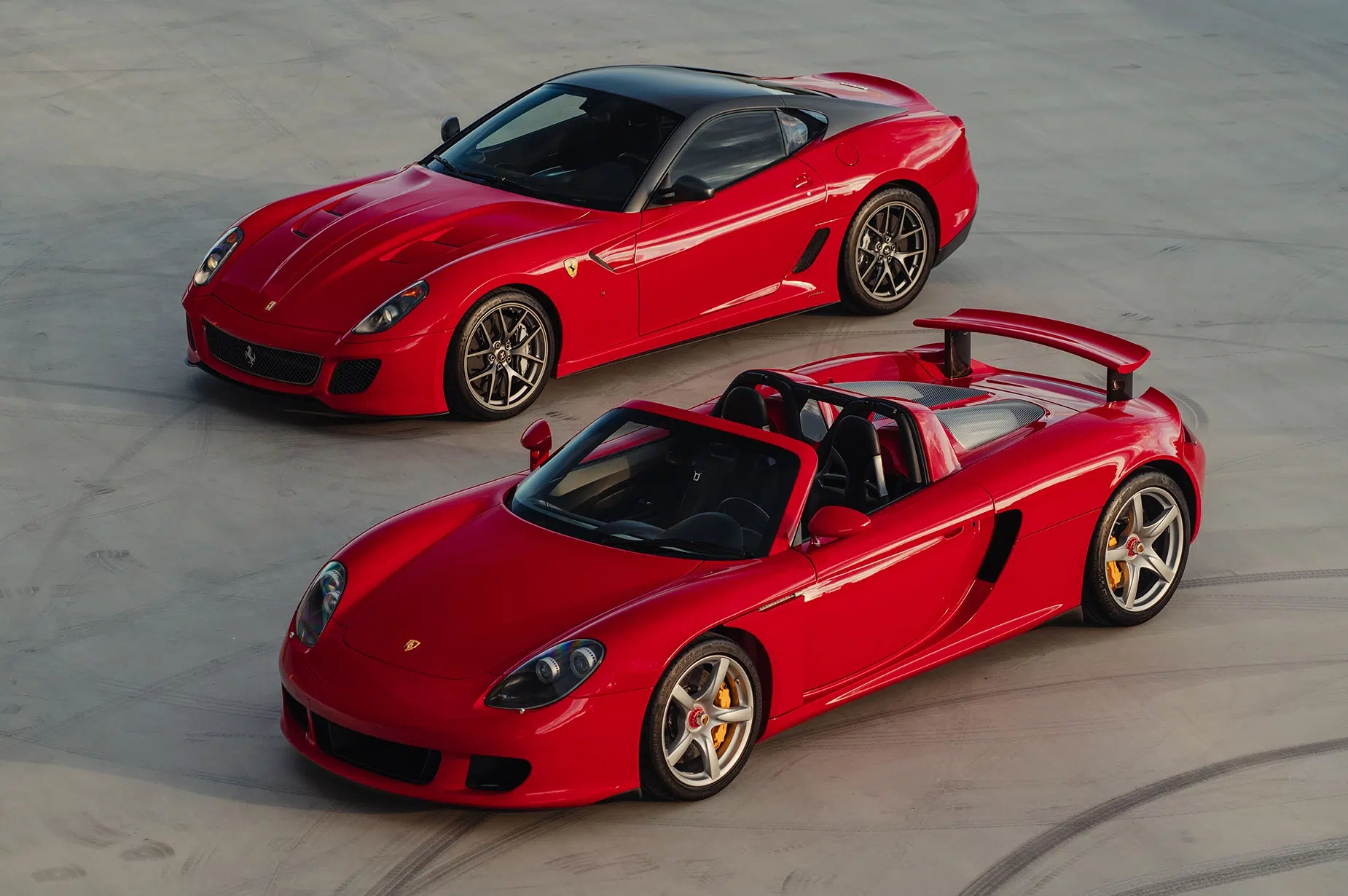
The Holy Trinity may headline the sale, but the surrounding catalogue is formidable in its own right. A 2005 Porsche Carrera GT in Guards Red is estimated between €2.7 million and €3.3 million. One of just 80 reportedly produced in the color, the car pairs its red exterior with a Dark Grey interior and carries the 5.7-liter V10 that has helped make the Carrera GT one of the most revered analogue supercars of the modern era.
There is also a 2010 Ferrari 599 GTO, Classiche certified and documented as an official sales-brochure car, offered with an estimate of €1.1 million to €1.5 million. Its place in Ferrari history is especially significant, as it was only the third road model from Maranello to wear the GTO designation after the 250 GTO and 288 GTO.
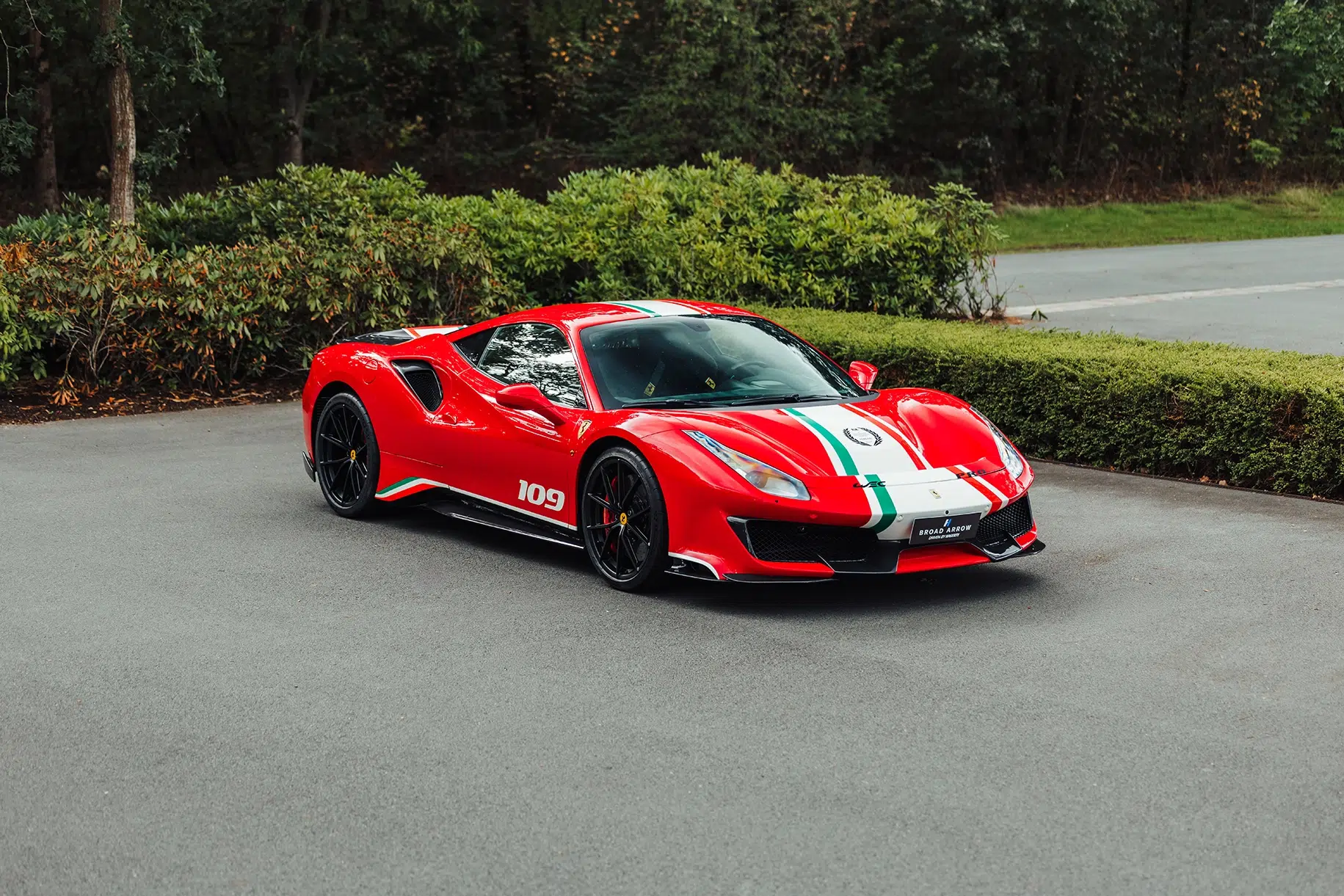
A 2020 Ferrari 488 Pista Piloti Ferrari adds another layer of exclusivity. Created through Ferrari’s Tailor Made division and offered only to clients involved in Ferrari’s racing program, approximately 200 examples were produced. The Zoute car is finished in Rosso Corsa with tricolore livery over Nero Alcantara, making it the sort of modern Ferrari that appeals as much for provenance and eligibility as it does for outright performance.
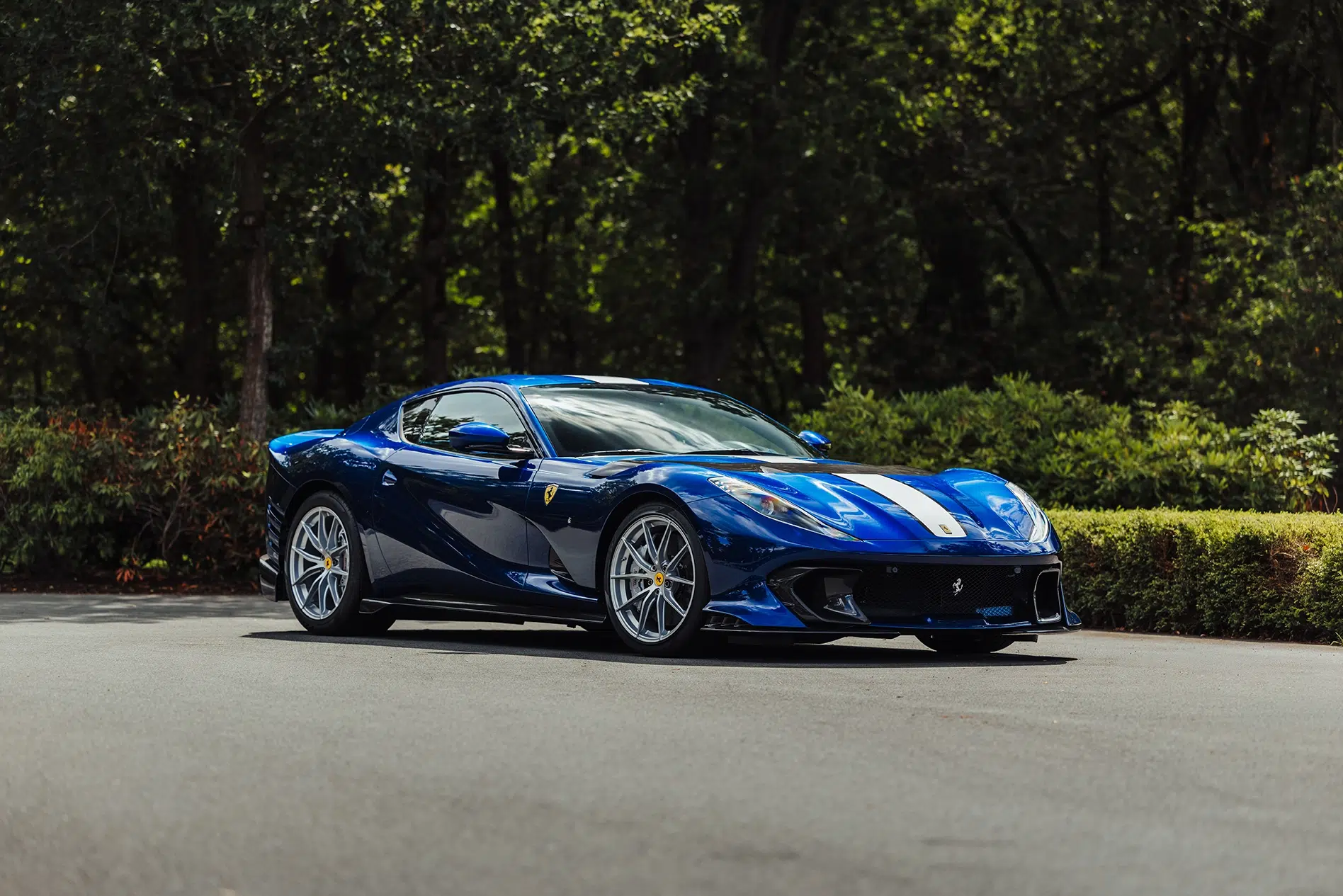
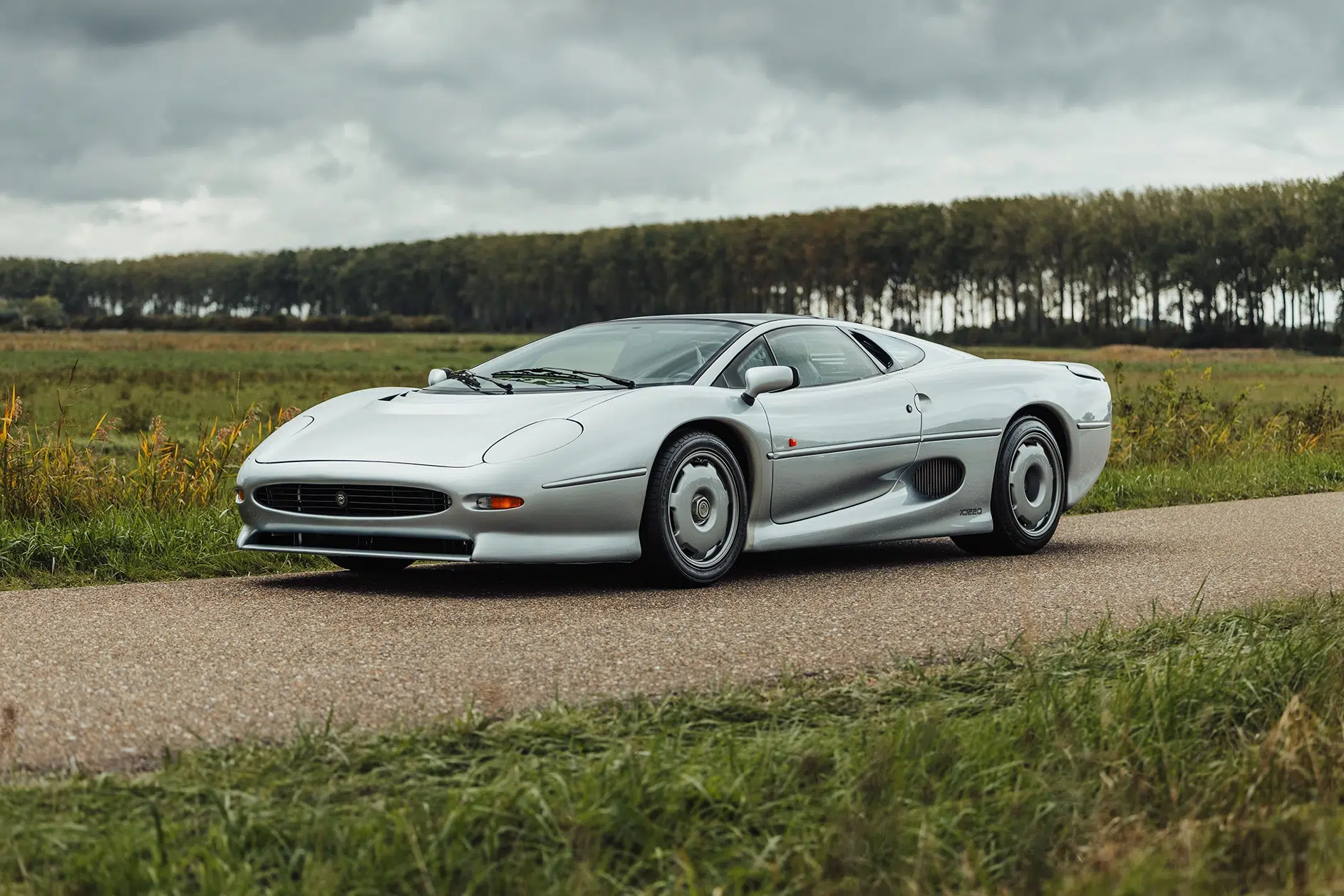
Also crossing the block is a 2022 Ferrari 812 Competizione in Blu Tour de France, showing only 299 kilometres at cataloguing. With its high-revving naturally aspirated V12, the Competizione increasingly stands as a marker of the closing chapter of a particular Ferrari tradition. Further back in time, the catalogue includes a 1984 Lamborghini Countach 5000 S and a 1992 Jaguar XJ220, each representing a different interpretation of what an ultimate supercar could be before electrification entered the conversation.
When the LaFerrari, P1, and 918 Spyder were new, the fascination centered on acceleration, horsepower, electric motors, and the astonishing complexity beneath their bodywork. Today, something else has begun to matter just as much: context. These cars now stand at the beginning of an era whose consequences are visible across the entire luxury-performance market, from Ferrari’s expanding use of hybrid powertrains to Porsche’s broader electrification strategy and McLaren’s continued exploration of electrically assisted performance.
The Holy Trinity therefore feels increasingly historical without feeling old. There is an important distinction between the two. These cars represent the moment when the world’s most ambitious manufacturers independently realized that electricity did not have to dilute performance; it could intensify it. That idea now feels obvious, but in 2013 it did not.
The setting for their reunion is especially fitting. The Zoute Grand Prix Car Week runs from October 7 through October 11 in Knokke-Heist, bringing together significant automobiles, art, and luxury culture, with Broad Arrow’s auction taking place in conjunction with the Zoute Concours d’Élégance. For collectors, events such as this offer something the market cannot digitize: comparison in the flesh.
To see a LaFerrari, P1, and 918 Spyder separately is special. To see them together is educational, because their differences become more apparent. The Ferrari brings theatricality, the McLaren aerodynamic intensity, and the Porsche technical precision. Each reflects the culture of the marque that created it, and that is perhaps why the Holy Trinity continues to resonate. They were never three versions of the same idea; they were three answers to the same question.
Broad Arrow’s offering also arrives at a particularly interesting point in the market, as the most important cars of the early hybrid-hypercar era transition from contemporary exotics into recognized collector objects. Condition, provenance, specification, originality, and technical maintenance are becoming increasingly important as buyers distinguish exceptional examples from merely desirable ones. This is the natural evolution of a collector category: at first, performance defines the car, then rarity, then history, and eventually the best examples become cultural objects.
The LaFerrari, P1, and 918 Spyder are entering that final stage. Their relevance is no longer based solely on what they can do, but on what they represent. For one evening in Belgium, collectors will have the opportunity to consider all three together, and that may be the true significance of Broad Arrow’s Zoute sale. It is not merely offering three extraordinary hypercars; it is offering three interpretations of the moment the future arrived.