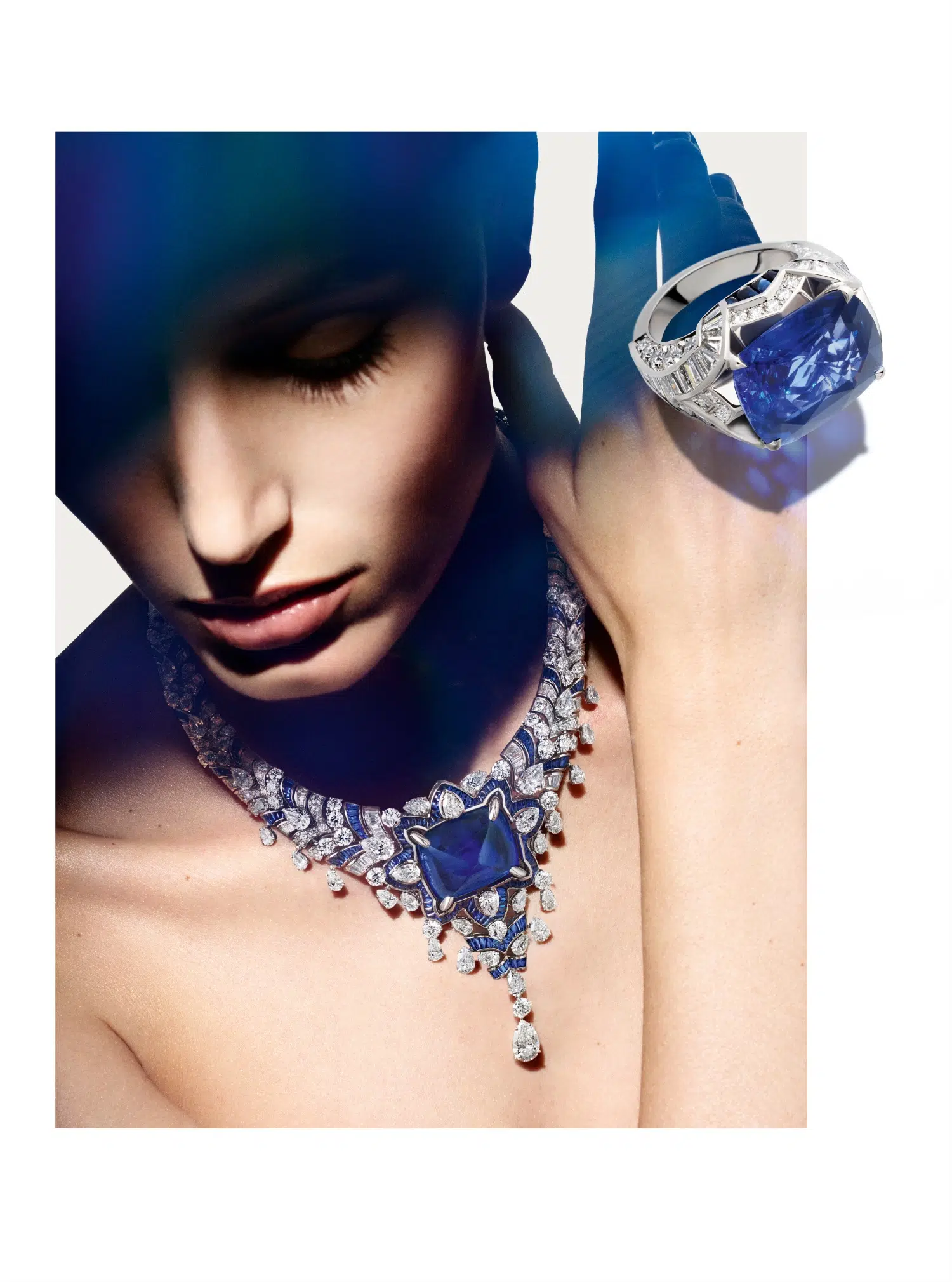
Rarity today is no longer measured in carats alone. Across the world’s great maisons, exceptional stones are being matched by equally exceptional ideas of transformability, architecture, heritage, handwork, and a new freedom in how precious jewellery is worn.
High jewellery has always occupied a curious space between adornment and possession. The stones may be measurable, certified, weighed, and catalogued, but the most compelling creations have never been defined by numbers alone. Their true value lies somewhere more elusive: in proportion, imagination, provenance, engineering, and the hand of the artisan.
In 2026, that distinction feels especially pronounced.
The season’s most memorable creations do not simply ask us to admire extraordinary gemstones. They ask us to consider what happens when rarity is treated as a starting point rather than the final statement. A monumental sapphire becomes architecture. A pair of yellow diamonds becomes an exercise in improbable symmetry. A jewel transforms from one form to another. A headpiece borrows the language of couture. Gold is pierced, engraved, and shaped until craftsmanship itself becomes as precious as the stones it holds.
For collectors, this evolution matters. Once scale becomes familiar, discernment moves elsewhere. The question is no longer simply: How large is the stone? But what has the maison done with it?
That is where the most interesting high jewellery begins.
Bvlgari: Architecture in Blue
There are gemstones that dominate a jewel, and then there are gemstones that appear to create their own atmosphere.
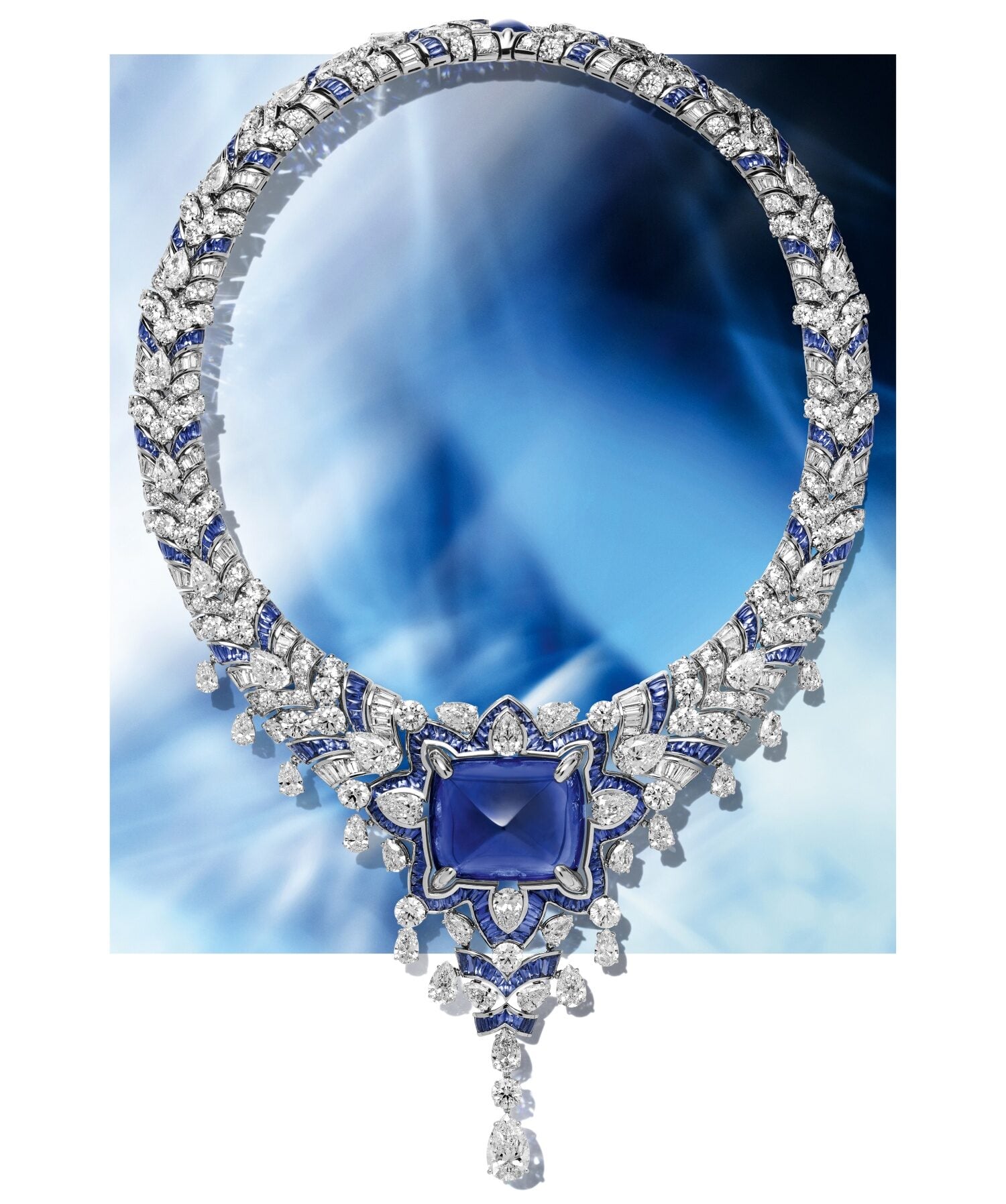
Bvlgari’s Cosmic Vault necklace belongs firmly to the latter category. At its center sits a 123.35-carat Sri Lankan sugarloaf sapphire, a stone whose sheer scale might easily have overwhelmed almost any design. Instead, Bvlgari builds around it with a sense of architectural discipline.
The necklace takes inspiration from the domes of Rome, translating volume, curvature and symmetry into a composition of diamonds and buff-top sapphires. More than 200 modular elements allow the piece to move despite its substantial presence, while approximately 1,500 hours of craftsmanship went into its construction.
It is this tension between monumentality and movement that gives Cosmic Vault its authority. The sapphire is undeniably the star, but the jewel succeeds because it is not treated as a specimen in isolation. It becomes the heart of a larger composition.
For collectors accustomed to exceptional colored stones, that distinction is significant. Rarity may begin with geology, but design determines whether a stone becomes merely important or truly unforgettable.
Cartier: Precision Disguised as Ease
Cartier has long understood that technical sophistication is most persuasive when it disappears into elegance.
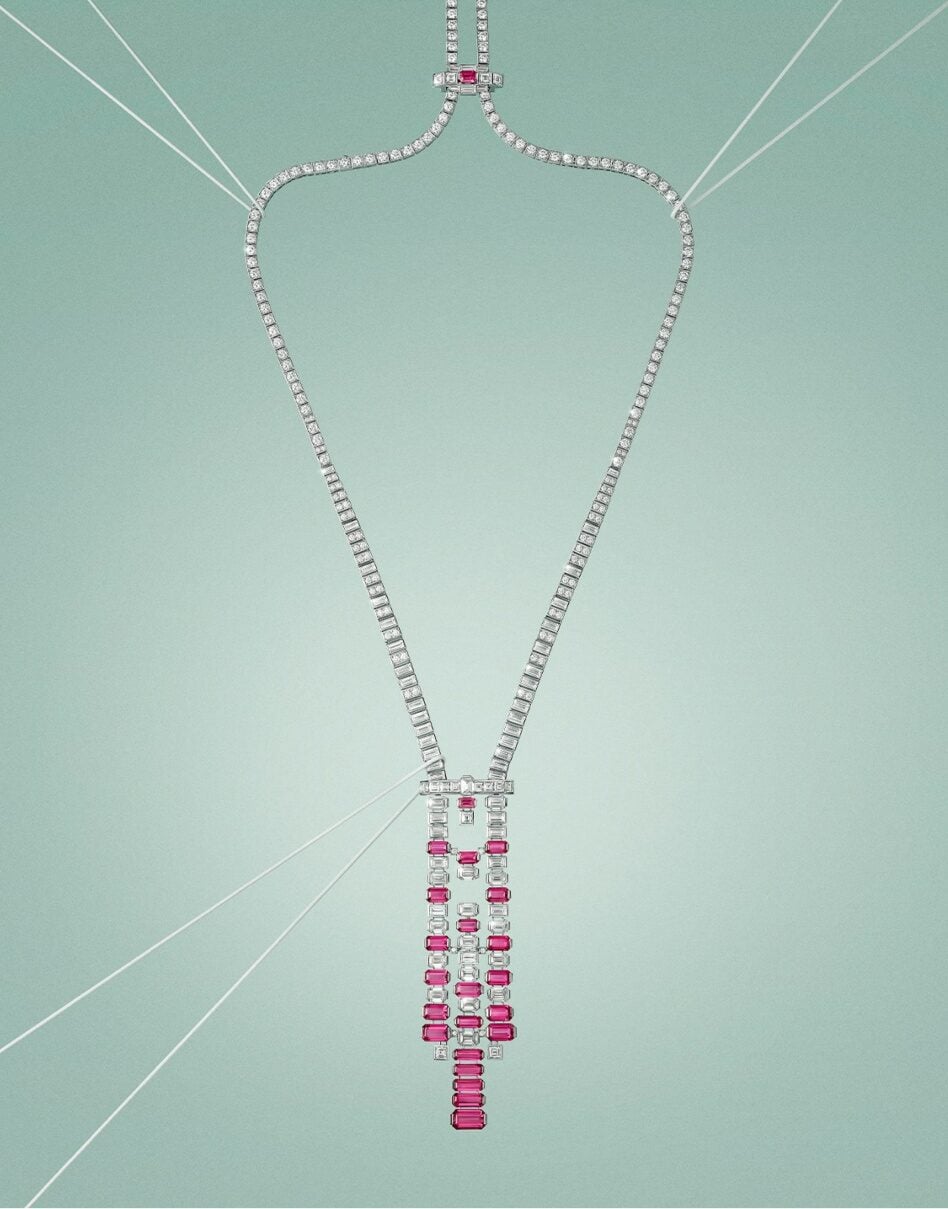
The Euphonia necklace from the maison’s En Équilibre collection is a study in that philosophy. Rubies are paired with emerald-cut diamonds, then reinforced by square, baguette, and brilliant-cut diamonds in a composition that feels controlled without becoming rigid. At the back, a sliding clasp allows the necklace to be adjusted in length while preserving its balance.
That detail may seem secondary beside the gemstones, yet it speaks directly to the way high jewellery is evolving.
Transformability and modularity are no longer simply practical conveniences. They are evidence of engineering. The ability to alter how a significant jewel sits on the body without compromising proportion or visual rhythm requires the same intellectual rigor as its aesthetic design.
Euphonia is therefore compelling for reasons that go beyond its materials. It expresses luxury as intelligence: the sense that a jewel has been considered not only from the front, under perfect light, but in motion, in wear, and in life.
Tiffany & Co.: An Icon Learns a New Language
Few motifs in twentieth-century jewellery are as immediately recognizable as Jean Schlumberger’s Bird on a Rock.
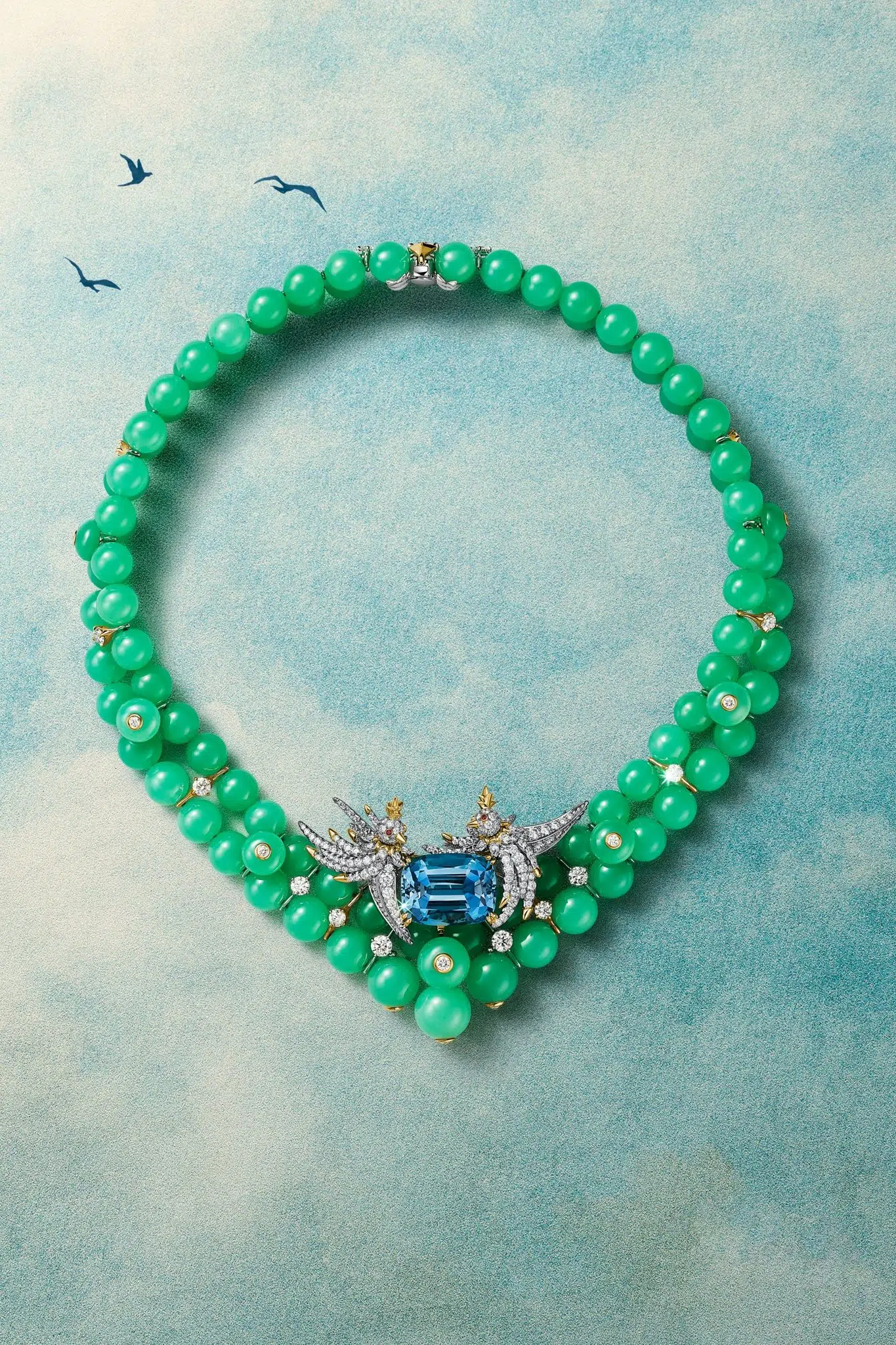
For Tiffany & Co.’s Blue Book 2026: Hidden Garden collection, the house returns to that celebrated vocabulary with a statement necklace featuring diamond birds perched above a remarkable 22-carat Santa Maria-hued aquamarine from Brazil.
The appeal here lies in continuity.
High jewellery can become so focused on novelty that heritage is sometimes mistaken for repetition. Tiffany demonstrates the opposite. A strong design language can evolve precisely because it is recognizable. Schlumberger’s wit, fantasy and sculptural imagination remain present, but the scale and composition give the familiar motif renewed presence.
For collectors, this kind of lineage carries its own form of value. A jewel is not merely beautiful in the present; it participates in a design history that can be traced through decades of creativity.
The aquamarine provides impact. The Bird on a Rock provides identity.
And in high jewellery, identity is often the rarer commodity.
Van Cleef & Arpels: The Theatre of Transformation
Few maisons have made transformability as central to their high-jewellery vocabulary as Van Cleef & Arpels.
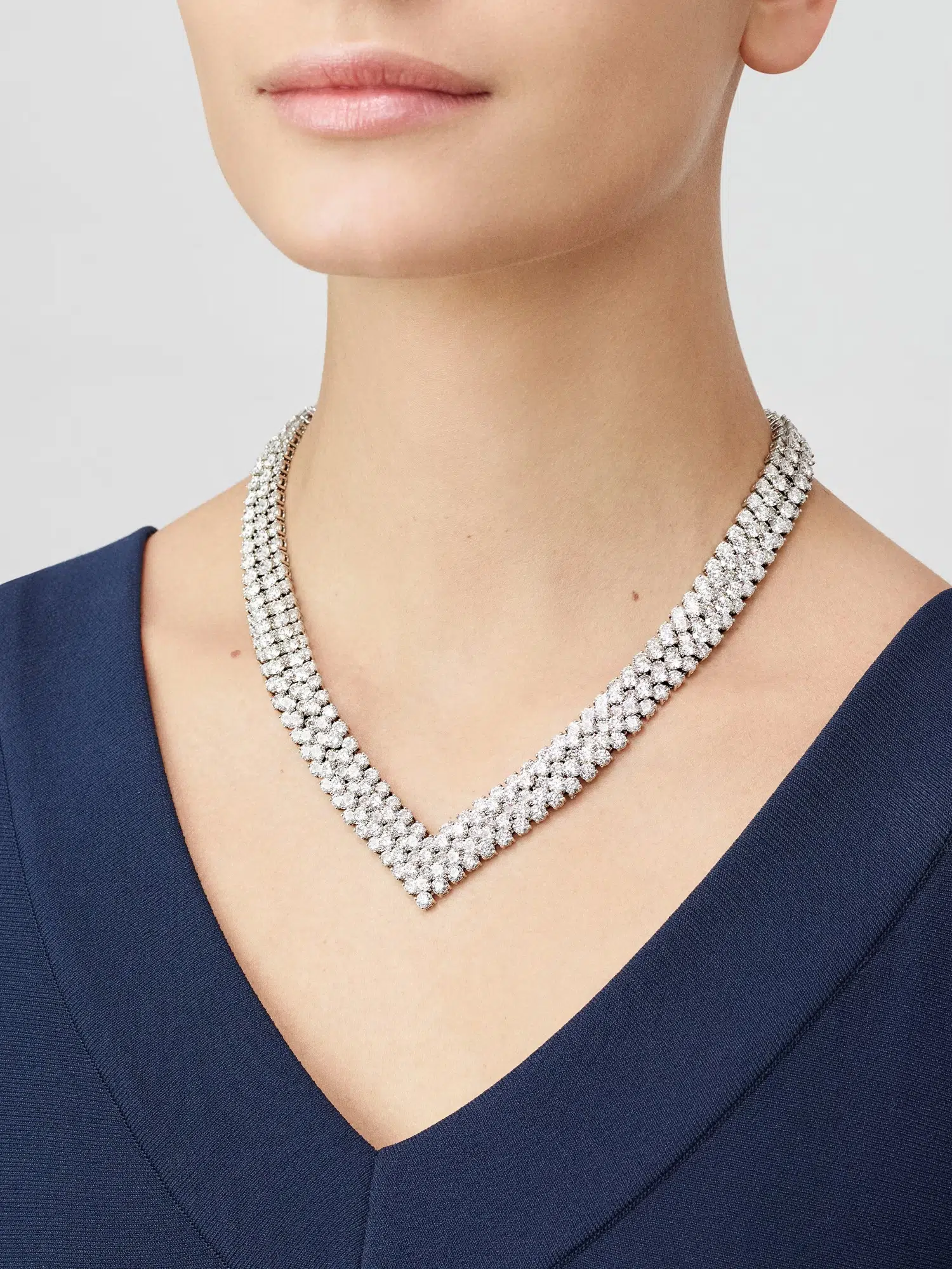
Its Reflets Adriatiques necklace, from the Treasure Island universe, brings together white gold, turquoise, sapphires, emeralds, Paraíba tourmalines and diamonds in a marine palette that feels almost painterly. The maison identifies the piece as transformable, continuing a tradition in which one jewel can assume multiple lives.
That tradition is not incidental. Van Cleef & Arpels has repeatedly treated movement and transformation as part of the creative act itself. Its À Cheval necklaces, for instance, can convert into bracelets, with the maison using highly articulated settings to preserve fluidity while handling substantial quantities of diamonds.
The fascination of such pieces lies in their hidden complexity.
To the wearer, transformation may appear effortless. To achieve that illusion, however, requires exact tolerances, carefully engineered articulation, and a deep understanding of how a jewel behaves on the body.
What appears poetic is, underneath, highly technical.
That duality is part of the maison’s enduring allure.
Buccellati: When the Hand Becomes the Rarity
In a market where extraordinary gemstones can often dominate the conversation, Buccellati offers a different proposition.
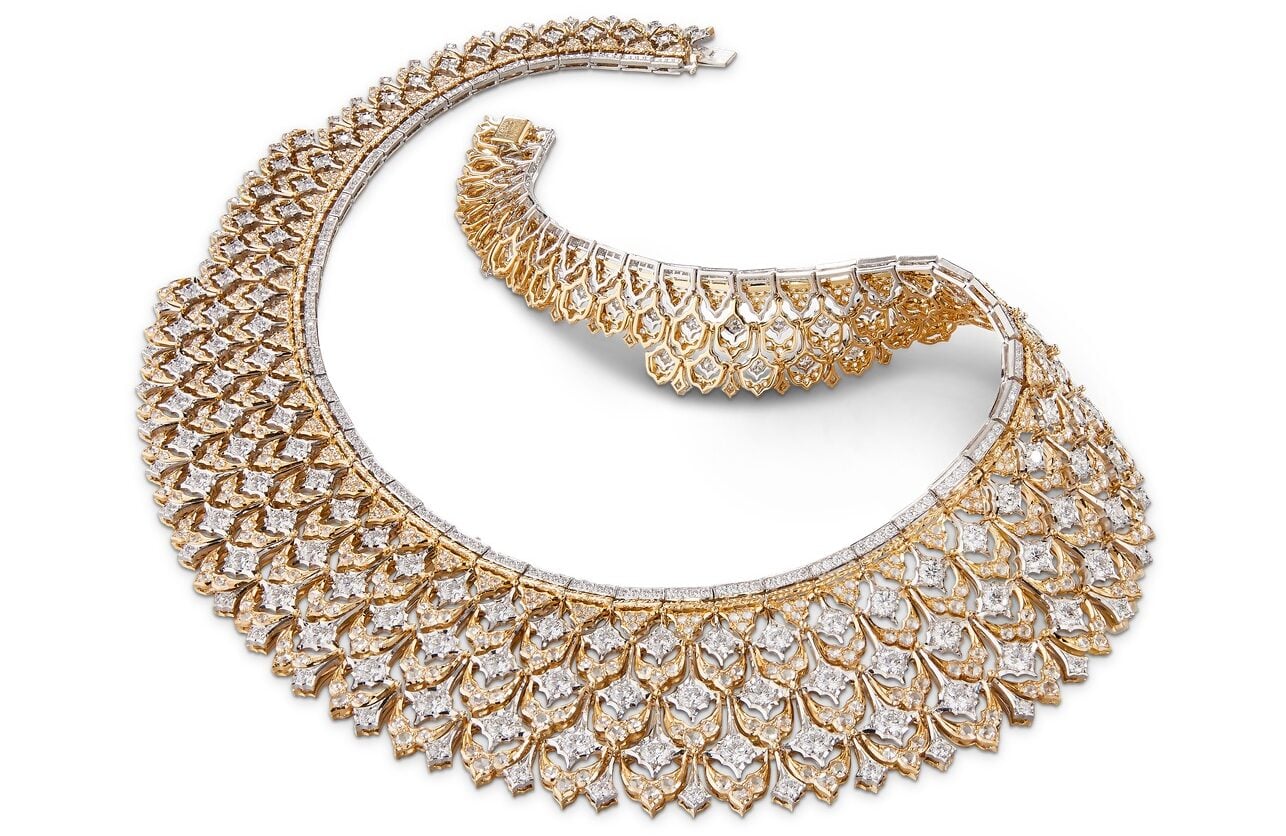
Its Serenissima high-jewellery collection turns toward Venice, not simply as inspiration but as an atmosphere. The house describes the collection as an exploration of the city’s soul, history and visual richness, interpreted through goldsmithing techniques that emphasize transparency, flexibility and meticulous handwork.
This is where Buccellati occupies a distinctive position.
The maison’s jewellery is often recognizable before a single gemstone is identified. Hand engraving, lace-like surfaces, honeycomb structures and richly textured gold make the craftsmanship itself part of the visual signature.
That changes the nature of scarcity.
A large diamond can be quantified. A sapphire can be graded. But the accumulated skill required to create surfaces and structures of this intricacy is far more difficult to reproduce.
For the sophisticated collector, that may be precisely the point.
When jewellery becomes too easily compared by carat weight or certification, handwork restores individuality. The object is valuable not simply because of what nature produced, but because of what human beings were able to do with it.
Chanel: Jewellery Moves Beyond the Neckline
High jewellery is increasingly interested in where it can be worn, not simply what it can contain.
Chanel’s Full Swing head jewel is one of the most expressive examples.
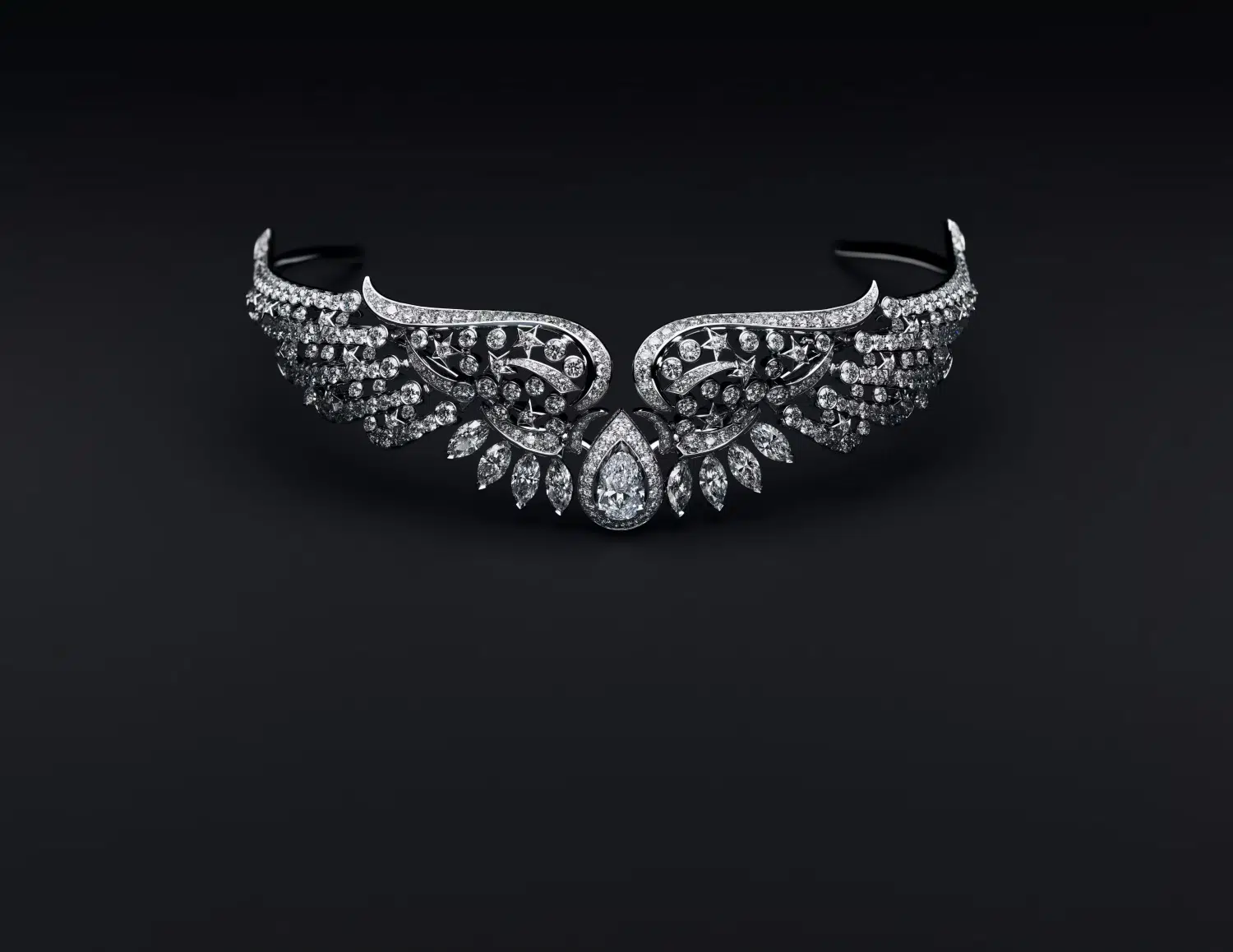
Part of the Reach for the Stars collection, the piece centers on a 3.08-carat pear-cut D Flawless diamond. Around it, openworked white-gold wings set with round and navette-cut diamonds sweep across the head with the delicacy of lace. Chanel describes the jewel as a bold reinterpretation of a signature form, with its construction designed specifically to follow the contours of the head.
The result feels closer to couture than conventional jewellery.
That is hardly accidental. Chanel has always understood the power of silhouette, and here the principle migrates from clothing to precious materials. The jewel does not sit passively on the body; it changes the body’s outline.
For collectors, pieces such as Full Swing signal a broader shift toward high jewellery as personal performance.
A necklace can be magnificent. A head jewel creates an entrance.
Graff: The Improbability of Two
A single extraordinary diamond is rare.
Finding two that can stand together as equals is another challenge entirely.
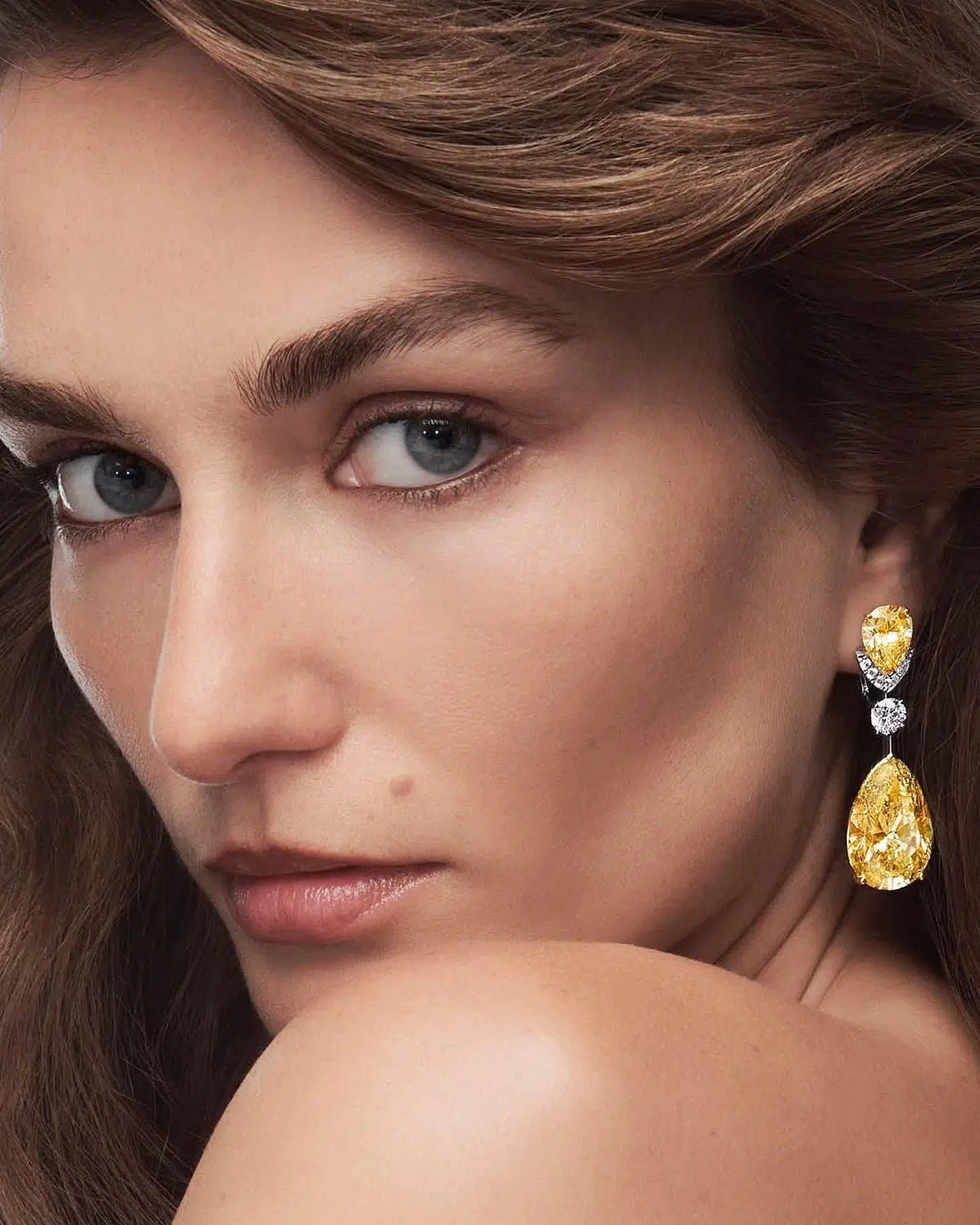
Graff’s Fancy Intense Yellow pear-shaped diamond earrings are built around stones weighing 25.06 and 25.02 carats. The maison lists the pair as Fancy Intense Yellow diamonds, with one certified at VVS2 clarity, set in white and yellow gold.
Their impact is immediate, but the deeper story lies in matching.
Large colored diamonds vary enormously in hue, saturation, shape, and character. To assemble a pair at this scale requires not only access to exceptional stones, but patience—the willingness to wait until two diamonds can exist in visual conversation with one another.
That is a different kind of rarity.
Collectors often focus on the uniqueness of singular objects, yet symmetry at this level can be just as difficult to achieve. The luxury lies not in one improbable discovery, but in two.
Graff does not overcomplicate the design because it does not need to. The drama is already present in the stones themselves.
Restraint, here, becomes confidence.
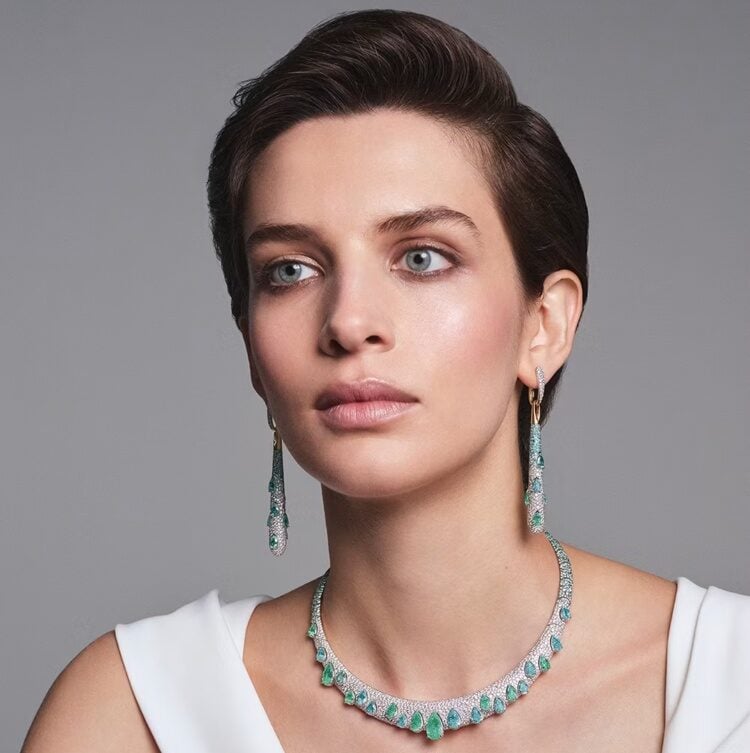
Pomellato: Color Without Ceremony
If some high jewellery still carries the atmosphere of a vault or gala, Pomellato is interested in what happens when those conventions are loosened.
Its 2026 Stile Libero collection is built around precisely that sense of freedom. The collection explores color, sculptural gold and openwork across 65 pieces, with the maison using unconventional gemstone combinations and free-form settings throughout.
Among its most electric pieces is the Drops of Paraíba choker, featuring 21 pear-shaped Paraíba tourmalines totaling 20.15 carats, arranged irregularly in a composition inspired by falling droplets.
What makes the piece interesting is not simply the rarity of Paraíba tourmaline, though that alone would be enough to command attention.
It is the way Pomellato refuses to make rarity feel overly formal.
The asymmetry feels spontaneous. The rose gold introduces warmth. The stones differ in scale and placement. Instead of imposing strict hierarchy, the design celebrates variation.
That attitude speaks to a changing collector psychology.
Important jewellery no longer needs to announce itself through solemnity. It can be playful, irreverent and intensely personal while still involving extraordinary stones and hundreds of hours of work.
Pomellato’s achievement is to make exceptional jewellery feel less like an obligation and more like an instinct.
Beyond the Carat
Taken together, these creations reveal a high-jewellery world becoming both more technical and more expressive.
Extraordinary gemstones remain fundamental. They always will. Yet the most compelling maisons are increasingly asking those stones to do more than simply impress.
They are being placed into transformable structures. Integrated into architectural compositions. Paired with historic design codes. Used to reshape the silhouette of the wearer. Surrounded by labor-intensive handwork. Matched with near-impossible precision. Freed from the expectation that importance must always look formal.
For collectors, that broadens the meaning of connoisseurship.
A sophisticated collection is no longer necessarily the one containing the largest stones. It may be the one that demonstrates the clearest point of view.
One jewel may be chosen for provenance. Another for engineering. Another for color. Another because its craftsmanship could only have come from a particular atelier.
That is where high jewellery becomes most interesting: when value stops being purely visible and starts becoming legible only to those who know what they are looking at.
The rarest luxury, after all, has never been abundance.
It is discernment.