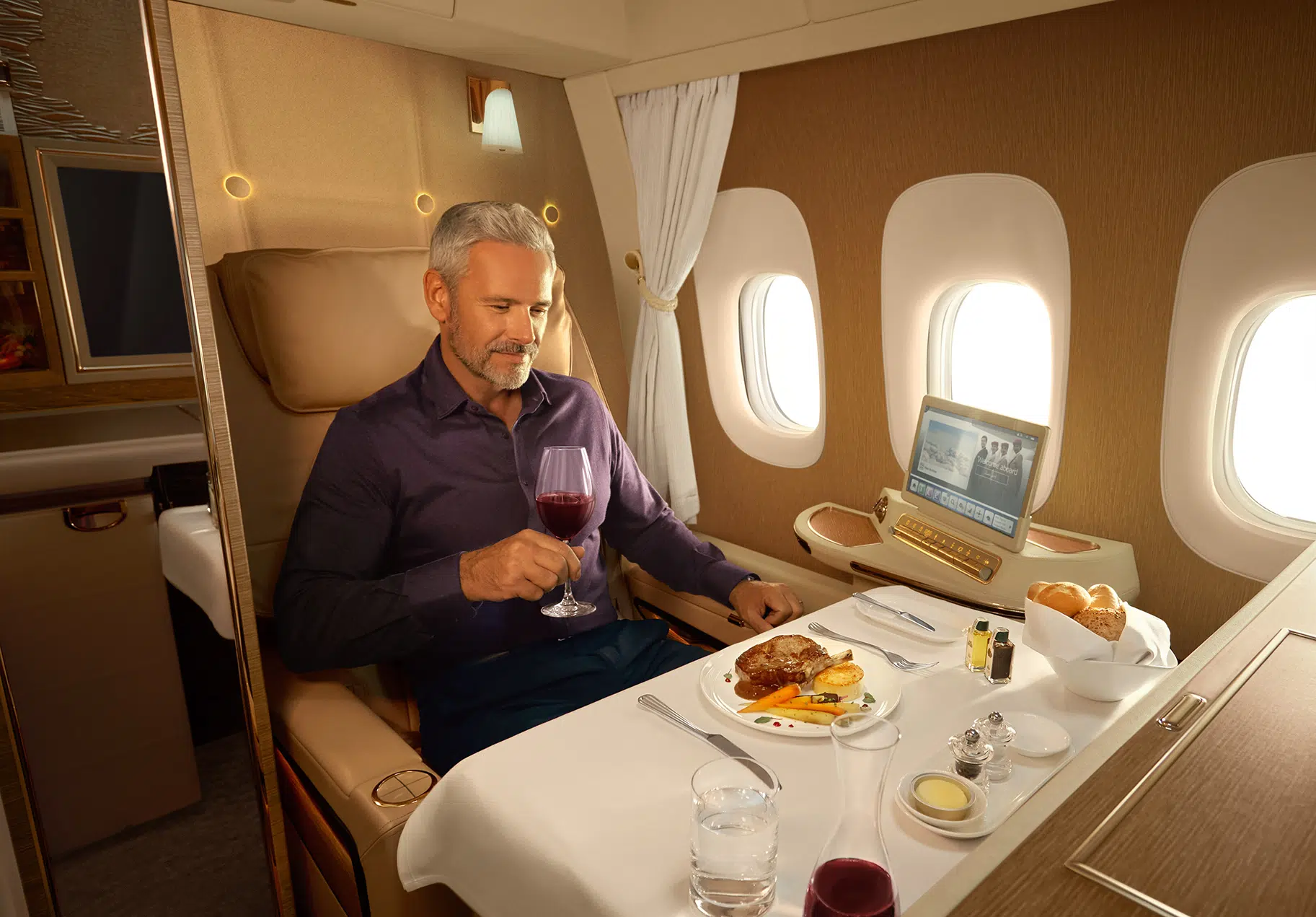
From Montrachet and First Growth Bordeaux to bottles being held until 2037, Emirates has quietly built one of aviation’s most ambitious wine programs, cellaring millions of bottles years before they ever reach the cabin.
Somewhere in France, around six million bottles of wine are ageing for flights that have not yet taken off.
For Emirates, wine is not simply an onboard amenity. It is a long-term investment in timing, provenance and experience, one that has seen the airline commit more than USD 1 billion to its wine program since 2006. Over the past year alone, that investment has exceeded AED 186 million, reinforcing a cellar strategy that is unusually patient by aviation standards.
Selected vintages are purchased years before they are ready to drink, then held in professional facilities in France until Emirates believes they have reached the right point in their evolution. Some bottles will remain there for more than a decade. Others are not expected to be poured until 2037.
The scale is impressive, but the names now entering the collection are even more telling. Emirates is expanding its white Burgundy holdings with Premier and Grand Cru wines that include Montrachet 2011, Chevalier-Montrachet 2013 and Corton-Charlemagne 2014. Red Burgundy Grand Crus from Échezeaux, Clos de Vougeot and Chambertin are also joining the program, bringing some of Burgundy’s most coveted appellations into the airline’s long-range cellar plan.
Bordeaux is equally prominent. Looking further ahead, Emirates plans to introduce a number of First Growth wines from estates including Château Mouton Rothschild, Château Margaux and Château Haut-Brion, alongside Château d’Yquem and Château Cheval Blanc.
The airline currently serves 36 different French wines and Champagnes across its cabins, but selecting wine for service at 35,000 feet is not as straightforward as assembling a prestigious list on the ground. Cabin conditions can alter the perception of aroma, fruit and structure, which means Emirates evaluates wines according to how they perform both before departure and at altitude.
Fruit concentration, acidity, tannin, oak integration and maturity all matter. So does time.
The airline’s holdings include vintages dating back to 2003, many acquired well before they were ready to be served. Bordeaux destined for Business Class is typically aged for at least eight to ten years, while bottles intended for First Class may mature for 12 to 15 years before release. Until then, they remain in professional French cellars, awaiting the moment Emirates decides they are ready for service across its network.
That degree of planning gives the program an unusual sense of continuity. A bottle selected today may not appear on a wine list for another decade, making the cellar less a stockroom than a rolling archive of future drinking.
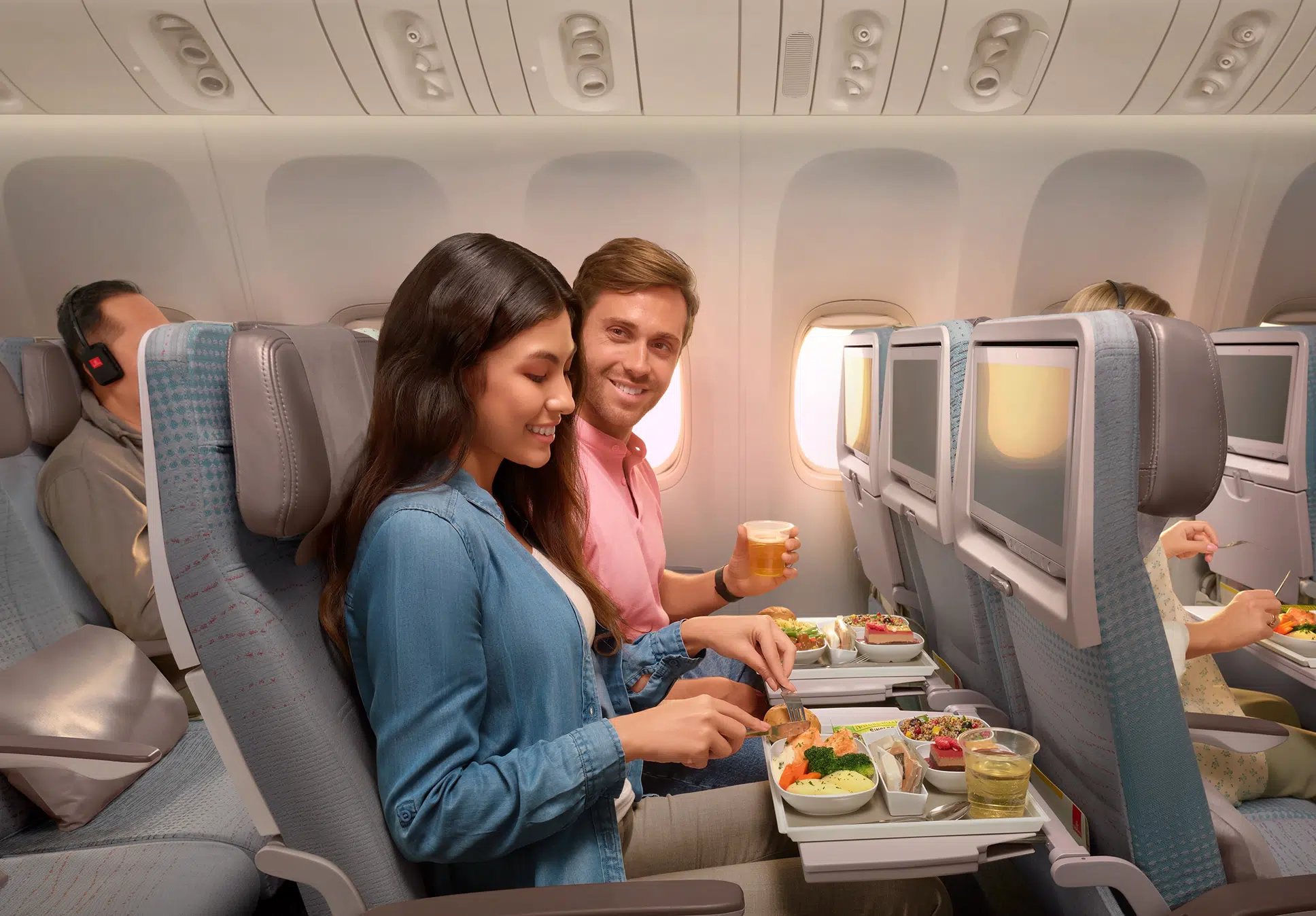
Each of Emirates’ four cabins has its own wine list, with selections refreshed every two weeks. Economy passengers are offered a red and a white, with recent choices including wines from M. Chapoutier and Domaines Barons de Rothschild, as well as a South African Sauvignon Blanc from the Gabb family and a red from Antinori’s Santa Cristina estate.
Premium Economy moves into more elevated territory, pairing premium red and white wines with vintage sparkling wine. Recent selections have included Château La Garde 2011, Cloudy Bay Sauvignon Blanc and Domaine Chandon 2016, the latter served exclusively in the sky by Emirates within its Premium Economy cabin.
In Business and First Class, the wine program becomes more geographically nuanced. Emirates divides its lists across six regions: the UK and USA, Europe, Africa, the Middle East, Australasia and Asia, allowing the airline to tailor selections to individual routes while introducing passengers to wines connected to the destinations they are visiting.
The cellar also extends beyond still and sparkling wine. Aged Ports are part of the collection, including Graham’s 1979 Tawny Port and a 1981 vintage from Dow’s, adding another layer of maturity to a program already defined by long-term thinking.
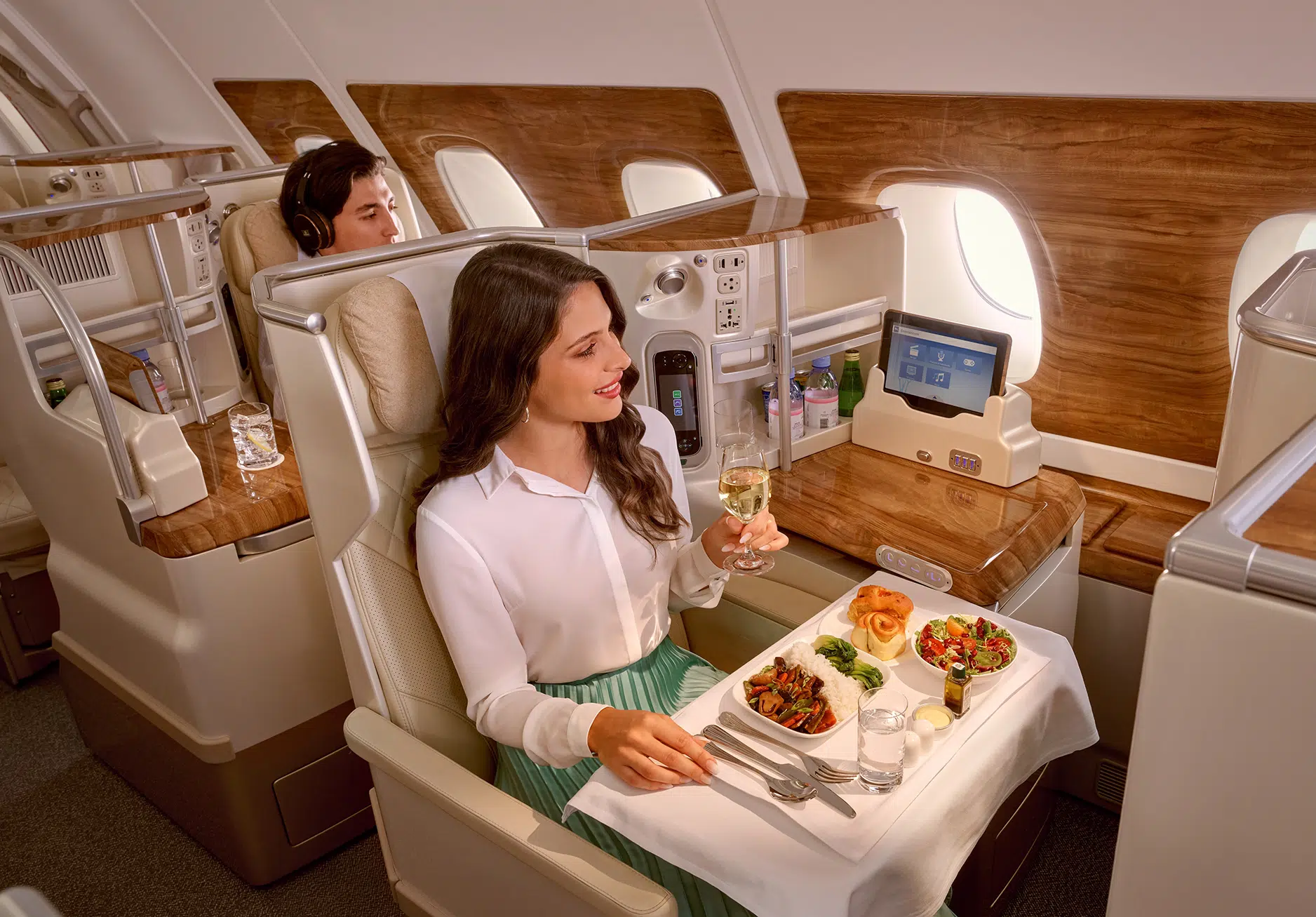
Wine, of course, is only one element of Emirates’ wider effort to elevate its onboard experience. The airline is refurbishing more than 120 aircraft, introducing new menus, expanding its vegan offering and continuing its unlimited caviar service for First Class passengers.
But the wine program may be the clearest expression of how seriously Emirates approaches luxury in the air. Rather than buying exclusively for immediate consumption, the airline is laying down vintages, waiting for them to evolve, and designing future cabin experiences years in advance.
With rare Burgundy, mature Bordeaux, and millions of bottles quietly ageing in France, Emirates is doing something few airlines attempt at this scale: cellaring not just wine, but the future of its First and Business Class experience.