In the South Moravian village of Čejkovice, wine has been part of the landscape for centuries, but beneath the vineyards lies something rarer still: a medieval cellar network first associated with the Knights Templar and now newly revived for a contemporary generation of wine lovers.
The Templars are recorded in Čejkovice as early as the 1230s, when they established a fortress and extensive wine cellars that helped shape the region’s viticultural identity. Today, those underground corridors remain among the most evocative reminders of that history. Roughly 650 meters of cellar passages are believed to survive, with approximately 400 meters currently accessible to visitors.
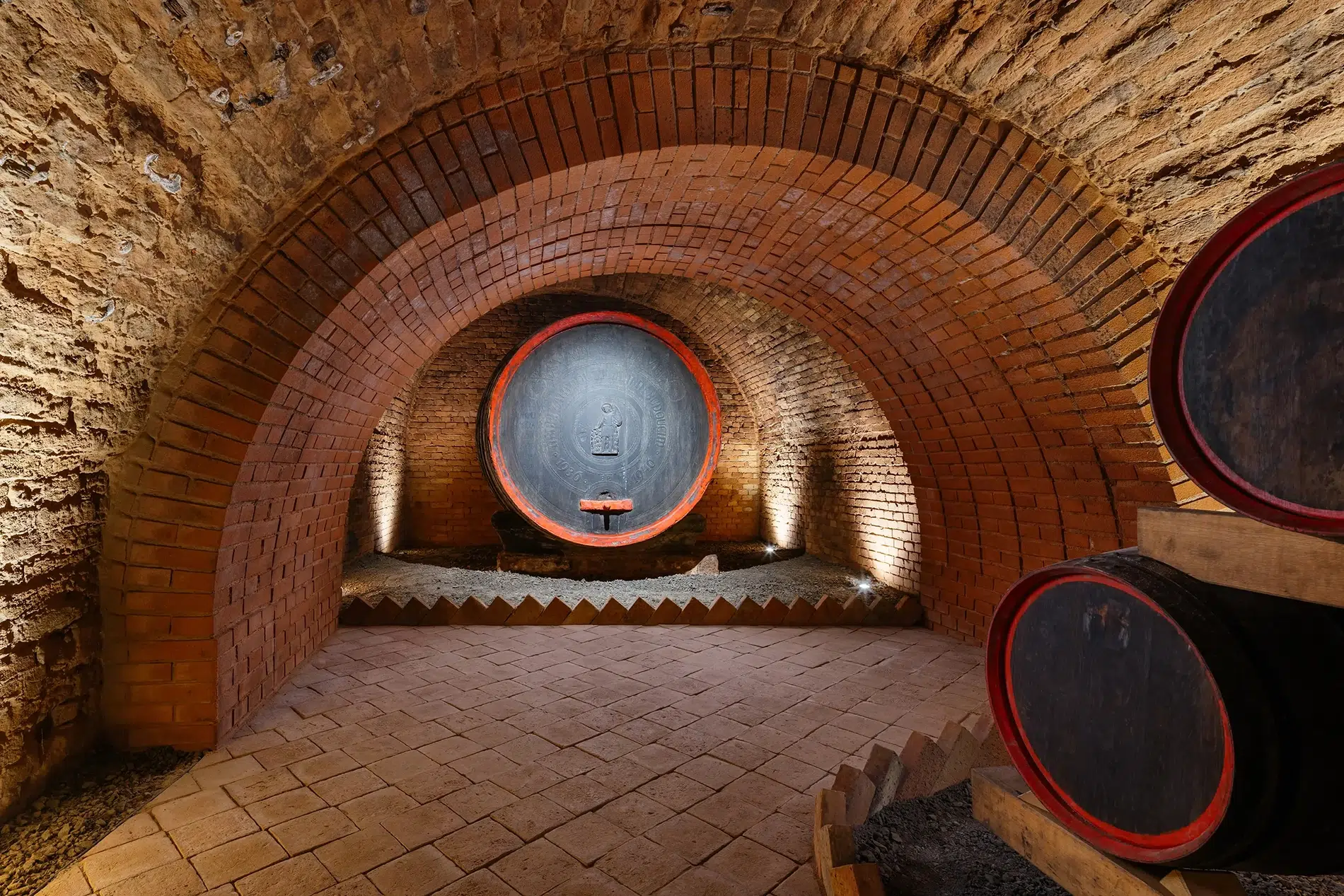
The latest revitalization, completed in 2026, was led by Czech designer Petr Novague for the Templářské Sklepy Čejkovice wine cooperative. Rather than attempting to remake the cellars, Novague approached the project with restraint, removing later additions and decorative elements that obscured the original architecture and allowing the historic stone and brick vaults to regain their visual authority.
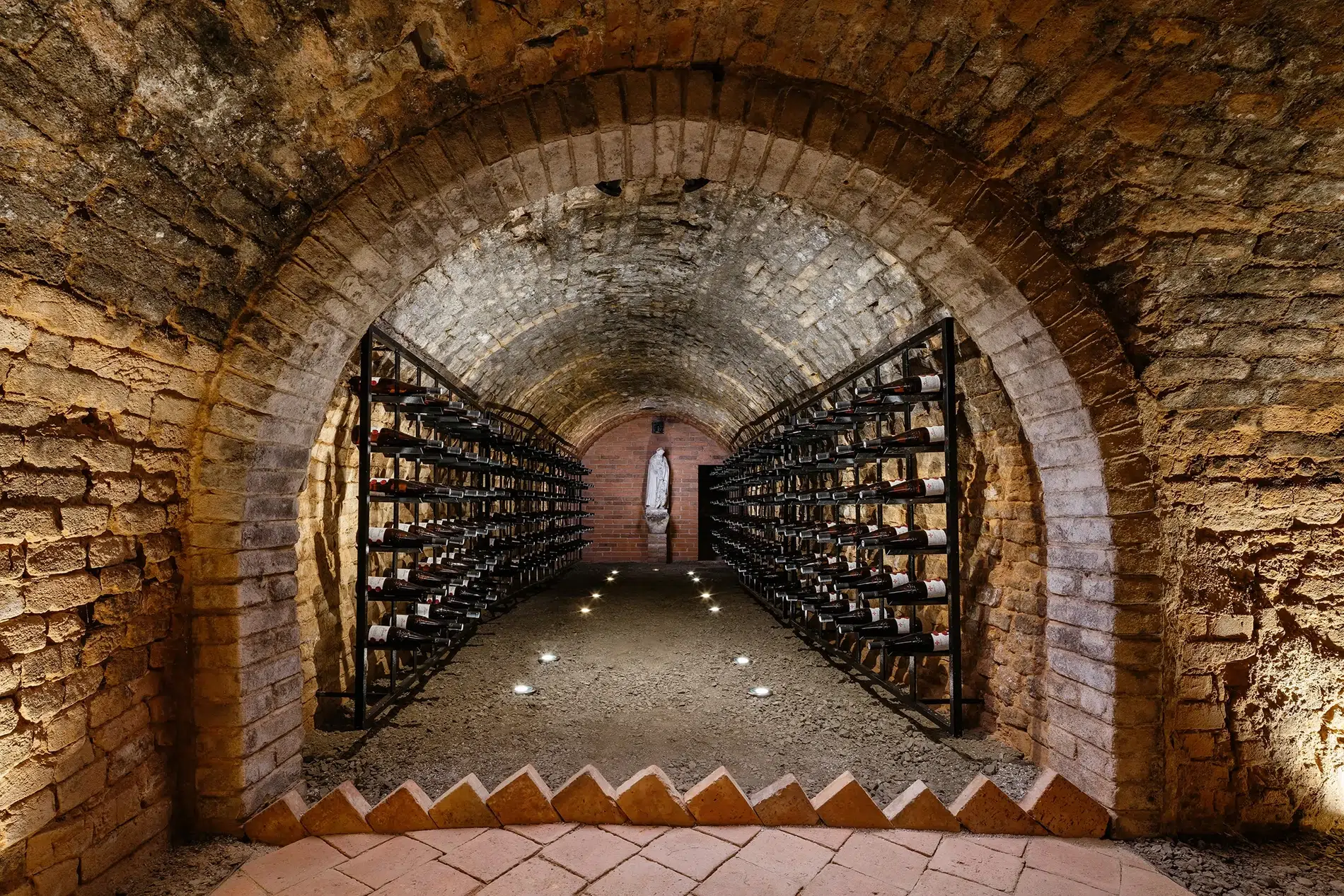
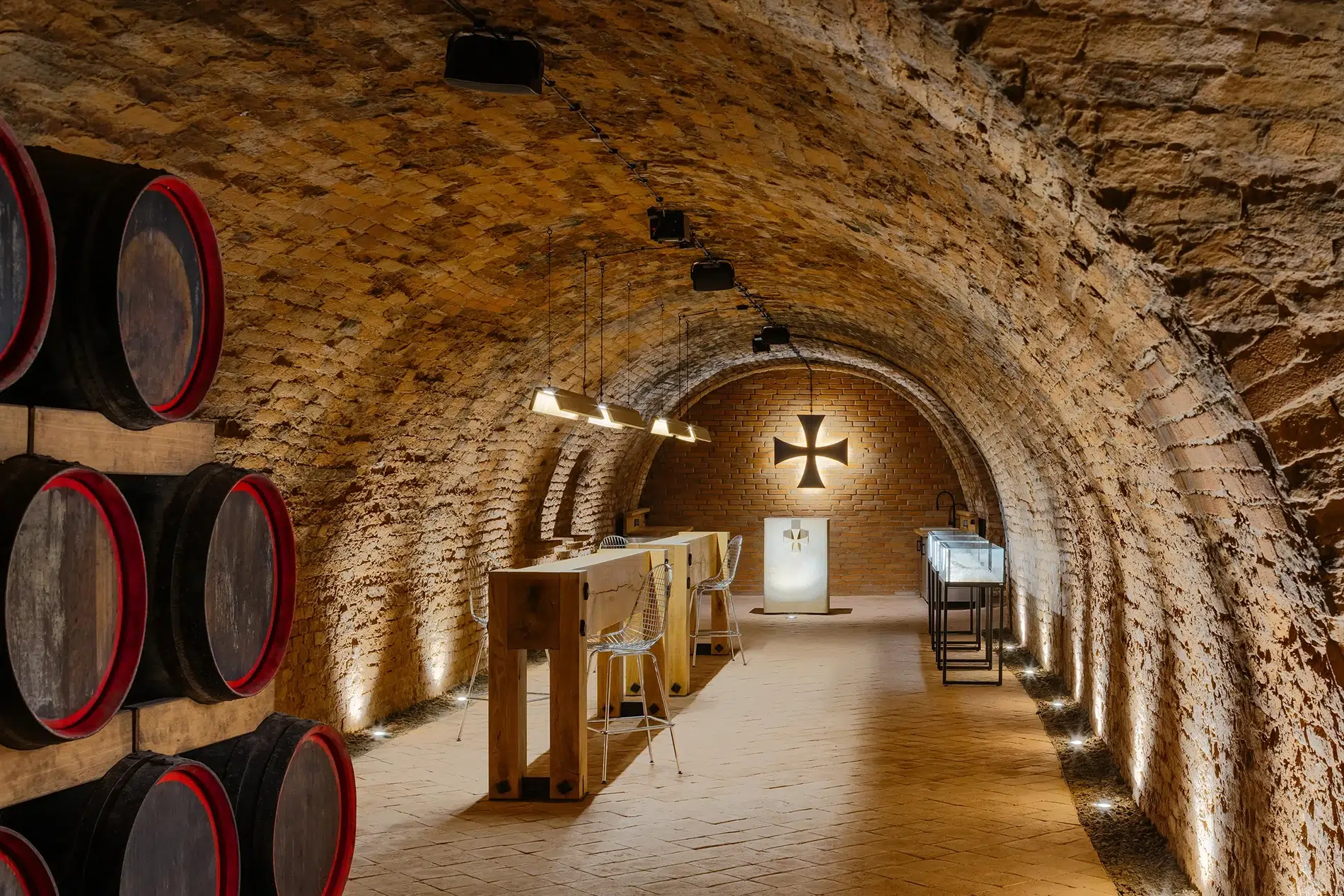
That sense of authenticity is central to the experience. The intervention introduces a clearly contemporary layer without competing with the medieval setting. Solid oak tables, steel elements, black-steel wine archive shelving and terracotta flooring create a material palette that feels deliberately tactile and understated. Atmospheric lighting draws attention to the texture of the vaults, while a subtle musical backdrop guides guests through the cellar’s long narrative, from its Gothic origins and Jesuit era to its modern role as a working wine destination.
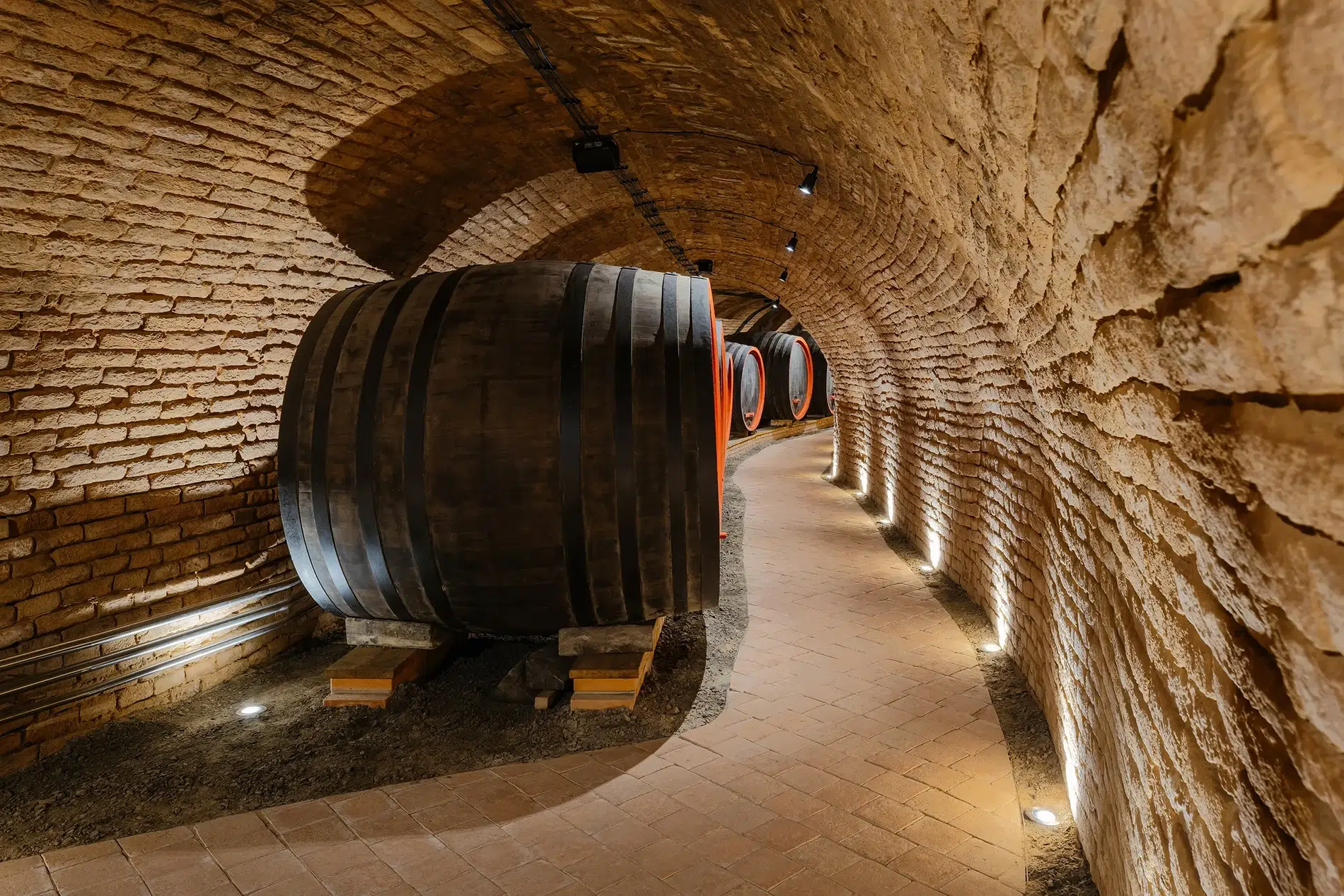
The contrast between old and new is particularly effective in the tasting spaces, where traditional craftsmanship meets a more minimal modern language. Wood, metal and sandstone recur throughout the interiors, with polished steel surfaces placed against substantial timber and forged details. At one point, a sandstone monolith fractured into the form of a Templar cross becomes an almost sculptural focal point, reinforcing the symbolism of the site without resorting to theatrical historicism.
Novague’s work extends beyond the architecture. The designer also created a new wine bottle for Templářské Sklepy whose silhouette references the Templar cross, allowing the project’s visual identity to travel beyond the cellar itself. It is a small but telling detail: the same design language that shapes the visitor journey is carried into the object ultimately taken home.
The winery itself is far from a static heritage attraction. Templářské Sklepy Čejkovice traces its cooperative roots to 1936, when local growers joined together to process and sell their harvests. Re-established after the political changes of the late 20th century, the cooperative now brings together approximately 340 members and continues to process grapes from surrounding vineyards, making the cellars both a cultural landmark and a functioning part of South Moravia’s wine economy.
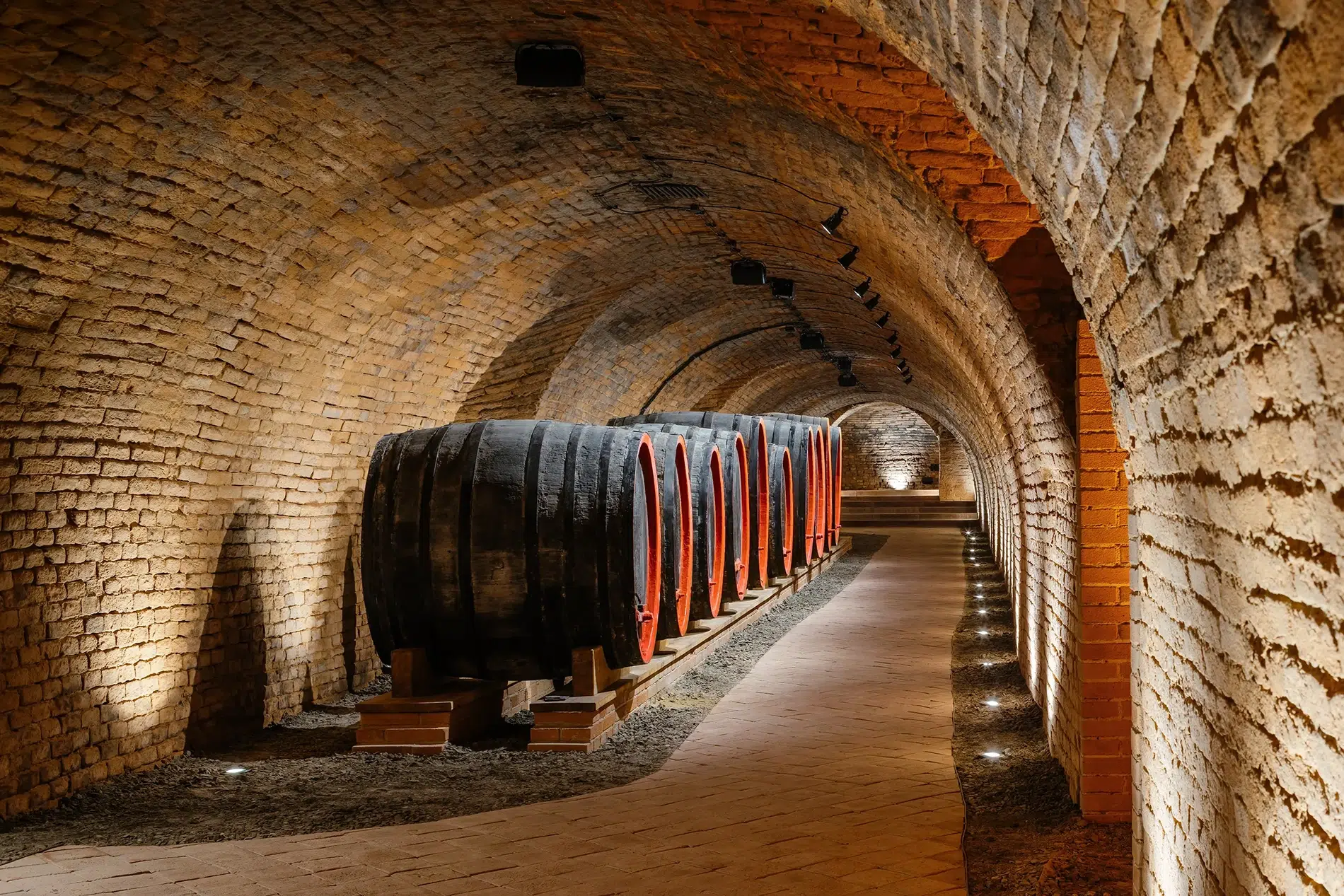
That living continuity gives the project its greatest luxury. There is no attempt to turn the underground complex into a polished spectacle detached from its origins. Instead, visitors encounter history through material, atmosphere and ritual: cool stone corridors, oak tasting tables, carefully stored bottles and wines tied directly to the surrounding landscape.
It is also what makes Čejkovice compelling as a destination. In an era when luxury increasingly favors authenticity over excess, the Templar cellars offer something difficult to manufacture: a genuine sense of age, place and continuity. The experience is not simply about tasting wine in a dramatic room. It is about drinking within a space that has carried wine culture through nearly nine centuries.
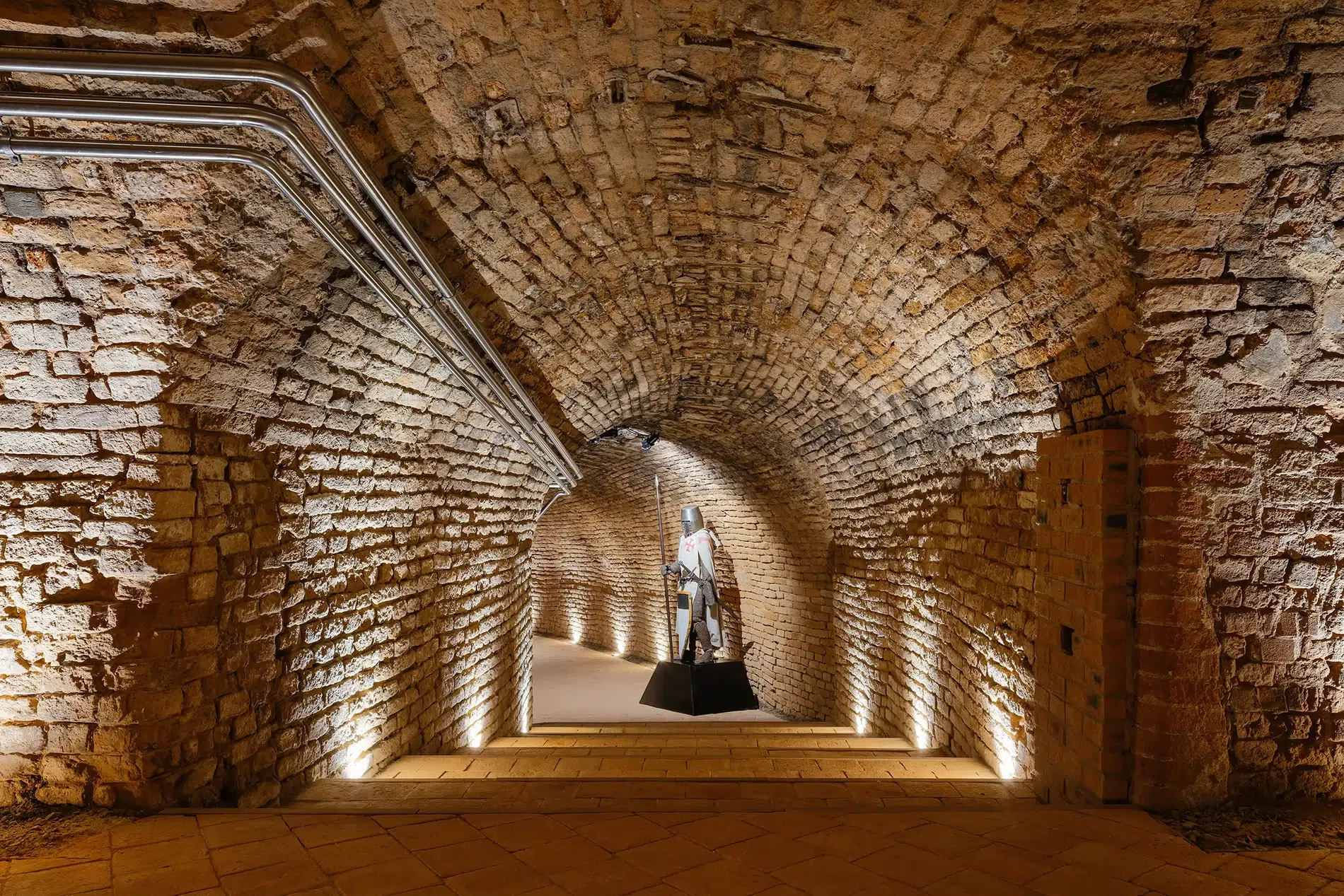
The revitalization succeeds because it recognizes that the most powerful element was already there. Novague’s design does not attempt to outshine the medieval architecture; it clarifies it. And in doing so, Templářské Sklepy becomes something more than a preserved cellar. It becomes an elegant conversation between history, wine, and contemporary design, one unfolding quietly beneath the vineyards of South Moravia.