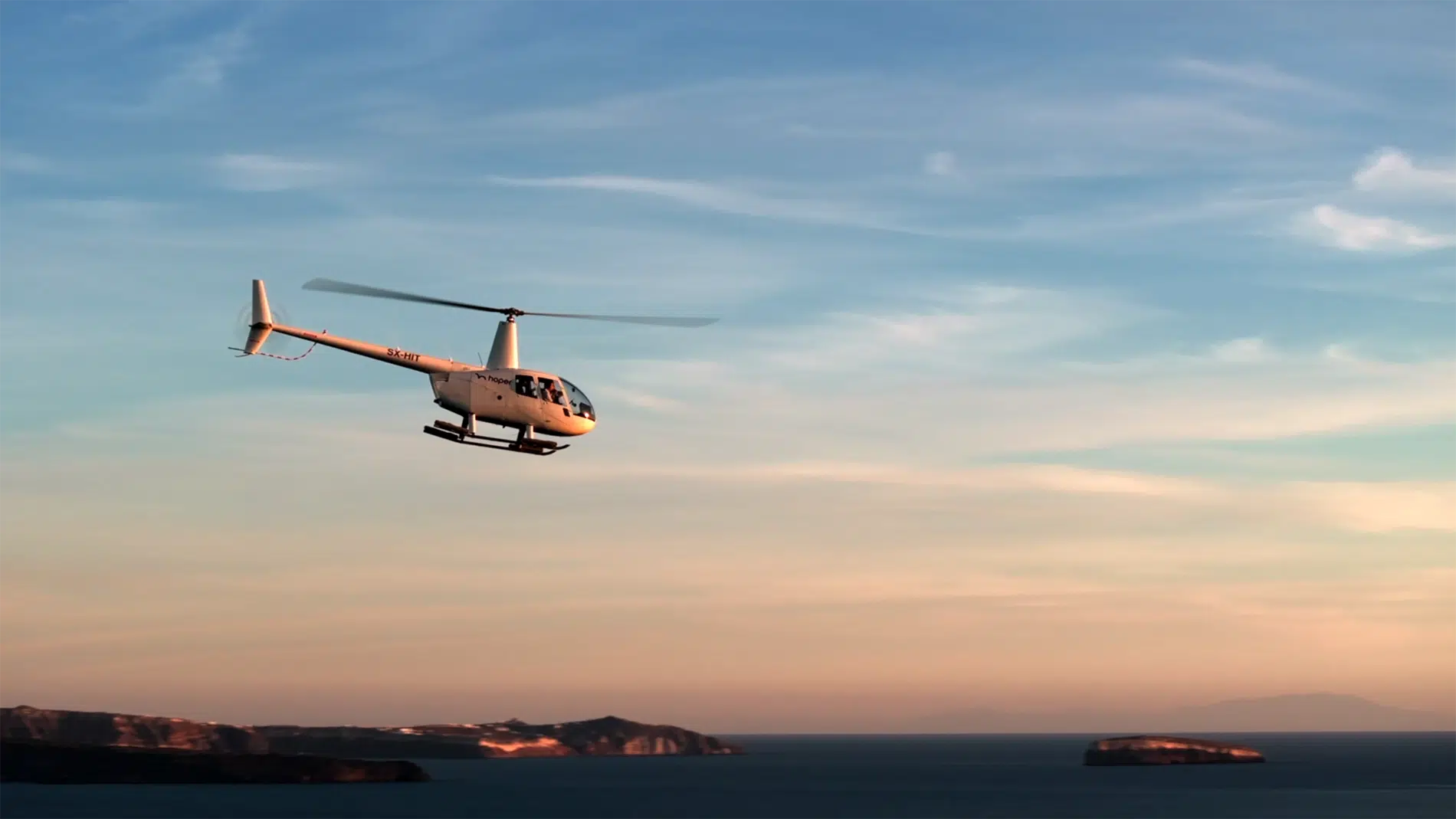
There are arrivals, and then there are entrances. At the Monaco Yacht Show, where Port Hercule fills with some of the most extraordinary yachts on the planet, and understatement is largely left at the border, there is really only one way to make the latter: by helicopter.
A chauffeur-driven Rolls-Royce still has its place on the Riviera. It is elegant, civilized, and considerably more persuasive than arriving in a Fiat. But even the finest motorcar loses some of its theatre when compared with descending over Monaco beneath a spinning rotor, the Mediterranean flashing below and the principality suddenly appearing between sea and mountains.
Helicopters possess a peculiar ability to make even a short journey feel important. The experience begins before the aircraft has moved an inch. You walk toward it slightly bent beneath the rotors, climb aboard, fasten the headset, and hear the pilot introduce himself through the intercom. Then comes the moment unique to rotary flight: no runway, no long acceleration, simply a vertical departure as the ground falls away beneath you and the world rearranges itself.
It is difficult not to feel something, and perhaps that is why helicopter travel remains one of luxury’s most visceral indulgences. Private jets are faster and yachts infinitely more romantic, but helicopters place you unusually close to the geography below. They skim rather than cross landscapes, turning familiar destinations into something altogether different.
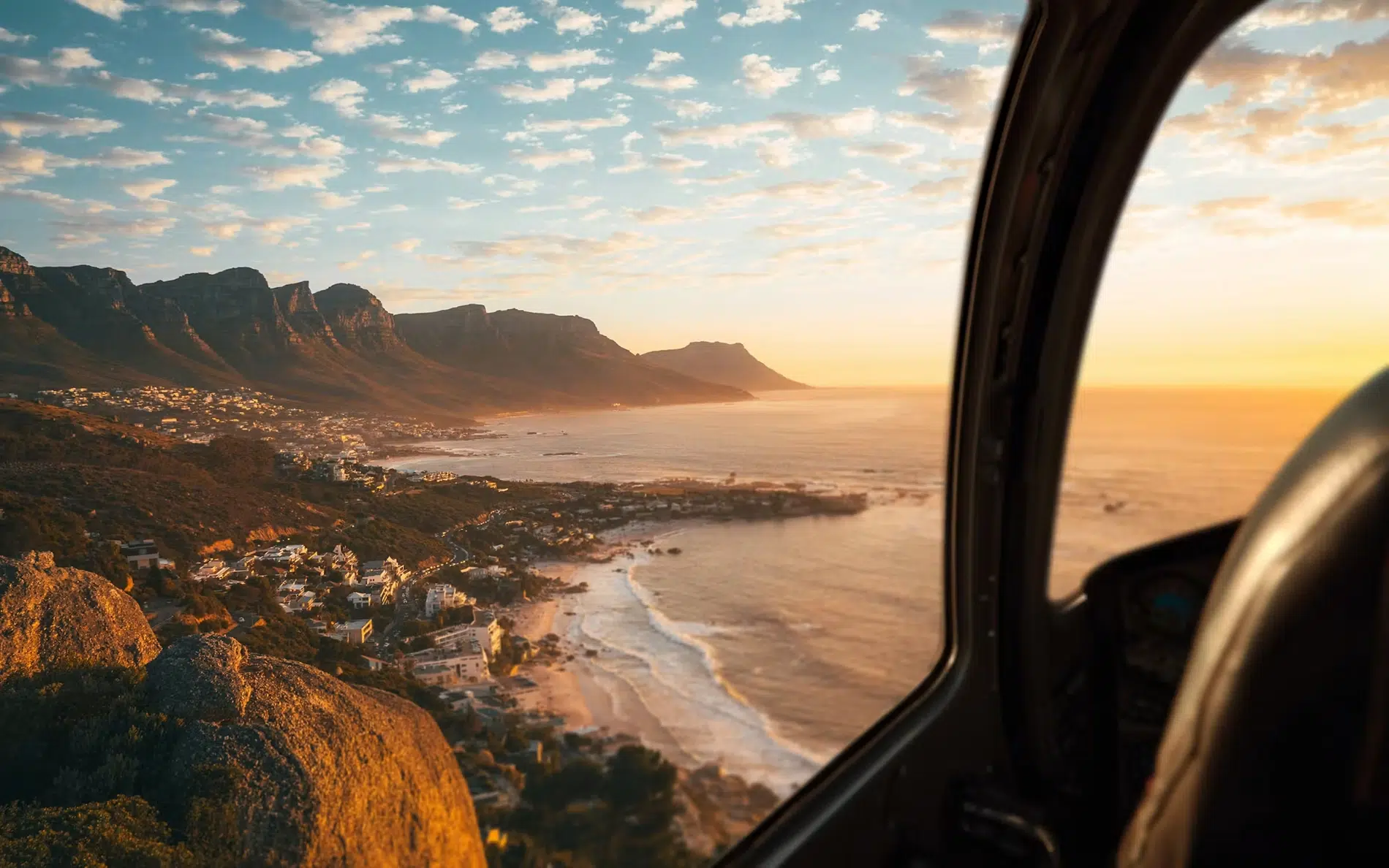
Dubai’s Palm and World islands become feats of geometry from above, while the Burj Al Arab and Burj Khalifa acquire an entirely different sense of scale. The Grand Canyon looks less like scenery than the earth torn open. Cape Town’s Table Mountain and Twelve Apostles become a procession of rock and ocean, while New York reveals the Empire State Building and Statue of Liberty from perspectives denied to almost everyone walking the streets beneath them.
Then there is the French Riviera, which from the air looks suspiciously as if it were designed specifically for this purpose. The Côte d’Azur unfurls in blue water, ochre rooftops, green hillsides, cliff roads, villas and marinas, all arranged with the sort of improbable visual confidence that explains why the world has been trying to arrive here stylishly for more than a century.
During Monaco Yacht Show week, style happens to have a practical advantage too. Traffic along the Riviera can transform a short road transfer into a prolonged exercise in patience, while the helicopter from Nice Côte d’Azur Airport to Monaco Heliport takes approximately seven minutes. Monaco to Cannes is around 12 minutes, turning roughly 50 kilometers of coastline into little more than an airborne aperitif.
For yacht owners, charter guests, brokers, shipyard executives and visitors moving between appointments during one of the busiest weeks in Mediterranean yachting, those minutes matter. Yet efficiency is only half the attraction. The other half arrives as Monaco comes into view, and Port Hercule appears below, crowded with superyachts whose proportions suddenly make more sense from the sky.
There is something wonderfully satisfying about seeing the enormous white “H” of the heliport and realizing that, on this occasion, it is actually meant for you. By the time the skids touch down, the transfer has already become part of the occasion rather than merely the means of getting there.
That combination of practicality and theatre is precisely what Athens-based hoper has set out to make easier to access. The company operates a helicopter-travel marketplace that brings private charter options together online across Greece, France, Italy, Switzerland and the United States, simplifying a sector that has historically been fragmented, opaque and strangely resistant to the sort of digital convenience now expected elsewhere in luxury travel.
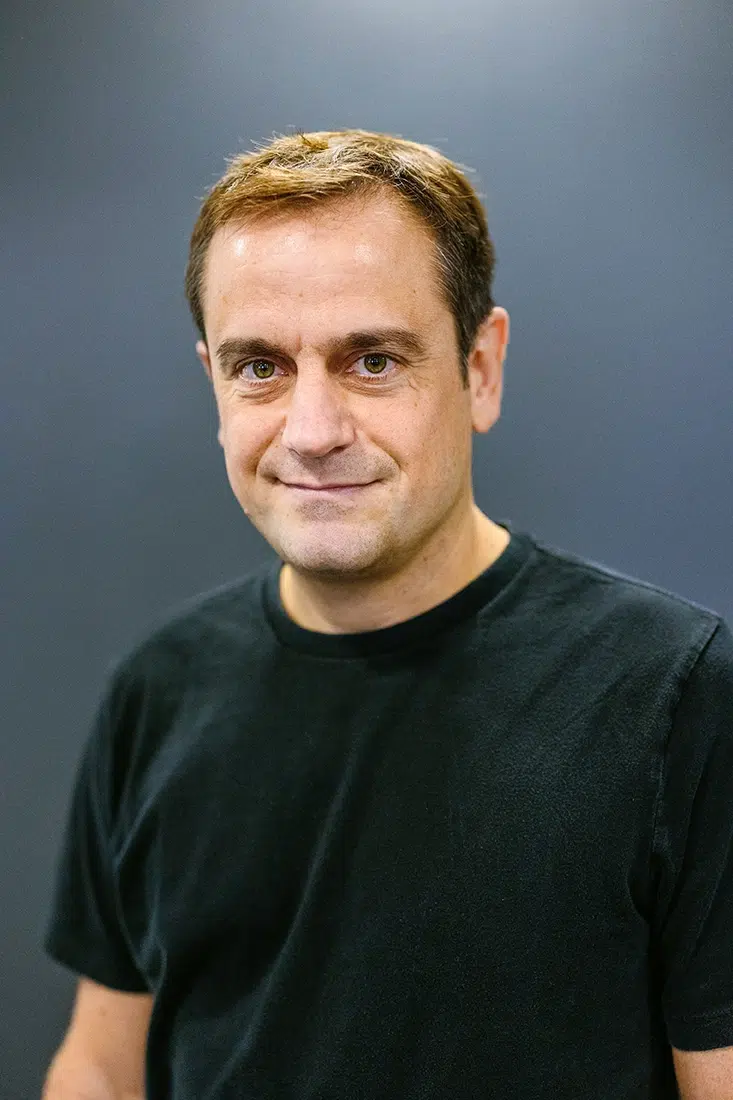
The concept sounds obvious only because someone finally built it. Founder and CEO Dimitris Memos arrived at the idea after a helicopter flight in Greece convinced him that the aircraft were dramatically underused and, more importantly, almost invisible online. Within 18 months, he had earned his pilot’s license, bought a helicopter and founded hoper, drawing on his previous experience as CEO of the global shipping-intelligence platform MarineTraffic.
It was an unusually decisive response to a good flight, but the logic becomes clear in Greece. Geography has always made the helicopter an appealing alternative to ferry schedules and long sea crossings, particularly for travelers moving between islands where distance is not the only issue. Hoper now operates a shared-flight network across 15 destinations and more than 50 routes, including Athens, Santorini, Mykonos, Milos, Ios, Sifnos, Tinos, Patmos, Naxos and Koufonisia.
Island-hopping by ferry certainly has its charms, particularly if one enjoys queues, timetables and watching a harbor disappear slowly behind you. A helicopter offers another interpretation. The Aegean becomes part of the spectacle rather than the inconvenience between destinations, with whitewashed villages, volcanic coastlines and impossible shades of blue unfolding below the cabin.
When did a ferry last give you an adrenaline spike?
Hoper is now strengthening its position at the more rarefied end of the market with the addition of two twin-engine Airbus helicopters to its Greek fleet. The expansion responds to growing private-charter demand and, more specifically, to the expectations of luxury hospitality partners whose guests prefer—or in some cases require—twin-engine aircraft.
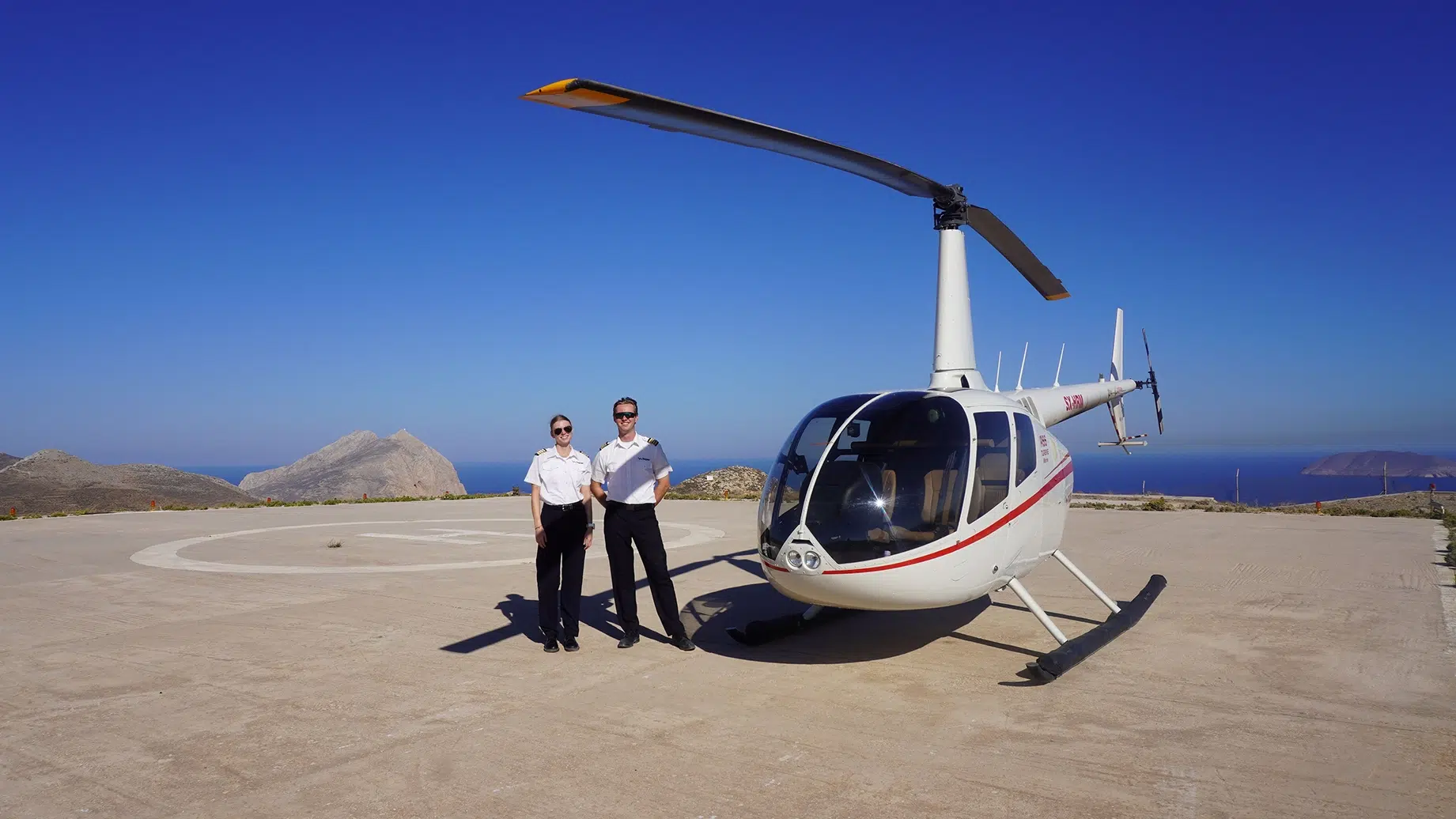
“Our luxury hospitality partners Scott Dunn, Aman, Mandarin Oriental and Original Senses share one thing: their clients fly twin-engine only,” says Dimitris Kossyfas, hoper’s chief commercial officer. “We were already meeting that demand through third-party operators, so bringing our own twin-engine aircraft into the hoper fleet was the natural next step.”
One of those aircraft is the five-seat Airbus AS355 Écureuil, better known as the Twin Squirrel. Powered by twin Rolls-Royce engines and offering a range of approximately 437 miles, it provides an appropriately polished way to move between islands and resorts. Even in aviation, an industry not known for modest nomenclature, there is something irresistible about being able to say that one crossed the Aegean in a Twin Squirrel.
The second is the six-seat Airbus H135, powered by twin Safran engines and equipped with advanced anti-vibration technology. With a range of around 349 miles and a reputation for quiet operation, it is particularly well suited to families, resort transfers and multi-stop itineraries where comfort begins to matter almost as much as speed.
Both aircraft join Hoper’s broader network of vetted operators flying Robinson, Bell, Airbus and Leonardo models. That wider network is central to the company’s appeal. Hoper is not attempting to turn helicopter travel into something ordinary; rather, it is trying to make the extraordinary considerably easier to arrange.
Which brings the story neatly back to Monaco.
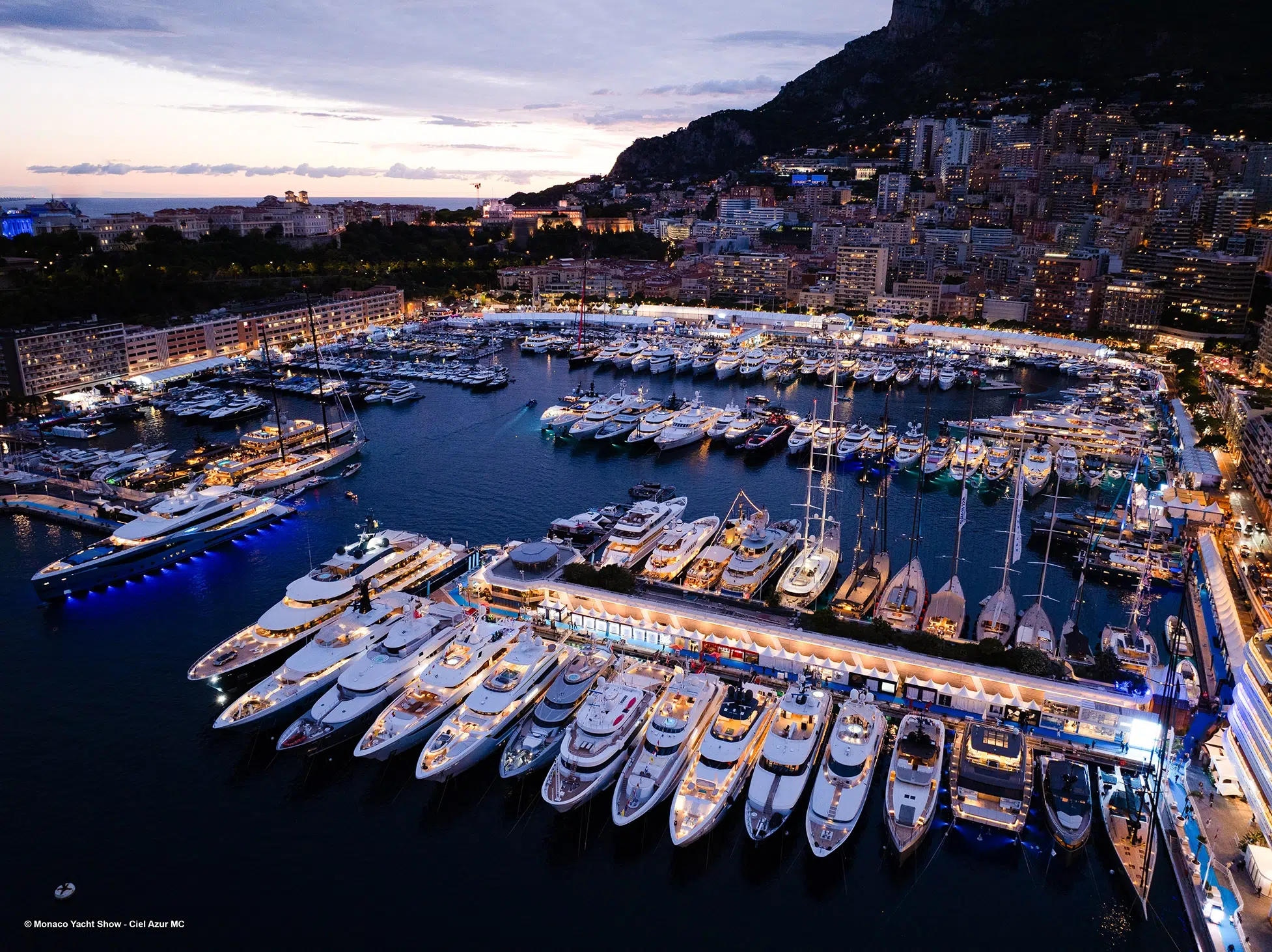
The Monaco Yacht Show is not a place where scale requires much explanation. Port Hercule becomes a temporary city of floating architecture, where shipyards, designers, brokers, owners and prospective buyers move between vessels whose dimensions increasingly challenge the distinction between yacht and ship.
From the quay, the sight is impressive. From the air, it is almost absurd. Superyachts stretch across the harbor like architectural models enlarged beyond reason, masts rise above apartment buildings, tenders score tiny wakes between enormous hulls, and the entire show becomes legible in a way it simply cannot from ground level.
For several minutes before landing, a helicopter gives you perhaps the finest private viewing platform at the Monaco Yacht Show. It also provides a reminder that some forms of luxury are still capable of producing genuine excitement rather than merely greater levels of comfort.
That may be the helicopter’s enduring appeal. Luxury has always been partly about eliminating inconvenience, but the best luxury occasionally replaces inconvenience with something memorable. A helicopter does both. It avoids the traffic, shortens the transfer, and turns transportation into the first experience of the day.
Upward mobility, in this case, really is vertical mobility.
The chauffeur’s peaked cap and white gloves give way to a pilot’s epaulettes. The rear seat of the limousine becomes a window over the Mediterranean. Instead of approaching Port Hercule through Monaco’s streets, you descend toward it with the entire yacht show spread beneath you, the harbor packed with some of the most extravagant engineering ever sent to sea.
There may be more discreet ways to arrive at the Monaco Yacht Show, and there are certainly cheaper ones. But as the rotors slow and you step onto the heliport with the Mediterranean behind you and the world’s most extraordinary yachts waiting across the principality, it becomes very difficult to argue that there is a better entrance.