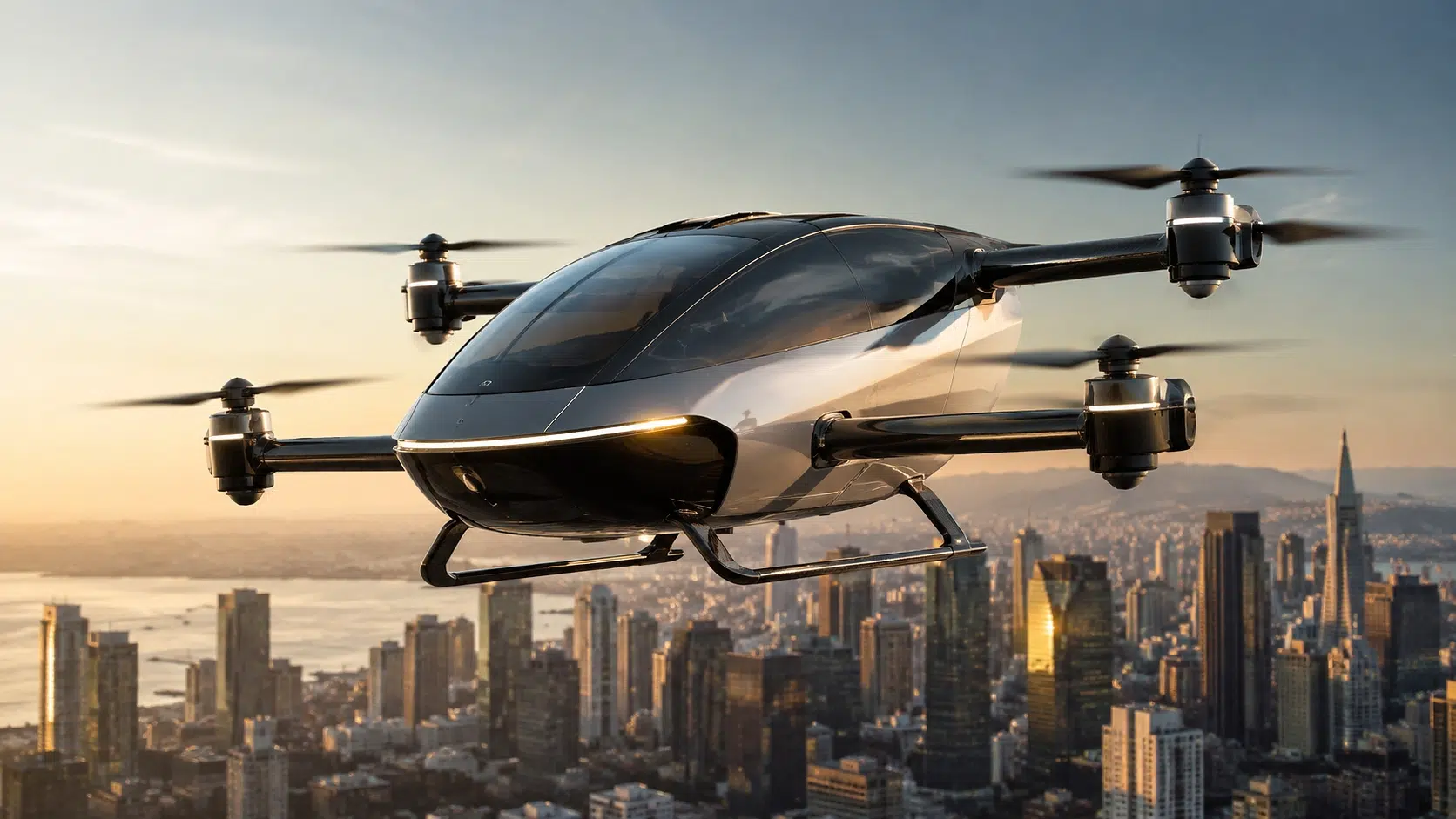
Private aviation has always been about collapsing distance. A helicopter can turn a traffic-choked airport transfer into a matter of minutes, connect a yacht to a city center, or make a remote resort feel surprisingly accessible. Now, SkyMatch Group is preparing for a future in which that same journey may no longer depend on a single aircraft type. The London-based private helicopter concierge is expanding its long-term strategy to include certified eVTOL air taxis and advanced air mobility services as those technologies move toward commercial operation.
The move is less about abandoning helicopters than broadening the definition of vertical travel. SkyMatch already operates as a centralized concierge for private helicopter charter across international destinations, connecting travelers and businesses with independent licensed operators rather than owning aircraft itself. Its next step is to apply that same model to an emerging aviation landscape where helicopters, electric vertical take-off and landing aircraft, ground transportation and new vertiport networks may eventually work together as part of one journey.
That distinction matters. The eVTOL sector has generated enormous attention, but commercial passenger service remains dependent on certification, operating approvals, infrastructure and local regulations. SkyMatch is not presenting electric air taxis as a product available for immediate booking. Instead, it is positioning itself for the moment when they become a viable part of private travel, evaluating future markets, monitoring certification progress, identifying potential operators and studying the vertiport infrastructure that will determine where these aircraft can realistically fly.

For luxury travelers, the appeal is easy to understand. Private aviation is extraordinarily effective, but it can also be fragmented. One operator may serve the Côte d’Azur, another Miami, another the Greek islands, while aircraft capability, local permissions and availability vary from destination to destination. The arrival of eVTOLs is likely to add another layer of complexity, with different cities using different aircraft, operating rules, range limitations and landing infrastructure. SkyMatch’s answer is to make the traveler think less about aircraft and more about the journey itself.
In practical terms, that could mean a guest arriving at a major international airport and being transferred by eVTOL to a city vertiport, then continuing by helicopter to a yacht, island retreat or remote estate. In another market, the entire trip might remain a conventional helicopter transfer. The point is not that one technology replaces another, but that the concierge layer sits above them, selecting the most appropriate option according to distance, destination, passenger requirements and local infrastructure.
It is an approach that reflects how sophisticated travelers already think. Few people planning an exceptional trip are emotionally attached to the mechanics of transportation; they are attached to time, privacy, access and ease. A five-star hotel can arrange the suite, a yacht manager can coordinate the vessel, and a private aviation concierge can increasingly become responsible for the airspace in between. SkyMatch’s vision is to make that movement feel seamless even as the technology behind it becomes more varied.
Helicopters will remain essential to that equation. Their ability to reach remote locations, serve longer routes, handle yacht transfers and operate where dedicated vertiport infrastructure does not exist gives them an advantage that early eVTOL fleets may not immediately match. For executive travel, offshore connections, resort access and missions requiring greater range or flexibility, conventional rotorcraft are likely to remain indispensable.
Electric air taxis, however, could become particularly compelling for shorter urban and regional journeys. Airport-to-city transfers are an obvious example, especially in destinations where ground congestion regularly turns a short geographic distance into a long, unpredictable drive. Business districts, major resorts and event destinations could also benefit if vertiport networks develop around locations where time-sensitive travelers already move in significant numbers.
That is where SkyMatch’s model becomes more interesting than a conventional charter platform. Rather than building its identity around one aircraft category, the company is framing itself around access. Its stated philosophy is simple: the traveler provides the journey, and SkyMatch provides one point of contact for the most suitable form of vertical aviation available in that market. Today that means helicopters. Tomorrow, in selected destinations, it could mean helicopters and eVTOLs working side by side.
For the luxury hospitality world, the implications are potentially significant. Hotels, resorts, concierge firms, yacht managers, travel advisors and destination management companies already depend on reliable private transportation partners when arranging high-value itineraries. Adding electric air taxis to that ecosystem could create new possibilities for shorter transfers and city connections while preserving helicopters for longer, more demanding routes.
The same applies to corporate travel. Executives moving between airports, financial districts, convention centers, and major events are precisely the kind of passengers for whom saving an hour on the ground can have disproportionate value. If eVTOLs eventually become available at scale in major commercial centers, they could add a new option between conventional helicopter charter and chauffeured ground transportation.
Yet the most important element of SkyMatch’s strategy may be its restraint. The company is careful not to suggest that uncertified aircraft are already carrying passengers or that widespread electric air-taxi service is imminent everywhere. Future service will depend on aircraft certification, licensed operator approvals, local aviation rules, infrastructure and commercial availability. That measured positioning gives the concept more credibility than the futuristic language that has sometimes surrounded advanced air mobility.
The private aviation market has seen similar transitions before. New aircraft categories, operating models and digital booking platforms have changed how clients access flight without necessarily changing what they value most. Reliability, discretion, flexibility and time remain the true luxuries. Technology succeeds when it improves those qualities rather than asking the traveler to care about the technology itself.
SkyMatch’s strategy is essentially built around that principle. The company is not trying to persuade a traveler to choose a helicopter over an eVTOL, or an eVTOL over a car. It is preparing to make that decision in the background, based on what makes the journey work best.
That could prove particularly relevant as luxury travel becomes more geographically ambitious. A guest may begin the morning in a city hotel, board a yacht by afternoon and finish the day at a remote coastal property. An executive may need to move between an airport, a business district and an event venue without surrendering hours to traffic. In both cases, the future of private mobility may be less about one extraordinary aircraft than about how intelligently different forms of transportation are connected.
For now, SkyMatch remains rooted in private helicopter charter, and eVTOLs remain a developing part of the aviation landscape rather than an everyday service. But the direction is clear. As vertical mobility expands beyond the helicopter, the real opportunity may not belong solely to the aircraft manufacturers or vertiport developers. It may also belong to the companies capable of turning a complicated network of technologies, operators and infrastructure into something the luxury traveler experiences as effortless.
That is the future SkyMatch is preparing for: not simply an era of air taxis, but an era in which the aircraft matters less than the ease of getting exactly where you want to go.