
From a rare Fettercairn single malt matured in Scottish rum casks to a new generation of independent distillers, Scotland is discovering a compelling new chapter in its spirits heritage.
Scotland has spent centuries perfecting the art of whisky. Its distilleries are celebrated for their craftsmanship, distinctive character, and deep respect for tradition. Yet beyond the familiar world of single malts, another spirit is quietly finding its place. Scottish rum, once an unlikely proposition, is gaining attention for its bold flavors, inventive producers, and growing sense of identity.
The relationship between these two spirits is becoming increasingly intriguing. Whisky offers generations of knowledge in distillation and oak maturation, while rum brings a different range of flavors and creative possibilities. Their meeting feels almost inevitable, particularly in a country where the pursuit of exceptional spirits has long been part of the culture.
That connection has found an elegant expression in the Highlands. Fettercairn Distillery has partnered with Scottish rum producer Matugga to create Distillers’ Secret No. 2, a limited-edition single malt that brings two distinct traditions together. The collaboration offers a glimpse of how Scotland’s emerging rum industry may influence the future of whisky.
The story began with an unexpected discovery in Fettercairn’s warehouses. Distiller Bruce Aitken identified an ex-red wine cask whose whisky had developed a rich character reminiscent of rum and raisin fudge. After five years of maturation, the spirit already showed promise. Rather than bottle it immediately, Aitken saw an opportunity to explore its flavors further.
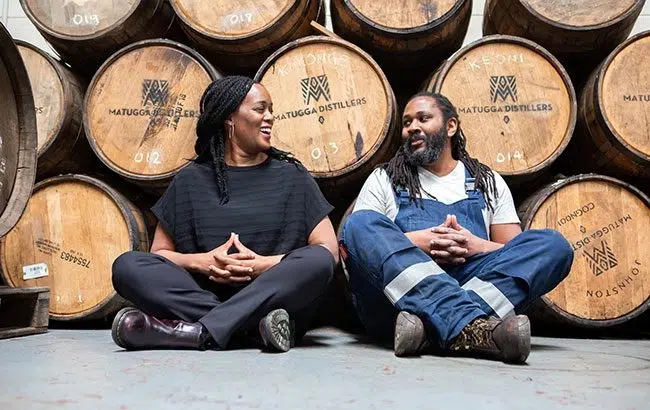
The answer came from Matugga, an independent rum distillery in Livingston, founded by husband-and-wife team Paul and Jacine Rutasikwa. Their approach combines African influences with Scotland’s distilling expertise, making them natural partners for a project built around curiosity and craftsmanship.
Fettercairn transferred the whisky into a cask previously used to mature Matuga rum. There, it spent another five years in Warehouse No. 2, developing deeper tropical notes and a more layered character. The rum-cask whisky was later married with spirit from first-fill bourbon barrels to bring balance and highlight Fettercairn’s signature fruit-driven style.
The resulting expression offers a fascinating meeting of flavors. According to the distillery’s tasting notes, aromas of grilled pineapple, soft toffee, and ginger spice lead into tropical fruit, molasses, vanilla, and citrus. Mango, guava, cinnamon, and nutmeg shape the finish, creating a profile that reflects both the Highland distillery’s character and the influence of rum-seasoned oak.
Bottled at a natural cask strength of 53.4% ABV, Distillers’ Secret No. 2 is limited to just 486 bottles. Priced at £120, it is available exclusively from Fettercairn Distillery in Aberdeenshire. For collectors, the appeal extends beyond rarity. The release captures an unusual moment in Scottish distilling, when an established whisky house is looking to a younger spirits category for inspiration.
For Matugga, the partnership carries significance of its own. Paul and Jacine Rutasikwa have helped demonstrate that rum can be produced with character and ambition on Scottish soil. Their distillery draws on African ingredients and influences, while embracing the country’s expertise in fermentation, copper pot distillation, and cask aging.
Matugga’s Golden Rum, matured in selected ex-bourbon casks, offers tropical fruit, wood spice, and a subtle smoky character. Its Spiced Rum takes a different direction, incorporating masala chai influences, black tea, ginger, natural spices, and Scottish honey. Both expressions reveal a distillery interested in creating its own style rather than simply recreating familiar Caribbean traditions.
The company has also invested in the future of aged Scottish rum. In 2023, Matugga introduced a private cask program, reflecting growing confidence in the spirit’s long-term potential. While Scotland’s cooler climate presents different maturation conditions from those of the Caribbean, it also gives distillers an opportunity to explore how time, temperature, and oak can shape the finished spirit.
Matugga is far from alone in this pursuit. Across Scotland, independent producers are bringing rum to landscapes more commonly associated with single malt whisky. From the islands to the Lowlands, they are drawing inspiration from local ingredients, maritime heritage, and the country’s long tradition of spirits production.
On Islay, an island synonymous with powerful, peated whiskies, rum has found an unexpected home. The Islay Rum Distillery operates from Port Ellen’s former lemonade factory, bringing a new spirit to one of Scotland’s most celebrated whisky destinations. Its barrel-aged rum explores the influence of oak previously used for heavily peated Islay single malt, creating an intriguing connection between two very different spirits.
The appeal lies in the contrast. Rum’s natural sweetness and fruit-driven character meet the smoky influence of whisky-seasoned wood. For drinkers accustomed to Islay’s distinctive malts, the result offers another way to experience the island’s distilling culture.
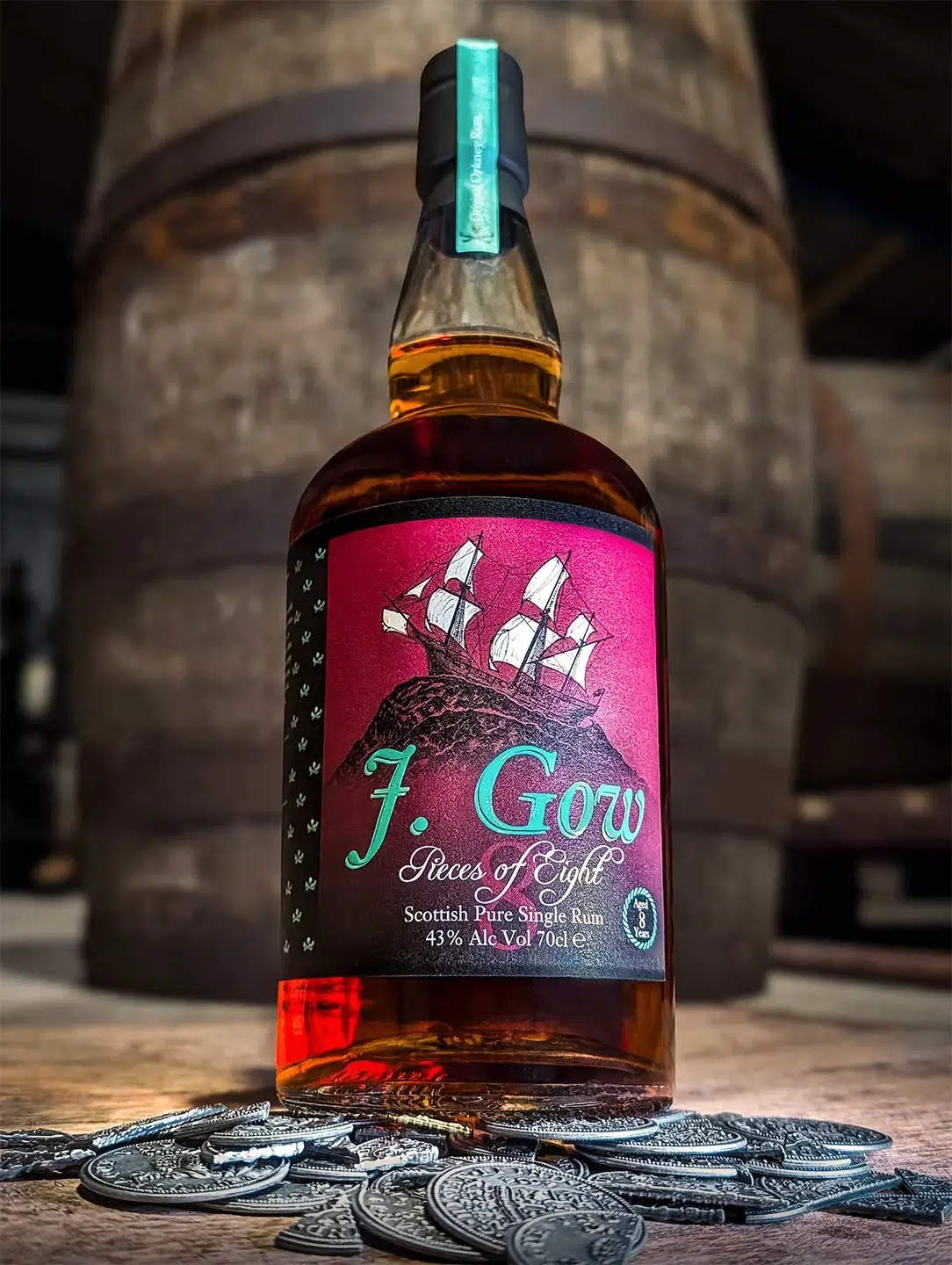
Farther north, Orkney has developed its own rum story through J. Gow, produced on the small island of Lamb Holm. Named after the notorious 18th-century Orcadian pirate John Gow, the distillery draws on the region’s maritime past while pursuing a modern approach to rum making.
Its range includes Revenge, Fading Light, Pieces of Eight, and Culverin, with different cask types bringing their own influence to the spirit. Bourbon, Madeira, and chestnut wood feature in the wider collection, offering varied expressions of fruit, spice, and oak. The nautical names may be playful, but the emphasis on maturation reflects a serious interest in craftsmanship.
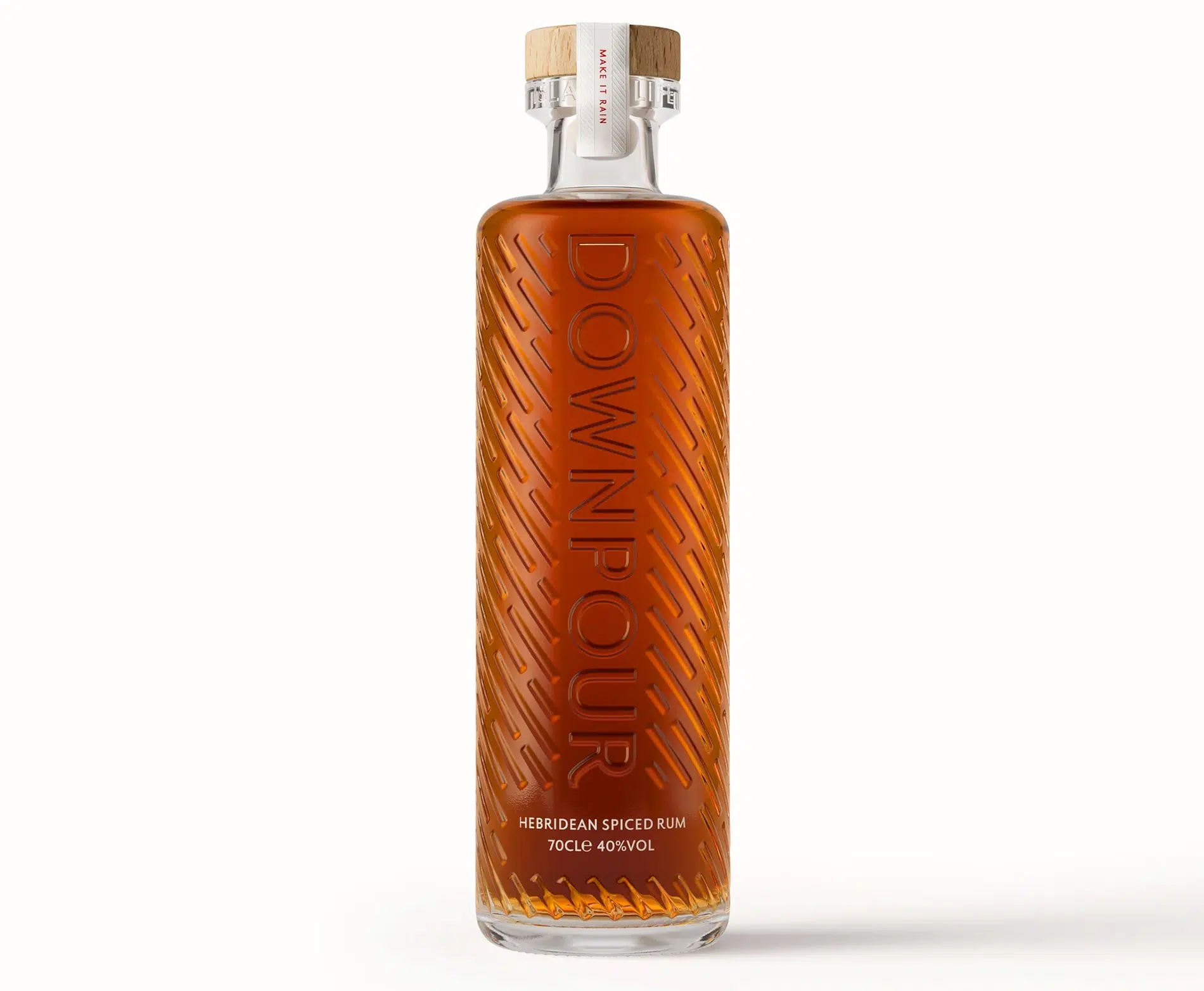
Elsewhere, North Uist’s Downpour Rum captures another side of Scotland’s emerging spirits identity. Its botanical approach incorporates ingredients such as wild thyme, pepper dulse seaweed, and pineapple weed. These unusual additions give the rum a connection to the island’s natural landscape, creating a distinctive alternative to more conventional spiced expressions.
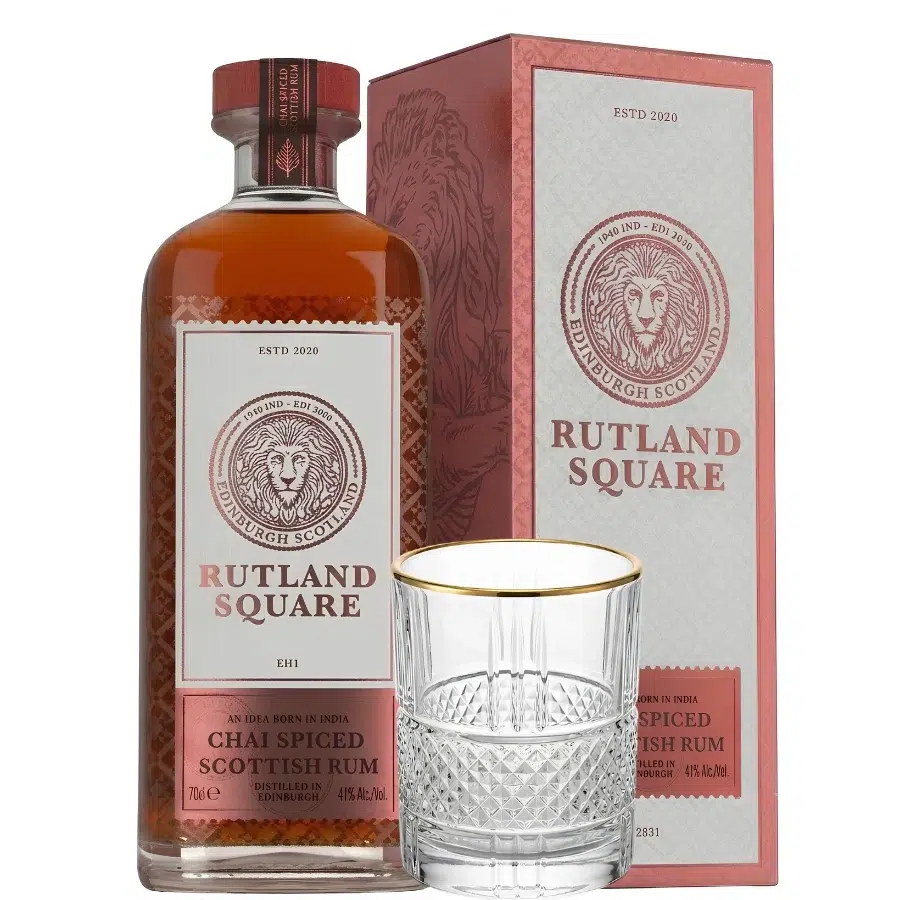
The movement extends across the mainland and neighboring islands. Producers such as Ninefold in Dumfries and Galloway, Dead Run on Bute, and Edinburgh’s Rutland Square are contributing to an increasingly varied Scottish rum scene. Each approaches the category differently, whether through traditional distillation, creative flavor combinations, or distinctive cask programs.
What unites these producers is a willingness to challenge expectations. Rum may be associated with tropical climates and sugarcane-growing regions, but its character is not determined by geography alone. Fermentation, distillation, maturation, and blending all influence the finished spirit, giving Scottish producers room to develop their own interpretations.
There is also an important distinction between the origin of the raw ingredients and the place of production. Scotland does not cultivate sugarcane commercially, so distillers rely on imported molasses or other sugarcane products. Their contribution comes through the decisions made afterward, from fermentation and distillation to the choice of casks and the time spent in them.
For whisky enthusiasts, this creates an interesting point of discovery. The familiar language of oak, age, provenance, and craftsmanship translates naturally to rum, yet the flavors can be entirely different. A well-made Scottish rum may offer the warmth of spice, the richness of caramel, or the brightness of tropical fruit, sometimes with an unexpected coastal or smoky character.
The category is also finding a place in contemporary cocktail culture. Bartenders are using Scottish rum in drinks that highlight its versatility, from refined interpretations of classic cocktails to more adventurous combinations of fruit, spice, and aromatic bitters.
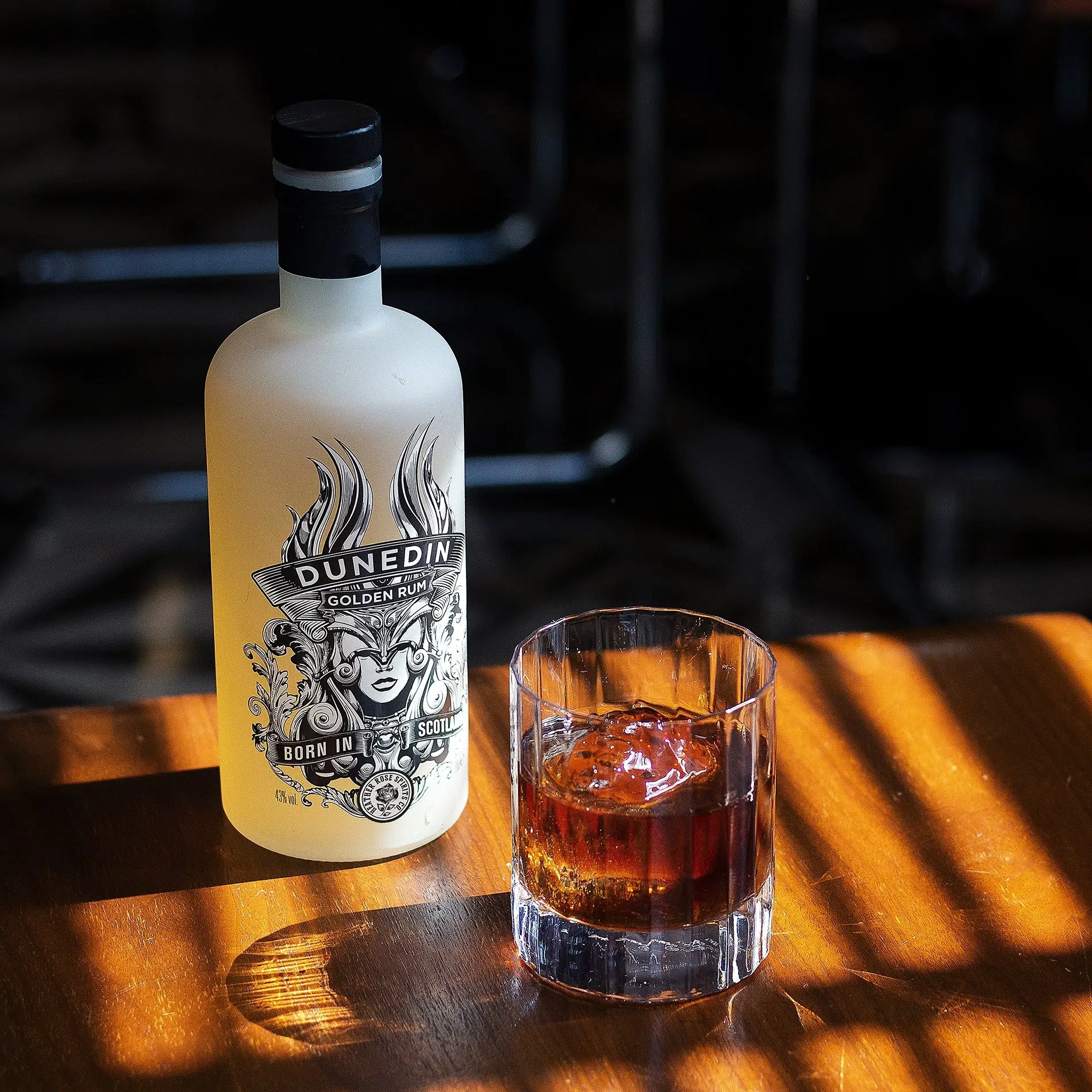
Matugga Golden Rum, for example, lends itself to an Orange Old Fashioned, where the spirit’s depth is balanced by citrus and a measured touch of sweetness. Its fruit-driven character also makes it an appealing base for a Grapefruit Sour, bringing freshness and texture to a drink designed for leisurely enjoyment.
Rutland Square’s chai-spiced rum invites a more expressive approach. Paired with pineapple, mango, lime, and fresh mint, it becomes the foundation for a Scottish Swizzle, a cocktail that combines tropical flavors with warming spice. J. Gow’s darker expressions offer another possibility, adding richness to an Amaretto Sour with pineapple and lemon.
These drinks illustrate how Scottish rum is moving beyond novelty. It is becoming a spirit with enough range to be enjoyed neat, over ice, or in carefully composed cocktails. As producers continue to experiment with maturation and flavor, that versatility may prove central to its appeal.
For Scotland, the emergence of rum does not threaten whisky’s place at the heart of its distilling heritage. Instead, it broadens the conversation about what Scottish craftsmanship can achieve. The knowledge developed over centuries of whisky production now offers a foundation for a younger industry with its own ambitions.
Fettercairn’s collaboration with Matugga captures that relationship particularly well. A whisky that began with the familiar richness of red wine maturation found new depth in a Scottish rum cask. In return, the project has brought greater attention to the possibilities of rum made and matured in Scotland.
The country’s rum industry is still writing its traditions, but its most compelling producers are already demonstrating a clear sense of purpose. Their work suggests that the next chapter in Scottish spirits will not be defined by whisky alone. It may also be shaped by the creative possibilities that emerge when tradition meets something entirely new.
Four Scottish Rum Cocktails to Discover
Matugga Orange Old Fashioned
Ingredients: 50 ml Matugga Golden Rum, 5 ml gomme syrup, 8 dashes orange bitters, ice, and orange peel.
Method: Add the bitters and syrup to a rocks glass, followed by several large ice cubes. Pour in the rum and stir until chilled. Finish with a twist of fresh orange peel or a dehydrated orange slice.
Matugga Grapefruit Sour
Ingredients: 50 ml Matugga Golden Rum, 35 ml fresh grapefruit juice, 25 ml aquafaba, fresh lemon juice, and gomme syrup to taste.
Method: Combine the ingredients in a cocktail shaker and shake without ice to develop a light foam. Add ice and shake again until chilled. Fine-strain into a coupe glass and garnish with grapefruit zest. The lemon and syrup quantities can be adjusted to balance the grapefruit’s acidity.
Scottish Swizzle
Ingredients: 50 ml Rutland Square Chai-Spiced Rum, 20 ml pineapple-walnut orgeat, 15 ml mango liqueur, 20 ml fresh lime juice, fresh mint, Angostura bitters, and crushed ice.
Method: Combine the rum, orgeat, mango liqueur, and lime juice in a highball glass. Fill three-quarters full with crushed ice and swizzle until the glass becomes frosted. Add more crushed ice, then garnish with fresh mint and a few dashes of Angostura bitters.
For the pineapple-walnut orgeat: Combine fresh pineapple, sugar, lightly toasted walnuts, brewed black tea, honey, and a little orange blossom extract. Blend until smooth, then strain thoroughly before using.
J. Gow Rumaretto Sour
Ingredients: 25 ml J. Gow Revenge or Fading Light Rum, 25 ml fresh lemon juice, 25 ml pineapple juice, 25 ml amaretto, and 12.5 ml sugar syrup.
Method: Add all ingredients to a shaker filled with ice. Shake until well chilled, then strain into a glass. Garnish with a decorative citrus twist or citrus rose.